Best Alternatives to Packer in 2026: 9 Tools Compared
Looking for alternatives to packer? We compared 9 image building and provisioning tools, from cloud builders to container builders, for teams in 2026.
- Editor's choice
 AWS EC2 Image Builder
Automated AMIs on AWS
Starts atSee websiteVisit aws.amazon.comFull review - Great alternative
 Azure Image Builder
Automated images on Azure
Starts atSee websiteVisit learn.microsoft.comFull review - Also consider
 Vagrant
Local dev environments
Starts atFreeVisit vagrantup.comFull review
TL;DR:
- Packer builds identical machine images for many platforms from one template, so no single tool replaces every part of it.
- Cloud-native builders from AWS and Azure are the simplest replacements inside a single cloud.
- Vagrant, Ansible, and Terraform cover the provisioning and infrastructure side of the Packer workflow.
- Docker Build, Buildah, and Kaniko are the picks when container images, not virtual machine images, are the goal.
Quick comparison
| Tool | Best for | Starts at | Free plan? | |
|---|---|---|---|---|
| AWS EC2 Image Builder | Automated AMIs on AWS | See website | No | Visit |
| Azure Image Builder | Automated images on Azure | See website | No | Visit |
| Vagrant | Local dev environments | Free | Yes | Visit |
 Ansible | Configuration and provisioning | Free | Yes | Visit |
 Terraform | Infrastructure as code | Free | Yes | Visit |
 Docker Build | Container image builds | Free | Yes | Visit |
 Buildah | Daemonless container builds | Free | Yes | Visit |
 Kaniko | Container builds in clusters | Free | Yes | Visit |
 OpenFactory | Guided Linux image builds | See website | Free trial | Visit |
The best alternatives to packer
HashiCorp Packer creates identical machine images for multiple platforms from a single source configuration, using builders for each cloud or hypervisor and provisioners to install software. The tools below replace different parts of that workflow, so the right pick depends on whether you build virtual machine images, container images, or both.
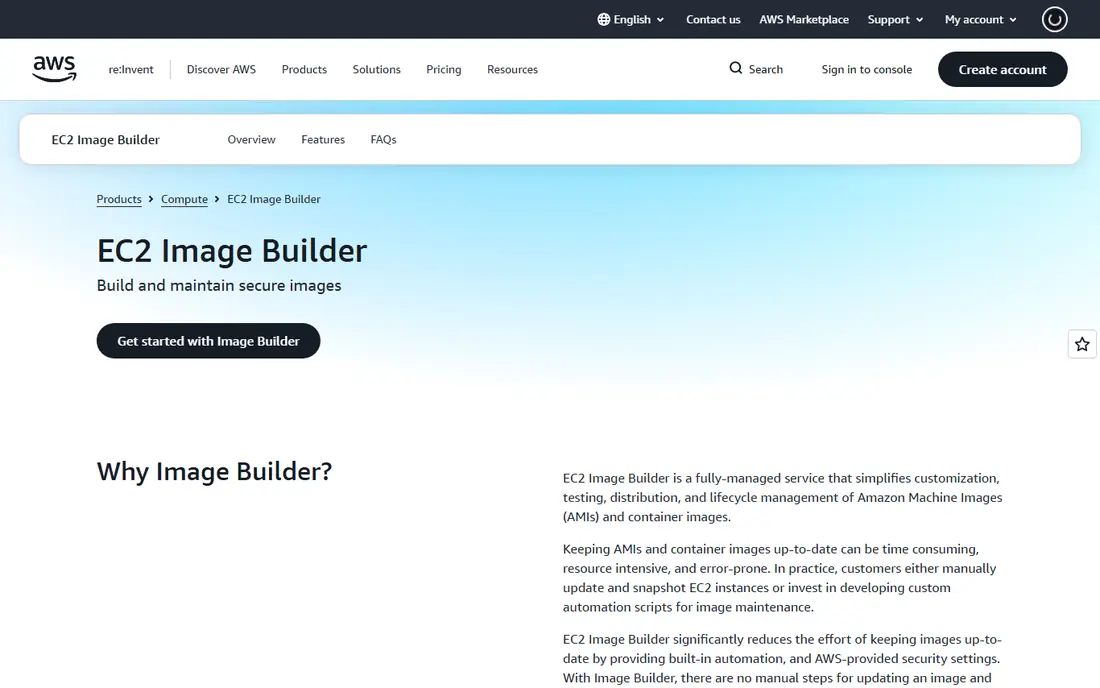
AWS EC2 Image Builder is the simplest Packer replacement for teams that live on AWS. It automates building, testing, and distributing Amazon Machine Images, with pipelines that patch and rebuild images on a schedule. Integration with EC2, Systems Manager, and image sharing across accounts covers most enterprise AMI workflows.
The limit is portability. Image Builder produces AMIs, not images for Azure, VMware, or other platforms, so multi-cloud teams still need Packer or a second tool. You also pay for the underlying EC2 and storage resources used during builds. For AWS-only shops, it removes the build servers Packer requires you to run.
- Fully managed image pipelines on AWS
- Automated testing and distribution
- Integrates with EC2 and Systems Manager
- AWS only
- Less portable than Packer across clouds

Azure Image Builder is Microsoft's managed image service for Azure, and it is itself built on Packer concepts. It provisions temporary build resources, creates a customized image, validates it, and distributes it through Azure Compute Gallery. Integration with Azure DevOps, GitHub Actions, and virtual machine scale sets fits enterprise Azure workflows.
Like its AWS counterpart, it only targets its own cloud. Teams that need the same image on Azure and AWS will still need a portable tool. Customization is also less open-ended than writing Packer templates directly. For Azure-only teams, it trades flexibility for a managed pipeline.
- Managed image builds on Azure
- Built on Packer concepts
- Integrates with Compute Gallery and DevOps
- Azure only
- Customization is less flexible than raw Packer templates
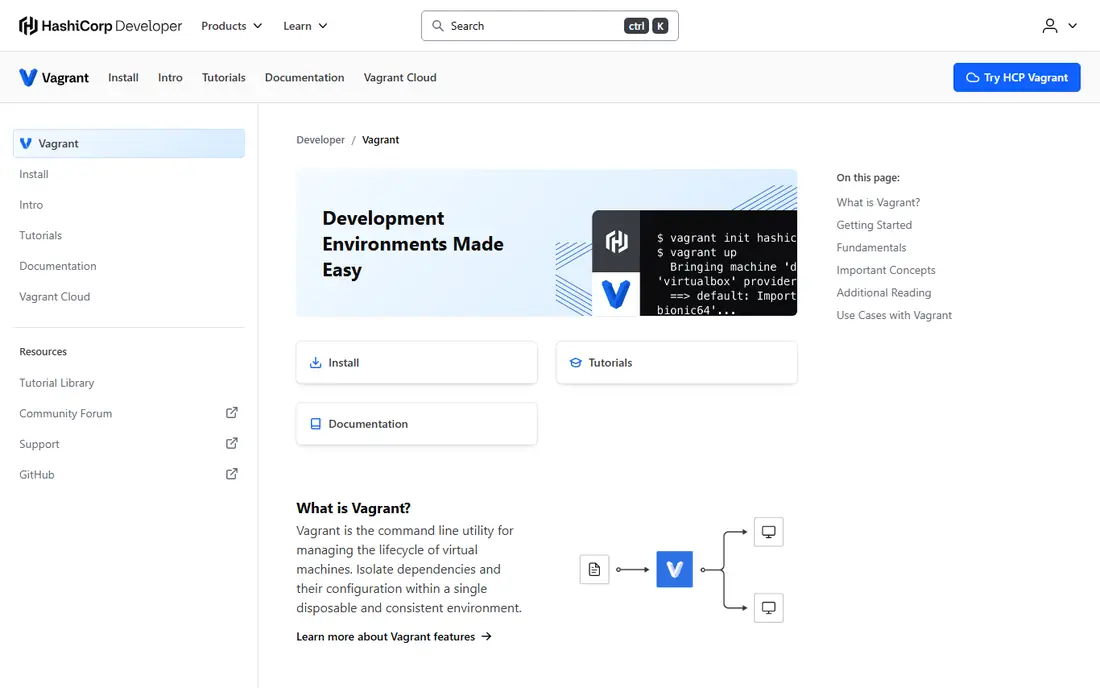
Vagrant, also from HashiCorp, is often mentioned beside Packer because the two work together: Packer builds images, and Vagrant runs them as local development environments. A single configuration file defines a virtual machine, its base box, networking, and provisioning, so every developer gets the same environment.
Vagrant is not a production image builder. It is built for local development and testing, not for automated AMI pipelines at scale. Teams that use Packer for golden images and want matching local environments will find Vagrant the natural companion, not a full replacement.
- Reproducible local virtual machines
- Simple configuration files
- Works with many providers
- Aimed at development, not production image pipelines
- Needs a hypervisor locally
Ansible is the provisioning side of the Packer workflow. Many Packer templates already use Ansible to install software and configure a machine before the image is captured, so teams that know Ansible can reuse the same playbooks to configure servers at deploy time instead of baking everything into an image.
On its own, Ansible does not produce machine images. It configures machines that already exist, whether virtual machines, cloud instances, or containers. Teams moving away from baked images toward configuration at deploy time often pair Ansible with Terraform or a cloud image builder.
- Agentless configuration with simple YAML
- Large module library
- Works as a Packer provisioner too
- Not an image builder on its own
- Needs another tool to capture images
Terraform, also from HashiCorp, is the infrastructure companion to Packer. Packer builds the image, and Terraform provisions the servers, networks, and load balancers that run it. The same configuration language style and provider ecosystem make the two tools feel familiar together.
Terraform alone does not build images. Teams that replace Packer with Terraform usually shift to configuring instances at boot time or to a cloud image builder for the image itself. For infrastructure automation around images, Terraform remains the standard pick.
- Declarative infrastructure across clouds
- Large provider ecosystem
- Pairs with Packer images
- Provisions infrastructure, does not build images
- Learning curve for state management
Docker Build is the answer when the real goal is container images rather than virtual machine images. Dockerfiles define layers, BuildKit adds caching and multi-platform builds, and the resulting images run anywhere Docker or Kubernetes runs. For teams that moved from virtual machines to containers, Docker Build replaces much of what Packer did.
It does not build AMIs, VMware images, or bare-metal images. Teams that still need full virtual machines must pair it with a machine image builder. If your workloads already run as containers, Docker Build is simpler and faster than maintaining Packer templates.
- Standard container image workflow
- BuildKit caching and multi-platform builds
- Huge ecosystem
- Builds container images, not virtual machine images
- Needs a container runtime workflow
Buildah builds Open Container Initiative images without requiring a Docker daemon, which suits automation pipelines and locked-down build hosts. Images can be built from a Dockerfile or assembled step by step from shell commands, giving fine control over layers. It pairs well with Podman for running the resulting containers.
Buildah is Linux-focused, and its ecosystem is smaller than Docker's, so Windows and Mac teams will find Docker easier. It also builds container images only, not virtual machine images. For Linux pipeline teams that want daemonless builds, Buildah is a strong open-source pick.
- Builds container images without a daemon
- Scriptable from shell
- Fine-grained layer control
- Linux-focused
- Smaller ecosystem than Docker
- Needs container tooling knowledge
Kaniko, from Google, solves a specific problem: building container images inside a Kubernetes cluster or container where a Docker daemon is unavailable or unsafe. It executes Dockerfile commands in userspace and pushes the resulting image to a registry, without privileged access.
Kaniko is slower than Docker Build in some workloads, and it only handles container images. Teams that build images in CI runners or Kubernetes pods, especially where security policy blocks privileged daemons, will find it the most practical option in this list.
- Builds container images inside Kubernetes without a daemon
- Works in unprivileged containers
- Open source
- Slower than Docker Build in some cases
- Container images only
OpenFactory takes a different approach to machine images: start with the desired Linux system, then build, boot, inspect, and test it in a virtual machine before release. Recipes define packages, services, users, and networking, and the platform supplies hosted workers so teams do not run their own build infrastructure.
It is newer and narrower than Packer, with a focus on Linux systems rather than the full range of Packer builders. Teams that need Windows images or many cloud targets will still prefer Packer. For Linux teams that want inspection and testing built into the image workflow, OpenFactory is an interesting modern option.
- Guided Linux system builds with booted VM inspection
- Recipes and tests included
- Hosted build workers
- Linux-focused and newer than Packer
- Narrower platform coverage than Packer builders
How we picked these
We compared official documentation for tools that cover Packer's core jobs: building machine images, building container images, provisioning machines, and defining infrastructure as code. We included cloud-native builders, HashiCorp companion tools, container builders, and a guided Linux builder, and we favored tools that are actively maintained in October 2026. We noted honestly where a tool covers only part of Packer's job, since no single tool matches its full builder ecosystem.
What to check before you switch
Image tooling choices last for years, so test the full pipeline before committing.
Image type first
Decide whether you need virtual machine images, container images, or both. Cloud builders suit single-cloud virtual machines, Docker Build and its peers suit containers, and Packer remains the portable choice for multi-cloud virtual machines.
Testing and distribution
Check how images are tested, versioned, and distributed to regions or accounts. A builder that produces images without testing or distribution tooling will need extra pipeline work to match Packer plus CI.
Portability and lock-in
Cloud-native builders are convenient but tie images to one cloud. If multi-cloud portability matters, keep a portable template format or accept running two builders.
FAQ
What is the closest alternative to Packer?
For single-cloud teams, AWS EC2 Image Builder or Azure Image Builder are closest in purpose, since they automate machine image pipelines. For multi-cloud teams, no single tool matches Packer, and most teams combine a cloud builder with Ansible or Terraform.
Can Terraform replace Packer?
Not directly. Terraform provisions infrastructure but does not build machine images. Teams often use Terraform alongside an image builder, or shift to configuring instances at boot time with Ansible.
Can Docker replace Packer?
Only for container workloads. Docker Build replaces Packer when applications run as containers, but it does not build virtual machine images for hypervisors or clouds.
Is Packer still maintained?
Yes, Packer remains an open-source HashiCorp tool with official builders and a plugin ecosystem, and Azure Image Builder is built on its concepts. Teams should still evaluate alternatives when their workloads move to a single cloud or to containers.
Which alternative is best for Kubernetes builds?
Kaniko is best for building container images inside Kubernetes without a daemon, while Buildah suits Linux CI pipelines. Docker Build remains the standard choice for local and general CI builds.