Best MessageBird Alternatives in 2026: 8 Tools Compared
Looking for MessageBird alternatives? We compare 8 messaging APIs on SMS, WhatsApp, voice, pricing, and delivery for teams switching from Bird today now.
- Editor's choice
 Twilio
Widest ecosystem
Starts atSee websiteVisit twilio.comFull review - Great alternative
 Plivo
Easy Twilio migration
Starts atSee websiteVisit plivo.comFull review - Also consider
 Telnyx
Low per-message cost
Starts atSee websiteVisit telnyx.comFull review
TL;DR:
- MessageBird is now sold as Bird, so check current Bird pricing and plans before you compare it with the tools below.
- Telnyx and Plivo are the strongest cost-led picks for teams that write code and want published per-message rates.
- Twilio has the widest developer ecosystem and channel coverage, which suits complex products that need many integrations.
- Sinch and Infobip suit global, enterprise messaging, where local routing and compliance matter more than a low headline rate.
- Always budget for carrier fees, number rental, and campaign registration on top of the per-message rate.
Quick comparison
| Tool | Best for | Starts at | Free plan? | |
|---|---|---|---|---|
| Twilio | Widest ecosystem | See website | Free trial | Visit |
| Plivo | Easy Twilio migration | See website | Free trial | Visit |
| Telnyx | Low per-message cost | See website | Free trial | Visit |
 Vonage | Voice, video, and messaging | See website | Free trial | Visit |
 Sinch | Global enterprise messaging | See website | Free trial | Visit |
 Infobip | Omnichannel at scale | See website | Free trial | Visit |
 Bandwidth | Carrier-grade US voice and SMS | See website | Free trial | Visit |
 ClickSend | Simple business messaging | See website | Free trial | Visit |
The best MessageBird alternatives
Bird, formerly MessageBird, now covers messaging, marketing, sales, and support in one platform. That breadth suits some teams and frustrates others that only want a messaging API. The tools below focus on SMS, voice, WhatsApp, and related channels, with different strengths on price, reach, and developer experience. We compared official pricing pages, docs, and public reviews.
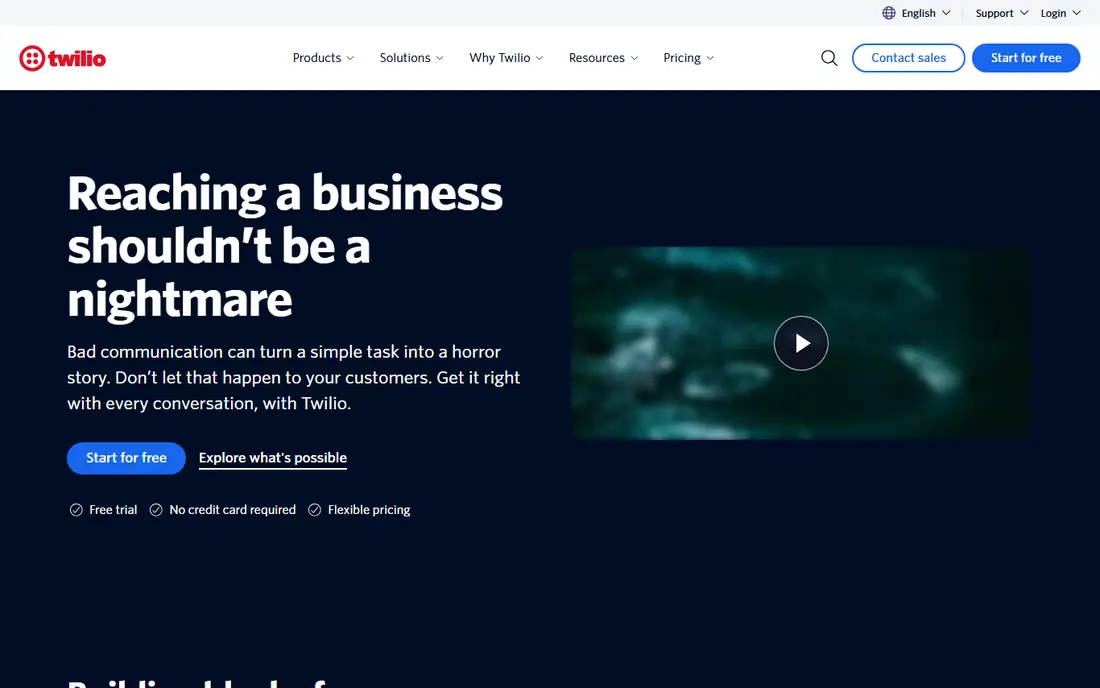
Twilio is the default choice when you want the most complete messaging platform and the deepest developer resources. It covers SMS, voice, WhatsApp, email, and verification, with SDKs, helper libraries, and a large integration catalog. Teams building a product that will grow across channels will find most of what they need in one place.
The cost is the main reason teams look elsewhere. Twilio rates are often higher than Telnyx or Plivo for the same US SMS volume, and carrier fees and number charges add to the bill. If your use case is simple SMS at scale, a cheaper API may save a lot. If your product needs many channels and mature tooling, Twilio still earns its price.
- Huge API and integration ecosystem
- SMS, voice, WhatsApp, and email in one platform
- Strong docs and tooling
- Per-message cost is higher than cost-led rivals
- Pricing can be complex across channels and countries

Plivo is a practical Twilio replacement for teams that want lower rates without a full rewrite. Its API design and migration guides help move SMS and voice workloads with less code churn, and its verification product covers OTP flows for sign-ups and logins. For many US and India focused senders, the savings add up quickly.
The trade-off is ecosystem size. Plivo has solid coverage, but it does not match Twilio on third-party integrations and niche channels. Test delivery in your key countries during a trial, since routing quality matters more than a small rate difference. For a straightforward migration, Plivo is a strong first trial.
- Twilio-compatible API options
- Competitive SMS rates
- Verification and voice APIs
- Smaller ecosystem than Twilio
- Some enterprise features need a sales conversation

Telnyx runs its own network, which helps it publish clear per-message and per-minute rates and keep voice costs low. Developers who understand numbering, routing, and carrier terms will find a lot of control here, from number management to call control and messaging APIs. It suits technical teams sending real volume.
The learning curve is steeper than a marketing-led platform. Teams that want guided campaign setup, templates, and support workflows may prefer Vonage, Sinch, or Infobip. For cost-led SMS and voice at scale, Telnyx is our pick to price first, with carrier fees included in the comparison.
- Own network with published rates
- Strong voice pricing
- Direct control over numbers
- Portal assumes telecom knowledge
- Fewer marketing tools than full omnichannel suites
Vonage, part of Ericsson, covers messaging, voice, and video in one developer platform. That mix suits contact centers, telehealth, and customer service products that need calls and messages in the same workflow. Its AI Studio helps build voice agents and routing flows without writing every step by hand.
Pricing needs care, since rates differ by country, channel, and volume. Vonage also leans toward larger accounts for some products, so small teams should confirm self-serve access and trial credits. For a product that blends voice, video, and messaging, Vonage is a strong, mature option.
- Strong voice and video APIs
- WhatsApp and SMS coverage
- AI Studio for workflow building
- Pricing varies by channel and region
- Enterprise focus can mean a sales-led purchase
Sinch is built for global messaging at scale, with direct connections to operators in many markets. That reach helps delivery in countries where a smaller API relies on intermediaries. It also covers RCS, WhatsApp, and verification, so a single vendor can handle several channels for an international product.
Small teams may find Sinch heavier than a self-serve API, and pricing often needs a quote for volume. For enterprises sending across many countries, the delivery quality and compliance support can justify that process. Test your top destinations, not just US rates, before you commit.
- Broad global reach and direct operator connections
- RCS and WhatsApp support
- Verification products
- Pricing is often quoted
- Setup can be heavier for small teams
Infobip covers SMS, WhatsApp, RCS, email, voice, and push, with tools for customer journeys and support. It suits large brands that run campaigns, notifications, and service messages across regions from one platform. Its compliance and routing tools help in markets with strict sender rules.
The platform is more than most small teams need, and pricing is often quoted rather than published. If you only send OTP codes in one country, a simpler API will be cheaper and faster to adopt. If you run omnichannel programs at scale, Infobip belongs on the shortlist.
- Very broad channel and country coverage
- Omnichannel workflows
- Enterprise support and compliance tools
- Quote-based pricing for many plans
- Platform can feel large for a single SMS use case
Bandwidth owns its network in the US, which gives it control over voice quality, number management, and messaging delivery for US-focused products. It suits contact centers, UCaaS providers, and businesses that need reliable US voice and SMS with carrier-level control. Its APIs cover messaging, voice, and related telecom services.
Global teams will need another provider for many international destinations. Bandwidth also leans toward larger, sales-led accounts, so small teams should confirm trial access early. For a US-first voice and messaging product, it is a credible, high-quality choice.
- Own all-IP voice network
- Strong US coverage
- APIs for messaging, voice, and emergency services
- US focus limits global reach
- Pricing and onboarding suit larger accounts
ClickSend suits small businesses that want to send SMS without a developer project. You buy credit, upload contacts, and send campaigns or notifications from a simple dashboard, with options for email, voice, and direct mail in some regions. That simplicity is the point, and it keeps costs predictable for modest volumes.
Developers building a high-volume product will find ClickSend lighter on APIs, SDKs, and routing controls than the developer-first tools above. For appointment reminders, marketing texts, and team alerts, it is an easy, low-friction pick. Check rates for your destination countries, since they vary.
- Prepaid credit with no subscription
- Simple dashboard
- SMS, email, and voice options
- Fewer developer tools than Twilio or Telnyx
- Less suited to complex, high-volume routing
How we picked these
We compared official pricing pages, API docs, and public reviews for messaging platforms that cover SMS and at least one other channel, and that are actively sold in October 2026. We favored tools with published rates or clear quote paths, real country coverage, and a track record for delivery. We left out single-country tools, pure email providers, and marketing-only platforms without a messaging API.
What to check before you switch
Start with total cost, not the headline rate. Add carrier fees, number rental, short code or 10DLC campaign fees, and any platform minimums. Then test delivery in your top five countries, including OTP speed and failure handling, since a cheap rate means little if codes arrive late.
Next, check compliance and migration work. Confirm sender registration for each market, porting rules for existing numbers, and webhook formats for delivery reports. Plan a phased cutover with dual sending for a short period, and keep your old provider active until delivery reports match. That caution avoids a silent outage during the switch.
FAQ
Is MessageBird now called Bird?
Yes, MessageBird rebranded as Bird. Its platform now covers messaging, marketing, sales, and support, not just SMS. If you search for MessageBird alternatives, you are comparing against the current Bird platform and pricing.
Which MessageBird alternative is cheapest for SMS?
Telnyx and Plivo are usually among the cheapest for US SMS on published rates, but your total depends on carrier fees, number charges, and destination mix. Run your last two months of volume through each vendor quote before you judge on rate alone.
Can I migrate from Bird to Twilio or Plivo easily?
Plivo offers Twilio-compatible options that can ease a move, but a Bird migration still needs number porting, sender registration, and webhook testing. Allow time for 10DLC and campaign registration in the US, and test delivery before you cut over fully.
Which alternative is best for WhatsApp?
Twilio, Vonage, Sinch, and Infobip all offer strong WhatsApp Business API coverage. Choose based on your regions, template needs, and support requirements, and confirm WhatsApp fees on top of the platform rate.
Do I need a messaging API or a marketing platform?
If you send transactional messages from code, such as OTP codes and alerts, an API-first tool is the right fit. If you send campaigns, journeys, and support messages from a dashboard, an omnichannel platform such as Infobip or Bird may suit you better.