6 Affinity CRM Alternatives for Talent Teams, Compared in 2026
6 products for affinity crm alternatives for talent teams, ranked by fit, with starting costs and free tiers. Short verdicts, no fluff. Numbers first.
- Editor's choice
 Folk
Small talent teams and agencies that sell through relationships
Starts at24 dollars per member a month for Standard, billed annuallyVisit folk.appFull review - Great alternative
 Copper
Talent teams that live inside Google Workspace and Gmail
Starts at23 dollars per seat a month for Basic, billed yearlyVisit copper.comFull review - Also consider
 Pipedrive
Talent teams that want a straightforward visual pipeline for candidates and clients
Starts at14 dollars per user per month for Essential, billed yearlyVisit pipedrive.comFull review
Direct answer
Folk comes first here, mainly for small talent teams and agencies that sell through relationships. Copper fits talent teams that live inside Google Workspace and Gmail; Pipedrive fits talent teams that want a straightforward visual pipeline for candidates and clients. All 6 tools are compared below on price, free plan and limits.
TL;DR:
- Number one here is Folk, a fit for small talent teams and agencies that sell through relationships.
- Dex fits individual recruiters and sourcers who handle a large personal network.
- Only 2 of the 6 tools have a free plan (Attio, Capsule), so check the caps.
- One limit worth knowing about Copper: entry-level caps at 2,500 contacts, real sales tracking begins at Professional for 59 dollars a seat, and there is no free plan, only a 14-day trial.
Quick comparison
| Tool | Best for | Starts at | Free plan? | |
|---|---|---|---|---|
| Folk | Small talent teams and agencies that sell through relationships | 24 dollars per member a month for Standard, billed annually | No | Visit |
| Copper | Talent teams that live inside Google Workspace and Gmail | 23 dollars per seat a month for Basic, billed yearly | No | Visit |
| Pipedrive | Talent teams that want a straightforward visual pipeline for candidates and clients | 14 dollars per user per month for Essential, billed yearly | No | Visit |
 Attio | Talent teams that want relationship intelligence with an adaptable data model | 29 dollars per user per month for Plus, billed yearly | Yes | Visit |
 Capsule | Small talent teams that want a straightforward shared CRM | 18 dollars per user a month for Starter | Yes | Visit |
 Dex | Individual recruiters and sourcers who run a large personal network | 12 dollars a month for Premium, billed yearly | No | Visit |
The best Affinity CRM Alternatives for Talent Teams
Choosing Affinity CRM Alternatives for Talent Teams usually comes down to price, fit and limits. This LinkVetted guide sets 6 tools side by side on those three points, with the facts kept short and checkable.
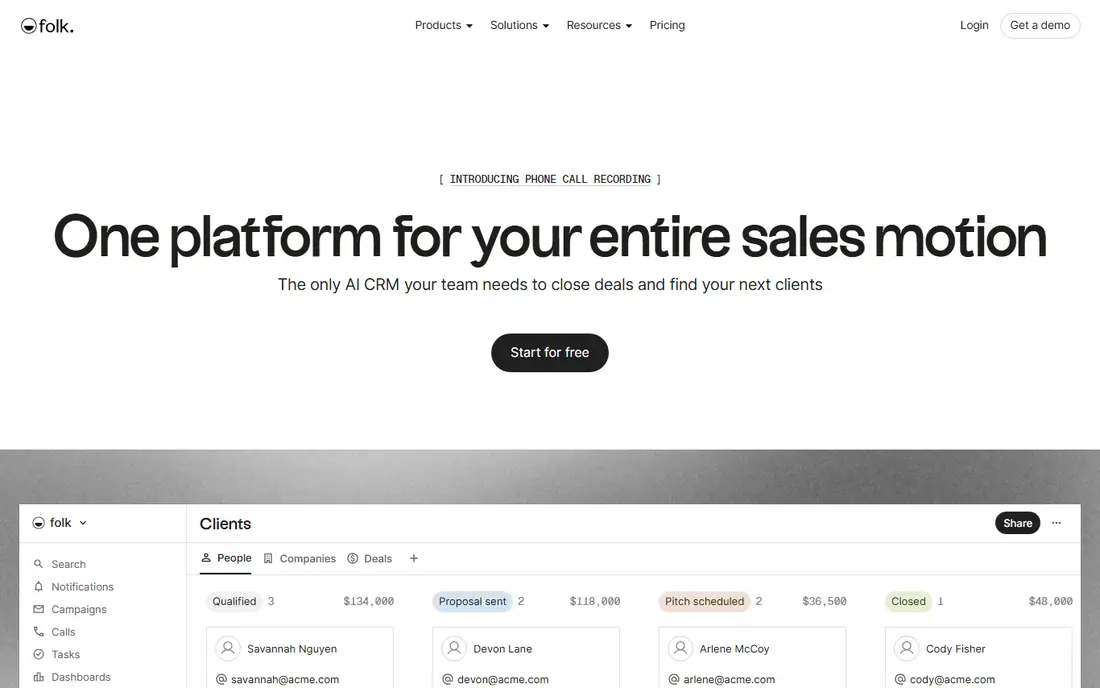
Folk serves small talent teams and agencies that sell through relationships. Folk is a relationship-focused CRM built around a Chrome extension that pulls contact details straight off LinkedIn into a Kanban-style pipeline, geared toward agencies, recruiters, and solo operators who run relationships more than a formal sales process. Also, the weakness is the price ladder: the features a recruiting team actually needs, like sequences and dashboards, sit on Premium.
From a buyer's view, standard costs 30 dollars per member per month, or 24 dollars billed yearly, and contains the pipeline, LinkedIn enrichment, and email, calendar, and WhatsApp sync. For a small team that lives on LinkedIn and wants a light CRM, Folk is a natural fit. More specifically, there is a 14-day trial with no card required, but no free plan. Price to start with Folk: 24 dollars per member per month for Standard, billed annually. Folk has no free tier.
Trade-offs to know: double the entry price.
- Multi-channel messaging
- LinkedIn Chrome extension for one-click contact capture
- Workflow automation beyond trigger emails needs Premium at 48 dollars per member a month
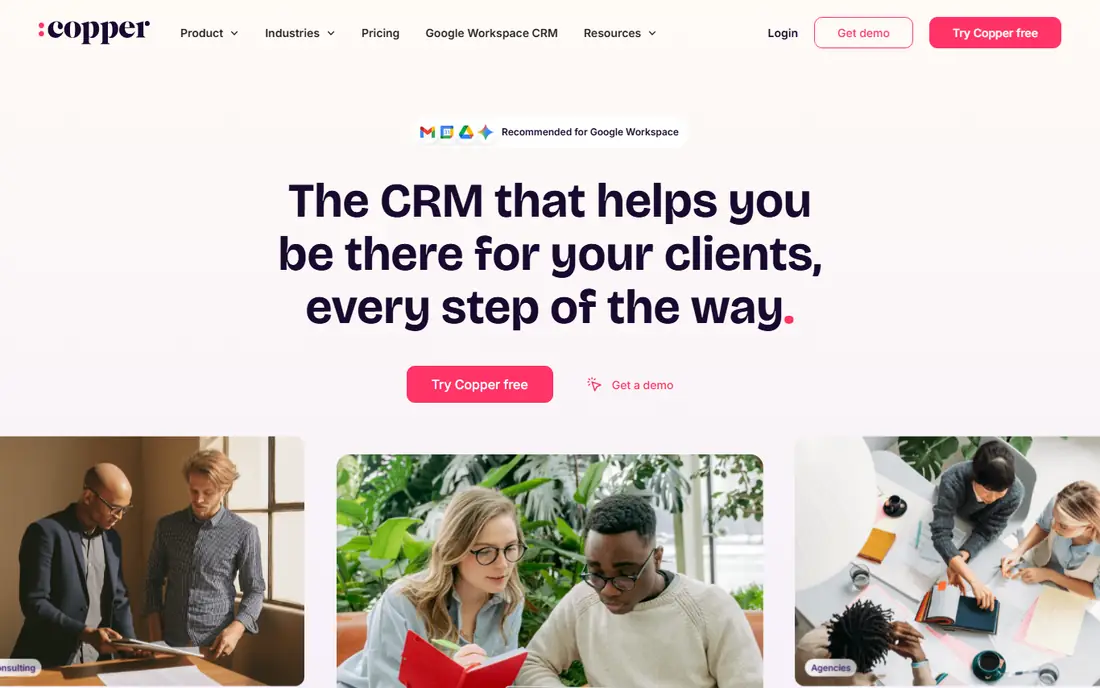
Copper makes the most sense for talent teams that live inside Google Workspace and Gmail. It syncs Google contacts, emails, and pipelines straight inside Gmail, so recruiters work without leaving the inbox. In daily use, professional costs 59 dollars a seat a month and brings workflow automation, bulk email, and reporting.
Limits to weigh: only a 14-day trial; real sales tracking opens at Professional for 59 dollars a seat.
Business costs 99 dollars. The weakness is the level ladder: Entry-level cannot mark a deal Won. The 2,500-contact cap is low for a recruiting team with history. Beyond that, entry-level costs 23 dollars a seat per month billed yearly, with a 2,500-contact cap. Entry price for Copper: 23 dollars per seat per month for Basic, billed annually. Copper has no free plan.
- Works inside Gmail
- Publishes pricing openly
- There is no free plan
Pipedrive
Best for: Talent teams that want a straightforward visual pipeline for candidates and clients
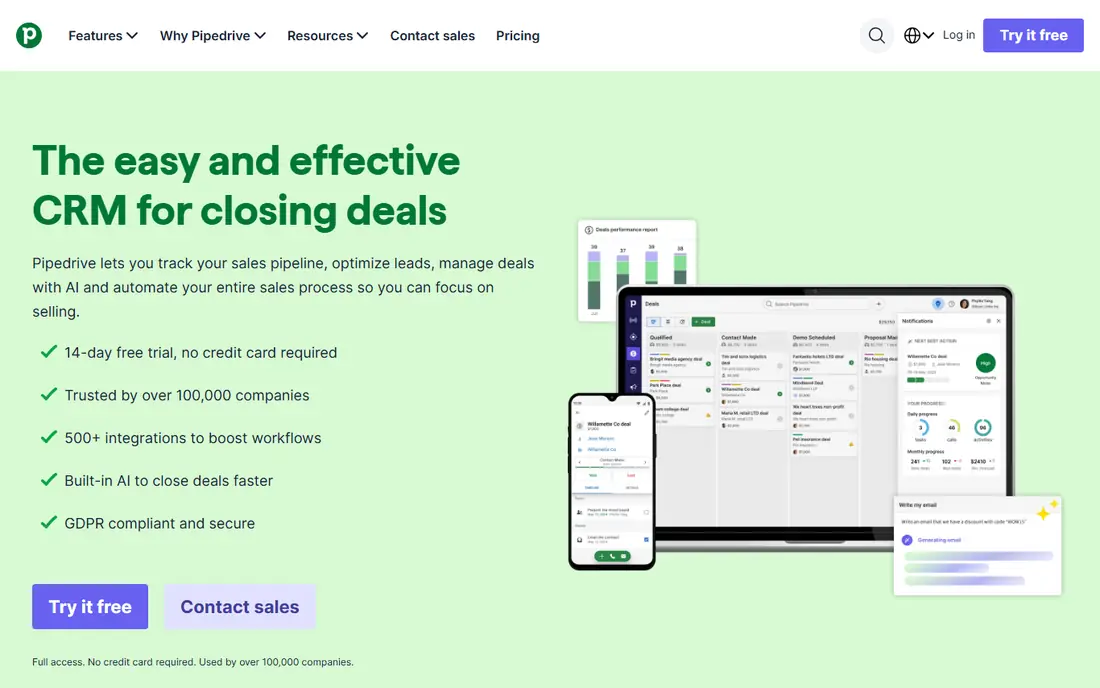
Pipedrive was built for talent teams that want a straightforward visual pipeline for candidates and clients. Pipedrive is a sales-focused CRM built around a visual pipeline, and talent teams use it to track candidates through sourcing, screening, interview, and offer stages. The weakness is that Pipedrive is a sales tool, not a relationship-intelligence tool: it has no relationship strength scoring and no automatic contact capture comparable to Affinity or Attio.
Advanced costs 29 dollars, Professional costs 49 dollars, Power costs 64 dollars, and Enterprise costs 99 dollars per user a month. For a talent team that wants a straightforward pipeline and a low price, Pipedrive is the cheapest sales CRM here. Pipedrive pricing: 14 dollars per user per month for Essential, billed annually. Pipedrive has no permanent free option.
Downsides: No free plan.
- Simple to adopt in a day
- Cheap entry price
- Lead capture and enrichment live behind premium extras
Attio
Best for: Talent teams that want relationship intelligence with an adaptable data model
For talent teams that want relationship intelligence with an adaptable data model, Attio is a natural candidate. Talent teams can model candidates, hiring managers, and clients as separate objects with their own relationships, instead of forcing everything into a sales pipeline.
Also, plus costs 29 dollars per user a month billed yearly, Pro costs 69 dollars, and Enterprise is quoted. Attio pricing: 29 dollars per user per month for Plus, billed annually. Attio offers a free plan.
What Attio does well: automatic contact enrichment.
The main drawbacks: Pro is reported at 69 dollars per user per month in most 2026 roundups, with some older pages listing 59 dollars, so confirm the current price.
- Adaptable data model with custom objects
- Free plan for up to 3 seats
- The credit system for AI features layers on cost at scale
Capsule is aimed squarely at small talent teams that want a straightforward shared CRM with a free plan. Annual billing saves up to 15 percent.
What to check first: the Starter plan lacks workflow automation and advanced reporting.
On top of that, for a small team that wants to try a shared CRM at no cost before paying, Capsule is the most approachable choice here. Beyond that, the free plan spans up to 2 users and 250 contacts, Starter costs 18 dollars per user a month, Growth costs 36 dollars, Advanced costs 54 dollars, and Ultimate costs 72 dollars per user a month. Starting cost for Capsule: 18 dollars per user per month for Starter. Free access exists with Capsule.
- Straightforward and quick to learn
- Solid contact management
- No built-in email marketing automation
Choose Dex for individual recruiters and sourcers who run a large personal network. Premium costs 12 dollars per month billed yearly, Professional costs 20 dollars and layers on Outlook, mail merge, and API access, and Team costs 40 dollars per user per month.
Limits to weigh: the 6-day trial needs a card.
The weakness is that Dex is aimed at one person, not a team: a talent team that needs shared candidate pipelines will find it thin. The starting price for Dex: 12 dollars per month for Premium, billed annually. There is no free plan with Dex.
- Syncs contacts from more than 15 sources including LinkedIn, email, calendar, WhatsApp
- Cheapest entry price here
- No free plan
A closer look at Affinity CRM Alternatives for Talent Teams
Affinity is a relationship-intelligence CRM aimed at venture capital, private equity, and executive search. It tracks who knows whom, scores relationship strength, and surfaces warm introduction paths, and talent teams use it the same way to map who in the firm knows a candidate, a hiring manager, or a client. In daily use, teams leave for three reasons: price, fit, and adaptability.
In practice, Affinity is designed for deal flow and portfolio tracking, so a recruiting team pays for features it never uses. Teams that want a more straightforward CRM end up fighting the data model.
Affinity CRM Alternatives for Talent Teams cost breakdown
Entry prices run from 12 dollars per month for Dex Premium to 29 dollars per user a month for Attio Plus. A 5-person talent team pays roughly 70 to 145 dollars per month on the entry plans here, against an Affinity contract quoted per engagement.
Choosing Affinity CRM Alternatives for Talent Teams: what matters
Look for four things. Second, relationship strength: the tool should display who talked to whom, when, and how frequently. So you can find a warm introduction rather than a cold email.
More specifically, third, shared visibility: the entire team should see the same contact history, notes, and pipeline. So a candidate is never contacted twice by two recruiters. Fourth, price per seat: researchers, coordinators, and sourcers need access but not a full license, so a low entry price and a free level matter more than enterprise features.
How we built this list
For each of the 6 tools we noted price, free plan or trial, fit for Affinity CRM Alternatives for Talent Teams and the main limit, using vendor pages and documentation. Seat minimums, billing terms and add-ons can move the real cost, so the starting prices here are a guide and not a quote. The order reflects how well each tool fits the most common buying scenario for Affinity CRM Alternatives for Talent Teams, then price clarity, then free plan access. It is a starting point, not a verdict.
Before you commit
- Check the current price for Folk, Dex and the rest on each vendor page, since seats and billing terms change the total.
- Look at free plan limits closely: Attio and Capsule have one, and the caps decide whether it is usable for real work.
- Before choosing Folk, weigh its main limit: no free plan, and workflow automation beyond trigger emails needs Premium at 48 dollars per member per month, double the entry price.
- Before you load data into Pipedrive, check what an export looks like and who can run it.
- Ask whether Capsule integrates with your current software, and whether that comes standard or as an add-on.
FAQ
How are the Affinity CRM Alternatives for Talent Teams ordered?
The order follows typical fit for Affinity CRM Alternatives for Talent Teams, with Folk first and Dex last, then price clarity and free access. It is editorial judgement, not a score, so another team could rank the tools differently.
Can I use a personal CRM for recruiting?
Dex is aimed at one person managing a large network, with keep-in-touch reminders and LinkedIn sync. It is a poor fit for a team, since shared pipelines and candidate history are restricted.
Is Folk the right pick for everyone comparing Affinity CRM Alternatives for Talent Teams?
No single tool suits every team. Folk comes first because it fits small talent teams and agencies that sell through relationships, while Copper suits talent teams that live inside Google Workspace and Gmail and Pipedrive suits talent teams that want a simple visual pipeline for candidates and clients. Match the tool to your own size, budget and workflow before deciding.
How much does Affinity CRM cost?
Its contracts are quoted per engagement and are reported to run into five figures per year for enterprise teams. Ask Affinity for a written quote before comparing it with the tools here.
Can I try these tools before paying?
Often, yes. Attio and Capsule have a free plan. Use your own data and a real task during the test, and check what the free tier or trial limits before you rely on it.
Do these tools publish their prices?
Yes. Every tool from Folk to Dex shows a starting price, though seats, add-ons and billing terms still change the final cost.