Zeffy and Stripe Alternatives in 2026: 8 Nonprofit Payment Options Compared
Compare 8 Zeffy and Stripe alternatives for nonprofit payments, including Donorbox, Givebutter, Fundraise Up, Classy, PayPal, Square, and Donately today.
- Editor's choice
 Donorbox
Nonprofit donation forms and recurring giving
Starts atSee websiteVisit donorbox.orgFull review - Great alternative
 Givebutter
Campaigns, events, and peer-to-peer fundraising
Starts atSee websiteVisit givebutter.comFull review - Also consider
 Fundraise Up
Optimized donation checkout
Starts atSee websiteVisit fundraiseup.comFull review
TL;DR:
- Donorbox and Givebutter are the most direct nonprofit-first alternatives, with donation forms and recurring giving.
- Fundraise Up and Classy suit larger nonprofits that want optimized checkout and campaign tools.
- PayPal and Square suit small groups that need a familiar checkout or in-person payments.
- Add platform fees and processing fees together, because the combined total is the real cost.
Quick comparison
| Tool | Best for | Starts at | Free plan? | |
|---|---|---|---|---|
| Donorbox | Nonprofit donation forms and recurring giving | See website | Yes | Visit |
| Givebutter | Campaigns, events, and peer-to-peer fundraising | See website | Yes | Visit |
| Fundraise Up | Optimized donation checkout | See website | No | Visit |
 Classy | Large campaigns and peer-to-peer programs | See website | No | Visit |
 PayPal | Familiar checkout for small nonprofits | Free | Yes | Visit |
 Square | In-person donations and events | Free | Yes | Visit |
 Stripe | Custom payment infrastructure | See website | No | Visit |
 Donately | Simple forms for small nonprofits | See website | Yes | Visit |
The best Zeffy and Stripe alternatives
Zeffy and Stripe both process nonprofit payments, but they work differently: Zeffy leans on donor tips to keep platform fees low, while Stripe is a general payment processor that needs a fundraising layer on top. The options below cover nonprofit-first platforms, general processors, and in-person tools, so you can match the tool to how donors actually give.
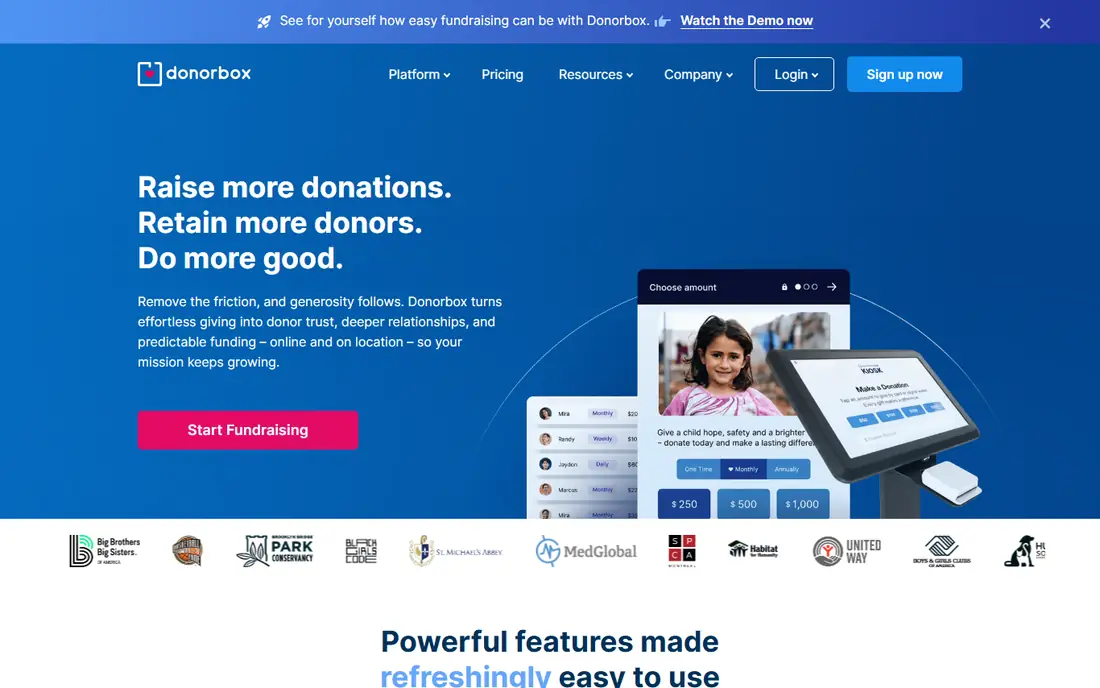
Donorbox is a nonprofit-first platform built around donation forms, recurring giving, and donor management. It connects to Stripe or PayPal for processing, and it offers text-to-give, crowdfunding pages, and integrations with common CRMs. For a small or mid-size nonprofit that wants a branded form on its own site, Donorbox is a practical, well-known choice.
The cost needs careful reading. The Standard plan is free to start but charges a platform fee, while Pro at $150 per month in recent listings lowers that fee. Processing fees through Stripe or PayPal sit on top. Work out the combined total at your donation volume before you pick a tier, and check whether donor-covered fees change the math.
- Custom donation forms
- Recurring giving
- Donor management basics
- Stripe and PayPal processing
- Platform fee on Standard plan
- Pro plan costs $150 per month in recent listings
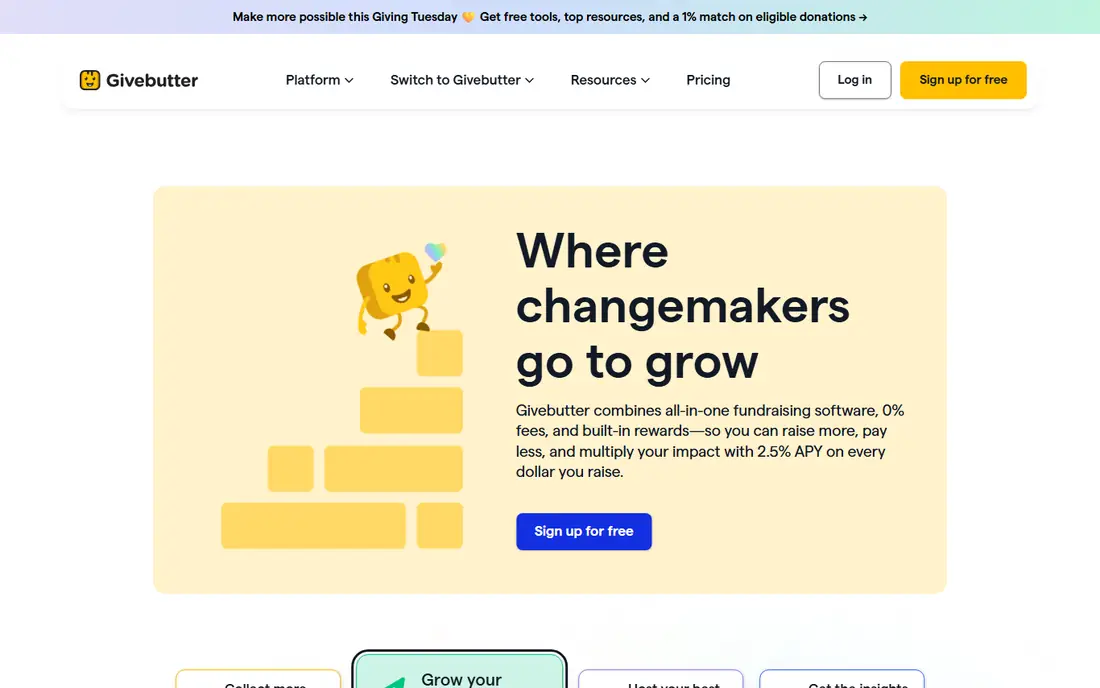
Givebutter offers campaigns, peer-to-peer fundraising, events, auctions, and donation forms in one platform, with a free platform fee when donors cover costs through tips. That model appeals to nonprofits that want a lively campaign experience without a monthly subscription. Its built-in CRM, texting, and donor feeds also help small teams run events and drives from one dashboard.
If donors skip tips, a platform fee applies on top of card processing, so the free claim depends on donor behavior. In-person chip payments may also need a card reader. For campaign-led fundraising, Givebutter is a strong Zeffy alternative. For simple forms, Donorbox may be simpler.
- Free platform fee with donor tips
- Campaigns, events, and auctions
- Built-in CRM features
- Platform fee applies if tips are disabled
- Card reader costs extra for in-person chip payments
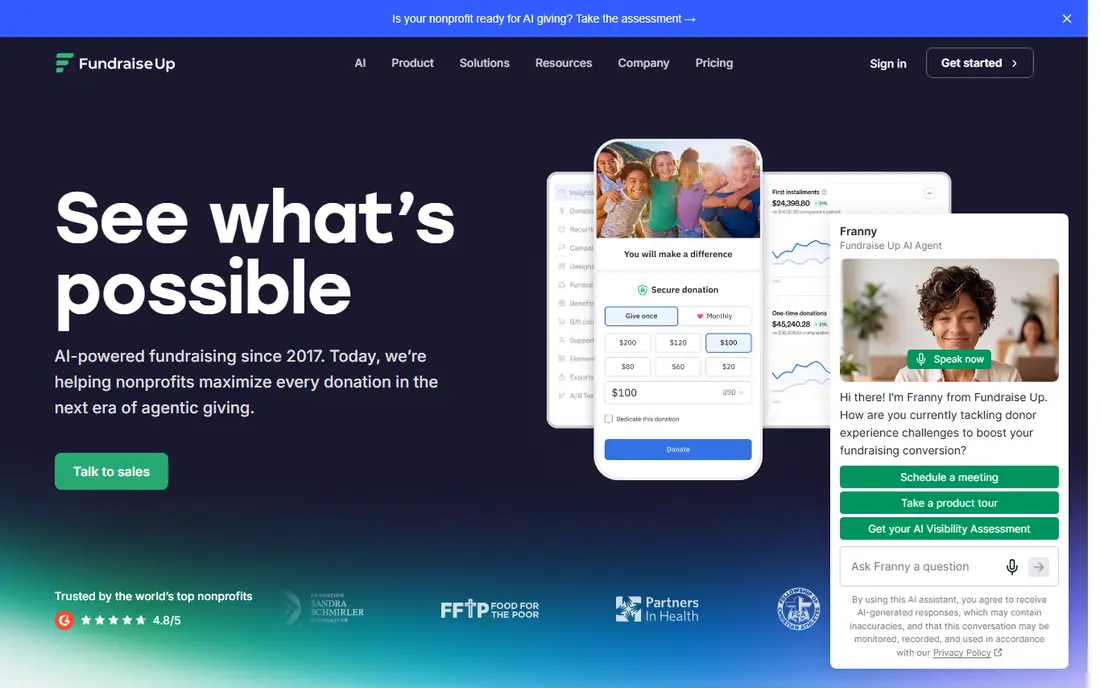
Fundraise Up focuses on the checkout itself, with tested donation forms, recurring upsells, and donor-covered fee options that aim to raise conversion. It integrates with Stripe and common CRMs, so donor data flows into the systems a larger nonprofit already uses. For organizations with steady online traffic, small checkout gains can add up to meaningful revenue.
The combined cost is higher than raw Stripe pricing, because a platform fee sits on top of processing. Pricing is also quote-based for larger organizations. If your main problem is checkout conversion, Fundraise Up is worth testing. If your main problem is cost, a simpler form tool may keep more of each gift.
- AI-tested checkout
- Recurring upsells
- Donor-covered fees option
- CRM integrations
- Platform fee plus Stripe processing
- Quote-based pricing for larger orgs
Classy, part of GoFundMe, offers campaign pages, peer-to-peer fundraising, events, and recurring giving for nonprofits that run larger programs. Its tools suit galas, runs, and team fundraising, where branded pages and participant tools matter as much as the payment form. Larger nonprofits that need campaign reporting and donor management will find a fuller suite here.
Pricing is quote-based, and Classy suits larger organizations better than a tiny group with a single form. Implementation and campaign setup also take more time than a simple donation button. If you run major campaigns, Classy is a strong alternative. If you need one form, a lighter platform will be faster.
- Campaign pages and peer-to-peer tools
- Recurring giving
- Donor CRM features
- Quote-based pricing
- Better suited to larger nonprofits than tiny groups
PayPal is the familiar choice: donors recognize it, donation buttons are easy to add, and verified 501(c)(3) organizations can apply for a charity rate, recently listed at 1.99% plus $0.49 per transaction. For a small group that needs a quick, trusted way to accept gifts, PayPal removes friction at checkout. It also supports recurring gifts through subscriptions in supported setups.
PayPal is not a fundraising platform. It lacks campaign pages, peer-to-peer tools, and donor CRM depth, so larger nonprofits will need another layer. The charity rate also requires verification, and standard rates apply until then. For simple donations, PayPal works well. For campaigns, pair it with a fundraising tool or pick a nonprofit-first platform.
- Widely recognized checkout
- Donation buttons
- Charity rate for verified nonprofits
- Limited fundraising features
- Charity rate requires verification
- Per-transaction fee applies
Square shines at events, galas, and booths, where a card reader or Tap to Pay on a phone accepts gifts on the spot. Online payments are also available, with a higher online rate than the in-person rate in recent listings. For nonprofits that collect gifts at events and sell merchandise, Square is a practical, well-known tool with simple setup.
Square is a general payment tool, not a fundraising suite. It lacks deep campaign pages, peer-to-peer fundraising, and automated tax receipts, so donor follow-up needs manual work or another tool. If in-person giving is central, Square is a strong pick. If online campaigns are central, a nonprofit-first platform will serve you better.
- Point-of-sale hardware
- In-person and online payments
- Simple setup
- Online rate higher than in-person rate
- Limited donor CRM and campaign tools
Stripe is the processor behind many fundraising platforms, and using it directly gives full control over checkout, subscriptions, and payment methods. Verified nonprofits can apply for a reduced rate, recently listed at 2.2% plus $0.30 per transaction. For organizations with developers, Stripe supports custom donation flows, recurring gifts, and global payments in one system.
The catch is effort. Stripe alone has no campaign pages, donor CRM, or peer-to-peer tools, so you must build or buy that layer. That is why many nonprofits use Stripe through Donorbox or Fundraise Up rather than directly. If you have developers and a custom site, direct Stripe makes sense. If not, pick a platform that already includes fundraising tools.
- Global payment processing
- Nonprofit rate on application
- Developer APIs and checkout tools
- Needs a fundraising layer or custom build
- No built-in campaign pages
Donately offers simple donation forms, recurring giving, and a donor dashboard for small nonprofits that want a clean setup without a large suite. Its learning curve is low, and forms can sit on a website or a hosted page. For a small team that needs reliable online giving without campaign complexity, Donately is a calm, affordable-feeling choice.
The feature set is smaller than Classy or Givebutter, with fewer event, auction, and peer-to-peer tools. Pricing varies by plan, so check the current tier before you commit. If you need one good form and recurring gifts, Donately fits. If you run large campaigns, a fuller platform will serve you better.
- Simple donation forms
- Recurring giving
- Donor dashboard
- Low learning curve
- Smaller feature set than Classy or Givebutter
- Pricing varies by plan
How we picked these
We compared official pricing pages, fee documentation, and feature descriptions for nonprofit payment tools that operate in the US in 2026. We favored platforms with clear donation forms, recurring giving, and stated processing partners, and we noted where platform fees stack on top of card processing. This is not financial advice, and fee rates change, so confirm the current rate before you launch a campaign.
How to choose a nonprofit payment tool
First, add up the real cost: platform fee plus card processing plus any monthly subscription, at your actual gift count and average gift size. A free platform fee with donor tips is not free if donors decline tips. Second, match the tool to giving channels: online forms, campaigns, peer-to-peer, or in-person events each favor a different platform. Third, check donor data: can you export donors, send tax receipts, and connect to your CRM? Test the donor checkout on a phone before you launch, because most gifts now arrive on mobile.
FAQ
Is Zeffy really free for nonprofits?
Zeffy charges no platform fee and relies on optional donor tips to fund its service, though card processing still applies through its payment partners. Check the current Zeffy terms for any changes to tip handling or payout timing.
What is the difference between a platform fee and a processing fee?
A platform fee pays the fundraising software, while a processing fee pays the card networks and processor. Many tools charge both, so the combined total is the number that matters.
Can donors cover the fees?
Many nonprofit platforms let donors add an amount to cover fees, which can raise net revenue. Test this option, because donor behavior varies by audience and campaign.
Do I need a 501(c)(3) for a charity rate?
PayPal and Stripe charity rates generally require verified nonprofit status. Apply early, because verification takes time and standard rates apply until approval.
Which tool is best for a small nonprofit?
Donorbox, Givebutter, and Donately all suit small nonprofits, with different strengths in forms, campaigns, and simplicity. Pick based on whether you run campaigns or just need a form.