Best AI Tools for Content Writing in 2026: 8 Tools Compared
Wondering which ai tool is best for content writing? We compared 8 leading AI writing tools on price, features, and fit, so you can pick with confidence.
- Editor's choice
 Jasper
Marketing teams that need consistent brand voice
Starts at$69 per monthVisit jasper.aiFull review - Great alternative
 Copy.ai
Chat drafting and repeatable content workflows
Starts at$29 per monthVisit copy.aiFull review - Also consider
 Writesonic
Budget SEO articles with live research
Starts at$16 per monthVisit writesonic.comFull review
TL;DR:
- Jasper and Copy.ai suit marketing teams that need brand voice and repeatable workflows, while Rytr and Writesonic are better for tight budgets.
- No single tool is best for every job, because long-form articles, short ads, and fiction each reward different features.
- Free plans and short trials are worth using first, since output quality varies a lot by topic and by how much detail you give the tool.
- Every draft still needs a human edit for facts, tone, and accuracy before it is published.
Quick comparison
| Tool | Best for | Starts at | Free plan? | |
|---|---|---|---|---|
| Jasper | Marketing teams that need consistent brand voice | $69 per month | Free trial | Visit |
| Copy.ai | Chat drafting and repeatable content workflows | $29 per month | No | Visit |
| Writesonic | Budget SEO articles with live research | $16 per month | Yes | Visit |
 Rytr | Low-cost short-form copy | $9 per month | Yes | Visit |
 Frase | Research-led SEO articles and content briefs | $49 per month | Free trial | Visit |
 Sudowrite | Fiction writers and novel drafting | $19 per month | Free trial | Visit |
 Scalenut | SEO teams that want research, writing, and optimization together | $59 per month | Free trial | Visit |
 Anyword | Performance marketing copy and ad testing | $49 per month | Free trial | Visit |
The best AI tools for content writing
We compared tools that cover blog posts, marketing copy, SEO articles, and fiction, and we kept only tools that are actively sold and supported in October 2026.
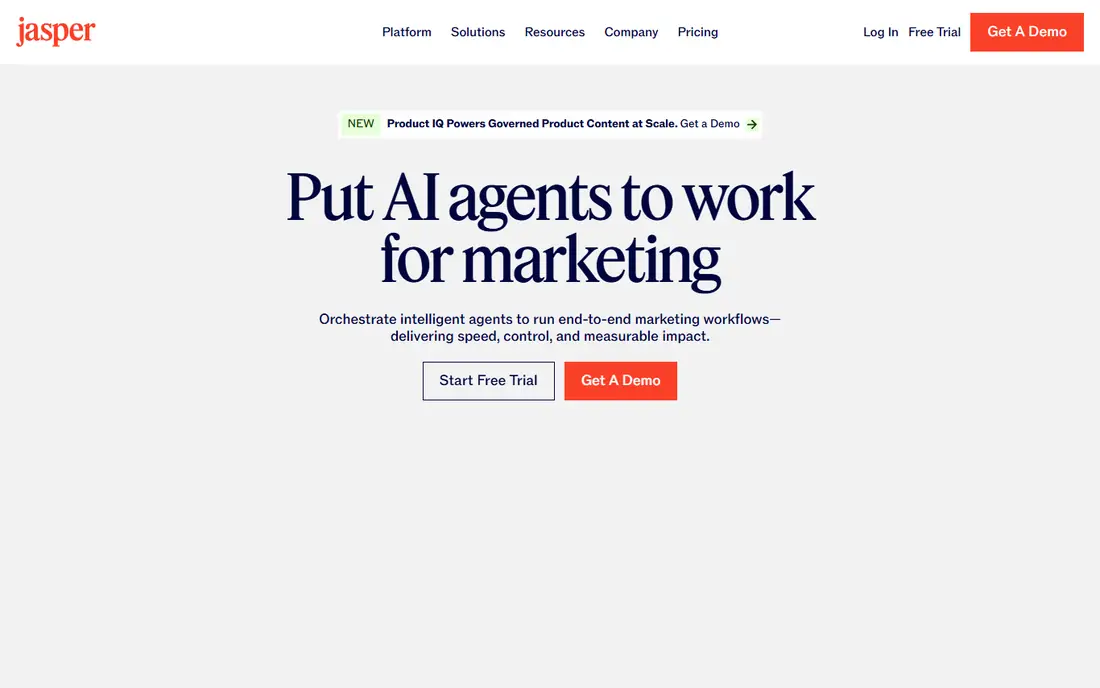
Jasper is built around campaigns rather than single prompts. You can set a brand voice, store knowledge about a product, and reuse that context across blog posts, ads, emails, and landing pages. For a team that publishes often, that shared context is the main reason to pay more than a general chatbot costs.
The catch is price and scope. A solo writer who only needs a few posts a month will likely find cheaper options do the same job. Use the trial on one real campaign, with one brand voice and one product brief, and count how much editing the output still needs before you commit.
- Strong brand voice controls
- Wide template library for marketing copy
- Collaboration features for teams
- High price for solo writers
- 7-day trial is short for a full evaluation

Copy.ai has moved toward chat plus workflows, which means it fits two different habits. If you like working in a chat window, the Chat plan is a straightforward way to draft and revise. If you produce the same kind of content again and again, workflows can chain research, drafting, and formatting steps together.
That second use is where the cost jumps. Small teams should start with the chat plan and only move up when a repeated task is clearly eating hours each week. Before paying, list the exact workflows you would run, because a tool that only drafts text does not need the most expensive tier.
- Chat plan gives access to several models
- Workflow tools suit repeated tasks
- Unlimited words in Chat on paid plans
- Higher workflow tiers are priced for teams, not individuals
- Plan names and limits have changed, so check the current page
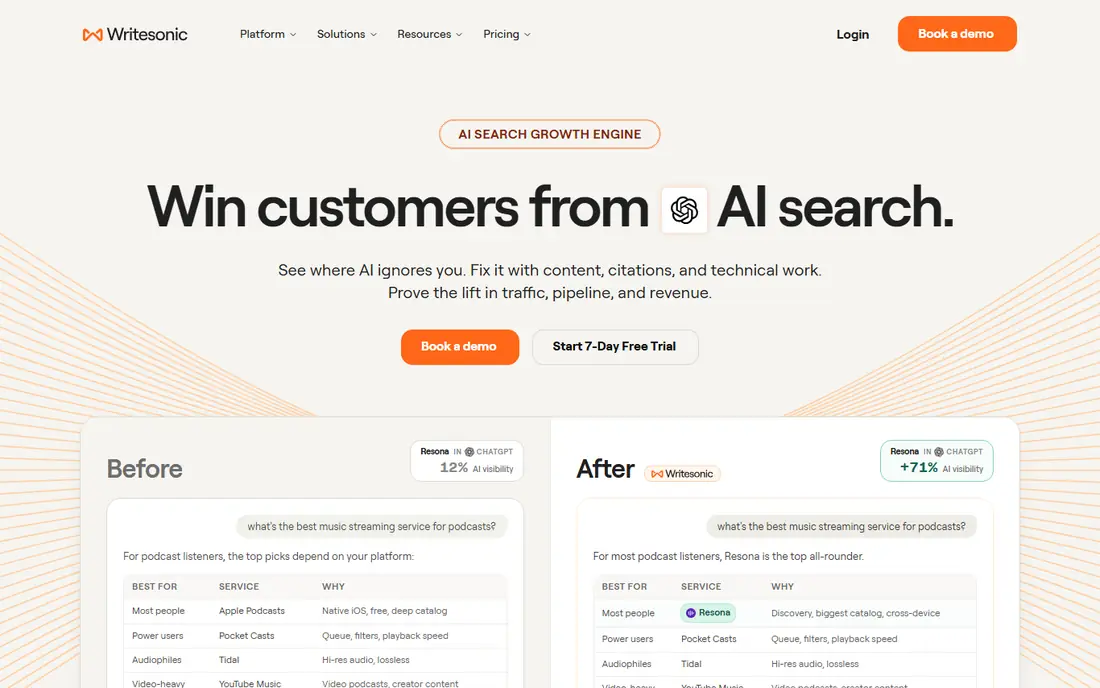
Writesonic appeals to bloggers and small sites because it combines drafting with SEO research in one place. Its article writer can pull in current information from the web, which helps when a topic depends on recent facts. The free plan is limited, but it is enough to judge tone and structure on a short piece.
Read the plan limits closely before you upgrade. Some features and article allowances sit on higher tiers, and the cheapest paid plan may not include everything you tested on the free tier. For most solo bloggers, the middle tiers are the realistic starting point.
- Free plan lets you test the core writer
- Article Writer uses live web research
- Broad template library
- Paid plan limits and credit rules can be confusing
- Higher tiers climb quickly in price
Rytr is the plainest tool on this list, and that is its strength. You pick a use case, choose a tone, add a few details, and get a short draft for an email, ad, product description, or social post. There is little setup, and the price stays low even on the paid plan.
Long articles are a different story. Output can turn repetitive over several thousand words, and Rytr does not research facts for you. Treat it as a short-copy helper, and pair it with your own notes and fact checks for anything longer than a page.
- Very low price
- Simple interface
- Free plan covers 10,000 characters a month
- Weak for long-form articles
- No live research
- No team plan
Frase starts from a different question than most writing tools. Instead of asking what you want to write, it asks what is already ranking for your topic, what questions readers ask, and what your draft is missing. That makes it a good fit for writers who update older posts or plan articles around search demand.
The limit to watch is the monthly article allowance on the Starter plan. If you publish more than a few optimized pieces a month, you may need the Professional plan. Frase is best for people who already care about search performance, not for writers who only need a quick draft.
- SERP research and content briefs in one workflow
- Optimization scoring for drafts
- Useful for teams improving existing pages
- Starter plan limits articles per month
- Price rises fast for larger teams
Sudowrite is the clearest specialist here. Its tools help with characters, plot beats, scene description, and chapter drafting, which is a very different job from writing ad copy. Writers who work on novels will find the structure more useful than a blank chat window.
It is a poor choice for business content. Marketing templates, SEO scoring, and brand voice controls are not its focus. Fiction writers should test the trial on a real scene, not a generic prompt, and watch how fast credits are used before choosing a tier.
- Built for fiction, with story structure tools
- All plans include the same core features
- Credit rollover on the Max plan
- Not built for marketing or SEO copy
- Credits can run out fast during heavy drafting
Scalenut
Best for: SEO teams that want research, writing, and optimization together
Scalenut covers the full SEO content workflow, from keyword clusters to optimized drafts. That breadth suits small content teams that would otherwise pay for separate research and writing tools. Its cruise-style drafting can produce a structured first draft quickly, though it still needs editing.
Pricing needs care. The site has shown promotional rates below its list prices, and limits can differ between monthly and annual billing. Confirm the exact article allowance and renewal price at checkout, and do not budget around a promotion that may end.
- Keyword clustering and content optimization in one platform
- Article allowances scale with plan
- 7-day trial on paid plans
- Monthly price is high for solo writers
- Promotional prices can differ from list prices, so confirm at checkout
Anyword stands out by scoring copy before you publish it. For a team running many ad variants, that score can help narrow the list before spending on a live test. It also offers templates shaped for specific channels, which matters when character limits and formats differ.
The trade-off is focus. Anyword is built for marketing performance, not for essays, guides, or fiction. If you rarely run paid campaigns, a general writing tool will give you more for less money. If ads are your main output, the scoring feature is the reason to consider it.
- Predictive performance scores for copy variants
- Channel-specific templates for ads, email, and landing pages
- Brand voice controls
- Scores are most useful with enough past performance data
- Less suited to long-form editorial writing
How we picked these
We compared official pricing pages, feature pages, and app store listings for tools that are actively sold in October 2026. We favored tools with a clear use case, a public price, and a free plan or trial, and we mixed well-known platforms with smaller specialists like Rytr and Sudowrite. We did not claim hands-on testing, and we treated vendor claims about quality with care, since output quality depends heavily on the brief and the topic.
What to check before you pay
Start with the job, not the brand. A tool that writes strong ads may still be weak at long guides, and a tool that scores well for SEO may feel slow for quick social posts. Write down your three most common content types, then test each shortlisted tool on the same brief and compare the editing time, not just the first draft.
Pay attention to limits that hide behind a simple monthly price. Article caps, credit systems, word limits, and seat counts can change the real cost fast. Check the renewal price as well, since introductory and promotional rates often differ from the price you pay in year two.
Set a simple editing rule before you publish anything from an AI tool. Check names, prices, dates, and claims against a primary source, read the draft aloud for tone, and remove anything the tool invented. AI writing saves time on first drafts, but it does not remove the need for a careful human review.
FAQ
Which ai tool is best for content writing for beginners?
Rytr and Writesonic are good starting points, because both have free plans and simple interfaces. Rytr suits short copy, while Writesonic suits short SEO articles. Try both free tiers on the same brief before paying, and pick the one whose drafts need less editing.
What are the best ai tools for writing blog posts?
Jasper, Frase, Writesonic, and Scalenut all handle blog posts, but they differ in focus. Frase and Scalenut add research and optimization, Jasper adds brand voice and team workflows, and Writesonic is the budget option. Choose based on how much research and SEO work each post needs.
What is the best ai content writing tool for ads?
Anyword is the strongest pick here, because it scores copy variants and offers channel-specific templates. Copy.ai is a good alternative for teams that need many ad formats plus workflows. In both cases, test the winning copy live, since a prediction score is not a guarantee of results.
What are the best writing ai tools for a small budget?
Rytr at $9 per month and Writesonic from $16 per month are the lowest-priced paid options on this list. Both have free plans, so you can test them without paying. If you only need occasional drafts, a free plan plus a general chatbot may be enough.
What is the best ai tool for content writing for fiction?
Sudowrite is the best fit for fiction, because it is built around story structure, characters, and long-form drafting. General writing tools can help with a scene, but they lack the same novel-focused workflow. Use the trial on a real chapter to judge credit use and output quality.
Is the best ai app to write a book the same as the best blog tool?
No, and that is a common mistake. A book needs continuity across chapters, character tracking, and long-form structure, which is why Sudowrite leads for fiction. Blog tools focus on search research, briefs, and short marketing copy, which matters less for a novel.