Top Recruiting Software for Startups in 2026: 9 Tools Compared
Top recruiting software for startups in 2026: 9 applicant tracking tools compared on price, hiring speed, career pages, and fit for small growing teams.

- Editor's choice
 Workable
Most startups
Starts at$299 per monthVisit workable.comFull review - Great alternative
 Ashby
Data-driven scaling teams
Starts at$400 per monthVisit ashbyhq.comFull review - Also consider
 Greenhouse
Structured hiring
Starts atSee websiteVisit greenhouse.comFull review
TL;DR:
- Workable is our pick for most startups because it publishes pricing, posts jobs widely, and covers sourcing, screening, and hiring in one system.
- Ashby suits data-minded teams that want strong reporting from the start, though its $400 per month starting price is a real step up.
- Zoho Recruit and JazzHR give small teams a lower-cost way to move off spreadsheets without paying for enterprise features they will not use.
- Greenhouse and Lever are strong for structured hiring, but both use custom pricing, so get a quote tied to headcount and hiring volume.
- The best tool is the one hiring managers will actually use, so test the pipeline view, the interview feedback step, and the career page before you pay.
Quick comparison
| Tool | Best for | Starts at | Free plan? | |
|---|---|---|---|---|
| Workable | Most startups | $299 per month | Free trial | Visit |
| Ashby | Data-driven scaling teams | $400 per month | No | Visit |
| Greenhouse | Structured hiring | See website | No | Visit |
 Lever | Hiring plus candidate relationships | See website | No | Visit |
 JazzHR | Budget-conscious small teams | See website | Free trial | Visit |
 Zoho Recruit | Low-cost recruiting | Free | Yes | Visit |
 Breezy HR | Visual hiring pipelines | $157 per month | Free trial | Visit |
 Manatal | Low-cost AI-assisted recruiting | $15 per user per month | Free trial | Visit |
 SmartRecruiters | High-volume hiring | $14,995 per year | No | Visit |
The best recruiting software for startups
A startup does not need the largest hiring platform. It needs a clear pipeline, a career page that looks credible, and a way for founders and hiring managers to move candidates without losing them in email. These tools cover that range, from free and low-cost options to systems built for fast scaling.
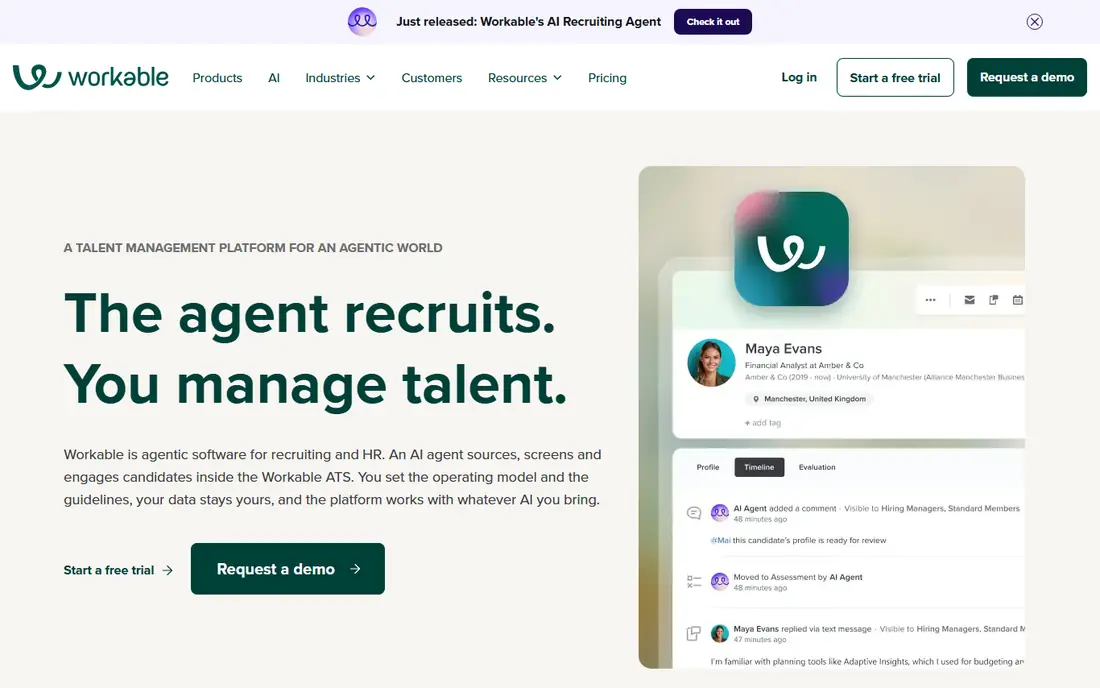
Workable is the easiest default for a startup that is hiring across several roles at once. Jobs can be posted to major boards, candidates flow into one pipeline, and hiring managers can leave feedback without a long training session. The pricing model is also clearer than many rivals, which helps a founder budget for a full year.
The catch is add-on pricing. Texting, video interviews, and assessments can add meaningful monthly cost, and the higher tiers include more of those features by default. Before you sign up, list the add-ons you truly need for your first ten hires and price the total, not just the base plan.
- Published pricing
- Wide job board distribution
- Hiring pipeline plus screening tools
- Add-ons for texting, video interviews, and assessments cost extra
- HR features are a separate product

Ashby appeals to founders who want hiring data from day one. Time to hire, source quality, interviewer load, and pipeline conversion are visible without exporting to a spreadsheet. That matters once a startup moves from occasional hiring to a steady hiring plan tied to growth targets.
For a pre-seed team hiring its first engineer, Ashby may be more than needed. For a team planning twenty hires in a year, the reporting and interview structure can prevent the usual problems of rushed decisions and unclear feedback. Trial the analytics on your own pipeline, not just a demo dataset.
- Strong native analytics
- Structured interview planning
- Sourcing and scheduling in one system
- Starting price is high for very early startups
- Depth can feel large for a team hiring one role
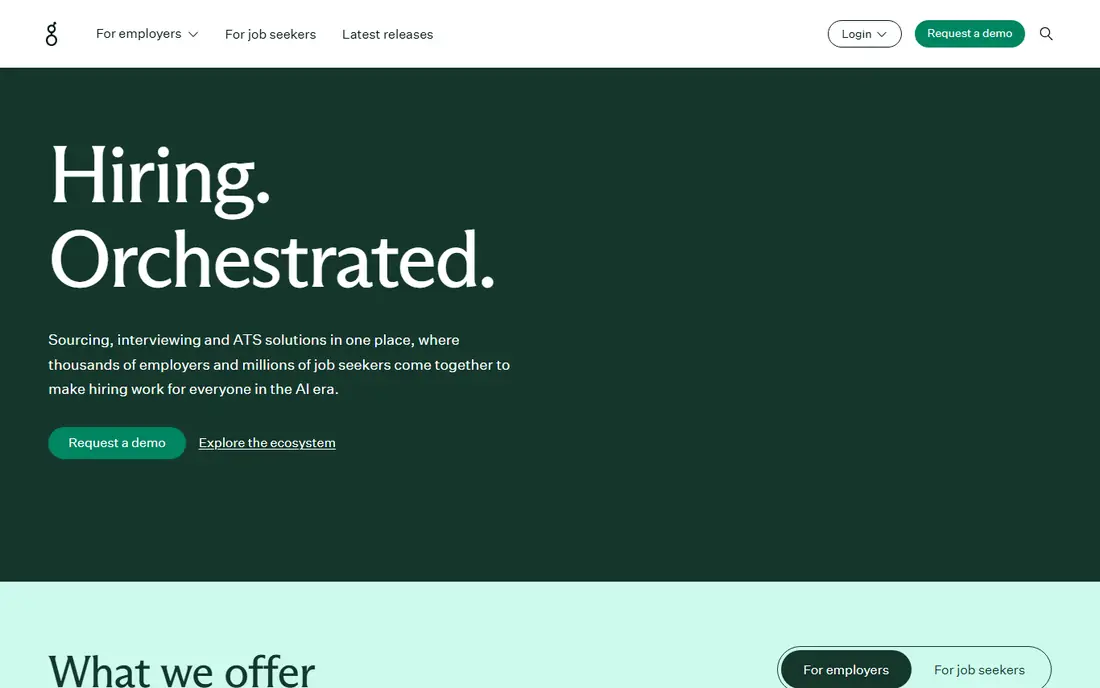
Greenhouse is built for teams that want every candidate judged on the same criteria. Interview kits, scorecards, and structured stages help reduce guesswork and make hiring decisions easier to explain. It also connects with many HR, scheduling, and assessment tools, which matters as a startup adds systems.
The trade-off is effort and cost. Greenhouse does not publish a simple starting price, and the value depends on using its structure properly. Startups that just need a pipeline and a job post may find it heavy. Teams that already feel hiring inconsistency should take the time to design scorecards before launch.
- Interview kits and scorecards
- Strong hiring workflow controls
- Wide integration library
- Custom pricing only
- Setup and process design take time
Lever suits startups that source candidates rather than only waiting for applications. The combined tracking and CRM approach keeps passive candidates, referrals, and past applicants in one place, so a good candidate from an earlier search is not lost. Nurture sequences and talent pools help small teams compete for people who are not actively job hunting.
Pricing is custom, and that makes budgeting harder for a young company. Ask for a quote based on recruiter seats and expected hiring volume, and compare it with Workable and Ashby over a full year. Lever earns its price when sourcing is a core hiring channel, not an occasional task.
- Combined applicant tracking and recruiting CRM
- Strong candidate nurturing
- Good for proactive sourcing
- Custom pricing only
- Can be costly for small teams with low hiring volume
JazzHR is a practical step up from spreadsheets and email. It posts jobs, tracks candidates in a clear pipeline, and lets hiring managers collaborate without charging per user on many plans. That flat approach helps startups where several founders and managers need access but only one person runs recruiting.
Advanced reporting and automation are thinner than in higher-priced tools. If you need deep analytics or complex interview planning, you may outgrow JazzHR sooner. For a small team hiring a handful of roles per quarter, its simplicity and predictable cost are real strengths.
- Flat-fee pricing approach
- Unlimited users on many plans
- Simple pipeline and job posting
- Fewer advanced analytics than Ashby or Greenhouse
- Some features cost extra as add-ons
Zoho Recruit is the lowest-cost credible option on this list. The free tier covers basic job posting and candidate tracking, and paid plans stay affordable per user. Startups already using Zoho for CRM, mail, or books will find the shared login and data flow convenient.
The product is not as polished as Workable or Ashby, and some automation and reporting features require higher tiers. Still, for a startup that needs a proper pipeline today and cannot justify several hundred dollars per month, Zoho Recruit is a sensible starting point that can be replaced later without losing candidate data if exports are kept current.
- Free tier for basic recruiting
- Low per-user paid plans
- Fits teams already using Zoho apps
- Interface feels dated in places
- Advanced features sit on higher tiers
Breezy HR wins on clarity. Hiring managers can see where every candidate sits, drag them to the next stage, and send messages without hunting through menus. That visual simplicity helps founders who hire part-time and do not want to learn a complex system for a few roles a month.
It is less suited to teams that need detailed hiring analytics or enterprise controls. For most early startups, though, speed and adoption matter more than reporting depth. If your hiring managers open the tool willingly and move candidates promptly, Breezy HR is doing its main job well.
- Clear drag-and-drop pipelines
- Good candidate communication tools
- Flat-rate style pricing for teams
- Reporting depth is modest
- Pricing rises with team size and features
Manatal is worth a look for startups that want AI help without an enterprise bill. It offers candidate matching, profile enrichment, and a combined tracking and CRM view at a low per-user price. Small agencies and startup teams hiring across varied roles can benefit from that breadth.
The honest catch is maturity and ecosystem. Manatal does not have the same integration depth or US market presence as Workable or Greenhouse. Trial it with a live role, check how it handles your job boards and email, and confirm data export before you move a full candidate database into it.
- Low per-seat price
- AI candidate matching and enrichment
- Combined tracking and CRM features
- Smaller brand presence in the US market
- Support and integration depth vary by plan
SmartRecruiters belongs on a startup shortlist only when hiring volume is already high or about to spike. It handles large applicant flows, multiple locations, and branded career sites in a way that smaller tools struggle to match. For a company opening several locations or hiring dozens of similar roles, that scale matters.
For a team hiring five people this year, SmartRecruiters is too much tool and too much cost. Keep it in mind as a future step. If your hiring plan jumps to high volume within a year, a trial and a volume-based quote will tell you quickly if the platform fits.
- Built for high-volume and global hiring
- Strong employer branding tools
- Broad integration options
- Price and scope exceed most early startups
- Implementation takes planning
How we picked these
We compared official pricing pages, product feature pages, and recent recruiting software comparisons for tools that serve small and growing teams. We favored tools with a real applicant pipeline, job posting, candidate communication, and hiring manager collaboration, rather than job boards alone. We also weighed published pricing, free plans or trials, and whether the tool fits a startup budget and team size. Prices are starting prices where published, and we wrote See website where vendors use custom quotes.
How to choose recruiting software for a startup
Start with hiring volume, not feature lists. A team hiring two people a quarter needs a clear pipeline and a good career page. A team hiring twenty people in six months needs scheduling, structured interviews, and reporting. Buying the larger system early rarely speeds hiring, because the team will not use half of it.
Test the hiring manager experience
Ask the people who will interview candidates to run a trial role. Can they review a resume in under a minute, leave feedback, and move a candidate without training? If feedback stalls, your pipeline will stall too. A tool that only the recruiter likes will fail in a startup where founders and managers share hiring work.
Check job distribution and career pages
Confirm which job boards are included, whether posting is one click or manual, and how the career page looks on a phone. Candidates judge a startup by its application experience. A slow form, a broken mobile page, or a generic job post can cost you applicants before anyone reads a resume.
Plan for data and compliance
Keep candidate data exportable, set clear rules for how long you keep applications, and use consistent interview criteria. Early good habits make later growth easier and reduce bias in decisions. Even a low-cost tool should let you export candidates, record feedback, and control who sees personal data.
FAQ
What is the best recruiting software for startups?
Workable is our pick for most startups because it balances price transparency, job distribution, and a pipeline hiring managers can use. Ashby is better for teams that want strong analytics, while Zoho Recruit and JazzHR suit tighter budgets. The right choice depends on hiring volume and how much structure your team will actually follow.
What is the best recruiting platform for startups on a budget?
Zoho Recruit has a free tier and low paid plans, making it the cheapest credible start. JazzHR and Manatal also keep costs down, with JazzHR using a flat-fee approach and Manatal charging a low per-user price. Compare total cost over a year, including add-ons, rather than the headline monthly price.
Do startups need an applicant tracking system?
Once a startup handles more than a few open roles or dozens of applicants, a tracking system helps. Spreadsheets lose candidates, duplicate messages, and hide hiring data. Even a free or low-cost tool gives you a single pipeline, a career page, and a record of decisions that email cannot provide.
What is the difference between Greenhouse and Lever for startups?
Greenhouse focuses on structured hiring with interview kits and scorecards, which suits teams that want consistent evaluation. Lever combines tracking with a recruiting CRM, which suits teams that source and nurture passive candidates. Both use custom pricing, so request quotes for the same headcount and hiring volume before comparing.
Can a startup switch recruiting tools later?
Yes, if candidate data is exported regularly and kept in a clean format. Before you sign up, test the export, confirm what transfers, and keep resumes and feedback backed up. Switching is easier when interview feedback lives in the tool in structured fields rather than only in free-text emails.