Shortlist: 6 Best Creator Marketing Software Options for 2026
Top creator marketing software in 2026: 6 contenders with entry costs and free tiers. Price notes and drawbacks come with each one. Full profiles inside.
- Editor's choice
 CreatorIQ
Enterprise programs with numerous markets and stakeholders
Starts atSee websiteVisit creatoriq.comFull review - Great alternative
 Collabstr
Booking individual creators for one-off campaigns
Starts atSee websiteVisit collabstr.comFull review - Also consider
 GRIN
Teams comparing choices in this category
Starts at$0 per month (premium plans from $200 a month, plus a management fee on wallet deposits)Visit grin.coFull review
Direct answer
Start with CreatorIQ if you need enterprise programs with plenty of markets and stakeholders. If your case is different, Collabstr suits booking individual creators for one-off campaigns and GRIN suits teams comparing choices in this category. Details, prices and limits for the rest of the 6 tools are below.
TL;DR:
- Top of the list is CreatorIQ, which targets enterprise programs with plenty of markets and stakeholders.
- Aspire fits mid-sized brands with a dedicated creator team.
- Before buying CreatorIQ, weigh this: targeted at big budgets.
- GRIN stands alone as the one tool in this list with a free plan.
Quick comparison
| Tool | Best for | Starts at | Free plan? | |
|---|---|---|---|---|
| CreatorIQ | Enterprise programs with numerous markets and stakeholders | See website | Not stated | Visit |
| Collabstr | Booking individual creators for one-off campaigns | See website | Not stated | Visit |
| GRIN | Teams comparing choices in this category | $0 per month (premium plans from $200 a month, plus a management fee on wallet deposits) | Yes | Visit |
 Modash | Finding and vetting creators across Instagram, TikTok and YouTube | See website | Free trial (14 days) | Visit |
 Insense | UGC and creator content for premium social ads | $400 a month (Brand plan, billed annually; $500 a month billed quarterly) | No | Visit |
 Aspire | Mid-sized brands with a dedicated creator team | See website | Not stated | Visit |
Creator Marketing Software compared in detail
If you are comparing creator marketing software, this page covers 6 tools in one place: what each is best for, what it costs to start, whether it has a free plan, and the main limit to know about.
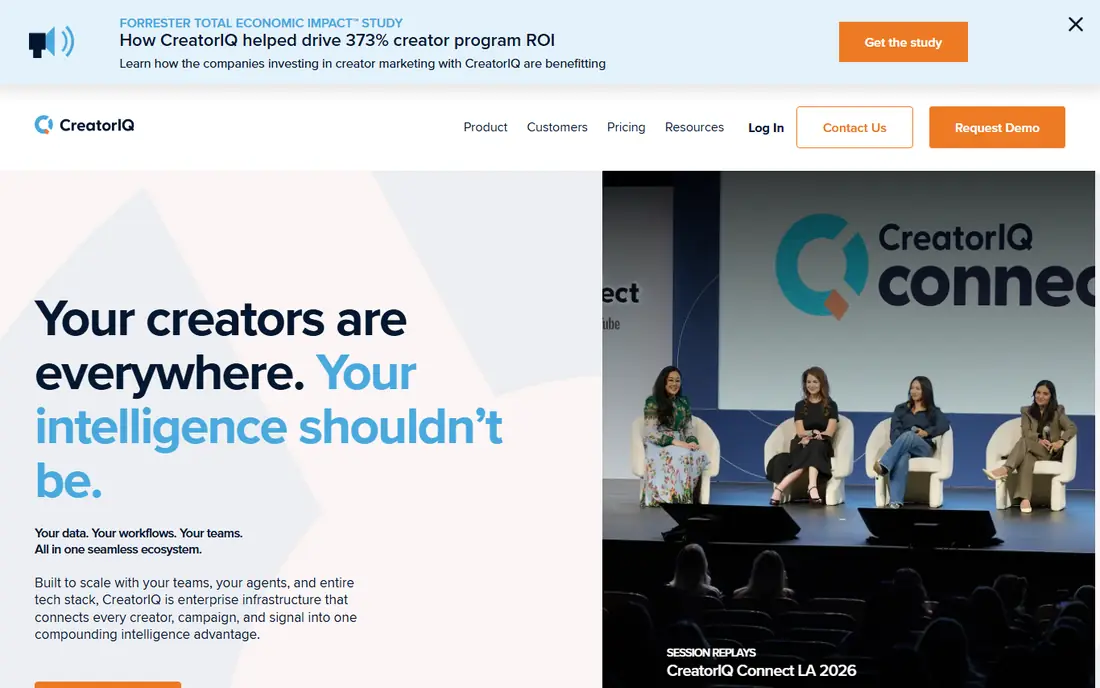
For enterprise programs with numerous markets and stakeholders, CreatorIQ is a natural candidate. CreatorIQ is the enterprise end of the market. It is meant for global brands and agencies that require approvals, permissions, compliance and reporting across numerous teams and regions.
Where CreatorIQ stands out: Reporting and governance depth.
For everyday use, most small and mid-sized companies will not need that structure. Beyond that, since the product targets large organizations, implementation takes longer than with self-serve tools. You should plan for onboarding, training and a clear internal owner. Worth adding: a company with a six-figure annual creator budget and multiple people touching campaigns is the realistic buyer. Bundle it on a shortlist only if your program is large enough to justify it. CreatorIQ shows no starting price here, so confirm the cost on the vendor site. Free access: Not stated. Watch-outs: Not practical for small teams.
- Multi-team programs
- Aimed at large
- Pitched at big budgets
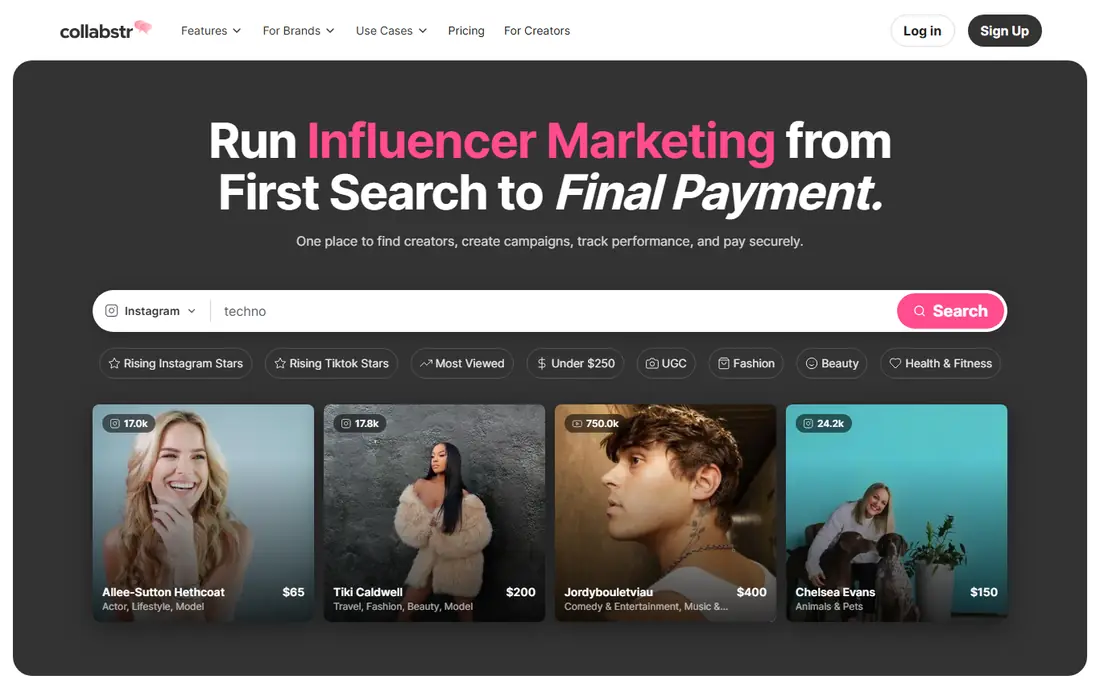
Collabstr serves booking individual creators for one-off campaigns. Collabstr works like a marketplace. In practice, browse creators, see their listed rates, book and pay inside the product.
That makes it a practical first step when you want to test two or three creators before committing to software. In practice, the limit is depth. Once you work with dozens of creators per month, you will outgrow it. Collabstr shows no starting price here, so confirm the cost on the vendor site. On free options: Not stated.
Drawbacks to consider: Marketplace fees and optional subscriptions add up.
- Creators list their own rates
- Marketplace model fits small tests
- Light on program management
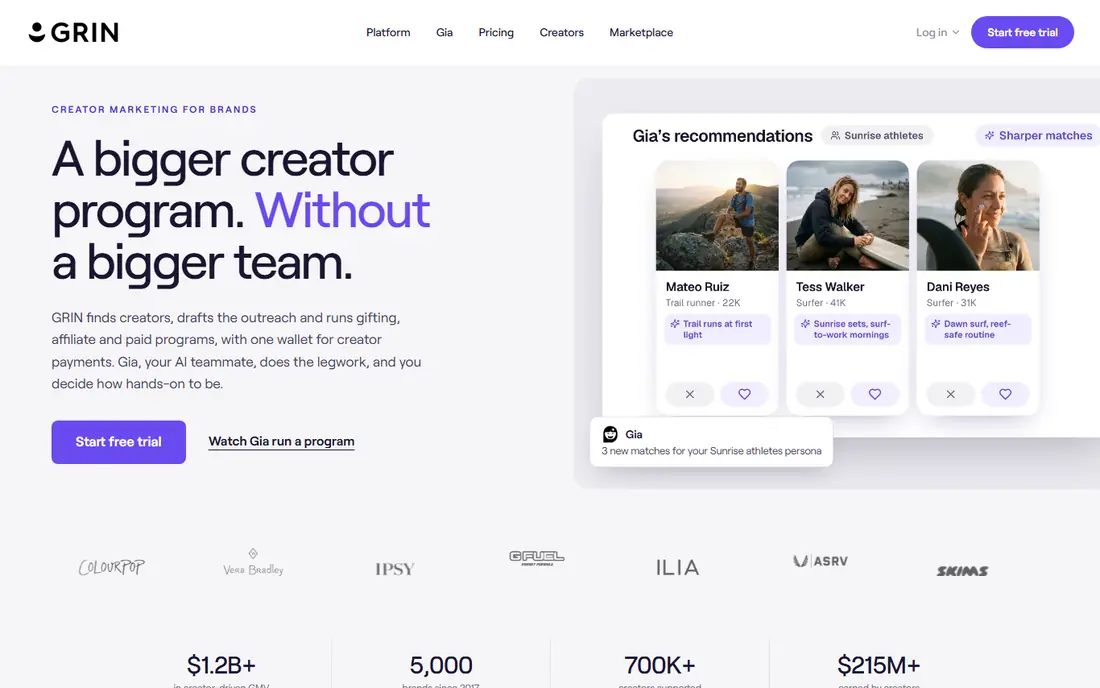
Choose GRIN for teams comparing choices in this category. Its pricing page lists four self-serve levels: Free at $0, Starter at $200 a month, Growth at $500 and Scale at $1,500. As for the details, the main limit is the wallet.
What to check first: Gift and search limits cap lower plans.
Starter removes the campaign limit, lets 100 gifts per month and lets you export creator lists and contact emails. Enterprise is quoted by the sales team and includes an annual agreement. On top of that, a brand funding $10,000 per month on Starter pays about $1,000 in fees on top of the $200 subscription, so do that math before you pick a level. Growth adds several brands, which matters for agencies and firms with more than one label. Entry price for GRIN: $0 per month. GRIN offers a free plan.
- Public self-serve pricing
- AI assistant for sourcing and outreach
- Management fee on every wallet deposit
Modash is aimed squarely at finding and vetting creators across Instagram, TikTok and YouTube. Third-party pricing breakdowns describe levels with plan names like Essentials and Performance, with caps on team members and tracked creators. From a buyer's view, the trade-off is scope.
Where it falls short: Lighter on contracts and payments than full suites.
In practice, pricing changes frequently and listings disagree, so confirm the current numbers on the vendor's site before you budget. You search, filter, check audience details and shortlist. It is a sharper tool than a full suite if discovery is your bottleneck. Modash does not show a starting price in this comparison, so check the vendor site for current pricing. Trial and free access: Free trial (14 days).
- Solid discovery focus
- 14-day trial
- Pricing scales with team size and creator limits
Pick Insense if this describes you: UGC and creator content for premium social ads. Insense is a marketplace first and a management tool second. Creator payments are not covered and have to be budgeted separately.
From a buyer's view, the pricing page presents a trial plan from $650 a month, a Brand plan from $400 a month on an annual commitment (or $500 a month billed quarterly) and an Agency plan from $640 a month billed yearly. Beyond that, additional user seats cost $30 a month and additional brands $100 a month. Worth adding: brands post a brief, creators apply or get invited, and the content is meant to be reused in premium campaigns. Insense cost at the entry level: $400 per month. No free plan comes with Insense.
The main drawbacks: Creator payments are budgeted separately.
- Managed service choice
- Built around ad-ready creator content
- No month-to-month plans on the self-serve levels
Aspire is designed for mid-sized brands with a dedicated creator team. Aspire (formerly AspireIQ) spans the full cycle: finding creators, outreach, product seeding, content approval, payments and reporting. It is designed for teams that run dozens or hundreds of creators on a continuing basis, with a person whose primary job is creator relationships.
For everyday use, pricing is not published. You will go through a demo and a quote. As for the details, the honest catch is size. It makes more sense when creators drive a meaningful share of revenue. Aspire does not show a starting price in this comparison, so check the vendor site for current pricing. On free options: Not stated.
Where it is weaker: Demo required, no public pricing.
- Full workflow from discovery to payments
- Capable for continuing relationships
- Heavier than small teams need
How we chose
Pricing pages, product documentation and feature lists were the main sources, and every entry carries at least one honest drawback. Prices and plan limits come from vendor pages and can change, so confirm them on the vendor site before you buy. The order reflects how well each tool fits the most common buying scenario for creator marketing software, then price clarity, then free plan access. It is a starting point, not a verdict.
Things to verify first
- Ask CreatorIQ, Collabstr, Modash and Aspire for a written quote, since no starting price is shown.
- Look at the free plan from GRIN closely: its caps decide whether it is usable for real work.
- Use real work to test the free trial from Modash, rather than a demo project.
- Read the limits listed for CreatorIQ first: geared toward big budgets.
- See whether Modash offers onboarding or training, and whether it is included in the price.
- Total up the real monthly cost of Insense, including add-ons, extra users and usage-based fees.
FAQ
Is CreatorIQ the right pick for everyone comparing creator marketing software?
No single tool suits every team. CreatorIQ comes first because it fits enterprise programs with many markets and stakeholders, while Collabstr suits booking individual creators for one-off campaigns and GRIN suits teams comparing options in this category. Match the tool to your own size, budget and workflow before deciding.
How are the tools for creator marketing software ordered?
CreatorIQ sits first and Aspire last because the order follows typical fit for creator marketing software, then price clarity and free access. It is a judgement call, so read each profile for fit and limits.
Do these tools publish their prices?
Not all of them. CreatorIQ, Collabstr, Modash and Aspire publish no starting price, so expect a quote request for those. The rest, GRIN included, show a starting price, though seats and billing terms still change the final cost.
How much does creator marketing software cost?
It ranges widely. GRIN lists plans from $0 to $1,500 a month, and Insense opens at $400 a month on an annual plan. Enterprise tools like CreatorIQ and Aspire use custom quotes. Creator fees are premium on top of all of these.
Can I try these options before paying?
Often, yes. GRIN has a free plan and Modash offers a free trial. Use your own data and a real task during the test, and check what the free tier or trial limits before you rely on it.