Top AI Financial Software in 2026: 9 Tools Compared
Compare top AI financial software for 2026, from Ramp and Brex to Vic.ai and Datarails, on automation, reporting, integrations, and price for teams today.
- Editor's choice
 Ramp
Cards and expense control
Starts atSee websiteVisit ramp.comFull review - Great alternative
 Brex
Cards and spend management for growing companies
Starts atSee websiteVisit brex.comFull review - Also consider
 Vic.ai
AI invoice processing for AP teams
Starts atSee websiteVisit vic.aiFull review
TL;DR:
- Ramp and Brex combine cards, expenses, and approvals, which suits companies that want spending control in one place.
- Vic.ai, Stampli, and Tipalti focus on invoice processing and payments, which helps accounts payable teams cut manual work.
- Datarails, FloQast, and Puzzle focus on reporting, close, and accounting workflows, rather than cards or payments.
- AI features vary widely, from receipt matching to forecast models, so ask vendors to demo your actual invoices and reports.
- This is not financial advice. Treat AI outputs as drafts to review, especially for tax, audit, and compliance decisions.
Quick comparison
| Tool | Best for | Starts at | Free plan? | |
|---|---|---|---|---|
| Ramp | Cards and expense control | See website | No | Visit |
| Brex | Cards and spend management for growing companies | See website | No | Visit |
| Vic.ai | AI invoice processing for AP teams | See website | No | Visit |
 Stampli | AP automation with human-friendly approvals | See website | No | Visit |
 Tipalti | Global payments and AP at scale | See website | No | Visit |
 Datarails | FP&A and financial reporting | See website | No | Visit |
 FloQast | Close management and accounting workflows | See website | No | Visit |
 Puzzle | AI accounting for startups | See website | No | Visit |
 Zeni | Bookkeeping plus finance operations | See website | No | Visit |
The best AI financial software
We compared AI finance tools on automation, accuracy controls, integrations, reporting, and fit for different company sizes, with attention to what the AI actually does rather than what marketing claims.
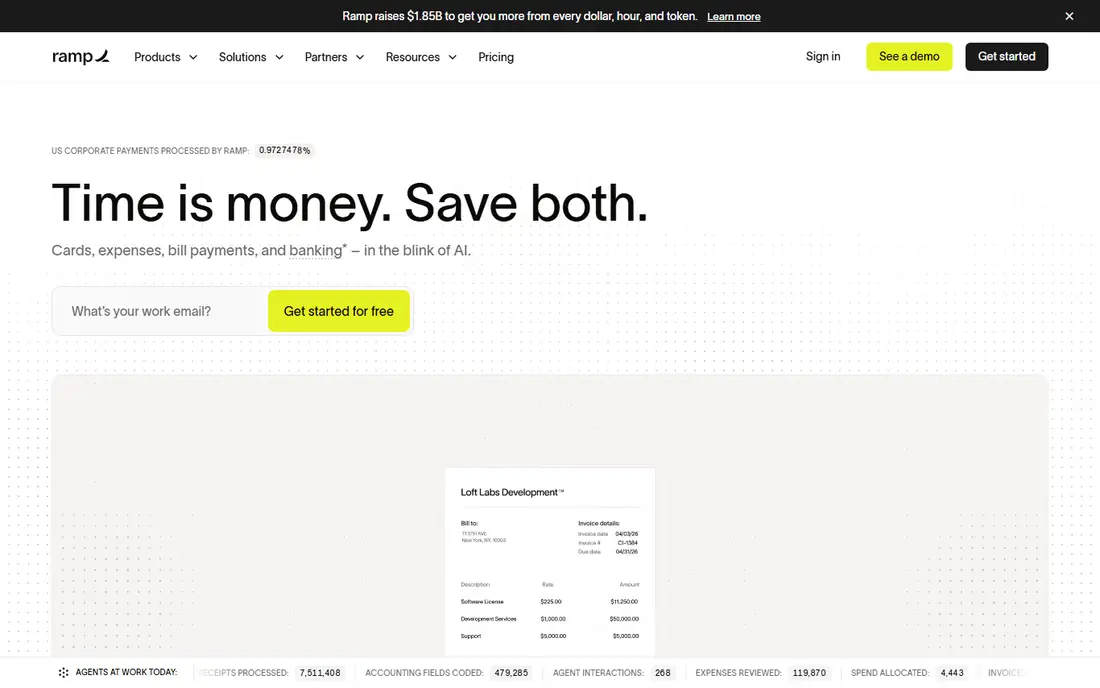
Ramp combines corporate cards, expense management, bill pay, and approvals in one platform, with AI tools that match receipts, suggest codes, and flag unusual spend. That combination helps finance teams see spending as it happens, rather than at month end. Controls such as limits and approval rules reduce manual chasing of receipts. Companies without significant card spend will get less value, and some advanced features sit on higher plans. For US companies that want tighter spend control with less manual expense work, Ramp is a strong top pick among the best AI tools for finance.
- Corporate cards with built-in controls
- Automated receipt matching and expense coding
- Real-time spend visibility
- Best for US companies with card spend
- Pricing varies by plan and features
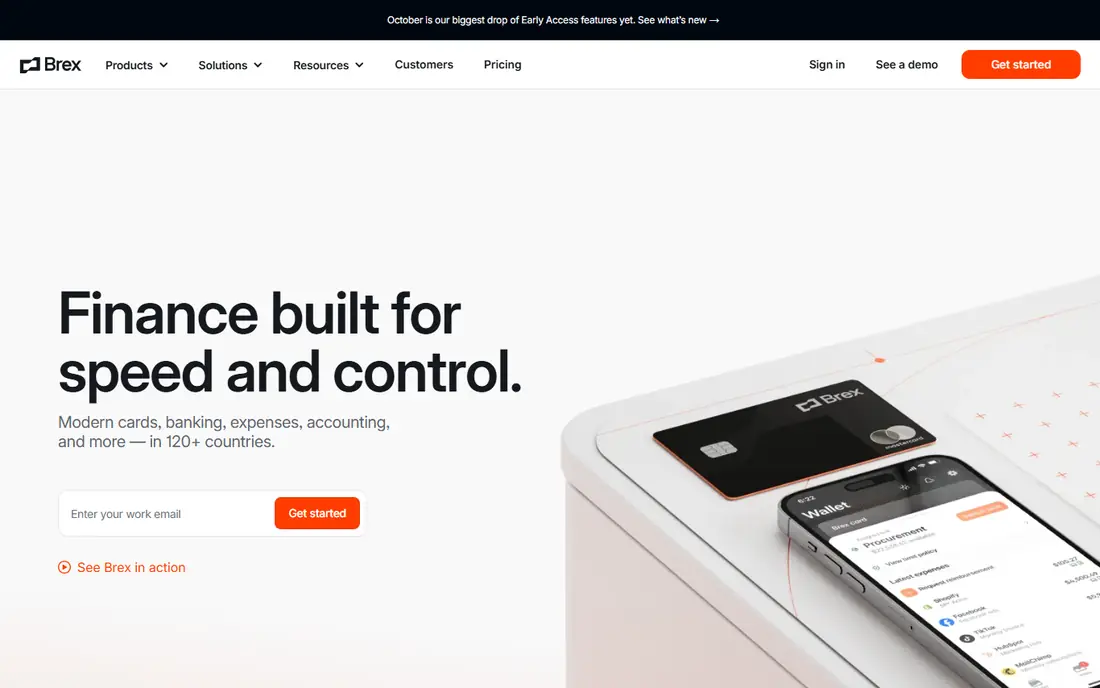
Brex offers corporate cards, expense management, travel booking, and bill pay, with AI-assisted receipt capture and categorisation. Finance teams can set budgets, require approvals, and sync transactions to accounting software, which cuts month-end reconciliation work. The platform suits startups and growing companies that need scale without adding finance headcount at the same pace. Smaller companies should check eligibility, card limits, and plan features before committing. For growing firms that want cards, travel, and expenses in one system, Brex is a credible alternative to Ramp.
- Corporate cards and expense automation
- Travel and bill pay tools
- Strong integrations with accounting systems
- Eligibility and limits depend on company profile
- Some features suit larger startups best

Vic.ai focuses on accounts payable, using AI to read invoices, extract data, suggest general ledger codes, and route approvals. Over time, it learns from corrections, which should reduce manual coding for repeat vendors. That focus makes it a good fit for mid-size companies with high invoice volume and complex coding rules. It is not a full accounting system, so it works beside your ERP or accounting software rather than replacing it. For AP teams drowning in invoices, Vic.ai is one of the best financial AI tools for cutting manual data entry while keeping human approval in place.
- AI invoice capture and coding
- Approval workflows
- Learns from past invoices and corrections
- Focused on AP, not full accounting
- Pricing is quote-based
Stampli brings invoices, approvals, and payments into one workflow, with AI help for coding, matching, and duplicate detection. Approvers can review invoices from email or a simple dashboard, which helps when managers are not finance experts. The platform integrates with common accounting and ERP systems, so approved invoices flow through without retyping. Very complex ERP setups should be checked during a demo, since integration depth varies. For companies that want AP automation without a steep learning curve, Stampli is a practical and well-liked option.
- Central inbox for invoices
- AI-assisted coding and matching
- Simple approval flow for non-finance staff
- Pricing is quote-based
- Advanced ERP features vary by integration
Tipalti suits companies that pay many suppliers, freelancers, or partners across countries. It handles payee onboarding, tax form collection, payment methods, and currency conversion, alongside invoice approvals and AP automation. That breadth reduces the manual work of global payments, where tax and banking details often cause delays. Setup needs care, especially for tax and compliance rules in each country, so plan onboarding time. For companies with global payables, Tipalti is one of the top AI financial software options for payments, even though its AI features sit inside a broader AP platform.
- Global payee onboarding and tax forms
- Mass payments in many currencies
- AP automation with approvals
- Pricing is quote-based
- Setup for global tax and compliance takes planning
Datarails helps finance teams build budgets, forecasts, and reports without losing the flexibility of Excel. Data from accounting and other systems flows into a central hub, so reports update without manual copying between spreadsheets. AI tools can surface trends, explain variances, and help draft forecasts, though finance staff should still review every output. Small companies with simple reporting may not need this depth. For FP&A teams that live in spreadsheets but need control, version history, and faster consolidation, Datarails is a strong choice.
- Excel-based planning with a central data hub
- Automated consolidation and reporting
- AI-assisted insights and forecasts
- Best for FP&A teams, not day-to-day bookkeeping
- Pricing is quote-based
FloQast organises the month-end close into checklists, reconciliations, and approvals, so accounting teams can see what is done, what is late, and who owns each task. AI features help match transactions, flag exceptions, and speed review, which reduces close time for many teams. Integrations with ERP and accounting systems keep balances tied to source data. Companies that only need invoice processing should look at Vic.ai or Stampli instead, since FloQast targets the close itself. For accounting teams that dread month end, FloQast is a focused and useful tool.
- Close checklists and task tracking
- Reconciliations tied to the close
- AI tools to speed review and matching
- Focused on close and accounting ops, not payments or cards
- Pricing is quote-based
Puzzle builds accounting software for startups, with AI that categorises transactions, prepares close tasks, and surfaces metrics founders actually check. The interface is simpler than a traditional ERP, which helps small teams without a full finance department. Integrations with banks, payroll, and billing tools reduce manual entry. Larger enterprises with complex ERP needs will likely need a bigger system. For early-stage and growing startups that want modern, AI-assisted accounting, Puzzle is an interesting and fast-moving option.
- AI-assisted categorisation and close
- Startup-friendly dashboards and metrics
- Integrations with banks and payroll tools
- Newer and smaller than large ERP vendors
- Best for startups rather than large enterprises
Zeni pairs AI bookkeeping software with a human finance team, which suits startups that need accurate books without hiring a full finance department. The platform covers bookkeeping, bill pay, expense tracking, and dashboards for cash, burn, and runway. Human review helps catch AI errors that a pure software tool might miss. The combined service model means pricing and scope depend on your needs, so ask what is included in software versus human support. For startups that want books done well with AI speed and human checks, Zeni is a practical choice.
- Combines AI bookkeeping with human finance support
- Dashboards for cash and spend
- Bill pay and payroll coordination
- Service-plus-software model varies by plan
- Pricing is quote-based
How we picked these
We compared official feature pages, pricing pages, integration lists, and public reviews for AI finance tools. We favoured tools that explain what their AI does, offer human approval controls, and integrate with common accounting and ERP systems. We treated AI outputs as drafts that need review, and we used See website for pricing, since most of these tools price by company size and plan.
How to choose AI financial software
Start with the workflow that costs most time: card expenses, invoice processing, global payments, reporting, or the month-end close. A tool that excels at one workflow may be weak at another, so shortlist by workflow first, then by AI features. Ask each vendor to demo with your own invoices, chart of accounts, and reports, not a polished sample set.
Check accuracy and controls
Ask how the AI handles new vendors, unusual invoices, and corrections, and whether a human must approve before posting or payment. Look for audit trails, role permissions, and duplicate detection. A tool that posts without approval may save time but create audit problems later.
Check integrations and data security
Confirm a live integration with your accounting or ERP system, your bank, and your payroll tool if relevant. Ask about data encryption, access controls, and how your financial data is used to train models. For finance data, a clear answer on training and retention matters more than a long feature list.
Trial with real volume
Run a pilot with a real month of invoices or expenses, and measure time saved, error rates, and approval speed. AI tools improve with your data, so a short pilot with real volume tells you more than a demo. This is not financial advice, and any forecast or tax-related output should be reviewed by a qualified professional before you act on it.
FAQ
What is the top AI financial software for small businesses?
Ramp and Brex suit small businesses with card spend, while Puzzle and Zeni suit startups that need bookkeeping and accounting help. Stampli is a good pick for small AP teams. Pick by workflow: cards, invoices, or books, rather than by the broadest AI claims.
What are the best AI tools for finance teams?
Ramp and Brex lead for spend management, Vic.ai and Stampli lead for invoice processing, Datarails leads for FP&A reporting, and FloQast leads for close management. The best tools for financial services work depend on whether the team handles payments, reporting, or close tasks most. Demo each tool on your real workflows before choosing.
Can AI financial software replace accountants?
No, AI software can cut data entry, matching, and drafting, but accountants still review, judge, and sign off on financial results. Tax, audit, and compliance decisions need human expertise, and AI outputs can contain errors. Treat AI as a fast assistant, not a replacement for professional judgement.
Is AI financial software safe for company data?
Reputable tools use encryption, role-based access, and audit trails, but you should still ask how data is stored, who can access it, and whether it is used for model training. Read the security and privacy pages, and check compliance claims against your industry needs. Limit access to finance data to staff who need it.
How much does AI financial software cost?
Most tools in this list price by company size, transaction volume, or plan, and do not publish a single starting price. Ramp, Brex, Vic.ai, and others use quote-based or tiered pricing, so ask for a total that includes implementation, integrations, and support. Compare cost against hours saved and error reduction, not just the subscription.
What is the best tool for financial services reporting?
Datarails is a strong pick for FP&A reporting, with Excel-based planning, consolidation, and AI-assisted variance explanations. FloQast helps with close reporting and reconciliations, while Puzzle offers startup dashboards and metrics. Choose Datarails for planning and board reporting, and FloQast for close accuracy.