SonarQube Alternatives in 2026: 8 Tools Compared
Compare SonarQube alternatives for code quality and security, with pricing, free plans, and the best fit for small teams, growing teams, and large codebases.
- Editor's choice
 Semgrep
Custom security rules
Starts atFreeVisit semgrep.devFull review - Great alternative
 Snyk Code
Developer-first security scanning
Starts atSee websiteVisit snyk.ioFull review - Also consider
 Codacy
Like-for-like code quality swap
Starts at$15 per user per monthVisit codacy.comFull review
TL;DR:
- Semgrep is our pick for teams that want custom security rules and a free start for small groups.
- Codacy and DeepSource are the closest like-for-like swaps for code quality plus security checks.
- Snyk Code and CodeQL suit teams that already use a wider security or GitHub workflow.
- Enterprise teams that need deep reporting should shortlist Checkmarx One and Qodana before signing.
Quick comparison
| Tool | Best for | Starts at | Free plan? | |
|---|---|---|---|---|
| Semgrep | Custom security rules | Free | Yes | Visit |
| Snyk Code | Developer-first security scanning | See website | Yes | Visit |
| Codacy | Like-for-like code quality swap | $15 per user per month | Yes | Visit |
 DeepSource | Low-noise quality checks with auto-fix | See website | Yes | Visit |
 CodeQL | GitHub-native deep analysis | See website | Yes | Visit |
 Qodana | JetBrains IDE teams | $6 per user per month | Yes | Visit |
 Checkmarx One | Enterprise application security | See website | No | Visit |
 CodeClimate Quality | Maintainability tracking | See website | Free trial | Visit |
The best SonarQube alternatives
SonarQube is strong on code quality, bugs, duplication, and quality gates. The tools below cover the same ground from different angles, so pick based on whether security, quality, or developer speed matters most to your team.
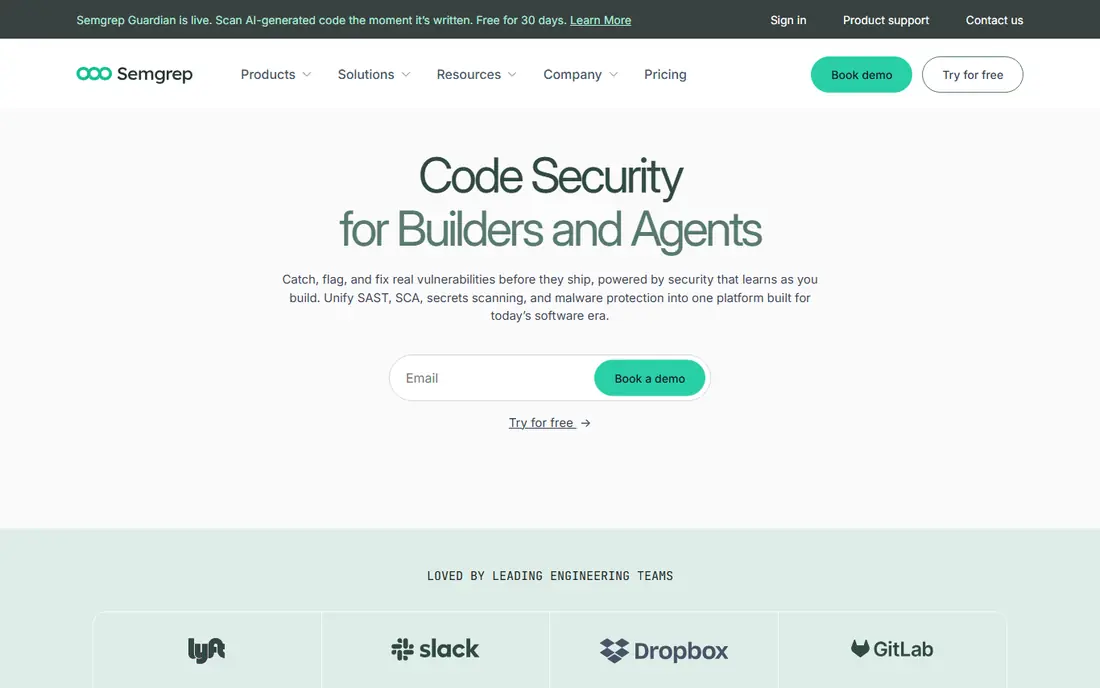
Semgrep stands out because its rules read almost like plain patterns, which makes it easy for a team to write a check for its own risky code. The open source engine runs in CI without a heavy setup, and the paid platform adds cross-file analysis and a larger rule library. For a small team, the free tier for up to 10 contributors is a practical way to start.
The catch is scope. Semgrep is mainly a security scanner, so it will not replace every SonarQube quality report on duplication, complexity, and coverage in one view. Teams that want both often run Semgrep for security and keep a separate quality view. If custom rules are your main reason for leaving SonarQube, that trade is worth it.
- Fast scans
- Clear custom rules
- Free open source engine
- Quality metrics are thinner than SonarQube
- Paid tiers add up per contributor
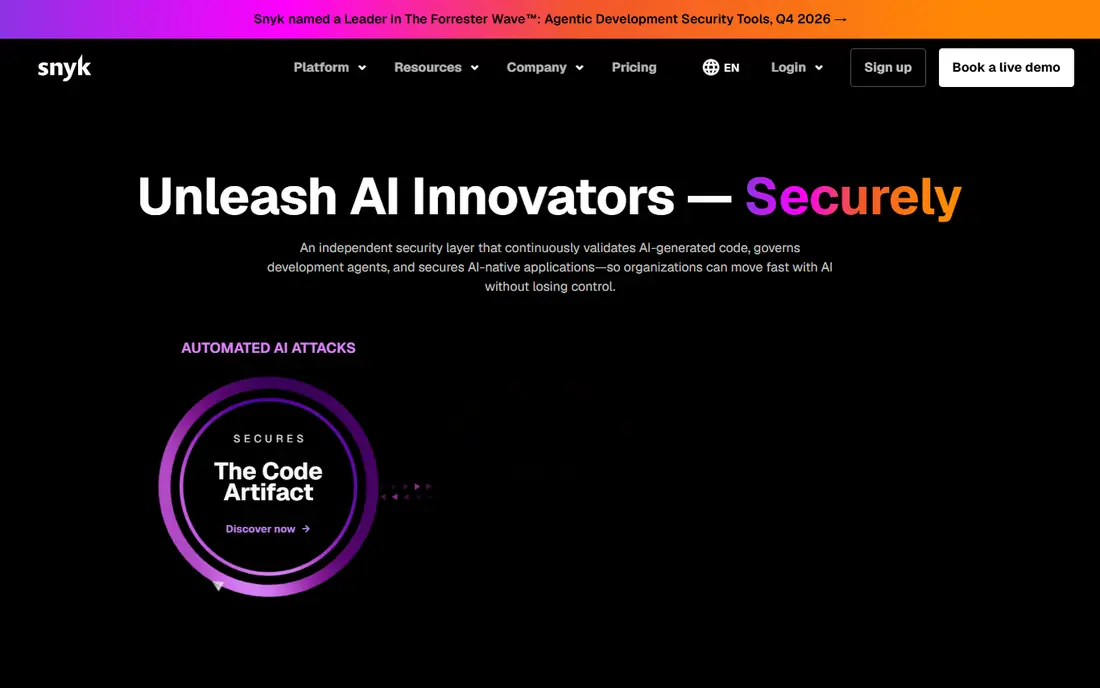
Snyk Code scans as developers write, which helps catch a vulnerable pattern before it reaches a pull request. It also sits inside a wider Snyk platform that covers open source dependencies, containers, and infrastructure as code, so security teams get one place to triage findings. That breadth is useful when security, not just code style, is the priority.
The downside is that Snyk Code is not a full SonarQube clone. It does less on long-term code quality trends, and teams that buy several Snyk products should model the total per-developer cost. Still, for teams that want fast, developer-friendly security feedback, it is one of the strongest options here.
- Real-time IDE feedback
- AI-assisted fixes
- Broad Snyk platform
- Full platform pricing can grow fast
- Quality metrics are limited
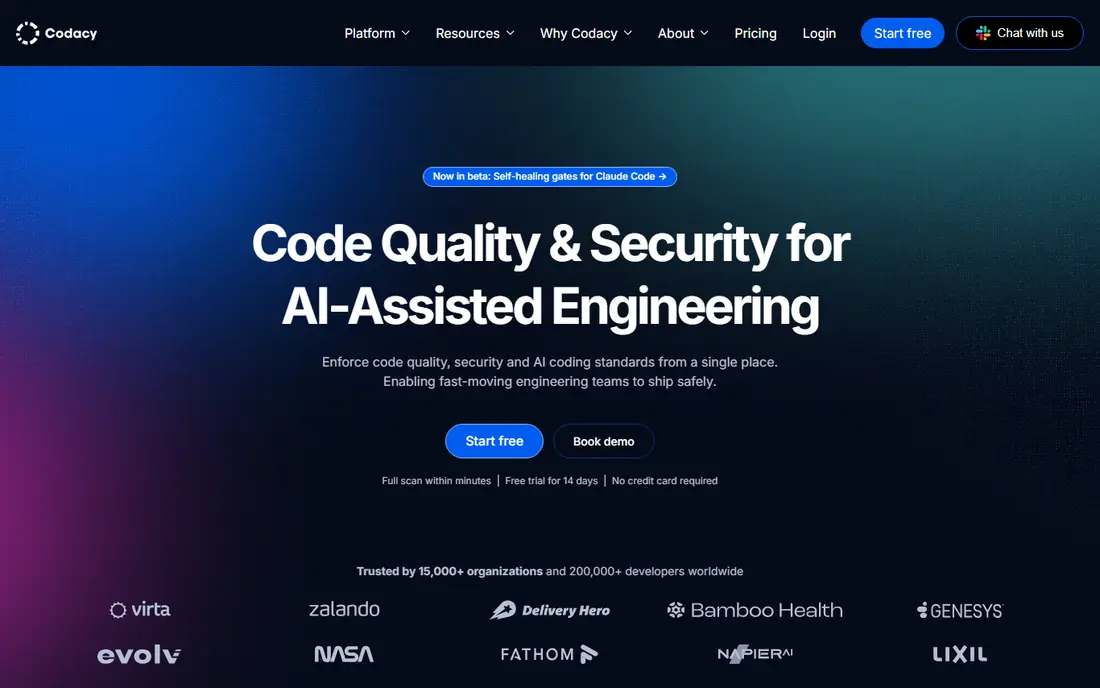
Codacy is the easiest mental swap for SonarQube users because it combines automated code review, quality grades, and security scanning in a familiar pull request flow. It supports a wide set of languages, which helps mixed stacks that would otherwise need several tools. Open source projects can also start free, which lowers the barrier for a trial.
Setup still needs care. Default rules can be noisy on an older codebase, so plan a short tuning period before turning on blocking checks. Once tuned, Codacy gives a clear daily view of new issues, coverage, and duplication. That makes it a good fit for teams that want SonarQube-style gates without self-hosting.
- Broad language support
- Quality and security in one view
- Pull request checks
- Rule tuning takes time
- Some advanced features sit on higher plans
DeepSource aims for fewer, better findings. Instead of flooding a pull request with minor style notes, it focuses on issues that affect correctness, security, and maintainability, and it can open fixes automatically in many cases. That focus saves review time, especially for teams that already feel overloaded by scanner noise.
Language coverage is narrower than some rivals, so check your stack before committing. Pricing also varies by plan, so confirm the current per-user rate on the vendor site. If your main complaint about SonarQube is noise rather than missing features, DeepSource deserves a trial.
- Automated fixes
- Focused issue reports
- Clean pull request comments
- Fewer languages than Codacy
- Enterprise pricing needs a quote
CodeQL treats code as data that can be queried, which lets security researchers find complex vulnerability patterns that simple pattern matching can miss. For public repositories on GitHub, it is free, and it integrates directly into GitHub pull requests and security alerts. That makes it a natural choice for open source maintainers.
For private code, access comes through GitHub Advanced Security, so cost depends on your GitHub plan rather than a simple CodeQL price. Writing custom queries also takes more skill than writing a Semgrep rule. Use CodeQL when depth matters more than a quick quality dashboard.
- Deep semantic analysis
- Strong for open source
- GitHub integration
- Learning curve for custom queries
- Private use needs GitHub Advanced Security
Qodana brings JetBrains IDE inspections into CI, so the checks developers see in their editor match the checks that run on a pull request. That consistency reduces the classic problem where local and CI results disagree. The entry price is also low compared with many enterprise scanners, which helps small teams.
Teams outside the JetBrains ecosystem can still use Qodana, but the fit is less obvious. Large monorepos may also need time to tune inspections and baselines. For IntelliJ, PyCharm, or WebStorm shops, it is a smart, low-friction SonarQube alternative.
- Strong IDE inspection heritage
- CI integration
- Low entry price
- Best value inside JetBrains tools
- Reports need tuning for large repos
Checkmarx One is built for organizations that need auditable security testing across many teams and regulatory frameworks. Its static analysis goes deep on data flow, and it pairs with software composition, API security, and infrastructure checks in one platform. Compliance teams often prefer that single audit trail.
That power comes with cost and complexity. Pricing is quote-based, and rollout usually needs security staff to manage policies and triage. Small teams will likely find it too heavy. Large, regulated teams that found SonarQube too light on security depth should put Checkmarx One on the shortlist.
- Deep static analysis
- Broad compliance support
- Large language coverage
- Quote-only pricing
- Heavier setup and admin effort
CodeClimate Quality focuses on whether code is getting easier or harder to maintain. It grades files and tracks trends over time, which helps engineering managers spot hot spots before they become painful refactors. The interface is simple, and pull request feedback is easy to read.
It is not a full security platform, so teams that need deep vulnerability scanning should pair it with a tool such as Semgrep or Snyk Code. If your SonarQube use was mainly about maintainability, duplication, and test coverage trends, CodeClimate Quality is a focused and readable replacement.
- Clear maintainability grades
- Trend tracking
- GitHub and GitLab support
- Security depth is limited
- Pricing needs a quote for larger teams
How we picked these
We compared official feature pages, pricing pages, and public documentation for tools that cover code quality, static security analysis, or both. We favored tools that are actively maintained in 2026, work in CI and pull requests, and offer a free tier, trial, or clear entry price. We left out tools that are only linters for one language or that had no public product page.
What to check before you switch
Start with your current SonarQube pain point. If quality gates are the issue, test Codacy or CodeClimate Quality on one repository first. If security findings are the issue, test Semgrep or Snyk Code. Measure false positives for two weeks before you turn on blocking checks, because a noisy gate will slow every merge.
Match the tool to your workflow
Check language support, CI support, and IDE support before you buy. A tool that scans well but does not fit your pull request flow will be ignored. Also check how it handles legacy code, since baselining old issues is often the difference between a smooth rollout and a stalled one.
Budget for the real cost
Per-developer and per-contributor prices look small until you count every committer, bot account, and contractor. Confirm whether inactive users count, whether open source repos are free, and what happens when you exceed a tier. For quote-only tools, ask for a written renewal price, not just a first-year figure.
Before you commit, run a trial on a real repository that includes your oldest and messiest code, not just a clean sample project. That test will show how each tool handles legacy patterns, false positives, and pull request noise. It will also show whether developers actually read the findings or start ignoring them. A tool that looks strong in a demo can still fail that real-world test, so give the trial at least two full sprints before you decide.
FAQ
What is the best alternative to SonarQube?
It depends on your goal. Codacy is the closest all-round swap, Semgrep is best for custom security rules, and CodeQL is best for deep GitHub-native analysis. Start with the problem you want to fix, then trial two tools on the same repository.
Are there free SonarQube alternatives?
Yes. Semgrep has a free open source engine and a free platform tier for small teams, Snyk Code and Codacy offer free tiers, and CodeQL is free for public repositories. Free tiers usually limit users, features, or support, so check the current limits.
Is Semgrep better than SonarQube?
Semgrep is stronger for fast, custom security rules and lighter CI runs. SonarQube is stronger for broad code quality metrics and long-term quality gates. Many teams run both, with SonarQube for quality and Semgrep for security.
Can I replace SonarQube with Snyk Code?
You can if security scanning is your main need, but Snyk Code does less on maintainability trends and duplication. If you need both, pair Snyk Code with a quality tool or keep a quality dashboard alongside it.
Do these tools work with GitHub and GitLab?
Most do, with pull request comments and status checks for GitHub, GitLab, and Bitbucket. CodeQL is deepest on GitHub, while Codacy, Semgrep, Snyk Code, and DeepSource support the major hosts. Confirm your exact host and CI system on the vendor page.