Best Shopify POS Alternatives in 2026: 8 Tools Compared
Compare shopify pos alternatives for retail and restaurants in 2026: Square, Lightspeed, Clover, Toast, Zettle, SumUp, Epos Now, and Revel on price today.
- Editor's choice
 Square POS
Small businesses that want to start today
Starts atFreeVisit squareup.comFull review - Great alternative
 Lightspeed Retail
Shops with complex inventory and multiple locations
Starts at$89 per monthVisit lightspeedhq.comFull review - Also consider
 Clover
Businesses that want polished hardware and apps
Starts at$14.95 per monthVisit clover.comFull review
TL;DR:
- Square is the easiest starting point, with free software, no contract, and hardware you can buy as you grow.
- Lightspeed Retail is the strongest pick for inventory-heavy shops, with matrix variants, purchase orders, and multi-location tools.
- Toast is the restaurant specialist, with kitchen displays, handheld ordering, and menus built for food service.
- Clover wins on hardware choice, with countertop terminals, handhelds, and an app marketplace for extra functions.
- Zettle and SumUp suit very small sellers and market traders, since they charge no monthly software fee and focus on card payments.
Quick comparison
| Tool | Best for | Starts at | Free plan? | |
|---|---|---|---|---|
| Square POS | Small businesses that want to start today | Free | Yes | Visit |
| Lightspeed Retail | Shops with complex inventory and multiple locations | $89 per month | No | Visit |
| Clover | Businesses that want polished hardware and apps | $14.95 per month | No | Visit |
 Toast | Restaurants, cafes, and bars | $69 per month | No | Visit |
 Zettle by PayPal | Small sellers already using PayPal | See website | Yes | Visit |
 SumUp | Mobile sellers, markets, and pop-ups | See website | Yes | Visit |
 Epos Now | Multi-location retail and hospitality on a budget | $39 per month | No | Visit |
 Revel Systems | Mid-market chains with several locations | $99 per month | No | Visit |
The best shopify pos alternatives
Shopify POS makes sense when your online store is the center of the business. If your shop is mainly in person, or you run a restaurant, another POS may fit better, cost less, or handle your inventory and kitchen workflow more cleanly. The tools below cover those cases.
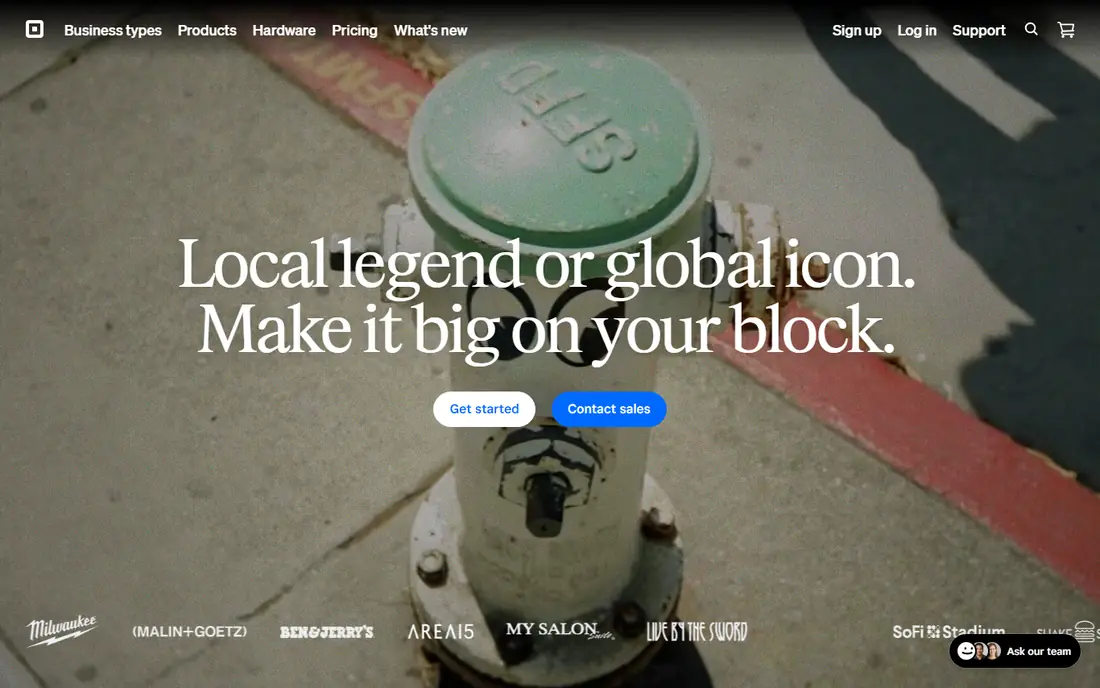
Square remains the default for small shops because the path from signup to first sale is so short. The free plan covers a POS app, basic inventory, customer profiles, digital receipts, and invoicing, with card processing charged per transaction. Paid Retail and Restaurant plans add deeper inventory, modifiers, and reporting for growing shops.
The limit is specialization. A large full-service restaurant will miss Toast kitchen workflows, and a specialty retailer with complex matrices may prefer Lightspeed. For a cafe, boutique, salon, or market stall, Square is our pick for most people, because you can start free and upgrade only when the business proves the need.
- Free software
- No long contract
- Wide hardware range
- Less depth for full-service restaurants
- Processing rates are not the lowest at high volume
Lightspeed Retail
Best for: Shops with complex inventory and multiple locations
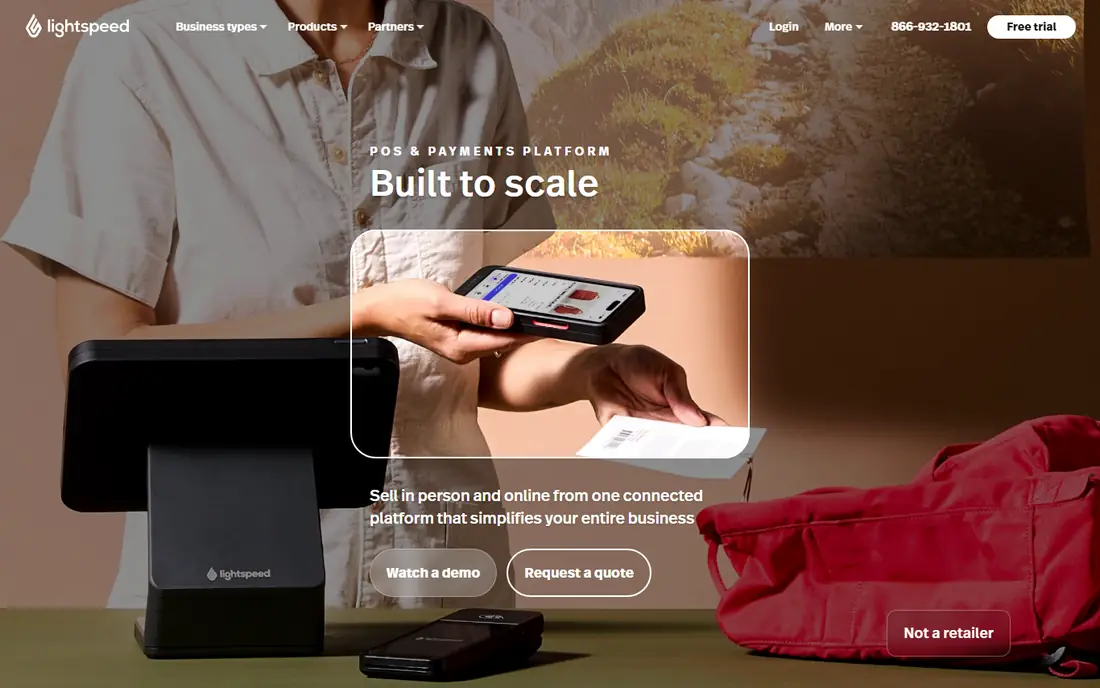
Lightspeed Retail is built for shops where inventory is the hard part. Size and color matrices, serial numbers, purchase orders, supplier management, and transfers between locations all sit in one system, which helps apparel, bike, pet, and specialty retailers avoid spreadsheet workarounds. Reporting across locations also gives owners a clearer view of what actually sells.
That depth costs more and takes longer to learn. A single-location shop with fifty products will not need most of it, and Square will feel faster. For a growing retailer with hundreds of SKUs and more than one store, Lightspeed is the strongest Shopify POS alternative on inventory alone.
- Strong matrix inventory
- Purchase orders and transfers
- Multi-location reporting
- Higher price
- Steeper learning curve than Square
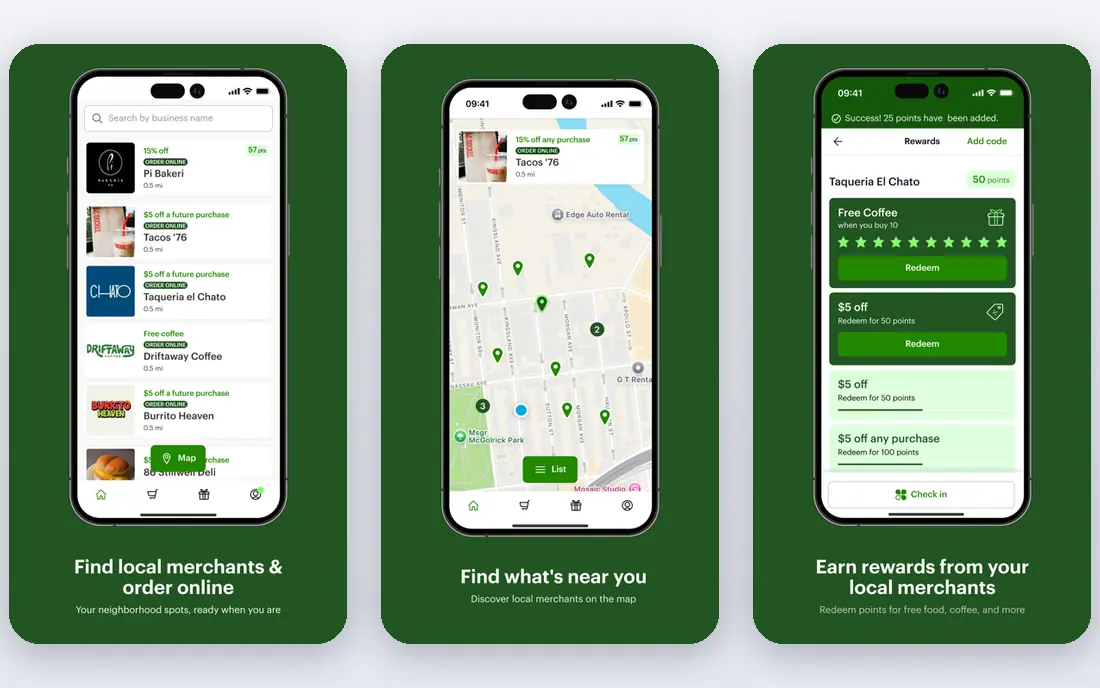
Clover stands out for hardware. Countertop stations, compact terminals, and handheld devices all run the same system, and the app marketplace adds loyalty, invoicing, employee tools, and industry functions. That range helps a business that wants a polished counter setup and the option to take payments tableside or on the shop floor.
Pricing is the warning. Clover is often sold through resellers and payment processors, so monthly fees, processing rates, and contract terms can vary widely for the same hardware. Buy direct where possible, read the contract term and early termination terms, and compare the total monthly cost, not only the device price.
- Wide terminal and handheld range
- App marketplace
- Restaurant and retail modes
- Pricing varies by reseller
- Contracts can be long through some sellers
Toast is designed for food service from the ground up. Kitchen display systems, handheld ordering, table management, menu modifiers, and online ordering work together, so a busy service runs with fewer paper tickets and fewer missed modifiers. Reporting by menu item, server, and daypart also helps owners spot what to promote and what to cut.
The trade is lock-in. Toast hardware is specific to Toast, and many plans involve a contract term, so switching later costs more than with Square. For a restaurant that plans to stay on one system for years, that trade is often worth it. For a food truck or a pop-up that may change systems, Square offers more freedom.
- Kitchen display and handheld ordering
- Menu management
- Online ordering built in
- Hardware is Toast specific
- Contracts can run one to three years
Zettle, owned by PayPal, suits sellers who want to take cards without a monthly subscription. You buy a reader, download the app, and pay a percentage per transaction, with no monthly software fee on the core plan. That model fits market traders, craft sellers, and small shops with irregular sales, where a monthly fee would eat into quiet months.
Depth is limited compared with Lightspeed or Toast. Inventory, staff, and reporting tools exist, but they do not match a full retail or restaurant suite. If you already use PayPal and you sell in person a few days a week, Zettle is a low-risk way to accept cards. If you run a busy store every day, Square or Lightspeed will serve you better.
- No monthly software fee
- Simple card readers
- PayPal integration
- Less depth for large retail
- Limited advanced inventory and reporting
SumUp follows the same no-monthly-fee idea as Zettle, with compact card readers and a simple app for taking payments on the go. Setup takes minutes, which matters for a market trader, a food stall, or a service business that takes payment at a client site. You pay per transaction, so quiet months cost nothing in software fees.
For a shop with deep inventory, staff permissions, and multi-location reporting, SumUp will feel thin. It is a payment-first tool, not a full retail platform. As a Shopify POS alternative for very small, mobile sellers, it is hard to beat on simplicity and upfront cost.
- No monthly fee on core plans
- Compact readers
- Quick setup
- Less suited to complex retail
- Advanced POS features are limited
Epos Now offers a middle path between free payment tools and premium retail suites. Retail and hospitality versions cover inventory, table management, staff permissions, and cloud reporting, at an entry price below Lightspeed and Toast. Multi-location reporting helps owners compare stores without buying an enterprise platform.
Add-ons and hardware bundles can raise the total, so price the full setup, including any back-office apps you need, before comparing it with Square Plus. For a small chain that needs more structure than Square but cannot justify Lightspeed pricing, Epos Now is a practical compromise.
- Affordable entry price
- Retail and hospitality versions
- Cloud reporting
- Add-ons can raise the total
- Hardware bundles vary by region
Revel targets mid-market restaurants and retailers with several locations. Central menu and catalog management, enterprise reporting, and role permissions help a head office keep stores consistent, while kitchen and retail modes cover both food and goods. That central control is the main reason a growing chain picks Revel over a simpler POS.
Cost and setup are the catches. Entry pricing sits above Square and Epos Now, and some plans expect a minimum number of terminals, which can exclude a single shop. For a chain with five or more locations, Revel offers control that justifies the price. For a single store, start with Square or Lightspeed instead.
- Strong multi-location controls
- Enterprise reporting
- Kitchen and retail modes
- Higher entry cost
- Minimum terminal counts on some plans
- Longer setup
How we picked these
We compared official pricing pages, feature lists, and public reviews for POS systems that cover Shopify POS jobs: in-person checkout, inventory, payments, hardware, and reporting. We favored systems actively sold in 2026, with published pricing or a no-monthly-fee model, and with distinct strengths for small shops, inventory-heavy retail, restaurants, and multi-location chains. Prices are starting software prices and exclude processing fees and hardware, so verify the total on the vendor page.
How to choose a POS without overpaying
The monthly subscription is only part of the cost. Processing fees, hardware, and contract terms decide the real total.
Price a realistic month, not the brochure
Take last month card volume and average ticket size, then apply each vendor processing rate. A shop doing $20,000 a month in cards can pay $500 or more in processing alone, which dwarfs a $30 difference in subscription price. Hardware is a one-time cost, but terminals, printers, and kitchen screens add up across locations.
Match the POS to the workflow
A restaurant needs kitchen displays and modifiers. A boutique needs matrix inventory and purchase orders. A market trader needs a reader and a phone. Buying a restaurant POS for a boutique, or a retail POS for a restaurant, creates daily friction that no discount fixes. List your five daily tasks first, then test each POS against them.
Check contract and hardware lock-in
Ask how long the contract runs, what happens if you leave early, and whether hardware works with another system. Square and Zettle offer more freedom here, while Toast and some Clover reseller deals involve longer terms. Freedom has value, especially for a new business that may change direction.
Test with real products and a real rush
Load your actual catalog, with variants and modifiers, and run a busy hour in a trial. Check how fast checkout feels, how inventory updates, and how refunds and discounts work. A POS that feels fine with ten demo products can slow down badly with five hundred real ones.
FAQ
What is the best overall Shopify POS alternative?
Square is the best overall pick for most small businesses, because it starts free, has no long contract, and covers retail, food, and services well. Lightspeed is better for inventory-heavy retail, and Toast is better for full-service restaurants.
Is there a free Shopify POS alternative?
Yes. Square offers free POS software, and Zettle and SumUp charge no monthly software fee on their core plans, with card processing charged per transaction. Free plans suit small sellers, but check inventory, reporting, and staff limits before relying on one for a busy store.
Which POS is best for restaurants?
Toast is the strongest restaurant pick, with kitchen displays, handheld ordering, and menu tools built for food service. Square for Restaurants is a good alternative for cafes and quick-service spots that want more freedom and a lower starting cost.
Do I still need Shopify if I use Square or Lightspeed?
No, unless you also want a Shopify online store. Square and Lightspeed both offer online selling tools, so a shop that is mainly in person can run without Shopify. A shop that already sells heavily online may keep Shopify for the website and use a separate POS only if the in-person workflow demands it.
How much do POS processing fees cost?
In-person processing often runs around 2.6 percent plus a small per-transaction fee on Square-style plans, with negotiated rates lower at high volume. Exact rates vary by vendor, plan, and card type, so use your own monthly volume and average ticket to compare totals.
Can I use my existing hardware with a new POS?
Sometimes. iPad-based systems like Lightspeed and Square work with many common printers and scanners, while Toast and some Clover setups use specific hardware. Check compatibility before you buy new terminals, since hardware can cost more than a year of software.