8 Best SerpRobot Alternatives for Rank Tracking in 2026
Compare the best SerpRobot alternatives for daily rank tracking, from budget tools to full SEO suites, with pricing and honest trade-offs for small teams.
- Editor's choice
 SE Ranking
Small teams needing a full SEO suite
Starts atSee websiteVisit seranking.comFull review - Great alternative
 Wincher
Simple daily rank tracking
Starts atSee websiteVisit wincher.comFull review - Also consider
 AccuRanker
Agencies needing speed and reports
Starts atSee websiteVisit accuranker.comFull review
TL;DR:
- SerpRobot is a budget rank tracker that charges per bot for daily keyword checks, so alternatives differ mainly in keyword limits and update speed.
- SE Ranking and Wincher offer the best balance of daily tracking, reporting, and price for most small teams.
- AccuRanker suits agencies that need fast, accurate data and client reports, but it costs more.
- Google Search Console is free and should run alongside any tracker, since it shows real clicks and impressions.
- Always spot-check a few keywords yourself during a trial, since trackers can disagree on the same keyword and location.
Quick comparison
| Tool | Best for | Starts at | Free plan? | |
|---|---|---|---|---|
| SE Ranking | Small teams needing a full SEO suite | See website | Free trial | Visit |
| Wincher | Simple daily rank tracking | See website | Free trial | Visit |
| AccuRanker | Agencies needing speed and reports | See website | Free trial | Visit |
 Nightwatch | Local and AI visibility tracking | See website | Free trial | Visit |
 Mangools SERPWatcher | Beginners wanting a simple tracker | See website | Free trial | Visit |
 ProRankTracker | Agencies with many locations | See website | Free trial | Visit |
 TrueRanker | Budget daily tracking with AI flags | See website | Free trial | Visit |
 Google Search Console | Free first-party Google data | Free | Yes | Visit |
The best SerpRobot alternatives
SerpRobot is known for low-cost rank tracking: you buy bots, each covering a set number of keyword checks per day, and you get daily Google, Bing, and YouTube positions. The alternatives below offer similar daily tracking with different limits, reporting, and extra SEO tools, and we compared official feature pages, pricing pages, and public reviews to judge fit for bloggers, small businesses, and agencies.
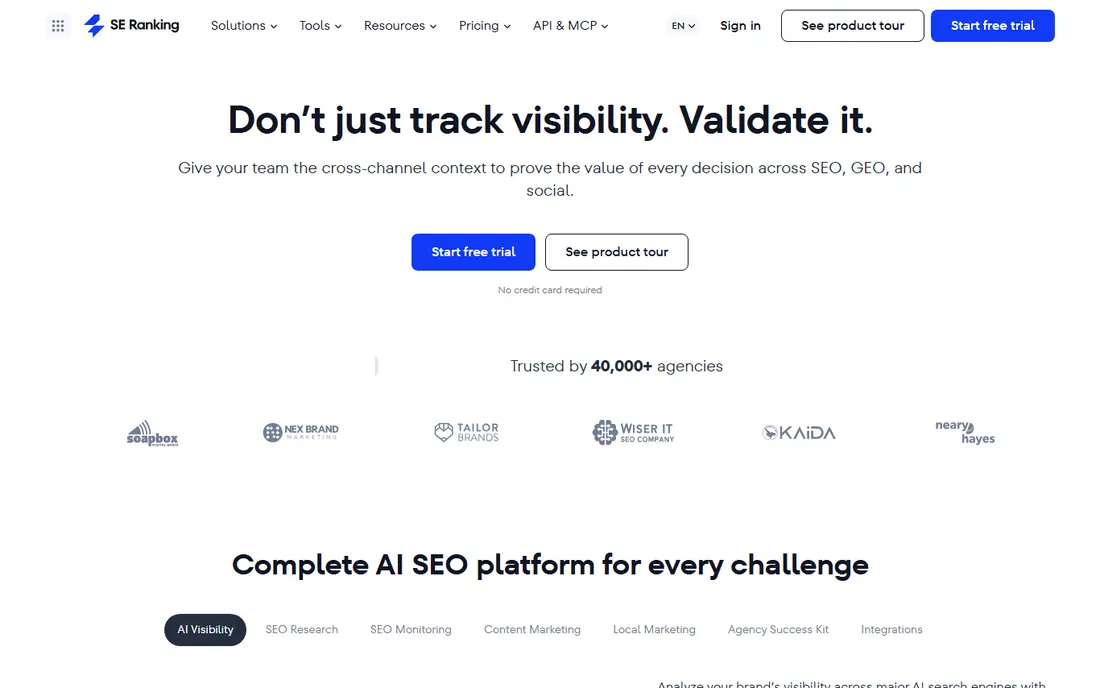
SE Ranking is the most common step up from a bare rank tracker because it adds keyword research, site audits, backlink checks, and competitor tracking to daily rank data. For a small team that tracks a few hundred keywords, the daily updates and clean reports cover most SEO work without buying several separate tools. The interface is also approachable for users who are not full-time SEOs. The entry plan includes a large keyword allowance, which can feel like overkill for a blogger tracking twenty terms. Pricing is subscription-based rather than per-bot, so costs do not scale as neatly for tiny keyword sets. If you need more than rank positions alone, SE Ranking is a strong value. If you only need ten keywords, a cheaper specialist may fit better.
- Daily tracking for many keywords
- Keyword research and audits included
- Clear client reports
- Entry plan can feel large for a single site
- Some advanced features need higher tiers
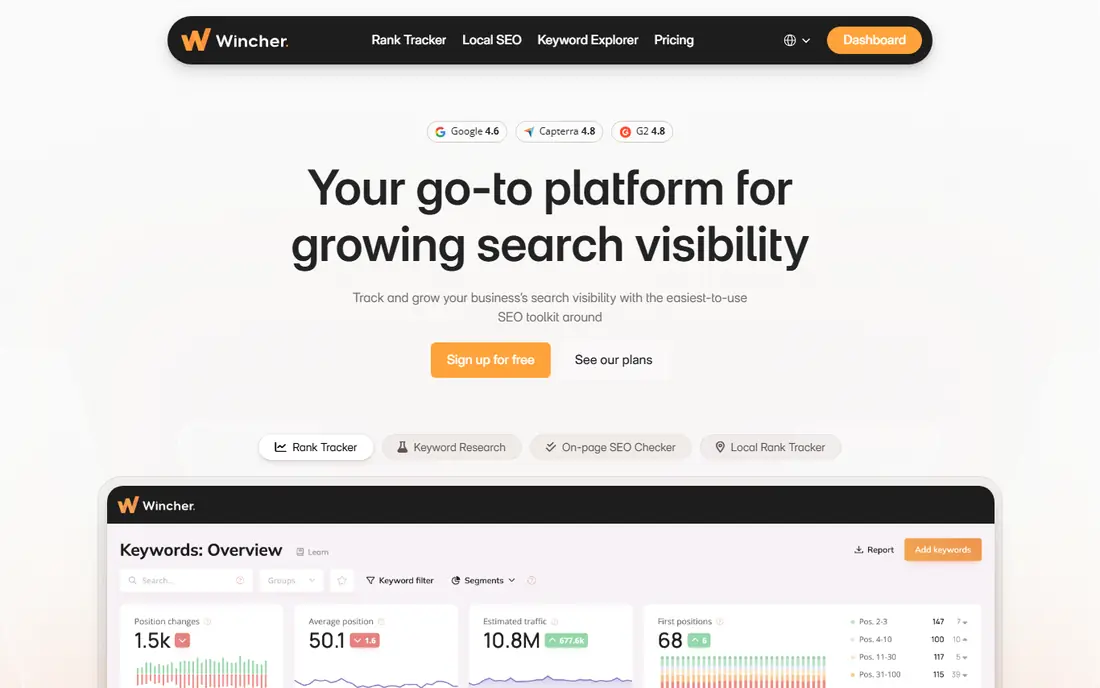
Wincher keeps rank tracking simple. Add keywords, pick locations and devices, and watch daily positions with history charts and competitor comparisons. That focus helps small businesses and freelancers who want reliable rank data without learning a full SEO suite. Reports are easy to share with clients or bosses who just want to know whether rankings moved. The limit is breadth. Wincher does not replace a full keyword research or audit suite, so teams that need those tools will pair it with another product. Keyword limits also affect price, so count your real keyword list before comparing plans. For pure daily tracking with clean reports, Wincher is a dependable pick.
- Simple daily tracking
- Clear position history
- Good agency reporting
- Fewer all-in-one SEO tools than suites
- Pricing varies by keyword count

AccuRanker is built for agencies and larger teams that check rankings often and share results with clients. On-demand refreshes, detailed SERP feature tracking, and polished white-label reports set it apart from budget trackers. If a client calls about a ranking drop, you can refresh that keyword and show the SERP context the same day, rather than waiting for tomorrow's scheduled check. Price is the barrier. AccuRanker starts well above budget trackers, and small sites tracking few keywords will not use its full power. Agencies with many clients, locations, and reporting needs often find the speed and report quality worth the cost. Solo bloggers should trial it, but expect to choose a cheaper tool unless client work justifies the fee.
- Very fast on-demand updates
- Deep SERP feature data
- Strong white-label reports
- Higher starting price
- Overkill for a single small site
Nightwatch suits teams that track local rankings across many cities and want to watch AI search visibility alongside classic rankings. Its dashboards can combine Google positions, local pack results, and AI answer mentions, which helps agencies explain visibility in 2026, when search results include more than ten blue links. Daily updates and on-demand checks keep data fresh. The platform offers many views, so new users need time to set up dashboards that match their reporting style. Pricing also depends on keyword volume and billing period, so get a quote for your exact list. For local SEO and AI-aware reporting, Nightwatch is one of the most forward-looking alternatives to SerpRobot.
- Local rank tracking
- AI visibility features
- Flexible dashboards
- Pricing varies by plan and billing
- Learning curve for advanced views
Mangools SERPWatcher is part of the Mangools suite, which also includes KWFinder for keyword research. Its dominance index gives a single health score for a tracked keyword set, which helps beginners see progress without reading every position change. The interface is clean, setup takes minutes, and the suite as a whole suits bloggers and small businesses. Update frequency is the watch-out. Some Mangools plans update less often than daily trackers, so check the plan you buy if daily data matters. Keyword limits are also smaller than SE Ranking or AccuRanker. For a beginner who wants simple tracking plus keyword research in one friendly suite, SERPWatcher is a good fit.
- Very easy to learn
- Dominance index shows overall health
- Pairs with KWFinder
- Weekly updates on basic plans in some tiers
- Smaller keyword limits than suites
ProRankTracker has long served agencies that track the same keywords across many cities, devices, and languages. Its reporting breaks down positions by location and device, which matters for local businesses and franchises. White-label reports and sub-accounts help agencies share data with clients without giving away the whole account. The interface is more functional than modern, and new users may need a demo to find advanced filters. Costs also grow with keyword and location volume, so model a realistic list that includes every city you track. For multi-location work, ProRankTracker remains a solid, proven alternative.
- Strong multi-location tracking
- Mobile and desktop splits
- Agency reports
- Interface feels dated to some users
- Pricing rises with term volume
TrueRanker positions itself as a direct SerpRobot alternative with daily tracking on a flat keyword pool, rather than rented bots, plus AI Overview flags, backlink checks, and client reports. That bundle appeals to SEOs who want daily data and a glimpse of AI search impact without paying suite prices. The starter price point also suits freelancers moving up from the cheapest trackers. As a newer, smaller brand, TrueRanker has less community history than SE Ranking or AccuRanker, so trial results matter more than marketing claims. Check update speed for your locations and confirm AI feature limits on the tier you buy. For budget-conscious users who want daily tracking plus AI flags, it is worth testing.
- Daily Google tracking on a flat keyword pool
- AI Overview flags
- Audits and reports included
- Smaller brand presence than leaders
- AI features vary by tier
Google Search Console is not a full replacement for SerpRobot, but every site owner should use it alongside a tracker. It shows the queries that actually brought impressions and clicks, average positions, and indexing problems, straight from Google. That first-party data helps you judge whether a tracker position matches real traffic, and it costs nothing. The limits are clear. Search Console does not track competitors, does not cover Bing or YouTube in the same way, and its position data is an average, not a daily snapshot for one location. Use it as your ground truth for traffic, and use a paid tracker for daily competitor and location detail. Together, they give a fuller picture than either alone.
- Free
- Shows real impressions, clicks, and average positions
- Official Google data
- No daily competitor tracking
- No Bing or YouTube ranks
- Data is sampled and delayed
How we picked these
We compared official feature pages, pricing pages, and public reviews for rank trackers that offer daily or regular Google position checks today. We favored tools with location and device tracking, position history, and reporting, and we included Google Search Console as a free complement rather than a direct clone. Prices shown as See website reflect keyword-volume and tier pricing that changes often, so check the vendor page for your keyword count before budgeting.
How to choose a SerpRobot alternative
Start by counting keywords honestly. Include every location, device, and language variant, since most tools charge by that total, not by your headline keyword list. A tool that looks cheap for fifty keywords can become expensive for five hundred keywords across ten cities. Write down your true count, then compare plans on that number.
Update frequency and accuracy
Daily tracking suits active SEO work, while weekly tracking may suffice for stable sites that change slowly. During a trial, spot-check five to ten keywords by searching yourself or comparing with Search Console averages. Small differences are normal, since results vary by location and personalization, but large, consistent gaps suggest a data problem worth investigating before you pay.
Reports, locations, and extra tools
Agencies need white-label reports, client seats, and location breakdowns. Bloggers need simple charts and alerts. Suites add keyword research and audits, which save money if you would buy those tools separately. Decide which extras you will actually use, since paying for a suite you never open is worse than paying a little more for a focused tracker you use daily.
FAQ
What are the best SerpRobot alternatives for a small budget?
TrueRanker, Wincher, and Mangools are strong budget-friendly starting points, depending on keyword count and update needs. Google Search Console is free and should run alongside any paid tracker. Compare plans on your true keyword count, including locations and devices, not just the headline price.
What are alternatives to SerpRobot with daily tracking?
SE Ranking, Wincher, AccuRanker, Nightwatch, ProRankTracker, and TrueRanker all offer daily tracking on most plans. Mangools plans vary, so confirm update frequency before buying. If daily data is essential, choose a plan that states daily updates clearly, not just regular checks.
Is SerpRobot still worth using?
SerpRobot remains a cheap way to track a small keyword set daily, with per-bot pricing that suits tiny lists. Alternatives make sense when you need more keywords, better reports, local tracking, or AI visibility data. Many users keep SerpRobot for a small list and add Search Console for traffic context.
How many keywords should I track?
Track keywords that map to pages you own and services you sell, plus a small set of competitor terms. Tracking thousands of vanity terms wastes money and clutters reports. Start with your money pages, your local terms, and your brand terms, then expand only when you act on the data.
Why do rank trackers disagree?
Trackers check from different locations, devices, and data centers, and Google personalizes results, so small differences are normal. Large gaps may come from different update times or location settings. Use Search Console averages and your own spot checks to judge which tracker matches your real visibility.
Do I need a rank tracker if I have Google Search Console?
Search Console shows real traffic and average positions, but it does not give daily competitor positions or precise local snapshots. A tracker adds that daily, location-specific view. Most serious SEO work uses both: Search Console for traffic truth, and a tracker for daily movement and competitor context.