Best Referral SaaSquatch Alternatives in 2026: 8 Tools Compared
Looking for referral saasquatch alternatives? We compared 8 referral platforms on pricing, integrations, fraud controls, and ease of setup for growing teams.
- Editor's choice
 ReferralCandy
Small ecommerce stores
Starts at$39 per monthVisit referralcandy.comFull review - Great alternative
 Friendbuy
Mid market ecommerce brands
Starts at$249 per monthVisit friendbuy.comFull review - Also consider
 Referral Rock
Business to business referrals
Starts atSee websiteVisit referralrock.comFull review
TL;DR:
- ReferralCandy and Referral Factory are the easiest starting points for small stores, with published monthly pricing and fast setup.
- Friendbuy, Talkable, and Mention Me suit larger brands that need testing, fraud controls, and detailed reporting.
- Referral Rock and GrowSurf fit business to business teams that want referral links tied to leads and signups, not only purchases.
- Ambassador is the pick when referral, affiliate, and partner programs should live in one system, though pricing is quote based.
- Check how rewards are triggered before you buy, since a tool built for one time purchases may not handle subscriptions well.
Quick comparison
| Tool | Best for | Starts at | Free plan? | |
|---|---|---|---|---|
| ReferralCandy | Small ecommerce stores | $39 per month | Free trial | Visit |
| Friendbuy | Mid market ecommerce brands | $249 per month | No | Visit |
| Referral Rock | Business to business referrals | See website | Free trial | Visit |
 Ambassador | Combined referral and partner programs | See website | No | Visit |
 Mention Me | Larger retail brands | See website | No | Visit |
 Talkable | Data driven referral testing | See website | No | Visit |
 GrowSurf | SaaS and newsletter referrals | $179 per month | Free trial | Visit |
 Referral Factory | Fast no code launches | $95 per month | No | Visit |
The best referral SaaSquatch alternatives
SaaSquatch, now known in many listings as SaaSquatch by Impact, built its name on referral programs for subscription and ecommerce brands. The tools below cover the same ground, from simple share and reward flows to enterprise programs with testing and fraud checks. We compared official feature pages, pricing pages, and public documentation.

ReferralCandy is our pick for most small stores because it keeps the moving parts to a minimum. A customer shares a link or code, a friend buys, and both sides get the reward you set. That narrow focus is a strength when you do not have a developer on hand to wire up custom events.
The catch is cost at scale. The entry plan carries a success fee in addition to the monthly charge, so a program that takes off can get pricier than the headline price suggests. It also fits purchase based rewards far better than lead based or subscription milestone rewards.
- Simple setup for Shopify and WooCommerce
- Automatic reward emails
- Clear referral tracking for purchases
- Success fee applies on top of the monthly price
- Less suited to complex business to business programs
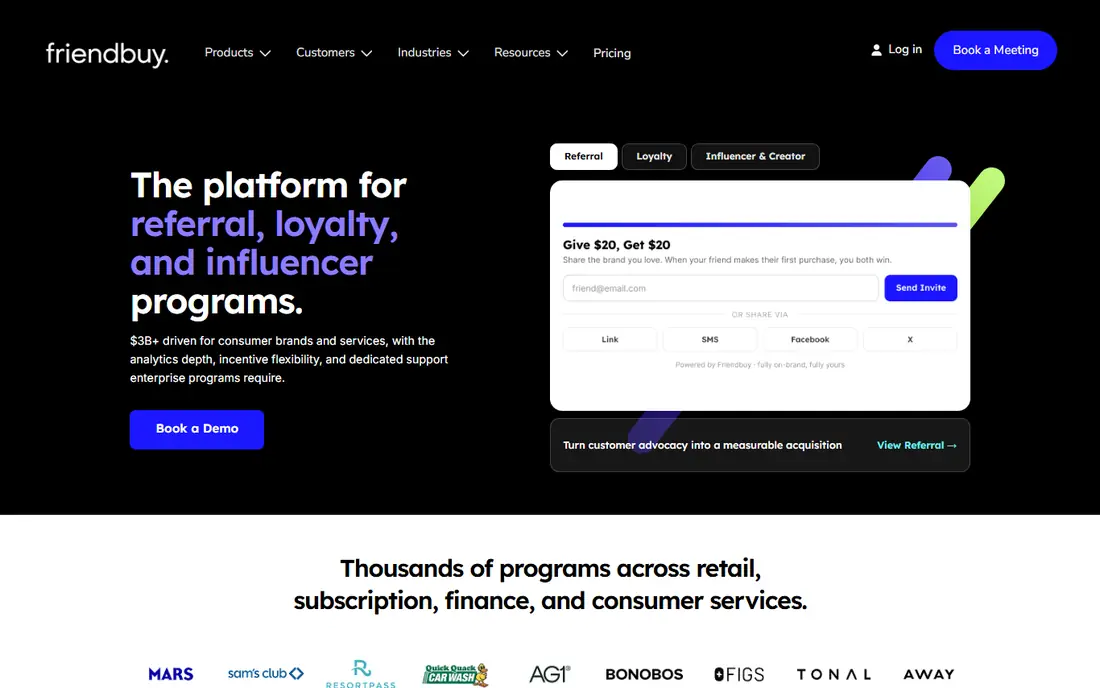
Friendbuy suits brands that have outgrown a basic referral widget and want to test what actually moves new customers. You can run different offers, compare results, and connect referral data to your store and email tools. That matters when referral is a real acquisition channel, not a side feature.
The trade off is commitment. At $249 per month to start, it only makes sense once referral volume can cover the bill. Smaller teams may prefer to prove the channel first on a cheaper tool, then move here when testing and reporting become the bottleneck.
- Referral and loyalty in one platform
- Testing tools for offers and pages
- Broad ecommerce integrations
- Entry price is high for small stores
- Setup takes more planning than a plug in tool
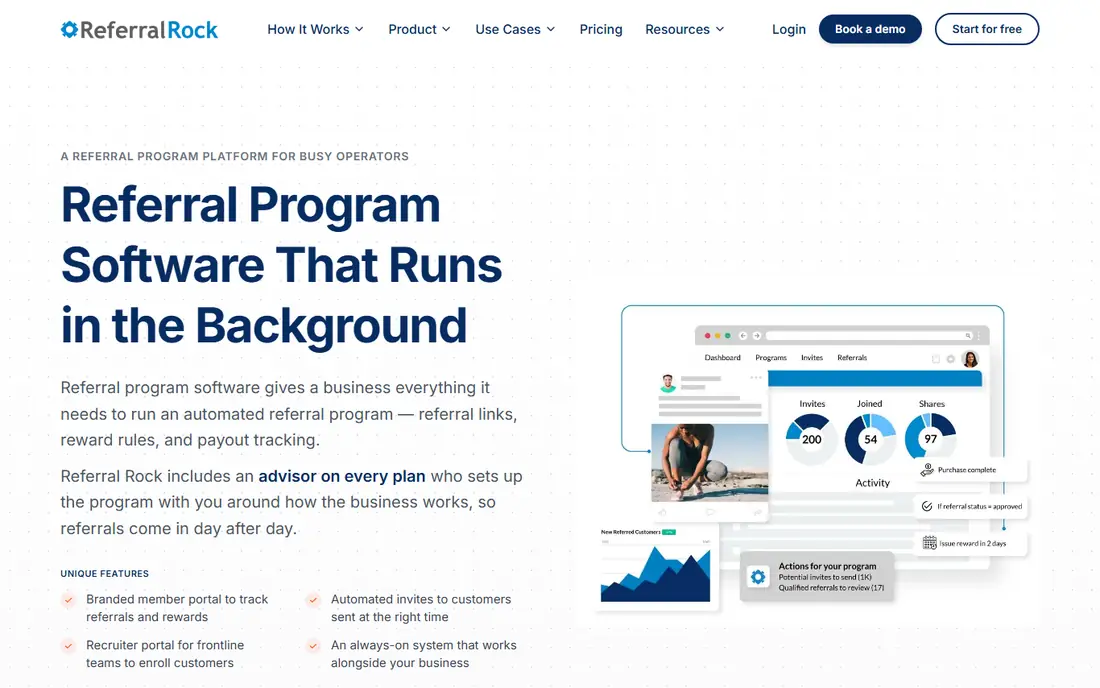
Referral Rock stands out for service businesses, agencies, and business to business teams. Many referral tools assume a checkout. This one also handles the slower path where a referral becomes a lead, then a meeting, then a sale, and it tracks that journey in a portal referrers can check themselves.
That flexibility comes with a plainer look and feel than consumer focused tools. If your brand needs a highly polished, on brand sharing experience out of the box, you may need design work. For teams that care more about tracking and CRM data, that is a fair trade.
- Hosted member portal for referrers
- CRM sync with Salesforce and HubSpot
- Rewards for leads as well as sales
- Pricing is not published on the main pricing page in a simple entry tier
- Design options are more functional than flashy
Ambassador is the consolidation pick. Instead of running separate tools for customer referrals, affiliates, and partners, you run them in one place with shared reporting. That can save admin time and give a clearer view of which relationships drive revenue.
The downside is scope. Pricing requires a sales conversation, and the platform is built for teams with enough program volume to justify it. A single small referral program will feel overbuilt here, and onboarding will take longer than with a self serve tool.
- Referral, affiliate, partner, and advocacy programs in one platform
- Revenue attribution on higher tiers
- Enrolment and payout workflows
- Quote based pricing and annual contracts on many plans
- More tool than a small team needs
Mention Me takes a different angle from most tools on this list. Its Name Share feature lets a customer share their name at checkout, so referrals that happen offline or in conversation are still captured. That is useful because many real recommendations never travel through a link.
This is a premium platform, and pricing reflects that. Smaller brands will likely find the sales led process and cost hard to justify. For larger retail brands where referral already drives a visible share of new customers, the extra capture and testing tools can pay for themselves.
- Name Share captures referrals without a link or code
- Benchmarking across brands
- Strong testing and optimisation features
- Enterprise style pricing with no public entry price
- Best value only at meaningful referral volume
Talkable is built for teams that want to treat referral like a growth experiment. You can test incentives, timing, and creative, then keep what wins. Preconfigured campaign templates speed up the first launch, while reporting lets you defend the program budget with numbers.
The honest catch is access. There is no simple self serve price to try, and the platform is aimed at larger ecommerce teams. If you only need one steady referral offer, the testing depth may be more than you use. If you plan to iterate, it is a strong fit.
- Built in A and B testing for campaigns
- Configurable reporting
- Templates for common ecommerce flows
- Quote based pricing
- Enterprise focus means a longer sales and setup cycle
GrowSurf fits product led teams. It handles the case where a referral should be rewarded for a signup, a trial start, or a newsletter subscription, which is exactly how many SaaS and creator businesses grow. Embeddable forms and hosted pages make it possible to launch without rebuilding your site.
At $179 per month to start, it is priced for businesses, not side projects. Teams that sell physical products through a checkout may also find store focused tools a better match. For signup driven growth, though, its model lines up well.
- Built for signups and leads, not only purchases
- GDPR and CCPA compliance features
- Embeddable referral forms and pages
- Entry price is steep for hobby projects
- Ecommerce purchase tracking is less central than in store focused tools
Referral Factory is the fastest route to a working program for teams without developer support. Templates cover common referral flows, and you can launch, share, and track rewards from one dashboard. Flat pricing also makes budgeting simple, since there is no success fee layered on top.
It is not the deepest tool here. Large brands that need advanced testing, complex attribution, or heavy customisation will hit limits sooner. For startups, agencies, and small businesses that need a solid program live this week, that trade is usually worth it.
- Template based setup with no developer needed
- Flat monthly pricing
- Webhooks and API for integrations
- Less depth for enterprise testing and attribution
- Branding and customisation limits on the entry plan
How we picked these
We compared official feature pages, pricing pages, and public documentation for referral platforms that cover the same use cases as SaaSquatch: customer referrals, reward fulfilment, fraud controls, and integrations with stores, CRMs, and billing tools. We kept only tools that are currently available and that serve a distinct audience, from small stores to enterprise brands. We did not claim hands on testing, and we used See website where a vendor does not publish a simple entry price.
What to check before you switch
Start with the reward trigger, because it decides whether a tool fits at all. A purchase trigger works for stores. A lead, signup, or paid subscription trigger works for SaaS and services. Ask each vendor to show you that exact flow, including what happens on refunds, cancellations, and duplicate referrals.
Next, look at fraud controls and approval. Self referrals, coupon abuse, and fake accounts can quietly eat a referral budget. A good tool lets you hold rewards for review, set eligibility rules, and block obvious abuse without punishing real customers.
Finally, check integration and reporting. Your referral tool should connect to your store or CRM and show cost per referred customer, not just total shares. Run a small pilot with one offer, measure it for a month, and only then expand to more complex campaigns or tiers.
FAQ
What is the closest alternative to SaaSquatch for SaaS referrals?
GrowSurf and Referral Rock are the closest fits for signup and lead based programs. GrowSurf is built around signups and forms, while Referral Rock tracks leads through to sales and syncs with major CRMs. Ambassador also works if you want referral and partner programs in one system.
Which referral SaaSquatch alternative is cheapest to start?
ReferralCandy starts at $39 per month plus a success fee, and Referral Factory starts at $95 per month with flat pricing. The cheaper headline price is not always cheaper in practice, since success fees grow with volume. Compare total cost at your expected referral volume before choosing.
Do these tools work with Shopify?
ReferralCandy, Friendbuy, and Referral Factory all support Shopify stores, and several others connect through integrations or APIs. Check the vendor integration page for your exact store setup, theme, and checkout type before committing.
How do referral tools stop fraud?
Most tools on this list offer approval workflows, eligibility rules, and checks for duplicate or self referrals. Larger platforms add more detailed fraud controls and reporting. Ask vendors how rewards are held, reviewed, and reversed when a referral is later found to be invalid.
Can I run referral and affiliate programs in one tool?
Yes, Ambassador is built for that, and several other tools combine referral with affiliate or loyalty features. If you only need customer referrals, a simpler tool will be easier to run and cheaper to keep.