Best Referral Rock Alternatives in 2026: 8 Tools Compared
Searching for referral rock alternatives? We compare 8 referral platforms for ecommerce, SaaS, and services on pricing, rewards, fraud controls, and setup.
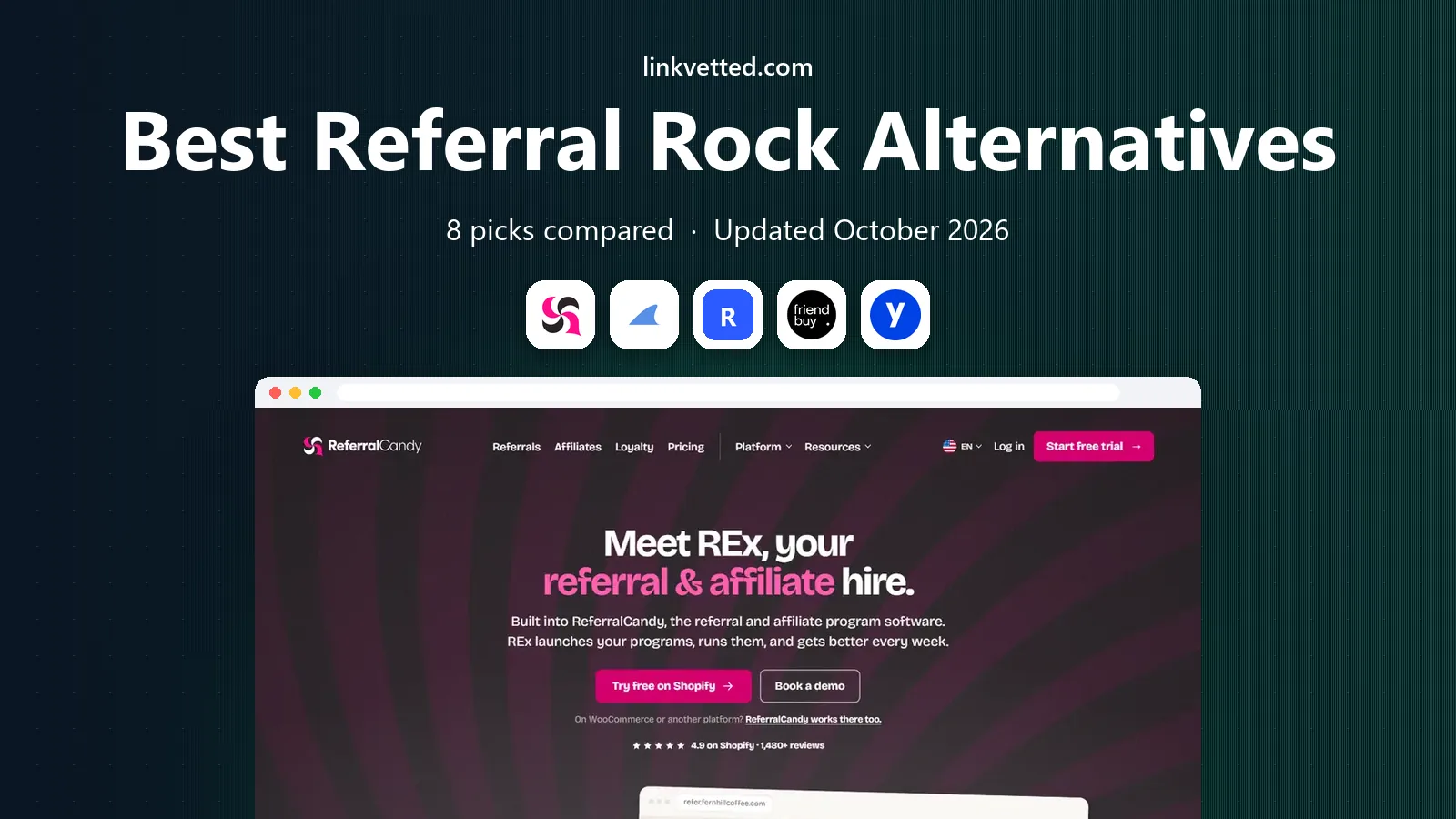
- Editor's choice
 ReferralCandy
Shopify and WooCommerce stores
Starts at$39 per monthVisit referralcandy.comFull review - Great alternative
 GrowSurf
SaaS and app companies
Starts at$179 per monthVisit growsurf.comFull review - Also consider
 Referral Factory
Fast no-code campaign setup
Starts atSee websiteVisit referralfactory.comFull review
TL;DR:
- ReferralCandy is our pick for most Shopify and WooCommerce stores that want a fast launch.
- GrowSurf and Referral Factory suit SaaS and service businesses that need flexible rewards and tracking.
- Friendbuy, Ambassador, and Mention Me fit larger brands that need fraud controls, testing, and enterprise integrations.
- Success fees can matter more than the monthly plan, so model total cost at your expected referral volume.
- Start with one clear reward and one clear conversion event, then expand only after the first campaign works.
Quick comparison
| Tool | Best for | Starts at | Free plan? | |
|---|---|---|---|---|
| ReferralCandy | Shopify and WooCommerce stores | $39 per month | Free trial | Visit |
| GrowSurf | SaaS and app companies | $179 per month | Free trial | Visit |
| Referral Factory | Fast no-code campaign setup | See website | Free trial | Visit |
 Friendbuy | Fast-growing consumer and subscription brands | See website | No | Visit |
 Yotpo Loyalty and Referrals | Brands that want loyalty and referrals together | See website | Free plan | Visit |
 Ambassador | Partner, affiliate, and referral programs at scale | See website | No | Visit |
 Mention Me | Larger retail brands that test referral offers | See website | No | Visit |
 Viral Loops | Waitlists, launches, and contests | See website | Free trial | Visit |
The best referral rock alternatives
Referral Rock is known for referral programs for service businesses and B2B firms, with member portals and rewards for leads or new sales. These alternatives cover the same idea from different angles, from simple store referral widgets to enterprise advocacy platforms, so your store type and referral volume should drive the choice.

ReferralCandy is the most direct pick for a store that wants refer-a-friend running in an afternoon. It tracks referrals, sends reward emails, and handles coupons or cash rewards without a developer, and it plugs into Shopify and WooCommerce workflows that store owners already use. For a small store, that speed matters more than advanced reporting, since a program that never launches brings no referrals at all.
The cost model needs care. The monthly plan is only part of the bill, since a success fee applies to referral revenue on top of the subscription. At low volume that fee is modest, but at high volume it can exceed the plan price, so model the fee at your expected monthly referral sales before you commit. If your referrals are mostly store purchases, ReferralCandy is still a strong, simple start.
- Fast setup for stores
- Automatic reward emails and tracking
- Works with major ecommerce platforms
- Success fee on top of the monthly plan
- Less suited to complex B2B referral logic
- Reward options are store-focused
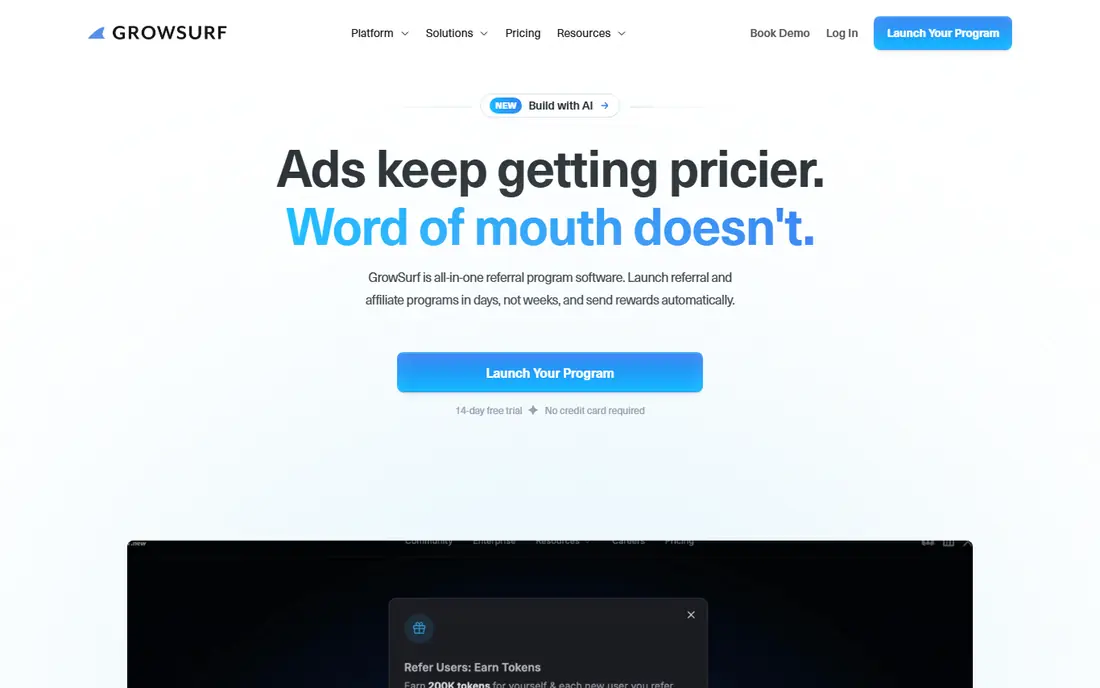
GrowSurf is designed for software and app businesses that want referrals inside the product, not only on a store checkout page. Referrers get a portal, a unique link, and progress tracking, while the business can set rewards tied to signups, upgrades, or other product events. That fit is closer to Referral Rock for B2B and service firms than a store-only tool, since the referral logic follows the customer journey rather than a single purchase.
The entry price is higher than store tools, and pricing summaries put the starting plan near $179 per month, with lower annual rates in some summaries. Small firms should check the current vendor page and the participant allowance, since a growing waitlist or user base can push you to a higher tier. Pick GrowSurf when referrals are a growth channel for a product, not a side promotion for a store.
- Built for product-led referrals
- Flexible rewards and participant tracking
- Embeddable referral portals
- Higher entry price for small firms
- Best with a technical team for custom setup
- Participant limits vary by tier

Referral Factory appeals to teams that want to launch without a long implementation project. You pick a template, set the reward, connect your CRM or store, and share referral links through email, social channels, or printed materials for offline referrals. That template approach helps service businesses and mid-size firms that need a working program this month, not a custom build next quarter.
The main caution is pricing clarity. Public summaries have shown different starting rates over time, so treat any third-party number as a guide and confirm the vendor page. The tool also focuses on referral campaigns rather than full loyalty programs, so brands that want points, tiers, and long-term retention may need a second tool. For a fast, flexible launch, Referral Factory is a practical middle ground.
- Template-based campaigns
- Supports online and offline referrals
- Webhooks and API for integrations
- Pricing has changed across summaries, so verify the current plan
- Advanced analytics sit on higher tiers
- Less depth for loyalty programs
Friendbuy serves consumer brands and subscription businesses that have outgrown a basic referral widget. It combines referral tracking with loyalty features, supports integrations with platforms such as Shopify and subscription tools, and gives larger teams the controls they need to prevent abuse and measure results. For a brand with steady order volume, that depth helps referrals scale without manual reward handling.
The barrier is access and cost. Friendbuy does not publish a simple starter price, so you will need a demo and a quote, and the total will reflect your volume and feature needs. Small stores with a handful of referrals per month will find cheaper options faster to start. Choose Friendbuy when referral volume, fraud risk, and subscription logic justify an enterprise-grade setup.
- Strong referral and loyalty features
- Integrations with major ecommerce and subscription tools
- Fraud controls for larger programs
- Custom pricing requires a sales conversation
- Can be more than a small store needs
- Setup is heavier than a simple widget
Yotpo Loyalty and Referrals
Best for: Brands that want loyalty and referrals together
Yotpo is a retention suite, and its loyalty and referrals product lets a store reward both repeat purchases and new-customer referrals from one system. A customer can earn points for purchases, reviews, or referrals, and redeem them in ways that fit the store margin. That combined view helps brands that want referrals to support repeat buying, not just one-time acquisition.
The trade-off is scope. If you only need referrals, a focused tool may be cheaper and simpler, while Yotpo makes sense when loyalty, reviews, and referrals will all be used. Free and paid tiers exist, but the useful paid plans are priced by the vendor on request or by plan, so check the current page for your store size. Pick Yotpo when retention, not just referral count, is the goal.
- Loyalty points and referrals in one platform
- Strong Shopify fit
- Reviews can sit in the same retention stack
- Full feature set is a suite, so costs rise with add-ons
- Best value for ecommerce, less so for pure B2B
- Setup takes planning
Ambassador, now part of a broader partner platform, is built for companies that run several kinds of partner programs at once. Referrals from customers, affiliates, influencers, and business partners can share tracking, rewards, and reporting, which helps larger firms avoid running four separate tools. Revenue attribution and payout handling are stronger here than in most store-focused tools.
That power comes with enterprise process. Pricing is custom, onboarding takes longer, and a small business with one referral campaign will pay for depth it does not use. Ambassador fits best when referrals are one part of a partner strategy that also includes affiliates or channel partners. If that is your situation, the unified reporting can justify the cost and setup time.
- Handles referrals, affiliates, and partners in one platform
- Strong tracking and payout options
- Enterprise integrations
- Custom pricing only
- Implementation is heavier than a store widget
- Overkill for a single small campaign
Mention Me is known for referral programs for larger retail and ecommerce brands, with a focus on testing what actually drives sharing. You can test different incentives, messages, and journeys, and track which version brings customers who keep buying. The Name Share feature also helps when a referral happens in conversation rather than through a link, which matters for brands with strong word-of-mouth.
The limits are cost and complexity. Mention Me is priced for brands with meaningful volume, and smaller firms will find the sales process slow compared with a self-serve signup. If your referral program is already working and you want to improve conversion and customer quality through testing, Mention Me is a serious upgrade. If you have not launched yet, start simpler and move here later.
- Strong A/B testing for referral offers
- Name-sharing feature for offline referrals
- Detailed referral analytics
- Enterprise focus with custom pricing
- Longer sales and setup cycle
- Less suited to tiny stores
Viral Loops covers referral mechanics beyond a standard refer-a-friend discount. It is built for waitlists, milestone rewards, contests, and launch campaigns, where sharing moves a person up a list or earns a reward. Startups, newsletters, and stores running a launch often get more value from that campaign style than from a permanent referral program alone.
The catch is fit for ongoing programs. If you need long-term referral tracking, payouts for closed sales, and CRM integration for a service business, Referral Rock, GrowSurf, or Ambassador will serve you better. Viral Loops is the pick when the goal is a burst of signups or a launch list, with clear rewards for each sharing milestone.
- Templates for waitlists, giveaways, and referral contests
- Easy sharing mechanics
- Useful for pre-launch growth
- Less depth for ongoing B2B referral payouts
- Pricing varies by participant volume
- Analytics are campaign-focused
How we picked these
We compared official feature pages, pricing pages, and public reviews for referral platforms that are live in October 2026, and we kept only tools that track referrals, manage rewards, and report results. We favored a mix of store, SaaS, service, and enterprise options so readers with different business types can find a fit. Prices shown are starting rates from vendor pages or recent pricing summaries, and we wrote See website where pricing is custom or has varied across public summaries. We did not claim hands-on testing, and we weighed fraud controls, reward flexibility, and total cost at realistic referral volumes.
How to choose the right referral tool
Start with the conversion event that earns a reward. A store rewards a purchase, a SaaS firm may reward a paid signup, and a service firm may reward a qualified lead or a closed deal. The tool must track that exact event without manual work, or the program will create admin overhead instead of growth. Check the integration for your store, CRM, or billing system before you look at templates, since a broken integration undermines every other feature.
Model the full cost
Add the monthly plan, any success fee, and payment or payout costs at your expected referral volume. A $39 plan with a percentage fee can cost more than a $179 flat plan once referrals grow, while a custom enterprise plan can be cheaper per referral at very high volume. Run the math at three volumes: your current level, double that level, and a strong month, so a good month does not become a surprise bill.
Protect the program from abuse
Self-referrals, fake accounts, and coupon sharing can drain a budget fast. Look for referral validation, approval workflows, limits per referrer, and fraud signals, and set a manual approval step for cash rewards at the start. Clear terms also help: state who qualifies, when a reward is paid, and what happens if an order is refunded or cancelled.
Launch small, then test
Pick one audience, one reward, and one sharing channel for the first campaign, and measure referrals, conversion rate, and refund rate separately from other marketing. Once the baseline works, test the reward size, the message, and the timing. Small, steady tests beat a complex launch with five rewards and no clear result.
FAQ
What is Referral Rock best for?
Referral Rock is best for service businesses and B2B firms that want referral programs with member portals, lead tracking, and rewards for leads or closed sales. It suits firms where referrals come from clients, partners, or staff, rather than only from store checkouts. The alternatives in this list cover the same ground, with store tools favoring purchases and SaaS tools favoring product signups.
How much does referral software usually cost?
Costs range from about $39 per month for a store tool to custom enterprise pricing for larger platforms, plus success fees on some plans. GrowSurf pricing summaries put its entry plan near $179 per month, while Friendbuy, Ambassador, and Mention Me price by quote. Always model the success fee and payout costs at your expected volume, not just the headline monthly rate.
Should I pay referrers in cash, credit, or discounts?
It depends on your margins and your customer type. Discounts work well for stores with repeat purchases, account credit suits SaaS firms, and cash suits B2B referrals where the referrer is not a buyer. Dual-sided rewards, where both the referrer and the new customer get something, often convert better than a one-sided reward, but they cost more per referral.
How do I stop fake referrals?
Use referral validation, require a qualifying purchase or signup before a reward is paid, limit rewards per referrer, and add manual approval for cash payouts. Clear program terms, refund rules, and a ban on self-referrals also help. Larger tools add fraud signals and testing, which matter more once a program grows beyond a few dozen referrals per month.
Can referral software work for a service business without a store?
Yes, if the tool tracks leads or closed deals rather than only store orders. GrowSurf, Referral Factory, Ambassador, and Referral Rock itself are built for that kind of tracking, often through forms, CRM links, or manual approval. Store-only tools can still work if you adapt them, but the reporting and reward logic will fit less cleanly.