Switching From Mode? 5 Alternatives for 2026
Compare 5 picks for Mode alternatives, with prices, free plans and who each fits. Sigma Computing takes the lead for AI apps on warehouse data. Easy to scan.
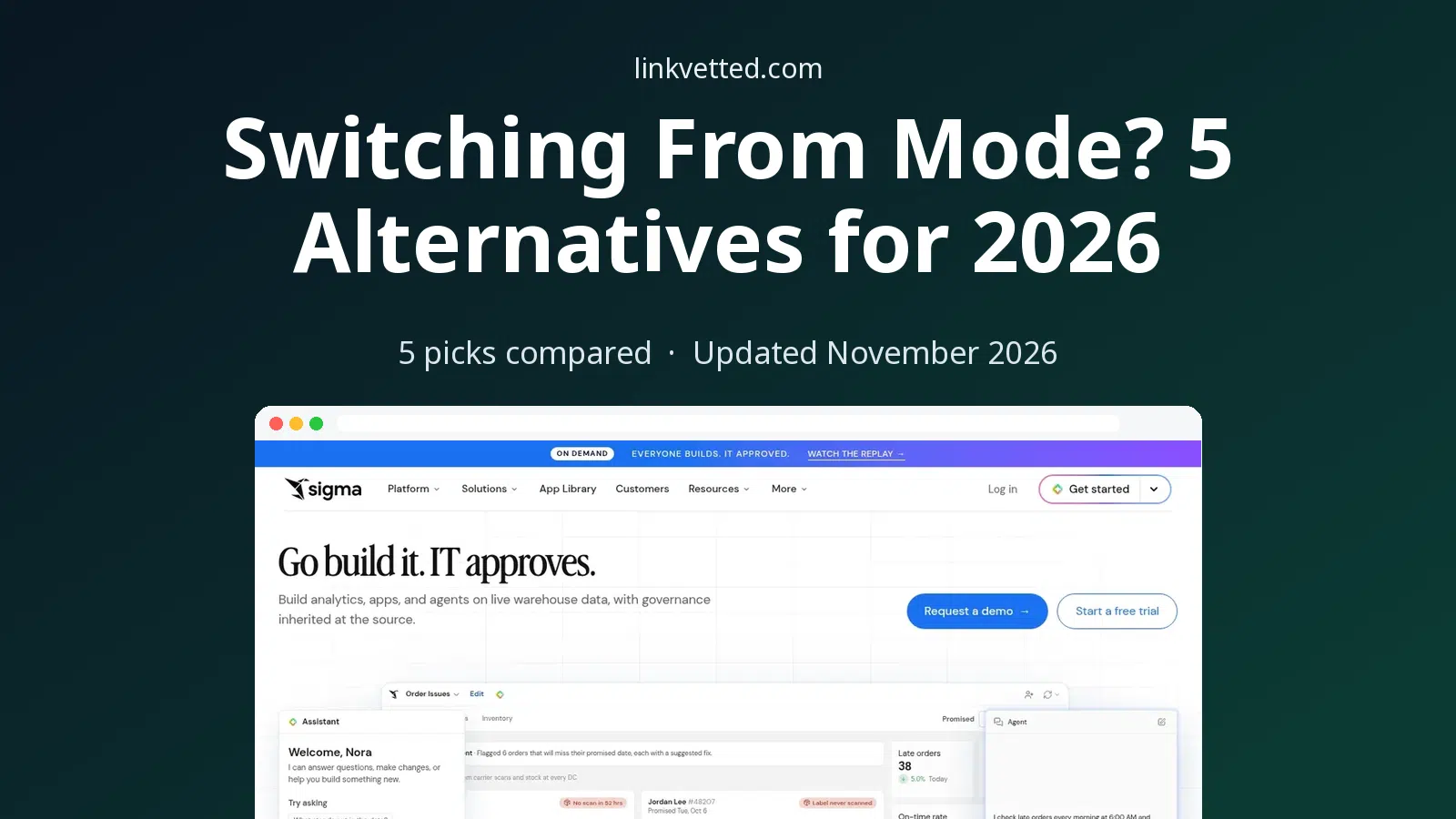
- Editor's choiceSigma Computing
AI apps on warehouse data
Starts atSee websiteVisit sigmacomputing.comFull review - Great alternative
 Tableau
Visual data exploration
Starts at$15 per user a monthVisit tableau.comFull review - Also consider
 Looker
Governed embedded analytics
Starts atSee websiteVisit looker.comFull review
Direct answer
For AI apps on warehouse data, Sigma Computing is where this list starts. Listed starting prices: Tableau from $15 per user a month and Metabase from $90 per month. If your case is different, Tableau suits visual data exploration and Looker suits governed embedded analytics. Prices, free plans and limits for all 5 tools follow.
TL;DR:
- The list opens with Sigma Computing, aimed at AI apps on warehouse data.
- Domo fits end-to-end data journey with AI.
- One limit worth knowing about Sigma Computing: needs a cloud data warehouse.
- Starting prices begin at $15 per user per month with Tableau.
Last checked November 2026. Prices and plan details were read from the vendors' own pages in November 2026; vendors change plans often, so confirm the current price on the vendor site before you buy.
Quick comparison
| Tool | Best for | Starts at | Free plan? | |
|---|---|---|---|---|
| Sigma Computing | AI apps on warehouse data | See website | Free trial | Visit |
| Tableau | Visual data exploration | $15 per user a month | Yes | Visit |
| Looker | Governed embedded analytics | See website | Not stated | Visit |
 Metabase | Open-source analytics with verifiable queries | $90 per month | Free trial | Visit |
 Domo | End-to-end data journey with AI | See website | Free trial | Visit |
Mode compared in detail
This LinkVetted guide covers 5 options for Mode. Each profile lists a starting price, free plan details, strengths and drawbacks, so you can drop poor fits quickly.
Sigma Computing
Best for: AI apps on warehouse data
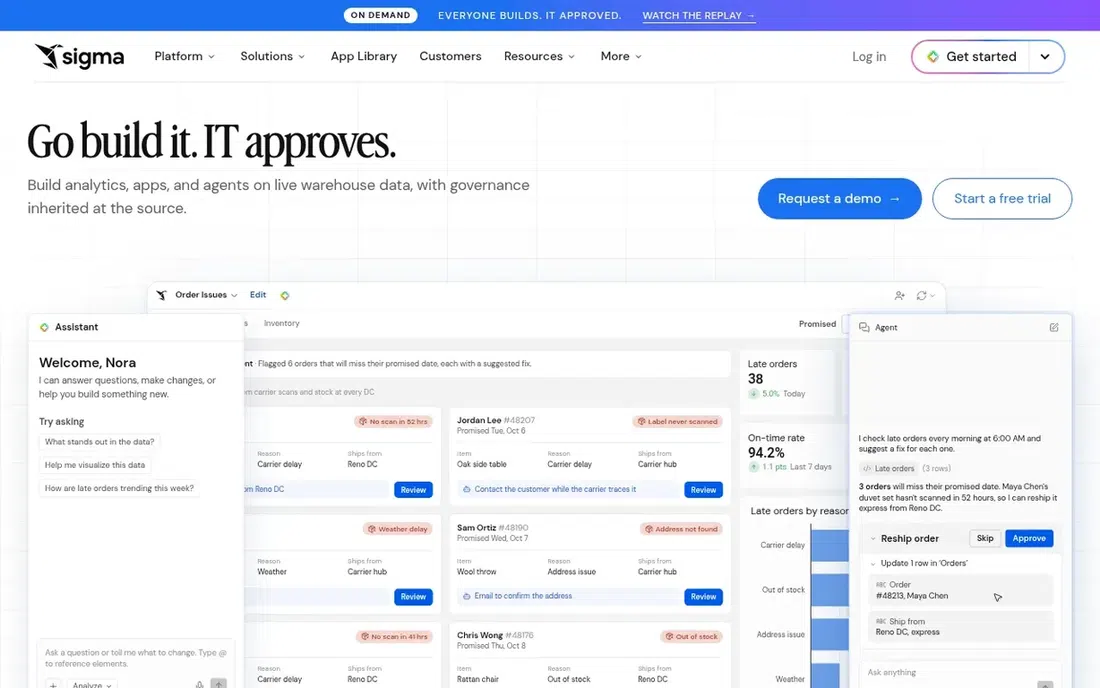
Sigma Computing was built for AI apps on warehouse data. Sigma needs a cloud data warehouse, which may not suit firms without one. Beyond that, Sigma Computing positions itself as the AI runtime for business.
It lets teams build and run AI apps, dashboards, and agents on governed warehouse data using chat, a spreadsheet interface, SQL, or Python. This makes it a solid fit for organizations with a modern data stack that want to enable several teams to build analytics. Check the vendor site for Sigma Computing pricing; none is listed in this comparison. Free options: Free trial.
Limits to weigh: May be overkill for straightforward reporting.
- Runs on governed warehouse data
- Build with chat, spreadsheet, SQL
- Needs a cloud data warehouse
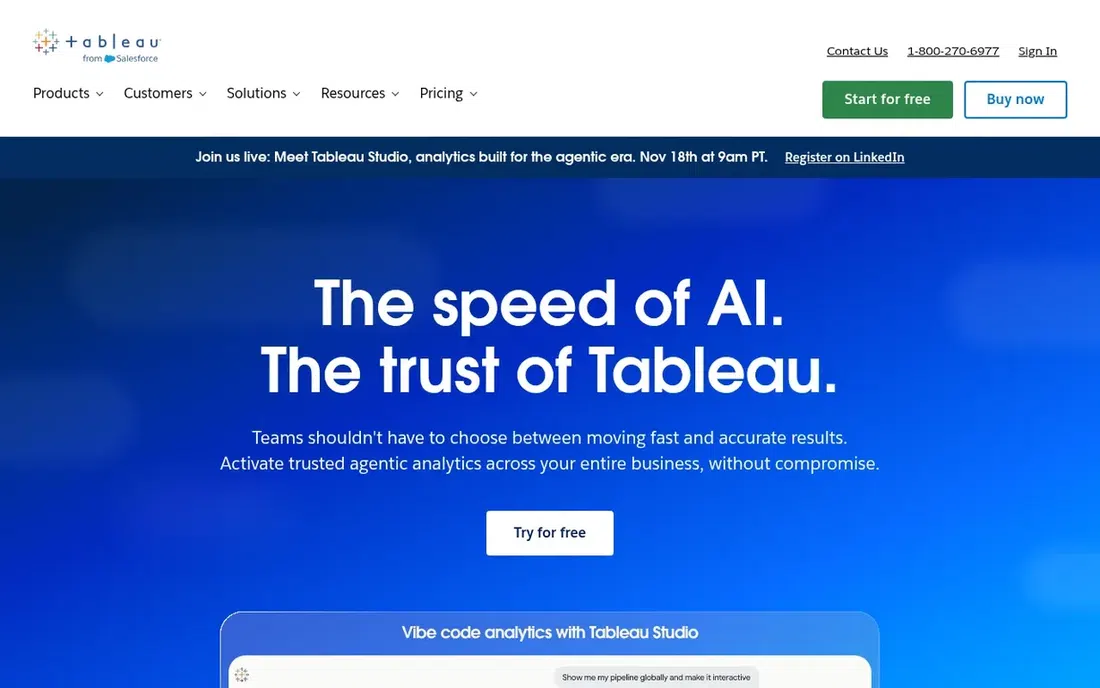
Think of Tableau for visual data exploration. Tableau is a widely used business intelligence and analytics software that helps people see and understand their data. Worth adding: consider Looker or Metabase for those needs.
Downsides: May need separate governance tools.
Also, Tableau's adaptability can result in inconsistent metrics without extra governance. It may not be the best choice for teams that require a built-in semantic layer or embedded analytics from day one. Tableau pricing: $15 per user per month. Tableau includes a free tier.
- Simple sharing of dashboards
- Drag-and-drop visualization creation
- Can become complicated at scale
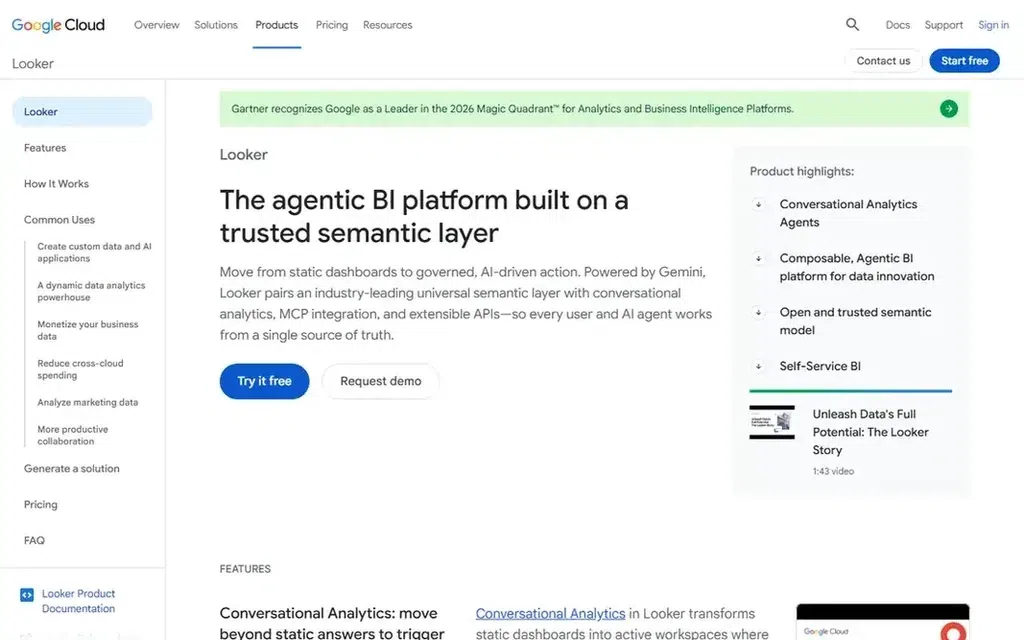
Looker was built for governed embedded analytics. Looker is Google Cloud's agentic business intelligence and embedded analytics system. It brings together metrics through a trusted semantic layer and uses Gemini agents to assist with analysis.
This makes it a good fit for organizations that require consistent, governed metrics and want to embed analytics into other applications. It may not be a strong match for teams seeking light, self-service exploration without governance. On top of that, consider other choices if you need a simpler, more visual-first tool. No starting price is listed for Looker here; confirm pricing on the vendor site. Free options: Not stated.
What to check first: Needs setup of semantic model.
- Solid embedded analytics capabilities
- Trusted semantic layer for consistent metrics
- May be complicated for ad-hoc exploration
Metabase is a good fit for open-source analytics with verifiable queries. Metabase is an open-source AI analytics tool that grounds every answer in your semantic layer, your metrics and business logic.
So you can inspect the query behind it. From a buyer's view, Metabase may not offer the same depth of embedded analytics or AI agents as some commercial products. What you pay to start with Metabase: $90 per month. As for free access: Free trial.
Where it falls short: Needs technical setup for self-hosting.
- Lets you inspect the query behind answers
- Grounds answers in a semantic layer
- May lack advanced embedded features
Domo serves end-to-end data journey with AI. It fits organizations looking for a thorough system that includes data integration through to analytics.
Also, Domo's wide feature set may come with complexity and cost that are not well suited to smaller teams or those seeking a light tool. No starting price is listed for Domo here; confirm pricing on the vendor site. Trial and free access: Free trial.
Limits to weigh: Can be expensive for small teams.
- Accelerates business-critical insights
- Links and moves data from any source
- May be complicated to set up
What went into this list
A buyer's checklist
- Confirm the entry price on the vendor page. For Sigma Computing, Looker and Domo that means a quote rather than a fixed price.
- Look at the free plan from Tableau closely: its caps decide whether it is usable for real work.
- Take the trial from Sigma Computing, Metabase and Domo and push a live task through it before you pay.
- Read the limits listed for Sigma Computing first: needs a cloud data warehouse.
- Map your must-have features to a specific Sigma Computing plan before you compare prices.
- Check how data leaves Looker: formats, limits and whether exports are available on every plan.
FAQ
Is Sigma Computing the right pick for everyone comparing Mode?
No single tool suits every team. Sigma Computing comes first because it fits AI apps on warehouse data, while Tableau suits visual data exploration and Looker suits governed embedded analytics. Match the tool to your own size, budget and workflow before deciding.
Which options for Mode have a free plan?
Tableau is the only tool in this list with a free plan. Free plans usually cap users, projects or features, so check the limits on the vendor page. Several others offer a trial instead. Prices, free plan details and limits for all 5 tools in this Mode alternatives roundup sit on the individual cards above.
How are the tools for Mode ordered?
The order follows typical fit for Mode, with Sigma Computing first and Domo last, then price clarity and free access. It is editorial judgement, not a score, so another team could rank the tools differently.
Do these tools publish their prices?
Not all of them. Sigma Computing, Looker and Domo publish no starting price, so expect a quote request for those. The rest, Tableau included, show a starting price, though seats and billing terms still change the final cost.
Sources
- https://www.sigmacomputing.com
- https://www.tableau.com
- https://looker.com
- https://www.metabase.com
- https://www.domo.com