Microsoft Premier Support Alternatives in 2026: 9 Options Compared
We compared microsoft premier support alternatives, from US Cloud and Unified Support to partner support, with pricing models and escalation trade-offs.

- Editor's choice
 US Cloud
Full third-party replacement
Starts atSee websiteVisit uscloud.comFull review - Great alternative
 Microsoft Unified Support
Direct Microsoft support
Starts atSee websiteVisit microsoft.comFull review - Also consider
 Park Place Technologies
Support plus hardware maintenance
Starts atSee websiteVisit parkplacetechnologies.comFull review
TL;DR:
- Microsoft retired Premier Support in favor of Unified Support, so most buyers are really choosing between Unified, a third-party provider, or partner support.
- US Cloud is the most established third-party replacement, with 24/7 support from senior Microsoft-certified engineers and pricing based on your deployment.
- Third-party providers typically claim savings of 30 to 50 percent against Unified list pricing, but treat that as a starting point for your own quote.
- Partner support through a CSP or managed provider suits mid-size companies that already buy licensing and cloud services from that partner.
- Our pick for large enterprises is to benchmark US Cloud against Unified before renewal, and for mid-size firms to test partner support first.
Quick comparison
| Tool | Best for | Starts at | Free plan? | |
|---|---|---|---|---|
| US Cloud | Full third-party replacement | See website | No | Visit |
| Microsoft Unified Support | Direct Microsoft support | See website | No | Visit |
| Park Place Technologies | Support plus hardware maintenance | See website | No | Visit |
 Spinnaker Support | Third-party Microsoft support | See website | No | Visit |
 TrustedTech | Mid-market monthly support | See website | No | Visit |
 CDW | Managed Microsoft services | See website | No | Visit |
 SHI International | Large-scale Microsoft lifecycle | See website | No | Visit |
 Insight | Cloud care and governance | See website | No | Visit |
 Rackspace Technology | Managed Azure and Microsoft 365 | See website | No | Visit |
The best microsoft premier support alternatives
Microsoft Premier Support was the old name for enterprise support from Microsoft itself. It was replaced by Microsoft Unified Support, which prices support as a percentage of total Microsoft spend and bundles proactive services with reactive help. The microsoft premier support alternatives below cover the real options in 2026: Unified itself, independent third-party providers, and partner-delivered support. We compared official provider pages, pricing descriptions and public analyses, and we only listed providers that are actively selling Microsoft support in October 2026.
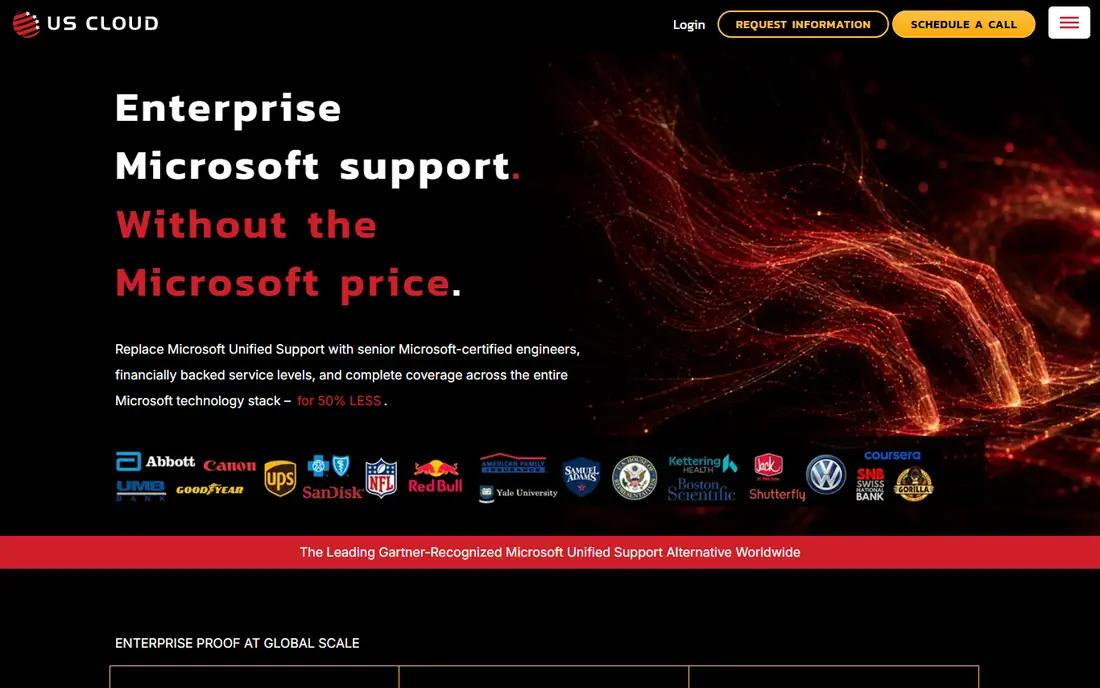
US Cloud is the provider most often named as a full replacement for Microsoft Premier and Unified Support. It offers 24/7 support from senior Microsoft-certified engineers, covers the full Microsoft stack including Azure and Microsoft 365, and prices support based on your actual deployment and ticket patterns rather than a percentage of your Microsoft bill. The company states that most tickets are resolved in-house, with escalations to Microsoft handled through its own partner support channels.
The trade-off is the same for every third-party provider: the rare case that needs a Microsoft code fix still goes through Microsoft, either via the provider's escalation route or a separate Microsoft channel. US Cloud claims savings of 30 to 50 percent against Unified list pricing, which matches the range cited by independent analyses, but treat that as a vendor claim to verify with your own quote. For a large enterprise facing a Unified renewal, US Cloud is the first alternative to benchmark.
- Microsoft-only focus with senior engineers around the clock
- Financially backed SLAs
- Pricing based on deployment, not total Microsoft spend
- No direct access to Microsoft engineering for code fixes
- Quote-based pricing needs a scoping call
Unified Support is not an alternative to Premier in the usual sense, since it is Premier's successor, but it belongs on this list because many buyers compare it against third-party options at renewal. It offers direct access to Microsoft engineering, proactive assessments and health checks through Services Hub, and a named customer success account manager on higher tiers. For a company that needs code-level fixes from Microsoft itself, no third party can fully match that access.
The drawback is pricing. Unified is priced as a percentage of total Microsoft spend, which means support costs grow when licensing or Azure usage grows, even if ticket volume stays flat. That model is why many enterprises now benchmark alternatives before renewal. If direct Microsoft engineering access matters more than price, Unified stays the safe choice. If price and flexibility matter more, the providers below deserve a quote.
- Direct escalation into Microsoft engineering
- Proactive assessments through Services Hub
- Named account management on higher tiers
- Priced as a percentage of Microsoft spend, so costs rise with licensing
- Least flexible pricing model here
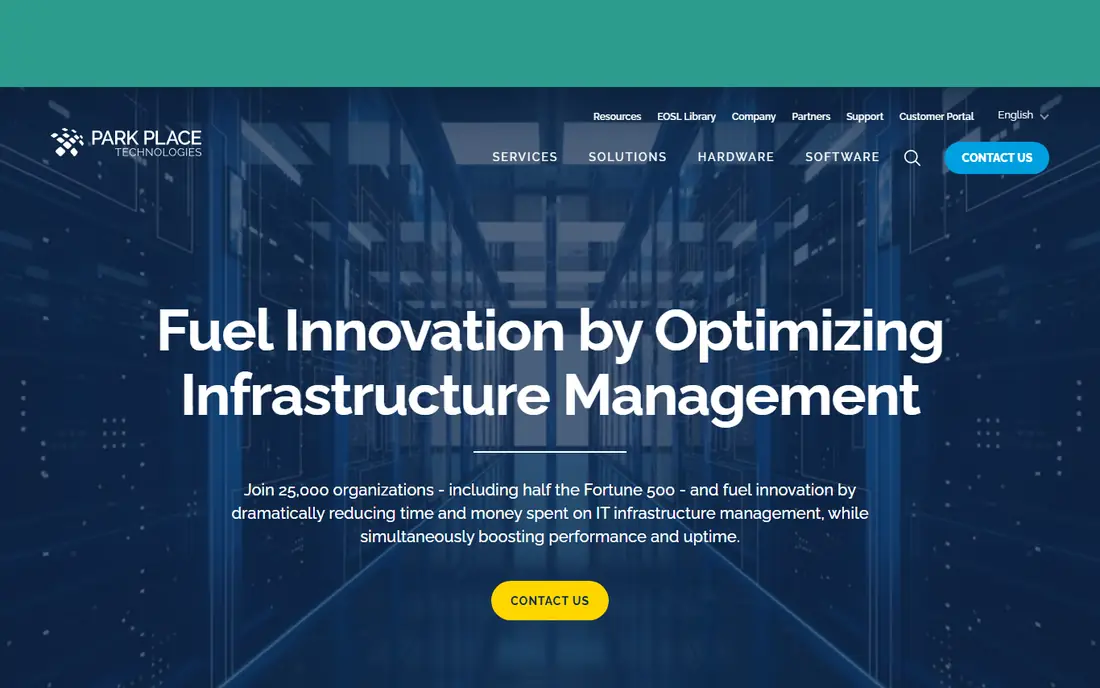
Park Place Technologies is best known for third-party hardware maintenance, and it also sells 24/7 support across the Microsoft stack. That combination suits buyers who want to consolidate data center maintenance and Microsoft support with one provider, cutting vendor count and simplifying contracts. Pricing is quoted based on the deployment covered, rather than a published price list.
The catch is focus. Microsoft support is part of a broader portfolio, not the whole business, so buyers should check engineer seniority, escalation routes and Microsoft stack depth during evaluation. For a company already consolidating maintenance contracts, Park Place is a practical alternative to evaluate. For a company that wants a Microsoft-only specialist, US Cloud is the closer fit.
- 24/7 support across the Microsoft stack
- Pairs with hardware maintenance from the same vendor
- Useful for data center consolidation
- Microsoft support is one line among broader services
- Quote-based pricing
Spinnaker Support is another independent third-party provider in the category tracked by Gartner for independent support of large vendors, including Microsoft, Oracle and SAP. It sells support priced on the deployment and cases covered, rather than total vendor spend, which is the same structural advantage as other third-party options. That model appeals to buyers who want support costs tied to what they actually use.
Public detail on its Microsoft-specific staffing and SLAs is thinner than US Cloud, so evaluation needs direct questions about engineer levels, response times and escalation paths. Spinnaker suits a buyer already considering third-party support for several vendors at once, since one provider can cover more than Microsoft. For a Microsoft-only replacement, compare it head to head with US Cloud on response and resolution terms.
- Independent third-party support for Microsoft and other vendors
- Pricing tied to deployment and use
- Experienced support teams
- Less Microsoft-specific public detail than US Cloud
- Quote-based pricing
TrustedTech is a Microsoft partner selling 24/7 support on monthly subscription terms across several plan levels. That monthly structure suits mid-market buyers who prefer predictable payments over a large annual Unified-style contract, and the partner model includes escalation to Microsoft for the most severe cases. It is a good fit for a company that wants third-party support without enterprise-scale procurement.
The limit is scale and public detail. TrustedTech is smaller than the large providers on this list, so buyers should confirm coverage hours, engineer certification and SLA backing in writing. For a mid-size Microsoft 365 and Azure estate, though, monthly partner support can be a simpler and cheaper alternative to Unified, and the subscription model makes it easy to trial.
- Monthly subscription across several plan levels
- 24/7 support from a Microsoft partner
- Escalation to Microsoft for severe cases
- Smaller scale than US Cloud or the large partners
- Plan details need a direct quote
CDW is one of the largest technology providers in the US, and its managed services cover Azure, Microsoft 365 and cloud operations alongside licensing. For a mid-to-large enterprise that already buys hardware, licensing and cloud services from CDW, adding support to that relationship can simplify procurement and give one throat to choke for day-to-day issues. Structured delivery and a large engineering bench are real strengths.
The trade-off is that support sits inside a wide portfolio, so the quality of Microsoft-specific support depends on the package and team assigned. Buyers should ask how support is staffed, what response times are guaranteed, and how escalations into Microsoft work for severe cases. For a company that values a single large partner, CDW is a strong microsoft premier support alternative to scope.
- Large managed services provider with Azure and Microsoft 365 depth
- Licensing plus support from one partner
- Structured service delivery
- Support is part of a wide portfolio
- Pricing and SLAs depend on the managed services package
SHI International is another large partner with deep Microsoft lifecycle services, covering cloud adoption, Azure optimization, licensing advisory and ongoing support. Enterprises with large Microsoft estates value SHI for lifecycle management: keeping licensing, costs and cloud usage aligned while support handles incidents. That breadth suits a company that wants support plus governance in one relationship.
As with CDW, support is part of a wider offer, so buyers should evaluate the specific support team, SLAs and escalation routes rather than the partner brand alone. SHI suits large enterprises that already work with a licensing partner and want support folded into that relationship. For a pure support replacement, a Microsoft-focused provider may offer sharper SLAs.
- Large-scale Microsoft cloud lifecycle services
- Azure optimization and licensing advisory
- Broad partner reach
- Support quality varies by engagement
- Quote-based managed services pricing
Insight sells Azure Cloud Care and managed services with an emphasis on cost control, governance and lifecycle management. For a business whose main pain is Azure sprawl and rising cloud costs alongside support needs, that combination is attractive: support tickets get handled while governance work keeps the estate tidy. Modernization services also help teams moving older workloads to Azure.
The limit is packaging. Insight support is typically bundled with managed services rather than sold as a standalone Unified replacement, so a buyer who only wants break-fix support may find the package broader than needed. For a company that wants support plus cloud governance, Insight is a credible alternative to evaluate alongside CDW and SHI.
- Azure Cloud Care and managed services
- Cost control and governance focus
- Modernization and lifecycle support
- Support is bundled with managed services, not sold as a standalone replacement
- Pricing by engagement
Rackspace Technology offers managed Azure and Microsoft 365 services with continuous monitoring and global coverage, which suits organizations that need round-the-clock operations support, not just incident response. Its managed services background means monitoring, patching and optimization sit alongside ticket handling, which can reduce incidents over time rather than just resolving them faster.
Pricing is engagement-based, so the support scope depends on the tier and services chosen. Buyers should confirm what counts as support versus managed operations, and which response times are guaranteed in writing. For a company that wants a managed operations partner rather than a pure support vendor, Rackspace is a strong final option on this list.
- Continuous monitoring and global coverage
- Managed Azure and Microsoft 365 expertise
- Long managed services track record
- Managed services pricing is engagement-based
- Support scope depends on the service tier chosen
How we picked these
We compared official provider pages and public analyses of Microsoft support options, and we only listed providers that are actively selling Microsoft support in October 2026. We favored providers with a clear Microsoft support offer, whether as a third-party replacement, a partner service or a managed service, and we left out general IT firms with no documented Microsoft support practice. Prices are marked See website throughout, because enterprise support is quoted per deployment, and any published percentage saving is a vendor claim to verify with your own quote. We note escalation trade-offs honestly, since direct Microsoft engineering access is the main thing third-party options cannot fully replicate.
How to choose a Premier Support alternative
Start before your renewal, not during it. Benchmark at least one third-party provider, such as US Cloud, against your current or quoted Unified cost, using your real ticket history and deployment size. Ask every provider the same hard question: when a critical incident happens at 2 a.m. on a Saturday, does your team resolve it, or do you open a ticket with Microsoft and wait in its queue? The answer reveals more about the support model than any marketing page.
Then check the contract details that decide value: financially backed SLAs, engineer seniority and certification, coverage hours, escalation routes for cases needing a Microsoft code fix, and whether proactive assessments are included or extra. Also confirm what you lose by leaving Unified, such as the named account manager and Services Hub assessments, and decide whether a partner or third party replaces those with reporting and reviews of its own. The cheapest quote is not the best deal if severe-case escalation is slow or unclear.
FAQ
What replaced Microsoft Premier Support?
Microsoft Unified Support replaced Premier Support as the main enterprise support offer from Microsoft. Unified bundles proactive and reactive support and prices it as a percentage of total Microsoft spend. Many buyers now compare Unified against third-party providers and partner support at renewal, since the pricing model differs sharply.
What is the best microsoft premier support alternative?
US Cloud is the most established third-party replacement, with Microsoft-only focus, senior engineers and deployment-based pricing. For companies that want direct Microsoft engineering access, Unified Support itself remains the strongest option. Mid-size firms often do best with partner support from a CSP or managed provider they already use.
How much can third-party Microsoft support save?
Providers and independent analyses commonly cite savings of 30 to 50 percent against Unified list pricing, because third-party pricing follows your deployment and ticket volume rather than total Microsoft spend. Treat that range as a starting point, not a promise, and get a scoped quote based on your real environment before budgeting savings.
Do I lose access to Microsoft engineers with third-party support?
You lose direct access to Microsoft engineering and the named account manager that Unified provides. Good third-party providers resolve most tickets in-house and escalate the minority that need a Microsoft code fix through their own Microsoft support channels. Confirm the escalation route in writing before signing, since it matters most for severe cases.
What is CSP partner support, and is it a real alternative?
CSP partner support means your Cloud Solution Provider partner delivers first-line Microsoft support, often bundled with licensing or cloud services. It suits mid-size companies that already buy from that partner, but quality varies widely between partners. Check response times, engineer depth, escalation paths and whether the partner holds a Microsoft Support Services designation before treating it as a Unified replacement.
Should I use pay-per-incident support instead?
Pay-per-incident support suits companies with very few Microsoft incidents a year, since you pay only when you open a case. It is not a replacement for 24/7 SLA-backed support if downtime costs you revenue or breaches compliance duties. Compare your last two years of ticket counts against an annual support quote to see which model costs less in practice.