Best Lambda Labs Alternatives in 2026: 8 GPU Cloud Providers Compared
Compare the best lambda labs alternatives for GPU rentals, training, and inference, from RunPod and Vast.ai to CoreWeave, Modal, and Nebius in 2026 today.
- Editor's choice
 RunPod
Flexible GPU rentals and serverless
Starts atSee websiteVisit runpod.ioFull review - Great alternative
 Vast.ai
Lowest-cost GPU rentals
Starts atSee websiteVisit vast.aiFull review - Also consider
 CoreWeave
Enterprise GPU clusters
Starts atSee websiteVisit coreweave.comFull review
TL;DR:
- RunPod is the most flexible Lambda replacement for developers, with secure cloud, community cloud, and serverless options.
- Vast.ai offers the lowest headline prices, but reliability depends on the host you pick.
- CoreWeave and Nebius suit larger teams and enterprises that need clusters and stronger support.
- GPU prices change with availability, so check the live price for your exact GPU, region, and term before you rent.
Quick comparison
| Tool | Best for | Starts at | Free plan? | |
|---|---|---|---|---|
| RunPod | Flexible GPU rentals and serverless | See website | No | Visit |
| Vast.ai | Lowest-cost GPU rentals | See website | No | Visit |
| CoreWeave | Enterprise GPU clusters | See website | No | Visit |
 Paperspace | Notebooks and managed GPU work | See website | No | Visit |
 Modal | Serverless GPU apps | See website | Yes | Visit |
 TensorDock | Small team GPU rentals | See website | No | Visit |
 Nebius | European GPU capacity | See website | No | Visit |
 Hyperstack | Multi-node training in Europe | See website | No | Visit |
The best lambda labs alternatives
We compared GPU cloud providers on GPU range, pricing model, serverless options, storage, networking, and support, using vendor pricing pages and recent pricing comparisons as our main sources.
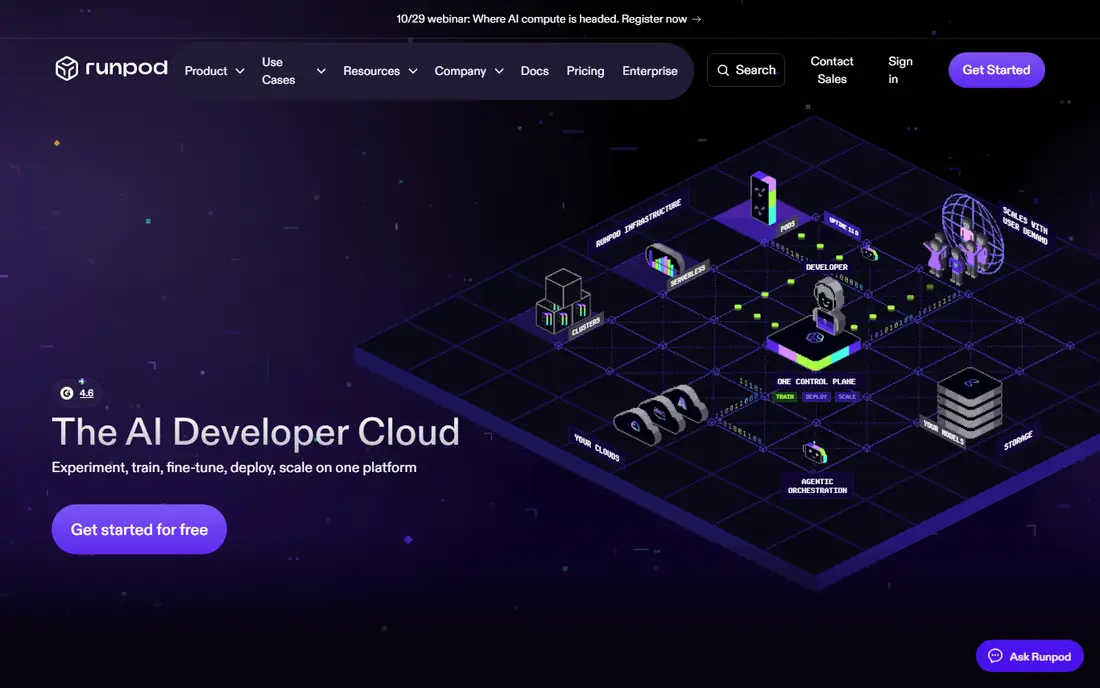
RunPod is our pick for most developers moving from Lambda, because it covers several use cases in one account. Secure Cloud offers managed data center GPUs, Community Cloud offers lower-cost host capacity, and serverless endpoints scale inference from zero without managing servers. Templates for PyTorch, CUDA, and common frameworks help you start a pod quickly.
The catch is that Community Cloud is not the same as Secure Cloud. Host quality, bandwidth, and interruption risk vary, so production work belongs on Secure Cloud or serverless, while experiments can use Community Cloud to save money. Check the live hourly rate for your GPU, since prices move with availability.
- Secure Cloud and Community Cloud options
- Serverless endpoints
- Broad GPU catalog
- Community Cloud reliability varies
- Pricing varies by GPU and availability
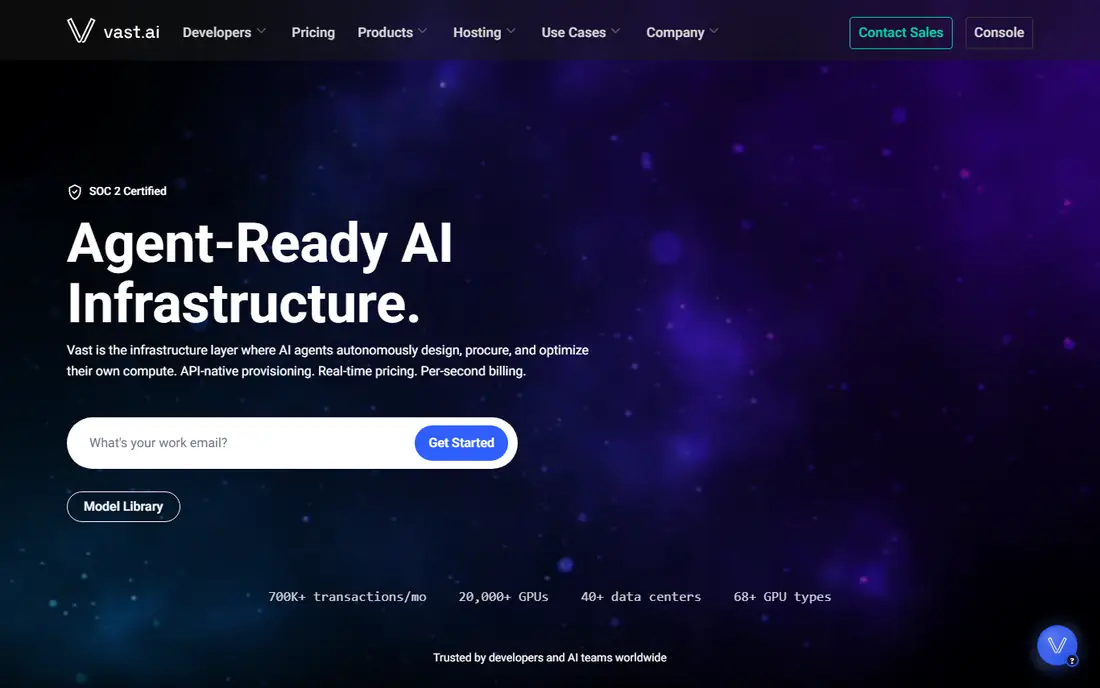
Vast.ai is a marketplace where hosts rent GPU capacity, which often produces the lowest headline hourly rates for a given card. That makes it attractive for prototyping, batch inference, and short fine-tuning jobs where an interruption is annoying but not costly. Consumer cards such as RTX models can be especially cheap for smaller models.
The trade-off is reliability. Hosts differ in uptime, bandwidth, and support, and spot-style instances can be reclaimed. For fault-tolerant batch work, Vast.ai is a strong value. For production inference or long training runs, pick a verified data center host or a managed cloud instead.
- Very low marketplace prices
- Wide GPU range including consumer cards
- Per-second billing on many offers
- Reliability depends on individual hosts
- Support is thinner than managed clouds
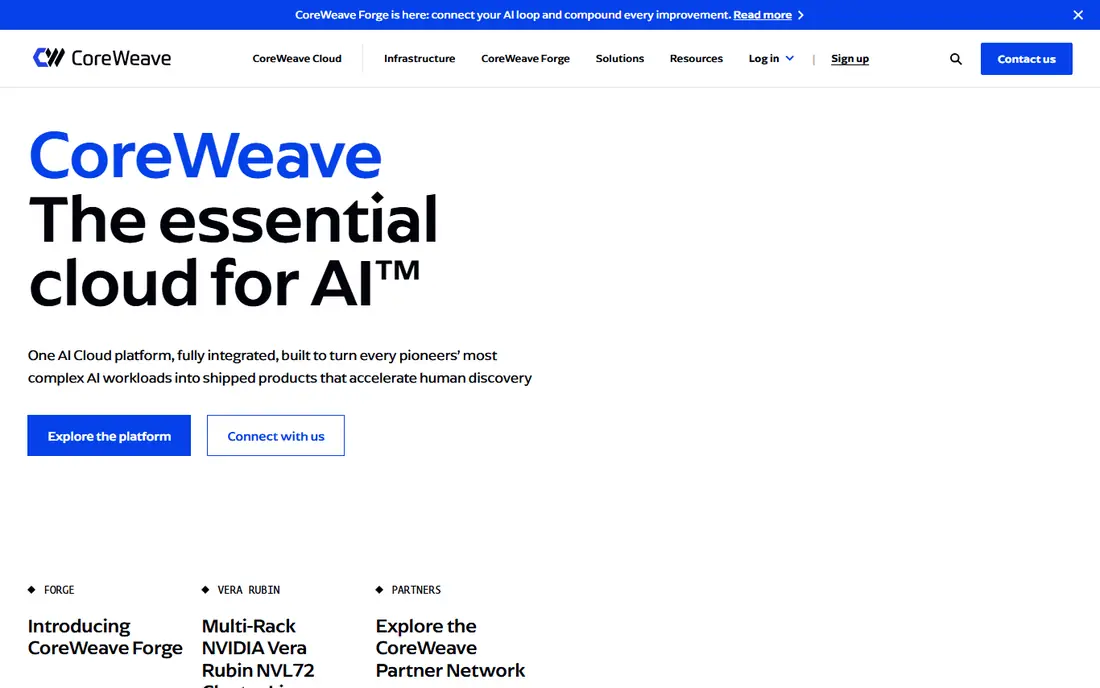
CoreWeave is built for large-scale training and inference, with clusters that use fast interconnects and managed Kubernetes. It suits companies that need many GPUs working together, strong support, and predictable capacity for production workloads. For enterprise AI teams, that scale and service level matter more than the lowest single-GPU price.
Small teams and solo developers will find CoreWeave harder to access and more expensive for single-GPU experiments. Pricing is often contract-based for large clusters, so get a quote for your exact cluster size and term. If you only need one or two GPUs, RunPod or Vast.ai will be simpler.
- Large GPU clusters with fast networking
- Managed Kubernetes
- Enterprise support
- Contract and enterprise focus
- List prices are higher than marketplace options
Paperspace, now part of DigitalOcean, suits developers and small teams who want notebooks and managed GPU machines without building infrastructure. Gradient notebooks let you run experiments in the browser, and managed machines cover training and inference without a complex cluster setup. That simplicity helps students, researchers, and small product teams.
The downside is price for some flagship GPUs, where hourly rates can sit above specialist clouds. Paperspace is best when ease of use and notebook workflows matter more than squeezing the lowest hourly rate. For large clusters, CoreWeave or Nebius may offer better scale.
- Gradient notebooks for easy experiments
- Managed machines
- Part of DigitalOcean ecosystem
- Higher hourly rates for some GPUs
- Less focus on huge clusters
Modal is a serverless platform for running Python code on GPUs, which suits teams building inference APIs, batch jobs, and AI features inside an app. You define functions in Python, Modal runs them on GPUs, and billing follows actual use, with scaling from zero when idle. That model avoids paying for idle servers.
The limit is focus. Modal is code-first and Python-first, so it is less natural for interactive notebook exploration or for teams that want a simple virtual machine. If your work is already Python functions and APIs, Modal is a clean Lambda alternative. If you want a desktop-style VM, pick RunPod or Paperspace.
- Serverless GPU functions with per-second billing
- Python-first workflow
- Scales from zero
- Code and Python focus
- Less suited to long interactive notebook sessions
TensorDock offers straightforward GPU rentals aimed at developers and small teams that want a simple alternative to larger clouds. It covers common GPUs for training and inference, with per-hour billing that is easy to understand. For a small team running experiments or a modest inference service, that simplicity is useful.
The trade-off is scale. TensorDock does not match CoreWeave on cluster size or enterprise support, and region coverage is narrower. It is a good pick for single-GPU and small multi-GPU work, and a weaker pick for a large production cluster.
- Simple GPU rentals for small teams
- Competitive rates for many cards
- Straightforward billing
- Smaller scale than leading clouds
- Fewer regions and enterprise features
Nebius suits European teams and companies that need data residency in Europe plus large GPU capacity. It offers managed AI cloud services, including clusters for training and inference, with a focus on European regions. For teams with compliance or latency needs in Europe, that regional focus is a real advantage.
The downside is access and pricing complexity. Rates vary by GPU, region, and commitment, and enterprise onboarding takes more time than renting a single pod on RunPod. If European residency is not a requirement, compare Nebius against CoreWeave and RunPod on total cost for your workload.
- European data residency options
- Large GPU capacity
- Managed AI cloud services
- Pricing varies by region and term
- Enterprise onboarding takes time
Hyperstack offers GPU cloud capacity with a focus on multi-node training and European regions. Fast interconnects help distributed training, and per-minute billing keeps short experiments affordable. For research teams and startups in Europe that need cluster training without hyperscaler prices, Hyperstack is worth checking.
The limit is scale and availability. As a smaller provider, Hyperstack may not have the same GPU availability in every region as larger clouds, so check live stock for your card before planning a run. For single-GPU work, RunPod may be simpler, but for European clusters, Hyperstack is a credible option.
- Multi-node clusters with fast interconnects
- European regions
- Per-minute billing on many offers
- Smaller provider than hyperscalers
- Availability varies by GPU and region
How we picked these
We compared official pricing pages, product documentation, and recent GPU pricing comparisons for specialist GPU clouds, marketplace clouds, and serverless platforms. We favored providers that rent NVIDIA GPUs for AI training and inference, with clear billing models and current availability. We included marketplace, managed, and serverless options because Lambda users range from solo researchers to enterprise teams, and we noted reliability and support trade-offs honestly.
How to choose a GPU cloud without wasting money
Start with your workload shape, not the GPU name. Training needs sustained, high-memory GPUs and fast networking, inference needs low latency and scaling, and prototyping needs cheap, flexible rentals. Matching the workload to the provider type will save more than chasing the lowest hourly rate for the wrong setup.
Price, storage, and egress
Check the full cost, including GPU hours, storage, and data transfer, since some providers charge more for persistent storage or egress. Marketplace clouds can look cheap until a job restarts and loses progress, so factor in checkpointing and retry time. Always check the live price for your exact GPU, since availability moves prices daily.
Reliability and support
For production inference, choose a managed cloud or serverless platform with support and uptime terms you can rely on. For experiments, a marketplace host is fine if your job can restart from a checkpoint. Ask about interruption policies, support response times, and whether your region has the GPU stock you need.
FAQ
What is the cheapest Lambda Labs alternative?
Vast.ai usually offers the lowest headline hourly rates, because hosts set marketplace prices and consumer cards can be very cheap. RunPod Community Cloud is also low-cost for many GPUs. The cheapest option for your job depends on the GPU, region, and whether your work can tolerate interruptions.
Is RunPod better than Lambda Labs?
RunPod is more flexible than Lambda for many developers, thanks to Secure Cloud, Community Cloud, and serverless options in one account. Lambda offers a simpler managed experience for research teams that want straightforward rentals. The better pick depends on whether you need serverless inference, marketplace prices, or simple managed pods.
Can I use these GPU clouds for inference?
Yes, RunPod serverless, Modal, and managed clouds all support inference, with scaling and API endpoints for production use. Marketplace rentals suit batch inference, where you process a dataset and stop. For live APIs, choose a serverless or managed option with autoscaling and support.
Do I need a cluster for AI training?
No, most fine-tuning and small-model training runs on one or a few GPUs, and a single pod is enough. Large-model training needs clusters with fast interconnects, which is where CoreWeave, Nebius, and Hyperstack help. Start with a single GPU, measure speed and memory use, and scale only when the job proves it needs more.
How do GPU prices work?
Most providers charge per GPU per hour or per second, with rates varying by GPU model, region, availability, and commitment term. Serverless platforms charge for actual compute time, while marketplace clouds let hosts set prices. Storage, networking, and data transfer can add costs, so check the full pricing page.
What GPU should I pick for a small model?
A consumer or mid-range data center GPU with enough memory for your model and batch size is usually enough for small models and prototypes. Check the model memory needs, including weights and activations, before renting a flagship card. Renting a larger GPU than you need wastes money, while renting too small a card causes out-of-memory errors.