Best Kapost Alternatives in 2026: 8 Content Platforms Compared
Looking for kapost alternatives? We compare 8 content operations platforms on calendars, workflows, creator networks, and publishing for teams in 2026.

- Editor's choice
 Contently
Managed content with creators
Starts atSee websiteVisit contently.comFull review - Great alternative
 CoSchedule
Marketing calendars and social
Starts atSee websiteVisit coschedule.comFull review - Also consider
 DivvyHQ
Complex editorial workflows
Starts atSee websiteVisit divvyhq.comFull review
TL;DR:
- DivvyHQ and CoSchedule are the closest calendar and workflow swaps for most Kapost teams.
- Contently and Skyword suit brands that also need vetted freelance creators.
- StoryChief suits smaller teams that publish to many channels from one place.
- Content operations tools vary from simple calendars to full managed services, so price and scope differ widely.
Quick comparison
| Tool | Best for | Starts at | Free plan? | |
|---|---|---|---|---|
| Contently | Managed content with creators | See website | No | Visit |
| CoSchedule | Marketing calendars and social | See website | Yes | Visit |
| DivvyHQ | Complex editorial workflows | See website | No | Visit |
 StoryChief | Multichannel publishing for small teams | See website | Yes | Visit |
 Skyword | Managed content and creators | See website | No | Visit |
 Optimizely CMP | Enterprise content orchestration | See website | No | Visit |
 GatherContent | Structured content production | See website | Free trial | Visit |
 ClearVoice | Freelance marketplace plus workflow | See website | No | Visit |
The best kapost alternatives
We compared official feature pages, pricing pages, and public reviews to build this list. Each option below is a real product that works today, and each one fits a different kind of buyer, so read the best-for line first and then the trade-offs.
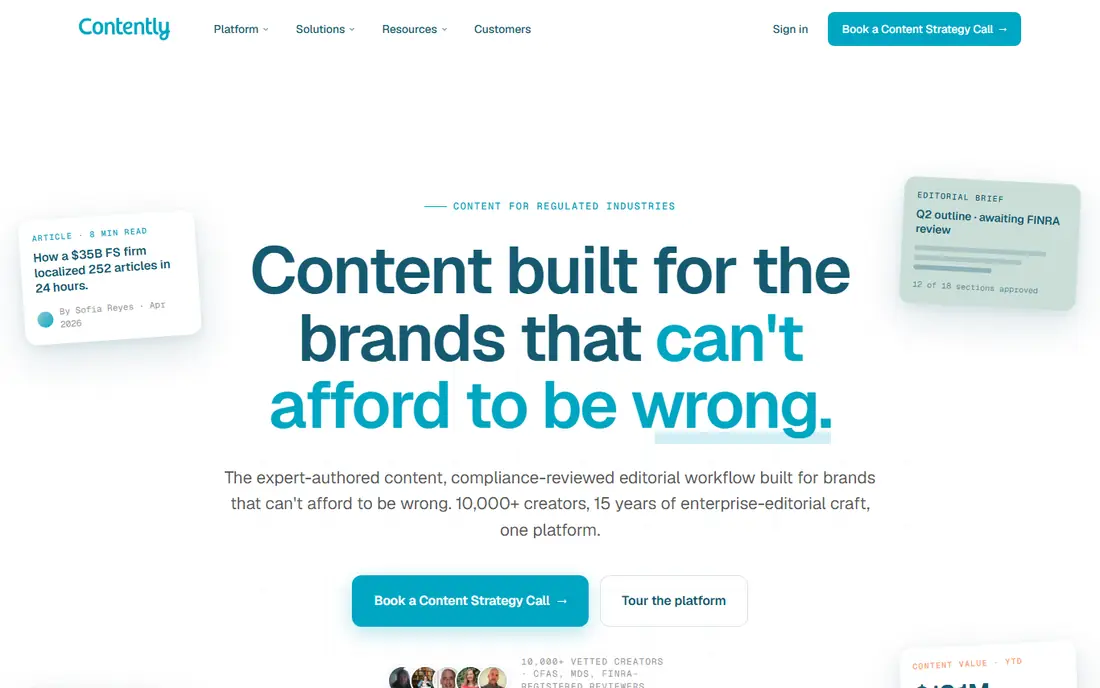
For many teams, Contently is best for managed content with creators. Contently pairs a platform with a creator network. Brands that need steady, high-quality articles plus workflow and analytics get both in one place.
Pricing shapes the decision here. Starting at see website, with a free plan listed as no, Contently fits teams that want managed content with creators without paying for features they will not use. Check the vendor pricing page before you buy, because plans, limits, and included features change during the year and the headline price rarely tells the full story for larger teams.
The managed model costs more than a calendar tool. Small teams that already have writers may not need the creator network. Weigh the strengths against the limits above, trial it with one real project, and judge it on the work it produces in your first two weeks rather than on a demo alone.
- Vetted creator network
- Workflow
- Analytics
- Enterprise pricing
- Managed service may be more than small teams need

If you want a direct swap, CoSchedule is best for marketing calendars and social. CoSchedule is the calendar-first pick. Marketing teams can plan content, social, and campaigns on one calendar, with optimization checks built in.
Pricing shapes the decision here. Starting at see website, with a free plan listed as yes, CoSchedule fits teams that want marketing calendars and social without paying for features they will not use. Check the vendor pricing page before you buy, because plans, limits, and included features change during the year and the headline price rarely tells the full story for larger teams.
Deep content operations features are thinner than Kapost or DivvyHQ. Teams with complex approval chains should trial workflow features carefully. Weigh the strengths against the limits above, trial it with one real project, and judge it on the work it produces in your first two weeks rather than on a demo alone.
- Unified calendar
- Social scheduling
- Content optimization
- Pricing varies by suite
- Some features need higher plans

In our comparison, DivvyHQ is best for complex editorial workflows. DivvyHQ is built for demanding editorial pipelines. Custom workflows, calendars, and planning tools suit publishers and large marketing teams.
Pricing shapes the decision here. Starting at see website, with a free plan listed as no, DivvyHQ fits teams that want complex editorial workflows without paying for features they will not use. Check the vendor pricing page before you buy, because plans, limits, and included features change during the year and the headline price rarely tells the full story for larger teams.
Pricing is quoted and setup takes effort. Small teams may find it heavy, while large teams will value the workflow control. Weigh the strengths against the limits above, trial it with one real project, and judge it on the work it produces in your first two weeks rather than on a demo alone.
- Editorial calendars
- Custom workflows
- Content planning
- Quote-only pricing
- Setup takes time
For this use case, StoryChief is best for multichannel publishing for small teams. StoryChief helps small teams and agencies publish one article to a website, social channels, and newsletters from one place.
Pricing shapes the decision here. Starting at see website, with a free plan listed as yes, StoryChief fits teams that want multichannel publishing for small teams without paying for features they will not use. Check the vendor pricing page before you buy, because plans, limits, and included features change during the year and the headline price rarely tells the full story for larger teams.
Governance and approval depth lag enterprise platforms. Larger firms with strict compliance needs should check those features first. Weigh the strengths against the limits above, trial it with one real project, and judge it on the work it produces in your first two weeks rather than on a demo alone.
- Publish to many channels
- Collaboration
- SEO checks
- Creator network is smaller
- Enterprise governance is lighter
When we weighed the options, Skyword is best for managed content and creators. Skyword combines a platform with managed content services and a creator network. Brands that want strategy plus production get hands-on help.
Pricing shapes the decision here. Starting at see website, with a free plan listed as no, Skyword fits teams that want managed content and creators without paying for features they will not use. Check the vendor pricing page before you buy, because plans, limits, and included features change during the year and the headline price rarely tells the full story for larger teams.
Teams that only want software will pay for services they do not need. Skyword fits brands that want production help, not just a tool. Weigh the strengths against the limits above, trial it with one real project, and judge it on the work it produces in your first two weeks rather than on a demo alone.
- Creator network
- Strategy support
- Content services
- Managed pricing
- Less suited to DIY calendar teams
For buyers who value simplicity, Optimizely CMP is best for enterprise content orchestration. Optimizely CMP, formerly Welcome, suits large firms that need plan-to-publish orchestration inside a wider digital experience suite.
Pricing shapes the decision here. Starting at see website, with a free plan listed as no, Optimizely CMP fits teams that want enterprise content orchestration without paying for features they will not use. Check the vendor pricing page before you buy, because plans, limits, and included features change during the year and the headline price rarely tells the full story for larger teams.
Smaller teams will find the suite heavy and costly. The value shows when content, assets, and campaigns must stay aligned at scale. Weigh the strengths against the limits above, trial it with one real project, and judge it on the work it produces in your first two weeks rather than on a demo alone.
- Plan-to-publish workflows
- Digital asset links
- Analytics
- Enterprise pricing
- Part of a larger suite
If budget shapes the choice, GatherContent is best for structured content production. GatherContent helps teams structure content before it reaches a website. Templates and workflows suit firms that produce structured pages at scale.
Pricing shapes the decision here. Starting at see website, with a free plan listed as free trial, GatherContent fits teams that want structured content production without paying for features they will not use. Check the vendor pricing page before you buy, because plans, limits, and included features change during the year and the headline price rarely tells the full story for larger teams.
Distribution and analytics are thinner than full marketing suites. Pair it with publishing tools if you need that depth. Weigh the strengths against the limits above, trial it with one real project, and judge it on the work it produces in your first two weeks rather than on a demo alone.
- Structured workflows
- Content templates
- Collaboration
- Smaller feature set for distribution
- Pricing is quoted in some cases
For teams that need depth, ClearVoice is best for freelance marketplace plus workflow. ClearVoice pairs a freelance marketplace with workflow and calendar tools. Agencies and brands can find writers and manage production in one place.
Pricing shapes the decision here. Starting at see website, with a free plan listed as no, ClearVoice fits teams that want freelance marketplace plus workflow without paying for features they will not use. Check the vendor pricing page before you buy, because plans, limits, and included features change during the year and the headline price rarely tells the full story for larger teams.
Marketplace quality varies by writer, so vetting matters. Costs also vary by assignment, which makes budgeting less predictable than a flat tool. Weigh the strengths against the limits above, trial it with one real project, and judge it on the work it produces in your first two weeks rather than on a demo alone.
- Freelance network
- Editorial calendar
- Workflow
- Managed costs vary
- Marketplace quality needs vetting
How we picked these
We started from the topic and kept only products that truly fit it, exist today, and publish enough detail to check. We compared official feature and pricing pages, app store listings where relevant, and public reviews, and we left out products that were discontinued, unclear, or a poor fit for the topic. We did not claim hands-on testing that did not happen. Prices are given as starting prices where we could verify them, and as See website where pricing is quoted or varies by plan and country.
We also weighed who each product suits, not just what it does. A tool can be excellent for one team and a poor fit for another, so each write-up names a best-for group and an honest catch. If a product needed a workaround to fit the topic, we left it out rather than padding the list.
What to check before you buy
Map your content pipeline before you buy. List who writes, who approves, where content publishes, and how you measure it. If writers are the gap, a managed platform with creators matters. If approvals are the gap, workflow depth matters. If publishing is the gap, multichannel tools matter. Trial one real article end to end, including a late edit and an approval change, because that is where weak tools show their limits. Also confirm contract terms, renewal pricing, and how you export your data if you later switch. A short trial on real work, with the people who will use the tool every day, is the best check before a yearly commitment.
FAQ
What is Kapost used for?
Kapost, now part of Upland, is a content operations platform. It helps teams plan, create, approve, and publish content across channels with consistent messaging.
Do I need a managed service or just software?
It depends on team size. Teams with writers need software for calendars and workflows. Teams without writers benefit from managed platforms with creator networks.
How is this different from a project tool?
Content tools add editorial calendars, briefs, approvals, and publishing links. General project tools can track tasks, but they lack content-specific workflows.
Can small teams use enterprise content tools?
Yes, but cost and setup may not pay off. StoryChief and CoSchedule suit smaller teams better than enterprise suites.
What should I check in a trial?
Test a full piece from brief to publish, including approvals and channel publishing. A calendar demo alone does not show workflow limits.