Best HydraHD Alternatives in 2026: 10 Legal Streaming Services Compared
hydrahd alternatives: we compare 10 legal licensed streaming services on price, catalog, and features so you can watch safely without piracy sites in 2026.

- Editor's choice
 Netflix
Broadest originals catalog
Starts at$8.99 per monthVisit netflix.comFull review - Great alternative
 Hulu
Next-day TV and originals
Starts at$12.49 per monthVisit hulu.comFull review - Also consider
 Disney+
Family, Marvel, and Star Wars
Starts at$12.49 per monthVisit disneyplus.comFull review
TL;DR:
- Every service on this list is a licensed streaming service, so your money supports the studios and creators behind the shows.
- Netflix at 8.99 dollars a month with ads remains the broadest single subscription for originals, films, and global catalog depth.
- Tubi and Pluto TV are genuinely free and legal, funded by ads, and they are the best starting point if the budget is zero.
- Disney+, Hulu, Max, and Paramount+ each win on a specific catalog, so pick by the shows your household actually watches rather than by size alone.
- Bundles and annual plans cut the total, but rotating one or two subscriptions through the year saves more than any single bundle for most homes.
Quick comparison
| Tool | Best for | Starts at | Free plan? | |
|---|---|---|---|---|
| Netflix | Broadest originals catalog | $8.99 per month | No | Visit |
| Hulu | Next-day TV and originals | $12.49 per month | No | Visit |
| Disney+ | Family, Marvel, and Star Wars | $12.49 per month | No | Visit |
 Max | Prestige drama and films | $10.99 per month | No | Visit |
 Peacock | NBC shows and live sports | $8.99 per month | No | Visit |
 Paramount+ | CBS shows and live sports | $8.99 per month | No | Visit |
 Apple TV | High-quality originals | $14.99 per month | Free trial | Visit |
 Prime Video | Included with Prime | $8.99 per month | Free trial | Visit |
 Tubi | Free films and TV | Free | Yes | Visit |
 Pluto TV | Free live channels | Free | Yes | Visit |
The best HydraHD alternatives
HydraHD is an unofficial streaming site, and unofficial sites carry real risks, including malware, broken links, and content that disappears without warning. The services below are legal, licensed alternatives that offer stable apps, proper subtitles, downloads on most plans, and support when something goes wrong. We compared official pricing pages and catalog descriptions to match each service to the viewer it serves best.
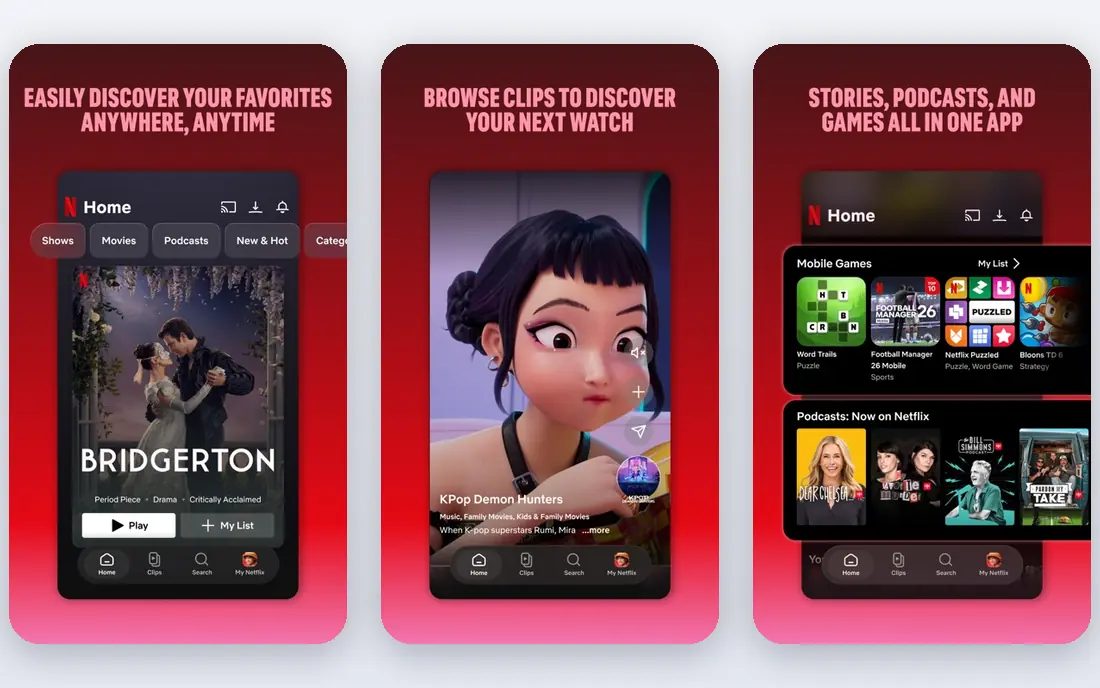
Netflix is still the default subscription for most households, and the reason is breadth. Its originals span drama, comedy, documentary, reality, animation, and stand-up, and its licensed catalog adds films and series from studios around the world. The app experience is consistently strong, with profiles, recommendations, and downloads that work well on phones, tablets, and TVs.
Pricing starts at 8.99 dollars a month for Standard with Ads, rising to 19.99 dollars for Standard without ads and 26.99 dollars for Premium with 4K and four screens. The catch is that the ad-free tiers now cost more than several rivals, and extra member slots cost 8.99 dollars a month each. If your household watches a little of everything, Netflix earns its place. If you watch one genre closely, a cheaper specialist may serve you better.
- Largest originals library
- Strong global catalog
- Polished apps on nearly every device
- Ad-free plans are pricey
- Password sharing is limited to a household plus paid extra members

Hulu suits viewers who still follow network television but want to watch on their own schedule. Many shows from ABC, NBC, and Fox arrive the day after broadcast, and Hulu originals add drama, comedy, and documentary titles that do not appear elsewhere. Bundles with Disney+ and ESPN Select can cut the combined cost if your household wants more than one of them.
The with-ads plan costs 12.49 dollars a month, and the no-ads plan costs 21.49 dollars a month, which puts the ad-free tier at the top of this list. Ads on the cheaper plan are frequent, so budget for the higher tier if ads bother you. For a household that watches current TV plus a few originals, Hulu is a strong single subscription, and it pairs well with a free service for films.
- Next-day episodes from major networks
- Strong originals
- Good bundles with Disney+
- Ad-free plan is expensive
- Live TV requires a separate, much pricier plan
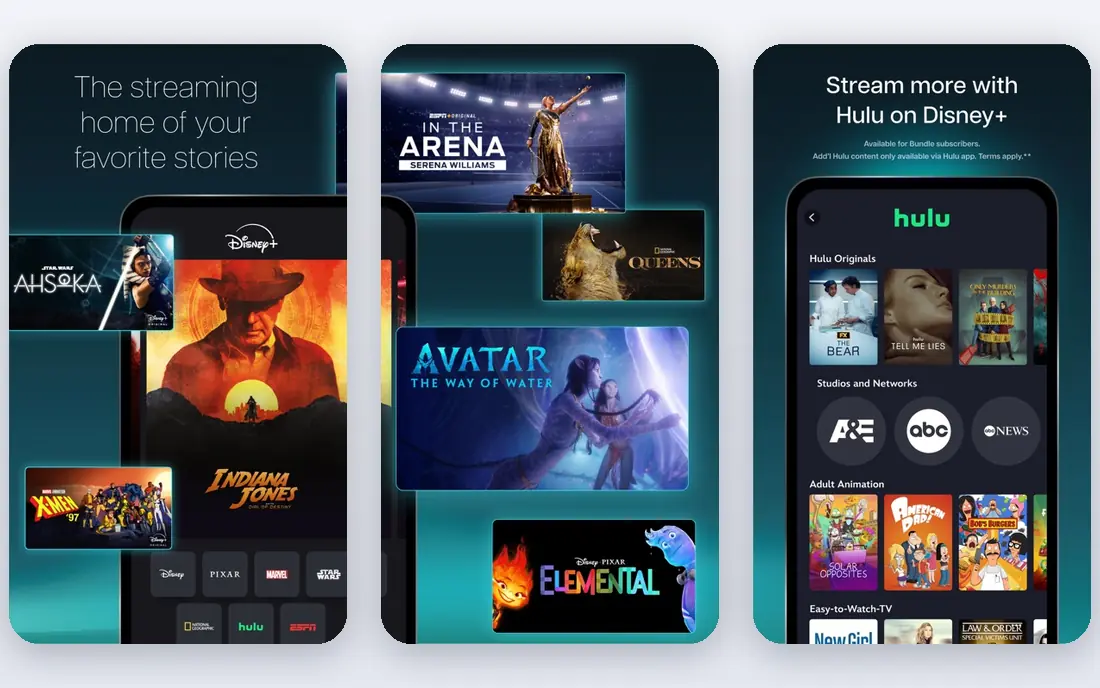
Disney+ is the obvious pick for families and for fans of its big franchises. The catalog brings together Disney animation, Pixar, Marvel, Star Wars, and National Geographic, with new series and films arriving regularly for each. Parental controls and kids profiles make it easy to hand a tablet to a child without worry, and 4K streaming is included on the Premium plan.
Pricing mirrors Hulu at 12.49 dollars a month with ads and 21.49 dollars a month for Premium without ads, with an annual Premium option at 214.99 dollars a year. The weakness is range: viewers who mainly want adult drama, true crime, or prestige series will find the catalog narrower than Netflix or Max. For a family household, or a franchise fan, Disney+ is close to essential.
- Disney, Pixar, Marvel, Star Wars, and National Geographic in one place
- Strong 4K support
- Good family controls
- Adult drama catalog is thinner than Netflix or Max
- Price has risen sharply
Max carries the HBO library alongside Warner Bros. films, DC titles, and a solid documentary shelf, which makes it the prestige pick on this list. If your watchlist leans toward acclaimed drama, limited series, and big films, Max delivers more of what you want per dollar than any other service here. Its app and download support are reliable across devices.
Plans start at 10.99 dollars a month for Basic with Ads, 18.49 dollars for Standard without ads, and 22.99 dollars for Premium with 4K. The ad-supported tier is a fair deal, but some films and shows rotate out as licensing deals change, so a title you plan to watch may leave. For quality over quantity, Max is our pick.
- HBO originals and Warner Bros. films
- Strong documentary and drama catalog
- Good 4K on higher tiers
- Catalog rotates as licensing changes
- Cheapest plan includes ads
Peacock is the home of NBCUniversal content, covering current NBC and Bravo shows, a deep back catalog of sitcoms and dramas, Universal films, and live sports including major events. It is a practical choice for viewers who follow NBC shows, reality TV, or sports that air on NBC networks, and its originals have grown into a respectable shelf of their own.
The Select plan costs 8.99 dollars a month, Premium with ads costs 12.99 dollars, and Premium Plus without ads costs 19.99 dollars. That middle tier is the sensible pick for most viewers, since Select is limited. If live sports and NBC shows matter to your household, Peacock earns its subscription. If they do not, a free service plus one other paid service may cover you.
- NBC and Bravo catalog plus live sports
- Lower entry price than several rivals
- Originals growing steadily
- No free tier anymore
- Ad-free plan costs notably more
Paramount+ brings together CBS shows, Star Trek, Paramount films, and live sports, with the Premium plan adding Showtime content and a live local CBS feed. It suits viewers who follow CBS dramas, reality competitions, or sports on CBS networks, and Star Trek fans will find the fullest collection here.
Essential costs 8.99 dollars a month with ads, and Premium costs 13.99 dollars a month, which is one of the more affordable ad-free tiers on this list. The app is less polished than the leaders, and some users report more buffering and clunkier navigation. For the catalog it holds, especially at the Premium price, Paramount+ is good value for the right viewer.
- CBS shows, Star Trek, and live sports
- Showtime content on Premium
- Local CBS station on Premium
- App experience lags behind Netflix and Disney+
- Catalog depth varies by title
Apple TV takes the opposite approach from Netflix: a small catalog, almost entirely originals, with a focus on production quality. Its drama, comedy, and documentary series regularly draw critical praise, and the service has built a reputation for shows that are worth watching rather than a shelf to scroll through. Picture quality is excellent, and the single plan keeps pricing simple.
The plan costs 14.99 dollars a month with no ads, and an annual option costs 119 dollars a year. A free trial is available, and Apple often bundles months free with a new device. The limit is size: if you want a deep back catalog to browse on a quiet evening, Apple TV alone will run dry faster than its rivals. Pair it with a free service, and it becomes a strong second subscription.
- Small but high-quality originals catalog
- No ad tier to confuse plans
- Excellent picture quality
- Library is much smaller than Netflix
- No large back catalog of licensed shows
Prime Video is the easiest subscription to justify, because many households already pay for Amazon Prime at 14.99 dollars a month, which includes Prime Video alongside shipping and music. As a standalone, it costs 8.99 dollars a month with ads, and removing ads costs extra. The catalog mixes Amazon originals with a large licensed film library, plus optional paid channels for services such as Starz or BritBox.
The main frustration is the interface, which mixes included titles with rentals and purchases, so checking whether a film is actually free takes a second look. For Prime members, though, the video service is effectively a bonus, and its originals alone justify opening the app. Non-members should compare it with Netflix or Max based on the shows they want, rather than on price alone.
- Included with Amazon Prime
- Large licensed film catalog
- Add-on channels for niche interests
- Interface is cluttered with rentals mixed into the subscription catalog
- Ads on the base plan
Tubi is the best free, legal replacement for an unofficial site, because it costs nothing and carries a genuinely large catalog of films and TV series. Owned by Fox, it licenses thousands of titles across drama, comedy, action, horror, and documentary, plus a growing set of originals. You can start watching without an account, and apps cover nearly every TV, phone, and streaming device.
The trade is ads, which interrupt films and episodes, and a catalog that leans toward older and mid-tier titles rather than this week's releases. For a household cutting costs, Tubi plus Pluto TV can cover a surprising amount of evening viewing for free. For new releases, pair Tubi with one paid service rather than expecting it to replace them all.
- Completely free and legal
- Large film and TV catalog
- No account needed to start watching
- Ad breaks interrupt viewing
- Newest releases are rare
Pluto TV recreates the cable experience for free, with hundreds of live channels organized by genre, including news, sports, movies, comedy, and reality, alongside an on-demand library. It suits viewers who like to turn on the TV and watch whatever is playing, rather than choosing a title each time. Owned by Paramount, it also carries content from across that company's catalog.
The fixed schedule is both the charm and the limit: you cannot always start an episode from the beginning, and ads appear regularly. For background viewing, news, or a free movie night, Pluto TV is excellent. Combined with Tubi, it gives a household two full free services before spending anything on paid subscriptions.
- Free live channels that mimic cable
- Large on-demand library
- No subscription or card required
- Channel schedules are fixed, so you cannot always pick an episode
- Ads are frequent
How we picked these
We limited this list strictly to licensed services with official apps and published pricing in the United States, and we excluded any unofficial streaming site, mirror, or piracy-adjacent service. We compared official pricing pages and catalog descriptions, favored services with stable apps and broad device support, and balanced paid services with free options so readers at any budget have a legal route. Prices reflect published monthly rates at the time of writing and change often, so confirm the live figure at signup.
What to check before you choose
Start with the shows your household actually watches, and check which service holds them before paying for anything. A service with a huge catalog is poor value if your three favorite shows live elsewhere, while a smaller service can be perfect when it holds exactly what you watch. Next, decide how much ads bother you, since ad-supported plans now save real money but interrupt films and episodes. Finally, count the total across all subscriptions, and consider rotating: subscribe to one service for a month, finish its shows, cancel, and move to the next. Most services are month to month with no contract, so rotation is the simplest way to watch widely without paying for everything at once.
FAQ
Is HydraHD legal?
HydraHD is an unofficial streaming site, and sites of that kind typically stream content without a license from the rights holders. Using them also exposes devices to malware, aggressive ads, and unreliable links, while giving creators nothing for their work. The services in this article are licensed, stable, and legal, and the free options cost nothing.
What is the best free legal alternative to HydraHD?
Tubi and Pluto TV are the best free legal options, because both are owned by major media companies, carry large licensed catalogs, and require no payment or card. Tubi suits viewers who pick a film or episode, while Pluto TV suits viewers who prefer live channels. Use both together for the widest free coverage.
Which paid service has the most shows?
Netflix has the broadest overall catalog of originals and licensed titles, followed by Prime Video for sheer film volume. For a specific taste, though, a specialist wins: Disney+ for family and franchise fans, Max for prestige drama, Hulu for current network TV, and Paramount+ for CBS and Star Trek.
Can I share a streaming account with family?
Most services limit sharing to members of one household, and several now charge for extra member slots outside the household. Check each service's current household rules before sharing, since enforcement and extra-member fees differ, and a shared account that breaks the rules can be restricted.
How can I lower my streaming bill?
Rotate subscriptions instead of holding them all at once, use annual plans only for services you keep year-round, and lean on free services such as Tubi and Pluto TV for filler viewing. Bundles help when your household genuinely wants each service in the bundle, but a bundle of services you rarely open is still wasted money.