Best Deno Alternatives to Fetch API in 2026: 8 Tools Compared
We compare 8 deno alternatives to fetch api, from tiny fetch wrappers like ky to full HTTP clients like axios, got, and undici for Deno apps of all sizes.
- Editor's choice
 Axios
Teams that want interceptors and wide support
Starts atFreeVisit axios-http.comFull review - Great alternative
 ky
Modern Deno and browser apps
Starts atFreeVisit github.comFull review - Also consider
 Undici
High-throughput services and Node-compatible code
Starts atFreeVisit github.comFull review
TL;DR:
- Tiny fetch wrappers like ky suit most Deno apps that only need a cleaner API and retries.
- Full clients like axios and got suit apps that need interceptors, caching, or advanced HTTP control.
- Undici suits high-throughput services, but its API is lower level than fetch wrappers.
- Check Deno and npm compatibility before you pick, since some libraries assume Node-only APIs.
Quick comparison
| Tool | Best for | Starts at | Free plan? | |
|---|---|---|---|---|
| Axios | Teams that want interceptors and wide support | Free | Yes | Visit |
| ky | Modern Deno and browser apps | Free | Yes | Visit |
| Undici | High-throughput services and Node-compatible code | Free | Yes | Visit |
 Got | Node-focused apps with advanced HTTP needs | Free | Yes | Visit |
 ofetch | Nuxt and Nitro-style apps, plus Deno services | Free | Yes | Visit |
 node-fetch | Legacy code moving toward fetch style | Free | Yes | Visit |
 Superagent | Teams that like a fluent request API | Free | Yes | Visit |
 Wretch | Small apps that want a tiny wrapper | Free | Yes | Visit |
The best deno alternatives to fetch api
Deno includes a built-in fetch API, but many developers want retries, timeouts, interceptors, or a simpler response API. The libraries below work with Deno in different ways, from small wrappers around fetch to full clients with their own engines, and the best pick depends on whether you need browser compatibility, Node compatibility, or raw speed.
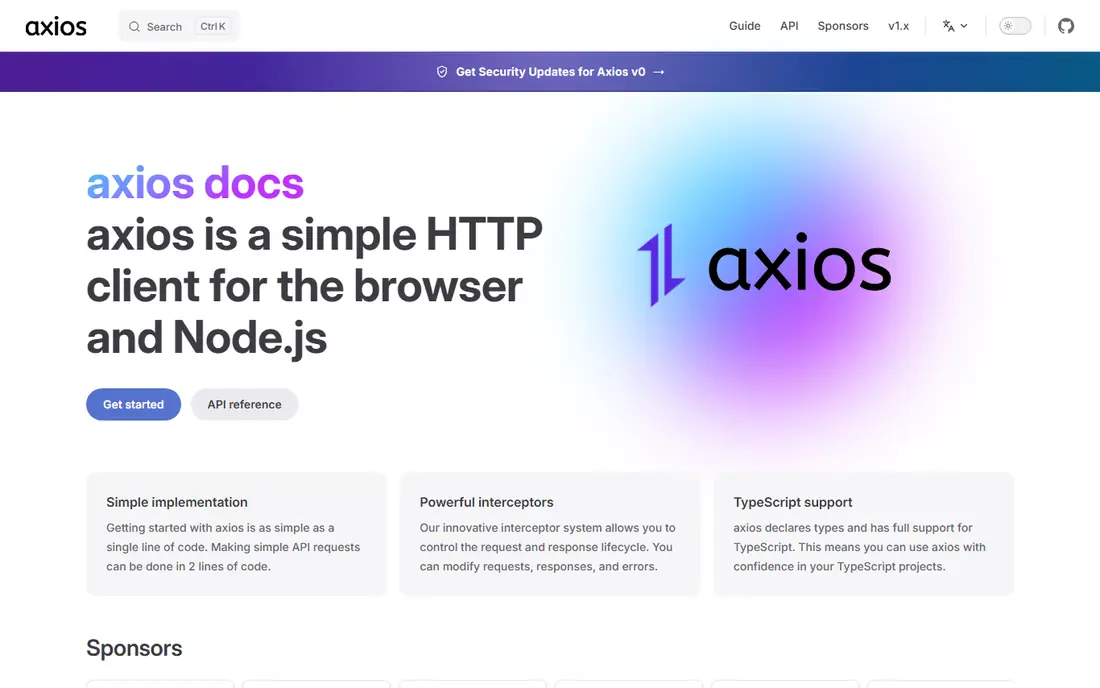
For teams that need teams that want interceptors and wide support, Axios is a practical place to start. a widely used HTTP client with interceptors and automatic data transforms. Its strength is familiarity, since many teams already know its API and error model.
The honest catch is that it adds more size and dependencies than a small fetch wrapper. That trade-off is worth weighing against the price and the time your team will spend on setup, and it is the main reason to run a short trial before you commit.
- Interceptors
- Automatic JSON handling
- Wide ecosystem
- Larger than tiny wrappers
- Needs npm compatibility in Deno
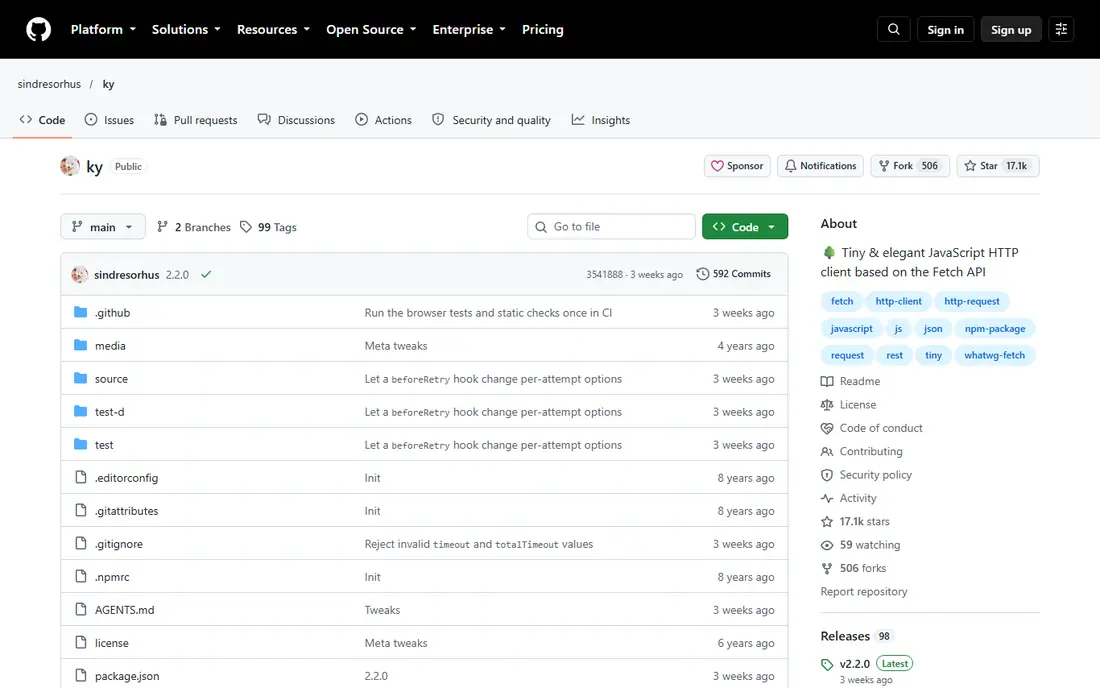
ky stands out for modern deno and browser apps. a small, modern HTTP client built on top of fetch. Its strength is simplicity, with retries, timeouts, and hooks in a tiny package.
The honest catch is that teams that need axios-style interceptors may need to adapt their code. That trade-off is worth weighing against the price and the time your team will spend on setup, and it is the main reason to run a short trial before you commit.
- Tiny and fetch-based
- Retries and timeouts
- JSON shortcuts
- Fewer enterprise features than axios
- API differs from axios

If high-throughput services and node-compatible code is the main job, Undici deserves a close look. a fast HTTP client that powers modern Node fetch implementations. Its strength is performance, with pooling and control for services that make many requests.
The honest catch is that its API is more work than a wrapper for simple JSON calls. That trade-off is worth weighing against the price and the time your team will spend on setup, and it is the main reason to run a short trial before you commit.
- Fast connection pooling
- Low-level control
- Maintained by Node team
- Lower-level API
- More manual work for common tasks
A different kind of pick, Got suits node-focused apps with advanced http needs. a powerful HTTP client for Node-style applications. Its strength is depth, with caching, retries, and pagination built in.
The honest catch is that Deno users should test its Node dependencies before adopting it widely. That trade-off is worth weighing against the price and the time your team will spend on setup, and it is the main reason to run a short trial before you commit.
- Retries
- Caching
- HTTP/2 support
- Pagination helpers
- Node-focused, so Deno use needs compatibility checks
ofetch is built around nuxt and nitro-style apps, plus deno services. a fetch wrapper from the UnJS ecosystem with smart defaults. Its strength is defaults, with JSON parsing and retries that reduce boilerplate.
The honest catch is that teams outside the Nuxt ecosystem should still test it in Deno first. That trade-off is worth weighing against the price and the time your team will spend on setup, and it is the main reason to run a short trial before you commit.
- Smart JSON handling
- Retries
- Works across runtimes
- Smaller ecosystem than axios
- Docs focus on Nuxt use
Consider node-fetch when legacy code moving toward fetch style matters most. a lightweight fetch implementation that helped Node apps before native fetch arrived. Its strength is familiarity for code written around the fetch API.
The honest catch is that in Deno, native fetch usually makes it unnecessary for new projects. That trade-off is worth weighing against the price and the time your team will spend on setup, and it is the main reason to run a short trial before you commit.
- Lightweight fetch implementation
- Familiar API
- Largely superseded by native fetch
- Adds a dependency for little gain in Deno
For teams that like a fluent request api, Superagent offers a clear and focused option. a long-lived HTTP client with a fluent, chainable API. Its strength is readability, since requests read as a chain of calls.
The honest catch is that modern teams may prefer smaller, fetch-native options for new Deno apps. That trade-off is worth weighing against the price and the time your team will spend on setup, and it is the main reason to run a short trial before you commit.
- Fluent chaining API
- Plugins
- Long history
- Larger and older style than tiny wrappers
- Deno use needs checks
Our pick in this spot, Wretch, works well for small apps that want a tiny wrapper. a tiny wrapper around fetch with middleware and addon support. Its strength is size, with a small core that stays close to fetch.
The honest catch is that its smaller community means fewer guides than the largest clients. That trade-off is worth weighing against the price and the time your team will spend on setup, and it is the main reason to run a short trial before you commit.
- Tiny size
- Fetch-based
- Middleware and addons
- Smaller community than axios or ky
- Fewer guides
How we picked these
We compared official documentation and repositories for HTTP clients that are live and maintained in October 2026. We kept libraries that run under Deno, either natively or through npm compatibility, and that offer a clear gain over plain fetch, such as retries, timeouts, or JSON handling. We left out unmaintained libraries and browser-only tools with no Deno path.
How to choose an HTTP client for Deno
First, decide how much abstraction you want. If you only want cleaner JSON handling and retries, a small wrapper keeps your bundle small and your code close to fetch. If you need request and response interceptors for auth tokens, a fuller client will save you from writing that logic by hand.
Second, check runtime compatibility. Some libraries work in Deno, browsers, and Node, while others are Node-only and rely on Node APIs. Test your pick in a small Deno script before you build a whole service around it, and check how it handles permissions and network access.
Third, think about error handling and timeouts. Plain fetch does not throw on HTTP error statuses and does not time out by itself, so many teams pick a client for those two reasons alone. Whatever you choose, add a timeout, retry only safe requests, and log status codes so failures are easy to trace.
One more check helps before you adopt an HTTP client. Build a tiny Deno script that makes requests to a real API with a timeout, a retry, and an error response, and run it with the permissions your production service will use. Check how the library reports network errors, timeouts, and non-success statuses, since those differences affect your logging and alerts. A short test now prevents a confusing failure in production later.
Also check the library update history and issue tracker, since an HTTP client with slow security fixes can become a risk for a production service.
Keep a simple note of error cases during testing, so the team that reviews the code can see exactly how each library handles failures.
FAQ
Does Deno have fetch built in?
Yes. Deno provides a fetch API compatible with the web standard, so you can make HTTP requests without installing anything. Alternatives add retries, timeouts, interceptors, and simpler JSON or error handling on top of that base.
What is the best alternative to fetch in Deno?
For most apps, ky is a strong pick, since it is small, fetch-based, and adds retries, timeouts, and JSON shortcuts. Axios suits teams that want interceptors, while undici suits services that need high throughput.
Can I use axios in Deno?
Yes, through Deno npm compatibility in most setups. Check the current axios docs for Deno, and test imports in a small script, since npm compatibility and module formats change over time.
Is ky better than axios?
It depends on needs. Ky is smaller and closer to fetch, which suits modern apps. Axios offers more built-in features, such as interceptors and wider browser support, which suits larger or older codebases.
Do I need a library if fetch already works?
Not always. Plain fetch suits simple scripts and small apps. A library pays off when you repeat the same retry, timeout, auth, and error logic across many requests, or when you need consistent behavior across runtimes.