Database Software With the Best Compliance Ratings in 2026: 8 Tools Compared
Compare database software with best compliance ratings, including Snowflake, Oracle and SQL Server certifications, controls, encryption and audit features.
- Editor's choice
 Snowflake
Regulated analytics and data sharing
Starts atSee websiteVisit snowflake.comFull review - Great alternative
 Oracle Database
Enterprise and highly regulated workloads
Starts atSee websiteVisit oracle.comFull review - Also consider
 Microsoft SQL Server
Microsoft and Windows estates
Starts atSee websiteVisit microsoft.comFull review
TL;DR:
- Compliance strength is about certifications, access controls, encryption and audit logs together, not a single badge.
- Snowflake, Oracle and Microsoft SQL Server suit regulated teams that need broad certification coverage and enterprise controls.
- PostgreSQL and CockroachDB appeal to teams that want open or distributed databases with strong security configuration options.
- MongoDB Atlas and cloud databases from Amazon and Google suit teams already running in one cloud.
- Always confirm the exact certifications for the service tier and region you will use, since coverage varies by deployment.
Quick comparison
| Tool | Best for | Starts at | Free plan? | |
|---|---|---|---|---|
| Snowflake | Regulated analytics and data sharing | See website | Free trial | Visit |
| Oracle Database | Enterprise and highly regulated workloads | See website | Free trial | Visit |
| Microsoft SQL Server | Microsoft and Windows estates | See website | Free trial | Visit |
 PostgreSQL | Open-source teams wanting control | Free | Yes | Visit |
 MongoDB Atlas | Document data in the cloud | See website | Free trial | Visit |
 Databricks | Analytics and AI on governed data | See website | Free trial | Visit |
 Amazon Aurora | AWS teams needing managed relational data | See website | Free trial | Visit |
 CockroachDB | Distributed teams needing resilience | See website | Free trial | Visit |
The best database software with the best compliance ratings
Compliance ratings for databases are not a single score. Buyers usually mean a mix of third-party certifications, encryption, access controls, audit logging, data residency options and the vendor's security documentation. The eight products below are widely used in regulated industries and publish substantial compliance material, but the right choice still depends on your regulator, your cloud and your data types.
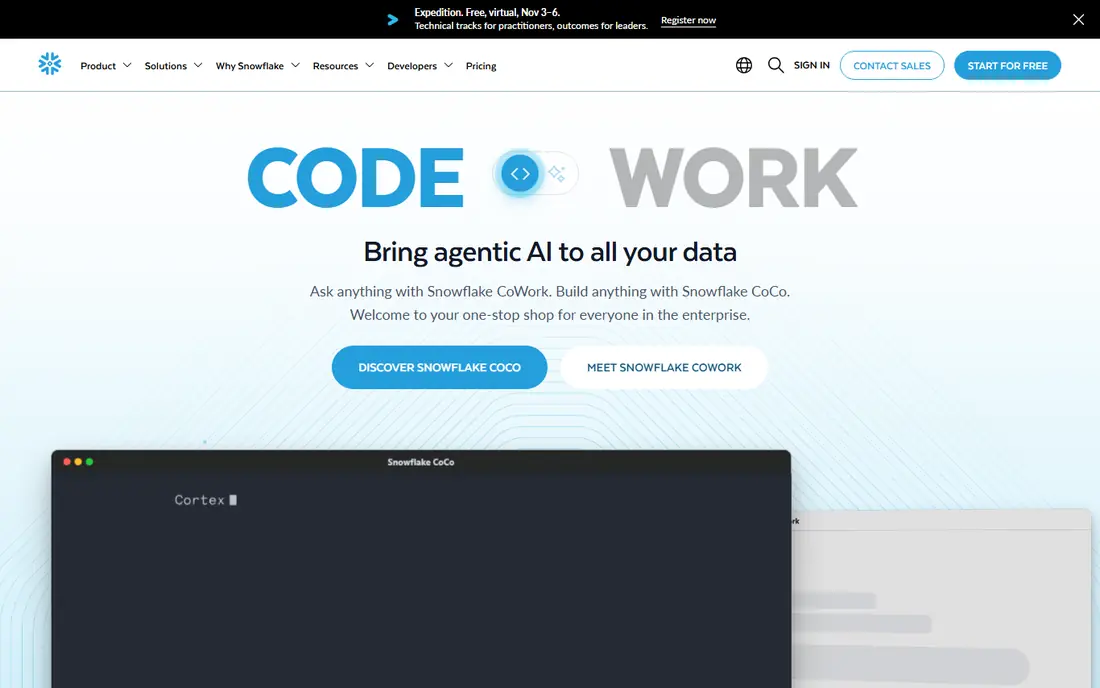
Snowflake is a cloud data platform used heavily for analytics, reporting and data sharing, and it publishes extensive compliance and security documentation for regulated customers. Role-based access, data masking, row-level security and audit history help teams control who sees sensitive data and prove it later. Secure data sharing also lets partners access governed data without copying files around.
The pricing model is the main planning task. Snowflake charges by usage, including storage and compute, so a compliance-friendly setup still needs cost controls, warehouse sizing and monitoring. Governance features also need deliberate setup, since defaults alone do not make a deployment compliant. For analytics teams in finance, health care and other regulated sectors, Snowflake is a strong shortlist pick when the data platform and the compliance story must move together.
- Broad certification documentation
- Governed data sharing
- Strong access and masking controls
- Quote and usage-based pricing needs modeling
- Costs rise with compute use
- Governance setup needs planning

Oracle Database remains a default for large enterprises and regulated workloads, including finance, government and health care systems that have run on Oracle for years. Advanced security, encryption, auditing and access controls are available, and deployment options span on-premises, Oracle Cloud and other clouds. That range matters when a regulator or an existing estate limits where data can live.
Licensing complexity is the well-known catch. Oracle pricing depends on edition, processors, users and deployment, so a quote needs careful scoping and a licensing review. Administration also demands experienced database staff. For an enterprise with existing Oracle skills and strict compliance duties, the depth justifies the cost. For a small team, a simpler cloud database will usually be a better fit.
- Long history in regulated enterprise use
- Advanced security options
- Broad deployment choices
- Licensing is complex
- Total cost is often high
- Skilled administration is needed
Microsoft SQL Server suits teams already running Windows, Active Directory and Microsoft 365, since identity, auditing and security tooling fit together. Transparent data encryption, row-level security, dynamic data masking and detailed auditing help teams meet common compliance duties, and Azure SQL options extend the same skills into the cloud. Administrators with Microsoft experience can usually run it without learning a new ecosystem.
Licensing needs care, since editions and core-based pricing change the total sharply, and some advanced features sit in higher editions. Teams outside the Microsoft estate get less benefit from the integration story. For a Microsoft-centered organization with regulated data, SQL Server is often the lowest-friction compliant choice.
- Strong fit with Microsoft security tools
- Auditing and encryption built in
- Familiar administration
- Licensing varies by edition and cores
- Best value inside Microsoft estates
- Linux use is narrower
PostgreSQL is the open-source database most regulated teams choose when they want control without license fees. Row-level security, strong authentication, encryption options and detailed logging are built in, and the extension ecosystem covers auditing, masking and encryption use cases. Managed PostgreSQL services from cloud vendors add their own compliance certifications on top of the same engine.
Self-hosting changes the compliance picture. There is no single vendor certification for a database you install yourself, so your team owns patching, hardening, backups and audit evidence. That is manageable with skilled staff, but it is real work. For teams with database expertise, or teams using a managed service with published certifications, PostgreSQL combines low license cost with serious security capability.
- Free and open source
- Strong security features
- Huge extension and hosting ecosystem
- Compliance depends on your own configuration
- No single vendor certification for self-hosted use
- Support is separate
MongoDB Atlas is the managed cloud version of MongoDB, aimed at teams storing document-style data for apps, catalogs and operational systems. The vendor publishes compliance and security documentation for Atlas, including encryption at rest and in transit, network controls, auditing and access management. Multi-cloud deployment helps teams keep data in a preferred region or cloud.
The document model is not right for every workload, especially heavily relational reporting, so data modeling should be tested before committing. Atlas pricing also scales with cluster size and use, so a pilot price is not a production price. For app teams that need flexible document data with a managed compliance story, Atlas is a credible option.
- Managed cloud service with published compliance material
- Encryption and access controls
- Multi-cloud options
- Document model does not fit every workload
- Costs rise with scale
- Compliance tier must be checked
Databricks is a data and AI platform built on a lakehouse design, and its governance layer, Unity Catalog, is central to its compliance appeal. Central access control, data lineage, auditing and masking help teams govern analytics and AI workloads from one place, rather than securing each notebook and table separately. Partnerships with the major clouds keep deployment flexible.
Usage-based pricing needs modeling, since compute, storage and AI workloads all contribute to the bill. Databricks is also primarily an analytics and AI platform, not a general transactional database, so it complements rather than replaces an operational database for many teams. For regulated analytics and AI work, its governance story is a genuine differentiator.
- Unified governance for analytics and AI
- Access controls and audit logs
- Strong cloud partnerships
- Pricing is usage-based and complex
- Best value for analytics workloads
- Governance setup takes effort
Amazon Aurora is a managed relational database for AWS teams, compatible with MySQL and PostgreSQL, which makes migration from those engines more straightforward. AWS compliance programs, encryption, network controls, auditing through CloudTrail and automated backups give regulated AWS teams a familiar control set. Performance and scaling are strong for transactional and mixed workloads.
The main limit is ecosystem fit. Teams outside AWS gain less from the integration story, and Aurora pricing depends on instances, storage and I/O, so production costs need a realistic workload test. Region and feature availability should also be checked for data residency duties. For an AWS-centered team, Aurora is usually the simplest compliant relational choice.
- Managed MySQL and PostgreSQL compatibility
- AWS security and compliance tooling
- Automated backups
- Best value inside AWS
- Costs scale with instances and storage
- Region coverage must be checked
CockroachDB is a distributed SQL database designed for resilience across regions and for workloads that must stay available during outages. Its PostgreSQL compatibility helps teams reuse existing skills and tools, while multi-region deployment supports data residency and availability goals. Encryption, role-based access and auditing support regulated use, and a managed cloud service is available alongside self-hosting.
The ecosystem is smaller than PostgreSQL, and distributed design introduces concepts that single-node teams must learn, including region configuration and transaction behavior under failure. Pricing for larger deployments is quote-based, so budget planning needs a vendor conversation. For global or always-on workloads with compliance duties, CockroachDB is a strong specialist pick.
- Distributed design with strong consistency
- Multi-region options
- Encryption and access controls
- Smaller ecosystem than PostgreSQL
- Operational learning curve
- Pricing needs a quote for larger use
How we picked these
We compared vendor compliance pages, security documentation, certification coverage, encryption, access controls, auditing and deployment options for databases used in regulated industries. We did not rank by a single invented compliance score, since certifications vary by service, tier and region. Instead, we favored products with published compliance material, enterprise controls and a track record in finance, health care or government use. Confirm the certifications that apply to your exact service and region before relying on any product for a regulated workload.
What to check before you buy
Match certifications to your regulator
List the frameworks your regulator or customers require, such as SOC 2, HIPAA, PCI DSS or GDPR-related controls, then ask each vendor which certifications cover the exact service and region you will use. A vendor-level certification does not always cover every product, tier or data center. Get the scope in writing and keep it with your compliance file.
Test access, masking and audit evidence
Set up roles, masking and row-level rules during the trial, then export the audit logs and test a review workflow. Compliance work is mostly evidence work, so the ease of producing access reports, change history and data lineage matters as much as the feature list. Check retention limits for logs, since short retention can break an audit.
Plan residency, backup and exit
Confirm where data and backups live, how encryption keys are managed and how you export data if you leave. Data residency, key control and a tested restore are common audit findings, and they are cheaper to settle before migration than after. For cloud databases, check whether backups cross regions by default.
FAQ
What is database software with the best compliance ratings?
There is no single official compliance rating that covers all databases. Snowflake, Oracle Database and Microsoft SQL Server are among the most widely cited for broad certification coverage and enterprise controls. The best choice depends on your required frameworks, your cloud and whether you self-host or use a managed service.
Is PostgreSQL compliant for regulated data?
PostgreSQL can support regulated workloads, with row-level security, encryption options and detailed logging, but compliance for a self-hosted install depends on your configuration, patching and audit practices. Managed PostgreSQL services publish their own compliance certifications, which can simplify the evidence work. Check the managed service scope for your region.
Do cloud databases handle HIPAA and PCI DSS compliance?
Major cloud database vendors publish HIPAA and PCI DSS related documentation, but the customer still owns part of the shared responsibility model, including access control, application security and configuration. Ask for the vendor responsibility matrix and confirm that your service tier and region are in scope. A signed business associate agreement may also be required for health data.
What compliance features matter most in a database?
Encryption at rest and in transit, role-based access, data masking, row-level security, detailed audit logs and data residency controls matter most for most audits. Backup, key management and change tracking are close behind. Certifications help, but auditors usually test these controls in your actual deployment.
Is an open-source database safe for compliance work?
Yes, when it is configured, patched and audited properly, and many regulated teams run PostgreSQL successfully. The difference from a managed service is who owns the evidence and the operations work. Teams without database operations capacity should prefer a managed service with published certifications.
How do I compare compliance claims between vendors?
Ask for the certification list by service and region, the shared responsibility matrix, audit log samples and data residency options. Test access controls and log exports in a trial, and keep vendor answers in writing. If a vendor cannot scope a claim to your service, treat that claim as unproven for your workload.
Sources
- https://www.snowflake.com/en/trust-center/compliance
- https://www.oracle.com/database/security
- https://www.microsoft.com/en-us/sql-server
- https://www.postgresql.org/docs/current/security.html
- https://www.mongodb.com/products/platform/atlas
- https://www.databricks.com/trust/security
- https://aws.amazon.com/rds/aurora
- https://www.cockroachlabs.com/product