Best Copy AI Alternatives in 2026: 9 Tools Compared
Looking for copy ai alternatives? We compare 9 AI writing tools on price, brand voice, SEO features, and free plans to help you pick the right fit in 2026.
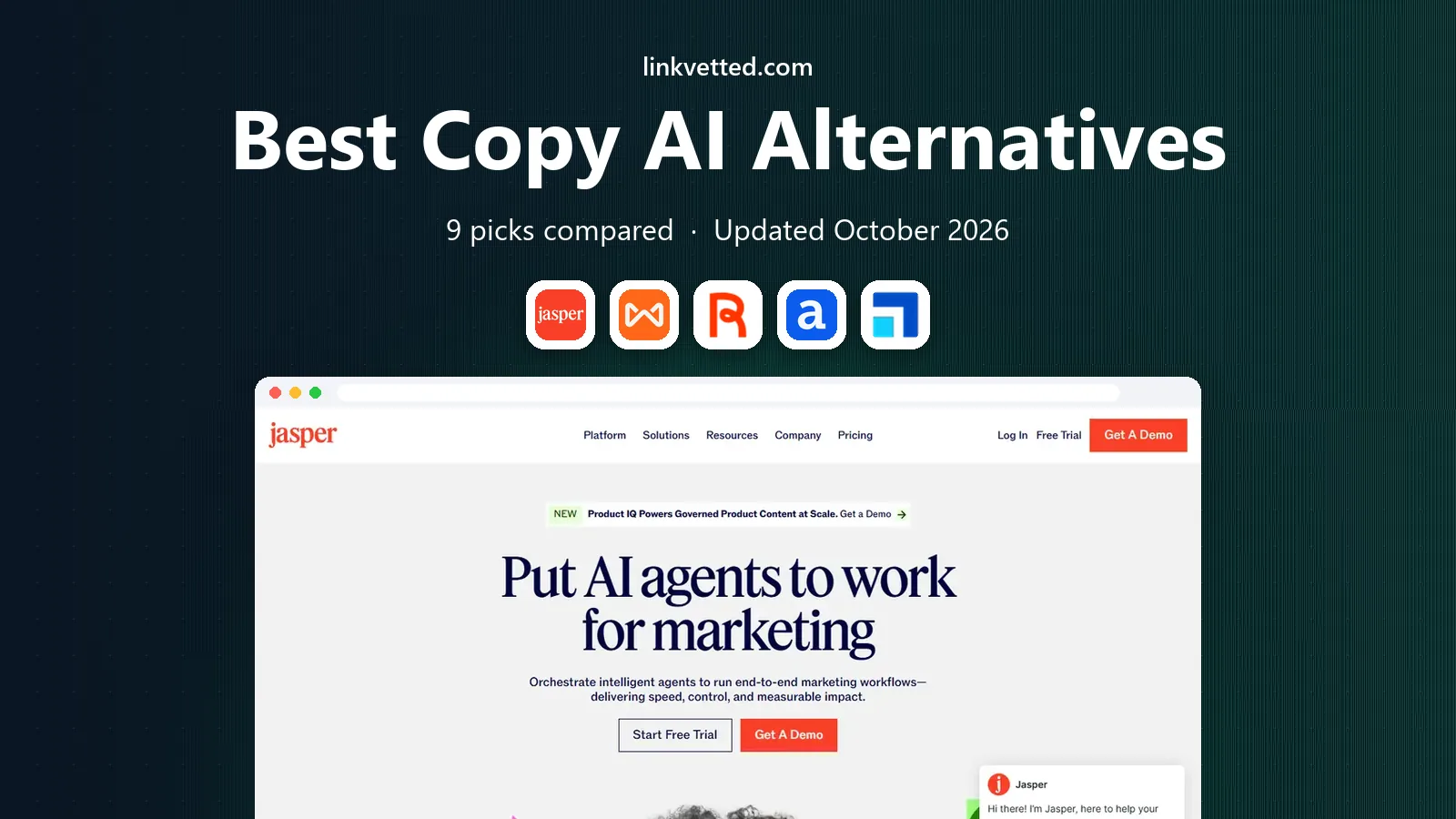
- Editor's choice
 Jasper
Marketing teams and brand voice
Starts at$59 per monthVisit jasper.aiFull review - Great alternative
 Writesonic
SEO articles and AI-search visibility
Starts at$79 per monthVisit writesonic.comFull review - Also consider
 Rytr
Budget short-form copy
Starts at$9 per monthVisit rytr.meFull review
TL;DR:
- Jasper is our pick for marketing teams that need steady brand voice across many writers and campaigns.
- Rytr is the cheapest serious option, with a free plan and a low-cost unlimited plan for short copy.
- Writesonic now aims at SEO and AI-search visibility, so it costs more but covers research and drafting in one place.
- General chat tools such as ChatGPT and Claude can replace a dedicated writer for many solo users at a lower price.
- Free plans vary a lot, so test output quality on your own briefs before paying for a full year.
Quick comparison
| Tool | Best for | Starts at | Free plan? | |
|---|---|---|---|---|
| Jasper | Marketing teams and brand voice | $59 per month | No | Visit |
| Writesonic | SEO articles and AI-search visibility | $79 per month | No | Visit |
| Rytr | Budget short-form copy | $9 per month | Yes | Visit |
 Anyword | Data-backed marketing copy | See website | Yes | Visit |
 Scalenut | SEO content planning and writing | See website | Yes | Visit |
 Frase | SEO briefs and content optimization | See website | No | Visit |
 QuillBot | Paraphrasing and editing | $8.33 per month | Yes | Visit |
 Wordtune | Rewriting and tone control | See website | Yes | Visit |
 Notion AI | Teams already working in Notion | $20 per user per month | No | Visit |
The best copy ai alternatives
Copy.ai moved toward short marketing copy and go-to-market workflows, so many readers want a tool that fits their own job better. The nine tools below cover team brand voice, SEO writing, budget drafting, and editing, and we compared their published pricing, free tiers, and documented features.
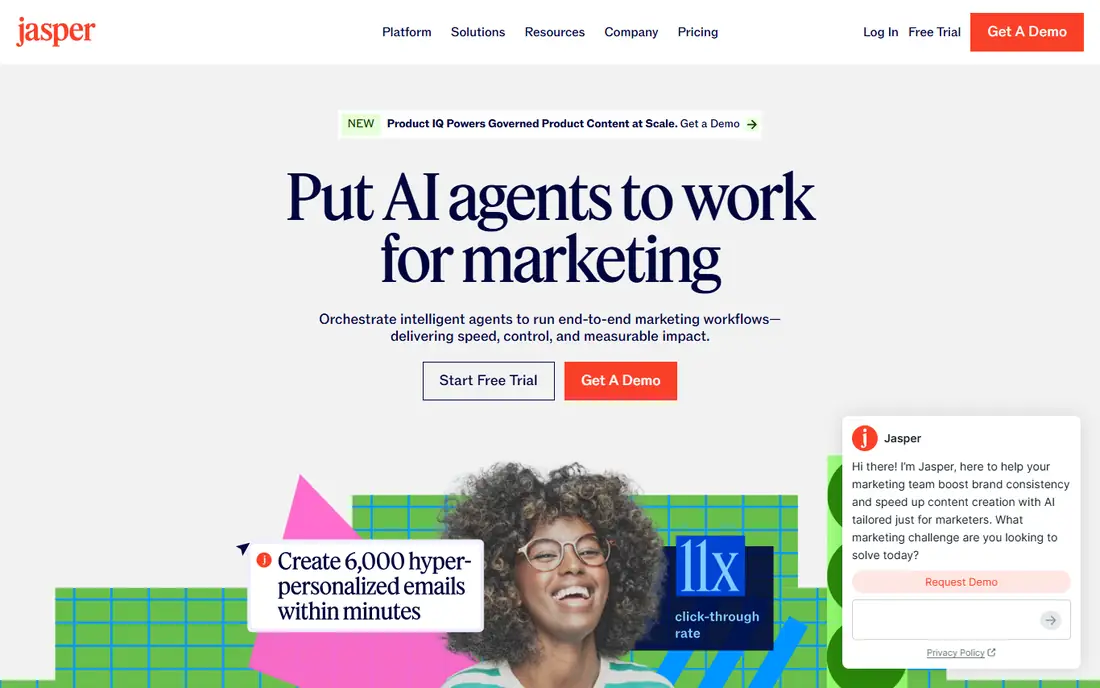
Jasper suits a marketing team that writes a lot of on-brand copy every week. Its brand voice feature learns from samples you provide, and that helps product descriptions, ads, and emails sound like they came from the same company. Templates for common formats cut setup time, and shared workspaces keep drafts, voice settings, and approvals in one place.
The catch is price. At $59 per month billed yearly, or $69 month to month, Jasper costs far more than a general chatbot, and there is only a 7-day trial rather than a free plan. Solo writers who mainly need a blank page and a good model will often get similar drafts elsewhere for less. For a team that spends real money fixing off-brand copy, though, that consistency can pay for itself.
- Strong brand voice controls
- Wide template library
- Team collaboration and campaign workflows
- No free plan
- Pricey for solo users
- One seat on the entry Pro plan
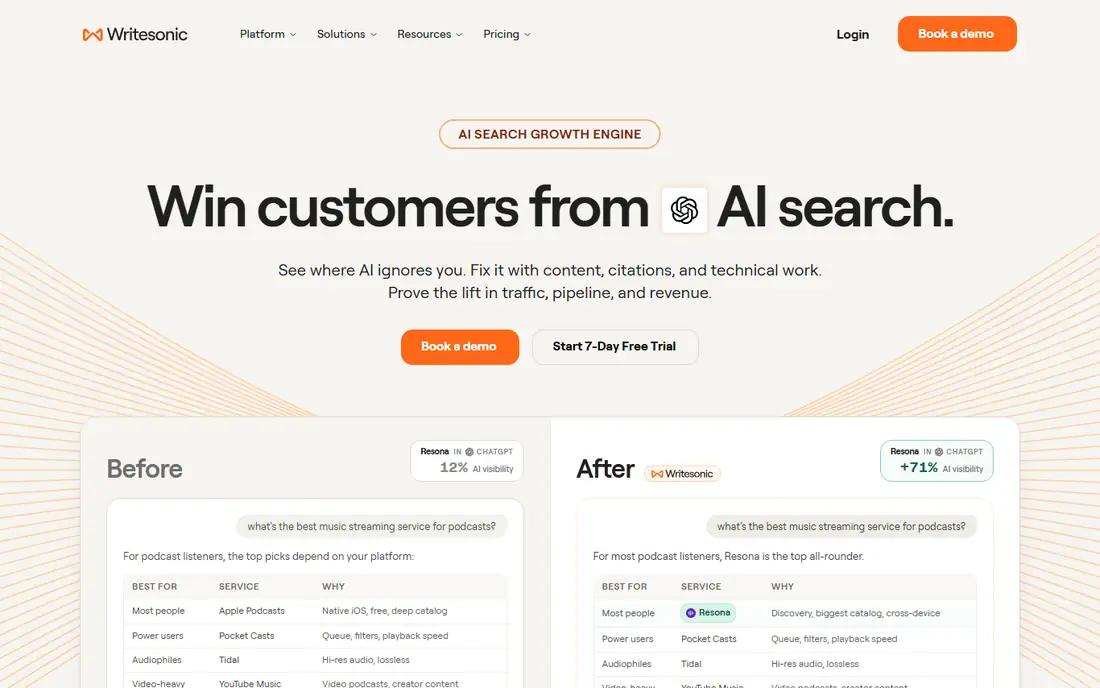
Writesonic fits content teams that publish articles meant to rank and to show up in AI answers. It pairs drafting with research and optimization checks, so a writer can move from a topic to a structured article without opening a separate SEO tool for every step. Its newer focus on AI-search visibility also appeals to teams watching how their brand appears in chat-based search results.
The trade-off is cost and complexity. The entry plan sits around $79 per month billed yearly, which puts it out of reach for casual bloggers. Credit limits also mean you should check how many articles and checks your plan covers before you commit. Teams with a steady publishing calendar will get more from it than someone who writes one post a month.
- SEO article workflows
- AI-search visibility tracking
- Research and drafting in one tool
- Entry price is high
- Credit-based limits need care
- No permanent free plan
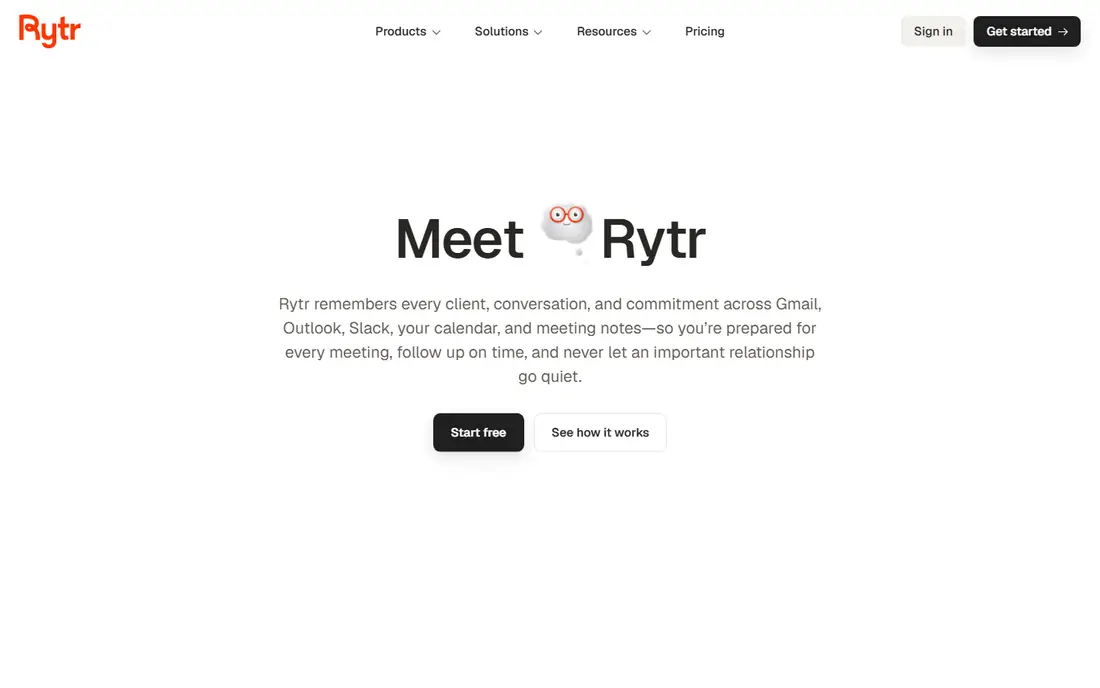
Rytr is the budget pick in this list, and it is honest about what it does well. Short social captions, product descriptions, emails, and ad variations come out quickly, and the interface stays out of the way. A free plan with 10,000 characters per month lets you test it properly, and the paid Saver plan costs $9 per month.
Long articles are where Rytr shows its limits. Drafts over a few hundred words often need more editing, and it lacks the deep SEO briefs and brand systems of pricier tools. If your work is mostly short copy and your budget is tight, that trade is easy to accept. If you publish long guides every week, spend more elsewhere.
- Permanent free plan
- Very low paid price
- Simple interface for short copy
- Weaker on long-form writing
- Smaller feature set
- Character-based limits
Anyword stands out because it tries to predict how copy will perform before you publish it. You can generate several versions of a headline, ad, or landing page section and compare their scores, which helps teams choose between options with more than gut feeling. It also offers brand voice settings and templates built around common marketing formats.
Pricing requires a closer look, since entry details vary by plan and billing period, so check the current pricing page before budgeting. The scoring features also take a little practice to use well, and scores are guidance rather than a promise of results. Still, for performance marketers who test copy often, that feedback loop is a genuine difference from a plain chatbot.
- Predictive scoring for copy variants
- Marketing-focused templates
- Brand voice tools
- Pricing is not fully transparent on entry pages
- Best value sits on higher plans
- Learning curve for scoring features
Scalenut is built for teams that plan content around search demand. It helps you research keywords, build a brief from competing pages, and then draft an article that covers the topics readers expect. That planning step matters, because many AI writers produce smooth text that misses the questions a searcher actually asked.
New users may find the dashboard crowded, since research, briefs, and optimization tools all sit in one place. Some of the deeper features also sit behind higher plans. Even so, if SEO is the main reason you write, Scalenut gives you more structure than a general writing tool, and that structure shows up in the first draft.
- Keyword research and briefs built in
- Content optimization scores
- Article drafting workflows
- Interface can feel busy at first
- Some features need higher plans
- Output still needs human editing
Frase takes a different angle from most tools here. It starts with what already ranks for a topic, pulls out the questions and headings those pages cover, and turns that into a brief a writer can follow. You can also run an existing draft through it and see which topics are missing. That makes it useful for editors who want to improve pages that already exist.
It is less of a fit if you mainly need fresh ad copy or social posts, since its strength is research and optimization rather than creative flair. There is no free plan, so use the trial to test a real brief before paying. For SEO editors, though, a good brief often saves more time than a faster draft.
- Strong content briefs from search results
- Optimization scores for existing pages
- Question research
- No free plan
- Less suited to pure creative copy
- Pricing varies by plan
QuillBot is not trying to be a full copywriting suite, and that focus is its strength. If you already have a draft and need to reword it, tighten it, or shift its tone, its paraphraser does that job well. A summarizer, grammar checker, and citation tools round out a practical editing kit, and premium costs $8.33 per month billed yearly.
The limit is scope. QuillBot will not plan a campaign or write a long article from a brief the way Jasper or Scalenut will. Free paraphrases are also limited in length and modes. Pair it with a drafting tool, or use it on its own if editing and rewriting are most of your work, and it earns its low price.
- Good paraphrasing modes
- Summarizer and grammar tools
- Low premium price
- Not a full long-form writer
- Paraphrase limits on the free plan
- Output can sound flat without edits
Wordtune works at the sentence level, which makes it a good fit for people who write their own first drafts and want help making them clearer. It suggests rewrites that are shorter, more formal, or more casual, and you can pick the version that fits the context. That small-scale help suits emails, reports, and posts where tone matters more than volume.
It is not the tool to pick if you need ten articles a week from scratch, since it is built around improving text rather than generating it in bulk. The free plan covers only a limited number of rewrites, so heavy users will need a paid plan. For careful editors and professionals, though, that sentence-by-sentence control is exactly the point.
- Sentence-level rewrite options
- Tone and length controls
- Works where you already write
- Free plan is limited
- Not built for bulk article creation
- Paid pricing varies by plan
Notion AI makes sense only if your team already lives in Notion, and in that setting it is genuinely handy. It can draft pages, summarize long notes, turn meeting notes into action items, and help rewrite sections without leaving your workspace. That context matters, because it works with the docs your team already trusts.
Outside Notion, it loses most of its appeal, since it lacks the templates, brand systems, and SEO briefs of dedicated writers. At $20 per user per month on top of a Notion plan, costs also grow with every seat. If Notion is already your home base, add it. If not, pick a dedicated tool from this list instead.
- Writes inside your existing docs and wikis
- Good for summaries and drafts
- Keeps work in one workspace
- Weak as a standalone writer outside Notion
- Per-user price adds up
- Limited SEO tooling
How we picked these
We compared official pricing pages, feature pages, and free trial terms for each tool, and we checked that every product is still sold and supported in October 2026. We favored tools that cover a distinct job, from team brand voice to SEO briefs to budget drafting, rather than listing near-identical chatbots. Prices are shown as published for annual billing where that is the headline rate, and we wrote See website where pricing varies by plan or is confirmed only on a sales page.
What to check before you pay
Start with your main job, not with the longest feature list. A team that needs consistent brand voice should test Jasper or Anyword on real campaign copy. A team that publishes search articles should test Writesonic, Scalenut, or Frase on a real keyword, including the brief and the optimization score. A solo writer on a budget should start with Rytr or QuillBot and see how much editing each draft needs.
Test with your own briefs
Free plans and trials are useful only if you use them on work you actually publish. Write one ad, one email, and one article section in each shortlisted tool, then count how many edits each draft needs. That simple test tells you more than any demo, because output quality varies by topic and by how specific your brief is.
Watch the billing unit
Some tools charge per word, some per credit, and some per seat, and those units change the real cost fast. A cheap monthly price can turn expensive if every article burns through credits, and a per-seat price can grow quickly as a team grows. Check the limits on your likely plan, ask what happens when you hit them, and prefer yearly billing only after a month of real use.
Keep a human in charge
AI drafts still need fact checks, especially for prices, claims about a product, and anything in a regulated field. Set a rule that no AI copy goes live without a human reading it once, and keep brand and legal checks in that pass. The tools in this list speed up drafting, but they do not remove the need for judgment about what you publish.
FAQ
What is the best Copy.ai alternative for marketing teams?
Jasper is the strongest pick for marketing teams, thanks to its brand voice controls and shared workspaces. Anyword is a good second choice if you want predictive scores for copy variants. Test both on the same campaign brief before you decide, since voice handling differs by brand.
Is there a free Copy.ai alternative?
Yes. Rytr offers a free plan with 10,000 characters per month, and QuillBot and Wordtune also offer free tiers for editing and rewriting. Free plans are best for short copy and testing, and most teams that publish often will need a paid plan.
Which Copy.ai alternative is best for SEO content?
Writesonic, Scalenut, and Frase all focus on search content, but they do it in different ways. Writesonic covers drafting plus AI-search visibility, Scalenut covers planning and briefs, and Frase is strongest on briefs and optimization. Pick based on whether your bottleneck is planning, drafting, or improving existing pages.
Can ChatGPT replace a dedicated AI writing tool?
For many solo users, yes, especially for general drafting and editing. Dedicated tools still win when you need templates, brand voice enforcement, SEO briefs, or team workflows. If you mostly need a blank page and a strong model, a general chatbot at a lower price is hard to beat.
How much should I expect to pay for a Copy.ai alternative?
Budget tools start around $9 per month, mid-range editors sit near $8 to $20 per month, and team tools such as Jasper and Writesonic start near $59 to $79 per month. Enterprise plans cost more and are usually priced by sales. Always check the billing unit, since credits and seats change the total.