Best Carbon Black Alternatives in 2026: 8 Endpoint Security Tools Compared
Compare the best carbon black alternatives for endpoint detection, response, and managed protection, with pricing, strengths, and honest limits in 2026.
- Editor's choice
 CrowdStrike Falcon
Cloud-native endpoint detection
Starts at$59.99 per device per yearVisit crowdstrike.comFull review - Great alternative
 SentinelOne Singularity
Automated response and rollback
Starts atSee websiteVisit sentinelone.comFull review - Also consider
 Microsoft Defender for Business
Microsoft 365 shops
Starts at$3 per user per monthVisit microsoft.comFull review
TL;DR:
- CrowdStrike Falcon and SentinelOne are the most direct replacements for Carbon Black, with cloud consoles and automated response.
- Microsoft Defender is the lowest cost route for teams already paying for Microsoft 365, at $3 per user per month for the business edition.
- Small teams should shortlist Sophos and Bitdefender first, since both pair endpoint protection with simpler management.
- Managed detection matters more than raw feature counts if no one on staff watches alerts full time.
Quick comparison
| Tool | Best for | Starts at | Free plan? | |
|---|---|---|---|---|
| CrowdStrike Falcon | Cloud-native endpoint detection | $59.99 per device per year | Free trial | Visit |
| SentinelOne Singularity | Automated response and rollback | See website | Free trial | Visit |
| Microsoft Defender for Business | Microsoft 365 shops | $3 per user per month | Free trial | Visit |
 Sophos Intercept X | Small teams wanting managed help | See website | Free trial | Visit |
 Bitdefender GravityZone | Value-focused multi-device protection | See website | Free trial | Visit |
 Trend Micro Apex One | Mixed Windows and Mac fleets | See website | Free trial | Visit |
 Palo Alto Networks Cortex XDR | Palo Alto network customers | See website | Free trial | Visit |
 ESET PROTECT | Lightweight, low-impact protection | See website | Free trial | Visit |
The best carbon black alternatives
Carbon Black built its name on endpoint detection and response, but buyers now have strong options with cloud management, faster setup, and managed services. These eight cover that range.
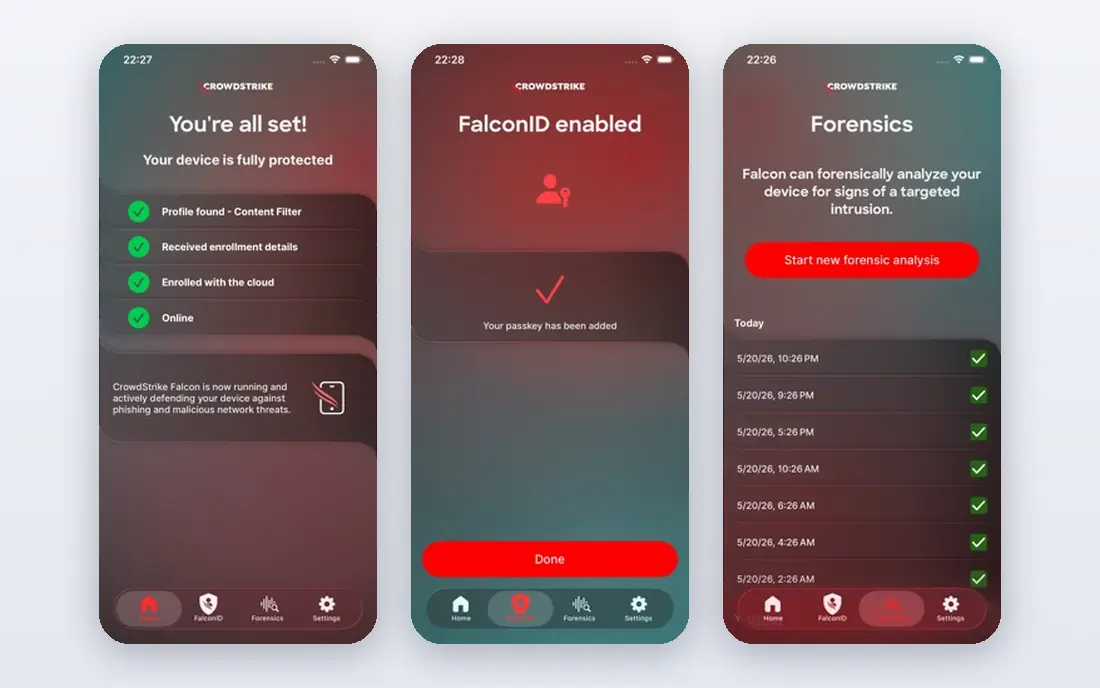
CrowdStrike Falcon suits teams that want a single agent for antivirus, detection, and response. The cloud console keeps policy changes quick, and the threat graph helps analysts trace an incident from first alert to full scope. Falcon Go covers small teams, while Pro and Enterprise add detection and hunting depth.
The honest catch is cost discipline. Entry pricing is published, but larger deals and managed services are quoted, so totals vary with device count and contract length. Teams should test the console during the trial and confirm which tier includes the response actions they actually need.
- Cloud console with no on-site server
- Strong threat intelligence
- Managed Falcon Complete option
- Higher tiers need a sales quote
- Pricing rises steeply at the top end
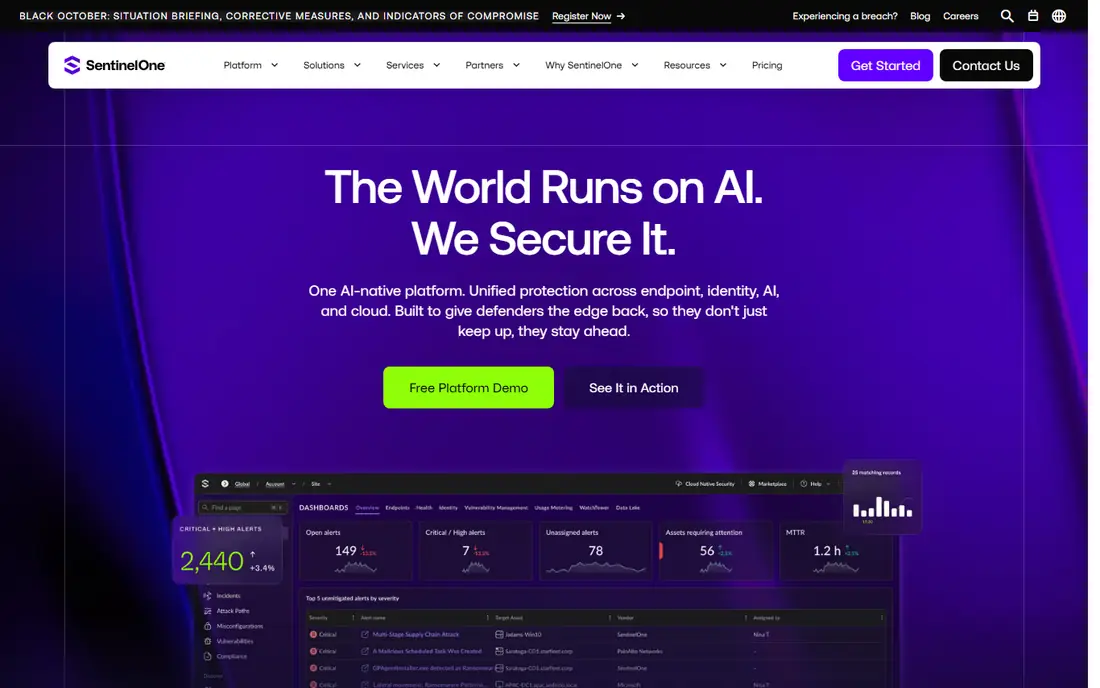
SentinelOne stands out for what it does without waiting for an analyst. Its agent can kill a malicious process, quarantine a file, and roll back affected files after a ransomware event. That automation is a real benefit for lean IT teams and for sites that cannot staff a security desk around the clock.
The platform also covers Windows, Mac, and Linux, with cloud and identity add-ons at higher tiers. Buyers should confirm which package includes device control and extended data retention, since those sit above the entry tier. For most mid-size teams, Singularity Complete is the sensible comparison point against Carbon Black.
- Automatic rollback after ransomware
- Behavioral detection
- Works offline
- Full platform pricing is quote-based
- Advanced tiers add cost quickly

Microsoft Defender for Business is the practical pick for small businesses already using Microsoft 365. It covers up to 300 users, protects up to five devices per user, and manages policies from the same admin center many teams already open each day. That familiarity cuts training time.
It is not the deepest standalone detection product at the entry tier, and larger firms will want Defender for Endpoint Plan 2 or a Microsoft 365 E5 bundle. Still, for a small team that needs solid protection without a second vendor contract, Defender is hard to beat on price and simplicity.
- Very low entry price
- Included in Microsoft 365 Business Premium
- Central Microsoft 365 console
- Best value depends on existing Microsoft licensing
- Deeper features sit in higher plans
Sophos Intercept X pairs endpoint protection with deep learning, exploit prevention, and CryptoGuard anti-ransomware tools. The console is approachable for general IT staff, not only dedicated security analysts. That matters for small businesses where one person covers servers, support, and security.
Sophos MDR adds a team that watches alerts and responds on your behalf, which is the closest like-for-like answer to a Carbon Black deployment with no in-house hunting staff. The trade-off is that pricing is not fully published, so buyers should get a written quote that lists exactly which MDR tier and retention period are included.
- Managed detection and response option
- Clear console
- Anti-ransomware features
- Pricing requires a quote or partner
- Some features need the XDR tier
Bitdefender GravityZone is a good fit for cost-conscious teams that still want layered defenses. It covers endpoints, servers, and mobile devices, with risk analytics that flag misconfigurations before attackers use them. The cloud console keeps multi-site management in one place.
Setup is straightforward, and the agent is known for a light footprint on older hardware. Buyers should compare GravityZone Business Security against the Premium and Elite tiers carefully, since detection, response, and managed services are split across them. A short trial on a mix of old and new machines will show any performance impact early.
- Strong malware detection record
- Layered protection
- Flexible cloud or on-site console
- Plan names and tiers can confuse first-time buyers
- Advanced XDR costs more
Trend Micro Apex One brings endpoint protection together with detection, response, and vulnerability shielding in one agent. Virtual patching is a useful strength for teams that cannot reboot servers on a vendor schedule, since it shields known flaws until a real patch lands. The SaaS console suits distributed teams.
The main drawback is the learning curve. The console packs in a lot of controls, and new admins may need time to tune policies so alerts stay useful rather than noisy. Trend Micro also sells through partners in many cases, so pricing clarity depends on getting a formal quote.
- Broad platform coverage
- Virtual patching
- Central SaaS console
- Quote-based pricing
- Interface takes time to learn
Cortex XDR is built for teams that want endpoint alerts joined with network and cloud telemetry. That wider view helps analysts see whether a suspicious laptop also talked to a risky domain or a cloud workload. Investigation timelines are clear, and automated playbooks can isolate a host quickly.
For a shop with no Palo Alto gear, the price and setup effort may be hard to justify against simpler endpoint tools. For a shop already running Palo Alto firewalls, the integration is the point, and Cortex XDR becomes a natural Carbon Black replacement. Expect a sales-led purchase with a demo and a scoped quote.
- Network, endpoint, and cloud data in one view
- Strong investigation tools
- Managed options
- Quote-based pricing
- Most value for existing Palo Alto customers
ESET PROTECT appeals to teams with older PCs, point-of-sale terminals, or machines that cannot spare much CPU. The agent is light, updates are frequent, and the cloud console keeps policy work simple. ESET also offers on-site console options for firms with strict data rules.
The honest limit is tier choice. Entry tiers cover core antivirus and device control, while full detection and response features sit higher up. Buyers comparing ESET with Carbon Black should check the top tiers, not the cheapest one, and run a trial on their slowest machines first.
- Low system impact
- Long track record
- Cloud console options
- Detection depth varies by tier
- Fewer managed service options than rivals
How we picked these
We compared official feature pages, pricing pages, platform coverage, and public documentation for endpoint detection, response, and managed services. We favored products that are actively sold and supported in October 2026, cover Windows and Mac at a minimum, and offer a cloud console or a managed option. We left out tools that only offer consumer antivirus with no central management, since those do not replace Carbon Black for a business.
What to check before you switch
Start with coverage, not brand. List every operating system in use, including servers and any Linux machines, and confirm each candidate protects them all. A tool that skips one platform leaves a gap that attackers will find.
Next, decide who watches alerts. If no one on staff can respond at night, a managed detection service is worth the extra cost. Ask vendors what response actions their team takes on your behalf, and how fast they isolate a host.
Finally, run a trial on real machines, not only on a test laptop. Check CPU use during a full scan, test the quarantine and rollback steps, and export a sample incident report. The product that is easiest to investigate during a trial is usually the one your team will actually use when an alert lands at 2 a.m.
FAQ
What is the closest alternative to Carbon Black?
CrowdStrike Falcon and SentinelOne are the closest direct replacements, since both offer cloud-managed endpoint detection, response, and automated containment. Microsoft Defender is closest on price for Microsoft 365 shops, while Sophos is a strong pick for small teams that want managed help.
Is Microsoft Defender enough to replace Carbon Black?
For many small businesses, yes, especially with Defender for Business or Defender for Endpoint Plan 2. Larger firms with strict hunting or forensic needs may still prefer CrowdStrike, SentinelOne, or Cortex XDR, which offer deeper investigation tooling.
How much do carbon black alternatives cost?
Prices range from $3 per user per month for Microsoft Defender for Business to quote-based enterprise pricing for Cortex XDR and higher CrowdStrike tiers. CrowdStrike Falcon Go starts at $59.99 per device per year. Always confirm the tier, since detection and managed response often sit above entry plans.
Do these tools work on Mac and Linux?
Most do, but coverage varies by tier. CrowdStrike, SentinelOne, Trend Micro, and Bitdefender cover Windows, Mac, and Linux in their business products. Check server coverage separately, since some plans treat servers as a different license type.
Should a small business buy managed detection?
If no staff member monitors security alerts full time, managed detection is worth serious thought. Services such as Sophos MDR and Falcon Complete watch alerts and act on them, which closes the gap between buying a tool and actually responding to incidents.
Sources
- https://www.crowdstrike.com/en-us/pricing
- https://www.sentinelone.com/platform-packages
- https://www.microsoft.com/security/business
- https://www.sophos.com/en-us/products/endpoint-antivirus
- https://www.bitdefender.com/business
- https://www.trendmicro.com/en-us/business/products/apex-one.html
- https://www.paloaltonetworks.com/cortex
- https://www.eset.com/business