BrowserStack Alternatives in 2026: 8 Tools Compared
Looking for BrowserStack alternatives? We compared 8 testing tools, from cloud grids like LambdaTest and Sauce Labs to free frameworks, with pricing for 2026.
- Editor's choice
 LambdaTest
direct BrowserStack replacement
Starts at$15 per monthVisit lambdatest.comFull review - Great alternative
 Sauce Labs
enterprise grid and compliance
Starts at$39 per monthVisit saucelabs.comFull review - Also consider
 TestingBot
lower cost cloud grid
Starts atSee websiteVisit testingbot.comFull review
TL;DR:
- LambdaTest, now TestMu AI, is the closest direct BrowserStack replacement, with a lower entry price and a large browser and device range.
- Sauce Labs suits enterprises that need compliance, analytics and a mature grid for large Selenium and Appium estates.
- Playwright, Cypress and Appium are free frameworks, not hosted grids, so they replace the test runner, not the device cloud, unless you run your own grid.
- AWS Device Farm and Firebase Test Lab suit teams already on AWS or Google Cloud, but Firebase Test Lab is set to shut down in September 2027.
- Compare automation pricing per parallel, not just the cheapest manual plan, since real device automation costs far more than manual testing.
Quick comparison
| Tool | Best for | Starts at | Free plan? | |
|---|---|---|---|---|
| LambdaTest | direct BrowserStack replacement | $15 per month | Yes | Visit |
| Sauce Labs | enterprise grid and compliance | $39 per month | Free trial | Visit |
| TestingBot | lower cost cloud grid | See website | Yes | Visit |
 AWS Device Farm | AWS based device testing | See website | Free trial | Visit |
 Kobiton | real device mobile testing | See website | Free trial | Visit |
 Playwright | free web automation framework | Free | Yes | Visit |
 Cypress | free front end test runner | Free | Yes | Visit |
 Appium | free mobile automation framework | Free | Yes | Visit |
The best BrowserStack alternatives
BrowserStack alternatives split into two groups: hosted clouds that give you browsers and devices on demand, and free frameworks that run tests but need a grid or local devices. The list below covers both, so you can choose by whether you want a managed service or a do it yourself setup.
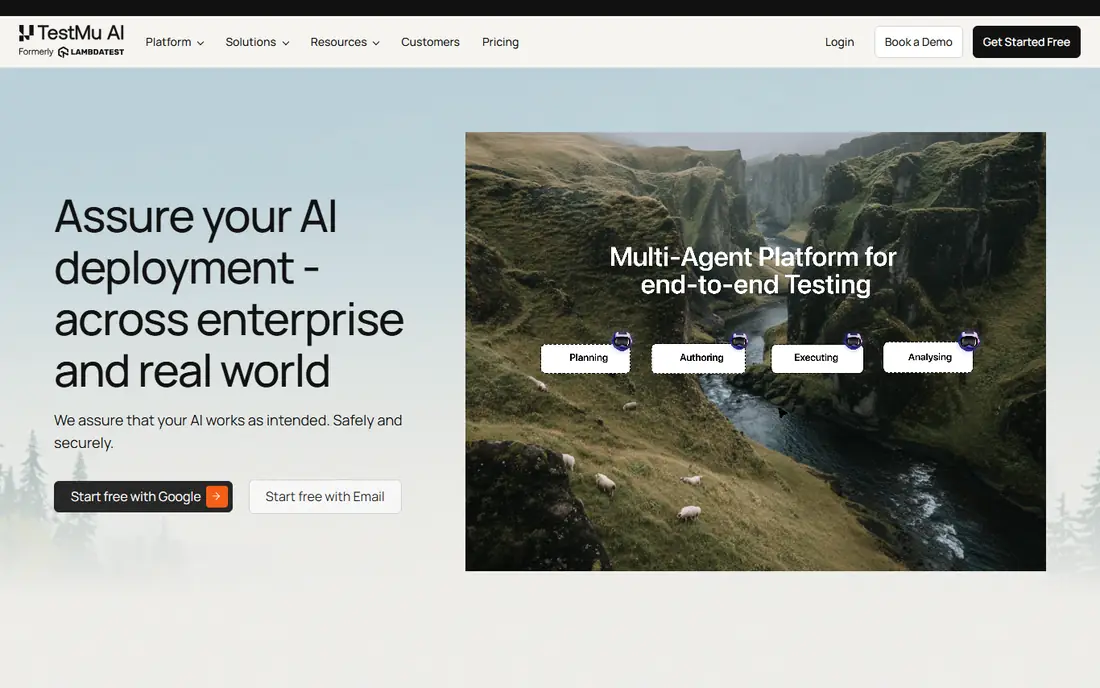
LambdaTest, now also branded TestMu AI, is the most direct BrowserStack alternative, with live testing, web and mobile automation, real devices and the HyperExecute engine for faster test runs. It supports Selenium, Playwright, Cypress and Appium, so existing tests usually point at the new grid with small changes. Entry pricing starts at $15 per month for web live testing, with automation plans higher.
The free tier includes limited automation minutes, which is enough for a trial but not for a full suite. Real device automation costs more than web automation, so check the per parallel price for the tier you actually need. For teams that want BrowserStack breadth at a lower price, LambdaTest is the first alternative to test.
- Large browser and device range
- Live, automation and HyperExecute options
- Lower entry price than BrowserStack
- Automation pricing rises with parallels
- Some features need higher plans
Sauce Labs is the enterprise pick, with a long standing grid, unified web and mobile testing, and analytics that help large teams find flaky tests and failures. It suits organisations with large Selenium and Appium estates, regulated industries that need compliance documentation, and teams that value support and stability over the lowest price.
Entry pricing starts at $39 per month for live testing on annual billing, while virtual device automation starts at around $149 per month and real device automation at around $199 per month in recent comparisons. That gap matters, so compare the automation tier, not the cheapest plan. For enterprises, Sauce Labs remains a safe and well supported choice.
- Mature grid for Selenium and Appium
- Strong analytics and diagnostics
- Enterprise compliance features
- Higher price than LambdaTest
- Entry plan covers live testing only, not automation
TestingBot offers cloud browser and real device testing at a lower entry price than the big two, with live testing from around 20 euros per month and automated testing from around 50 euros per month in recent comparisons. It supports Selenium, Appium and Cypress, and includes video, screenshots and logs for debugging.
The device range is smaller than BrowserStack or LambdaTest, so teams with a very wide matrix should check coverage for their key combinations first. Euro pricing also means US teams should convert costs before budgeting. For small teams that need a hosted grid without enterprise pricing, TestingBot is a practical option.
- Browser and real device testing
- Selenium, Appium and Cypress support
- Lower entry pricing in euros
- Smaller device range than leaders
- Pricing in euros can confuse US budgeting
AWS Device Farm suits teams whose infrastructure already runs on AWS, since device testing fits into existing CI pipelines and billing. Real mobile devices are priced per device minute, at around $0.17 per minute in recent listings, with unmetered slots at $250 per month and a one time trial of 1,000 minutes for new accounts. Desktop browser testing is available at a low per minute rate, but it is not the main focus.
Setup is more hands on than LambdaTest or Sauce Labs, and reporting is less polished for non AWS users. If your team already uses AWS heavily, Device Farm can be cost effective for mobile testing. If you need a polished, all in one grid for web and mobile, a dedicated testing cloud will feel easier.
- Pay per device minute
- Integrates with AWS CI workflows
- Unmetered device slots available
- Mobile focused, desktop browser testing is limited
- Setup is more hands on than a managed grid
Kobiton focuses on real mobile devices, with thousands of iOS and Android devices, on premises and private cloud options, and diagnostics for mobile specific issues. That focus suits teams whose main problem is mobile app quality, rather than desktop browser coverage. Private device options also help teams with security or compliance needs.
Pricing is enterprise and quote based, so small teams will find it harder to compare than LambdaTest or Sauce Labs. Desktop browser testing is not its strength, so web heavy teams should look elsewhere. For mobile first teams that need real devices and control over their lab, Kobiton is a strong alternative.
- Large real device library
- On premises and private cloud options
- Strong mobile diagnostics
- Enterprise pricing, no simple self serve price
- Less suited to desktop browser testing
Playwright is not a hosted grid, but it is the framework many teams use to replace BrowserStack Automate for web testing. It supports Chromium, Firefox and WebKit, with auto waiting, tracing, screenshots and parallel runs built in. It is free, open source and maintained by Microsoft, which gives it a strong future.
On its own, Playwright runs on your machines or CI runners, not on a cloud of real devices, so large scale cross browser runs still need a grid or cloud service. Many teams pair Playwright with LambdaTest or Sauce Labs, using Playwright as the runner and the cloud as the grid. For code first web teams, Playwright is the essential free piece of the puzzle.
- Free and open source
- Chromium, Firefox and WebKit support
- Fast, reliable auto waiting and tracing
- Needs your own grid or cloud for large scale runs
- No real mobile devices on its own
Cypress is a popular free test runner for front end teams, with a browser based debugger that shows exactly what happened at each step. It is easy to set up for web apps, and its time travel debugging helps developers fix failures faster than log based tools. The open source runner is free, with a paid cloud dashboard for team features like parallelisation and flaky test detection.
Browser support is narrower than Playwright, focusing on Chromium based browsers plus Firefox and WebKit support that is less broad than a full grid. Cypress also does not provide real mobile devices on its own. For front end teams that want fast, debuggable web tests, Cypress is an excellent free alternative to a hosted runner.
- Free test runner
- Excellent debugging in the browser
- Good for front end teams
- Browser support is narrower than Playwright
- Cloud dashboard is paid for team features
Appium is the free framework for native mobile automation, supporting iOS and Android through a WebDriver based API that Selenium teams already understand. It works with many languages and test frameworks, and it is the standard choice for teams that want to own their mobile automation without a vendor lock in.
Like Playwright, Appium needs devices or a grid to run at scale, whether that is local devices, an in house lab, or a cloud like Sauce Labs, LambdaTest or Kobiton. Setup and maintenance take real effort, especially for iOS devices. For teams with the skills to run their own lab, Appium is the free foundation for mobile testing.
- Free and open source
- IOS and Android automation
- WebDriver based, so familiar to Selenium teams
- Setup and device management are hands on
- No hosted devices on its own
How we picked these
We compared official pricing pages, documentation and public comparisons for testing tools that are still available in October 2026, and we kept tools that either replace BrowserStack as a hosted grid or replace its test running layer as a free framework. We looked at browser and device coverage, framework support, pricing per parallel, free tiers and self hosting options. We did not claim hands on enterprise testing, and we treated third party pricing summaries as a guide, since vendor pages change often.
How to choose a BrowserStack alternative
Start by listing your real test matrix. Most teams need 8 to 15 browser and OS combinations, not thousands, so check that a cheaper grid covers those combinations before paying for a huge catalogue. Also list whether you need real mobile devices, desktop browsers, or both, since that choice changes pricing more than any other factor.
Next, compare automation pricing, not manual pricing. A $15 or $29 manual plan looks cheap, but real device automation often costs $149 to $199 per parallel per month, and parallels multiply quickly for large suites. Run your suite on a trial, measure how many parallels you actually need, and calculate the monthly total before you sign.
Finally, test migration with a real suite. Point your existing Selenium, Playwright, Cypress or Appium tests at the new grid, check that videos, logs and failure diagnostics are clear, and confirm CI integration works. Keep BrowserStack running during the trial, and only switch once the new tool handles your daily suite without workarounds. Note that Firebase Test Lab, if you consider it, is set to shut down in September 2027, so do not build a new long term strategy on it.
FAQ
What is the best BrowserStack alternative?
LambdaTest is the best direct replacement for most teams, thanks to lower entry pricing and broad browser and device coverage. Sauce Labs is the best enterprise alternative, while Playwright and Cypress are the best free frameworks for teams that run their own grid.
What are the top BrowserStack alternatives for mobile testing?
Sauce Labs, LambdaTest, Kobiton and AWS Device Farm are the top hosted options for real mobile devices, with Appium as the free framework underneath many of them. Choose by device coverage, pricing per parallel, and whether you need on premises or private devices.
Is LambdaTest cheaper than BrowserStack?
Yes, in most comparisons LambdaTest entry pricing is lower than BrowserStack, starting at $15 per month for web live testing versus $29 per month for BrowserStack Live. Automation pricing is closer, so compare the per parallel rate for the tier you need, not just the cheapest plan.
Can I use Playwright instead of BrowserStack?
Yes, for web automation, Playwright can replace the test runner part of BrowserStack, but it does not provide a hosted device cloud on its own. Many teams use Playwright as the framework and a cloud grid like LambdaTest or Sauce Labs for browsers and devices at scale.
Is there a free BrowserStack alternative?
Playwright, Cypress and Appium are free and open source, and LambdaTest and TestingBot offer free tiers with limited minutes. Free frameworks need your own machines or a grid to run at scale, while free cloud tiers suit trials and small projects.