Best Workout Apps in 2026: 10 Apps Compared
Looking for the best workout apps? We compared 10 fitness apps for 2026 on price, free plans, home and gym training, classes, tracking and safety in detail.
- Editor's choice
 Nike Training Club
Free guided workouts
Starts atFreeVisit nike.comFull review - Great alternative
 FitOn
Free home classes
Starts atFreeVisit fitonapp.comFull review - Also consider
 Peloton App
Live and on-demand classes
Starts at$12.99 per monthVisit onepeloton.comFull review
TL;DR:
- Nike Training Club is our pick for most people, because it offers guided workouts for free, with no subscription needed.
- FitOn is the best free alternative for home classes, with yoga, dance, Pilates and HIIT in one app.
- Peloton App and Apple Fitness+ suit class lovers, while Strong, JEFIT and Fitbod suit gym lifters who want logging or programming.
- Strava is the best tracker for runners and cyclists, thanks to routes, segments and a large community.
- This is general fitness information, not medical advice: check with a clinician before starting a new programme if you have a health condition, injury or pregnancy.
Quick comparison
| Tool | Best for | Starts at | Free plan? | |
|---|---|---|---|---|
| Nike Training Club | Free guided workouts | Free | Yes | Visit |
| FitOn | Free home classes | Free | Yes | Visit |
| Peloton App | Live and on-demand classes | $12.99 per month | Free trial | Visit |
 Apple Fitness+ | Apple Watch classes | $9.99 per month | Free trial | Visit |
 Strava | Running and cycling tracking | $11.99 per month | Yes | Visit |
 Strong | Simple gym logging | $4.99 per month | Yes | Visit |
 JEFIT | Gym plans and exercise library | $12.99 per month | Yes | Visit |
 Fitbod | AI-generated strength sessions | $15.99 per month | Free trial | Visit |
 Freeletics | Bodyweight training journeys | See website | Yes | Visit |
 Sweat | Trainer-led programmes | $24.99 per month | Free trial | Visit |
The best workout apps
We compared official pricing pages, feature pages and app store listings for the best workout apps, the best apps for fitness at home and the best fitness apps for gym training. The best app is the one that matches how you train, where you train and what equipment you have.
Nike Training Club is the best workout app for most people because it costs nothing and still feels like a proper training app. Workouts cover bodyweight strength, HIIT, yoga, core and running, with guided plans for different levels and goals, and the coaching cues are clear without being overlong. You can train at home with little or no equipment, or take a plan into a gym.
The trade-off is depth: the library is smaller than Peloton or Apple Fitness+, and recent updates have focused less on new content than on keeping the core free. Start here, and pay only when you want live classes, a larger library or a specific coach.
- Guided workouts at no cost
- Plans for strength, HIIT, yoga and running
- Works on iPhone and Android
- Library is smaller than paid class platforms
- Less instructor personality than Peloton or Apple Fitness+
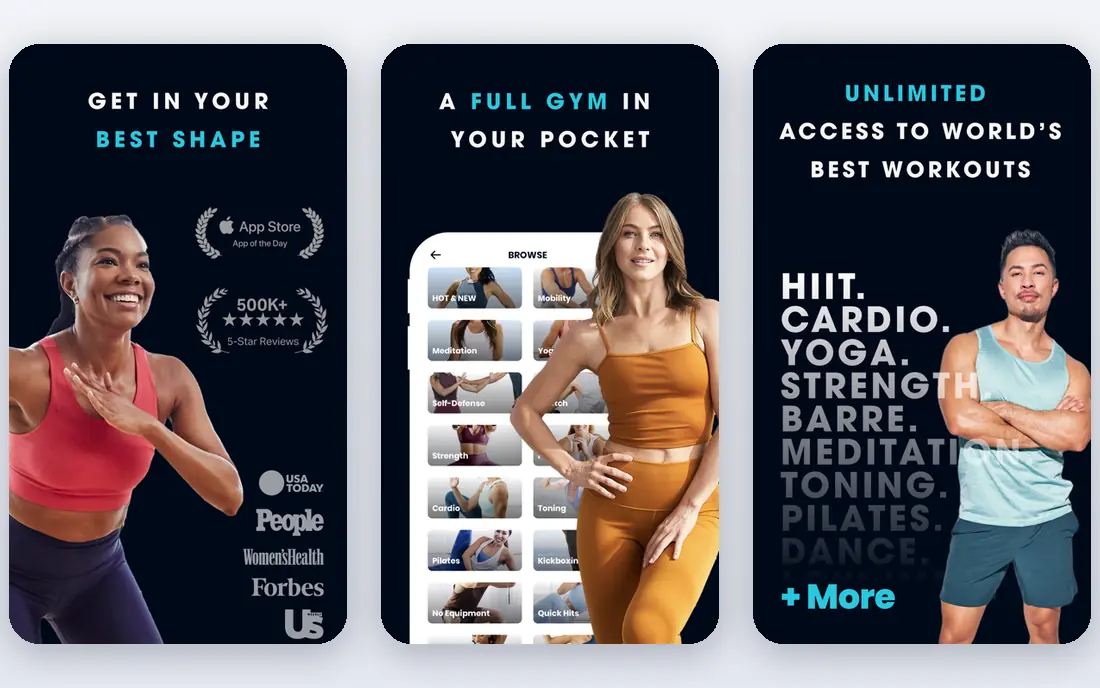
FitOn is the best free alternative to Nike Training Club for home classes, with a wider mix of styles including dance, barre and Pilates alongside strength and cardio. Classes are led by trainers, with music and a community feed, and challenges help you stay consistent with friends. The free tier covers a large part of the library, which makes it a genuine free option rather than a short trial.
The paid plan adds offline downloads, premium classes and meal plans, and some users will miss those features on the free tier. Class quality also varies, so try several trainers before settling on favourites.
- Large free class library
- Yoga, dance, Pilates, HIIT and barre
- Social features and challenges
- Paid upgrade is needed for offline downloads and premium content
- Class quality varies by instructor
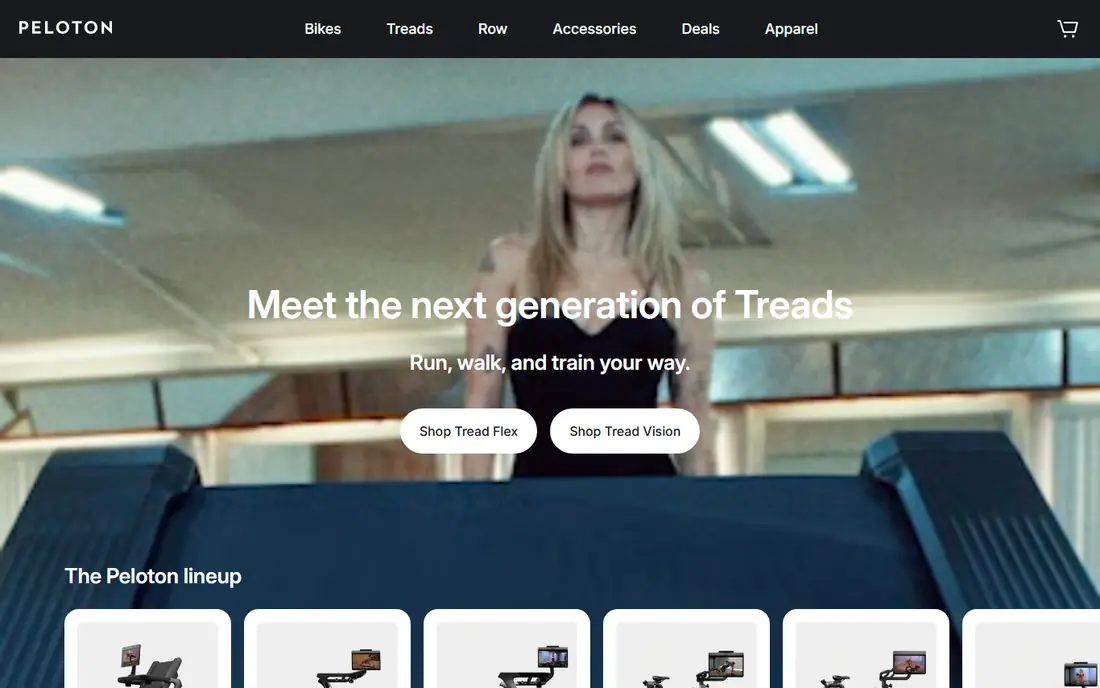
Peloton App, at $12.99 per month for App One, gives you live and on-demand classes without buying a bike or treadmill, covering strength, yoga, Pilates, running, cycling and meditation. The instructors, music and leaderboard create a community feel that keeps many users consistent, and the library is large enough to avoid repeating the same class for months. A set of free classes lets you test the style before paying.
The catch is that the signature bike and treadmill classes work best with Peloton equipment, and the app-only experience leans more on bodyweight, strength and mat classes. If you already own the equipment, the all-access plan is a separate, higher price.
- Huge live and on-demand class library
- Strong instructors and community
- Strength, yoga, running and cycling classes
- Full cycling and treadmill experience needs Peloton equipment
- Monthly price is higher than Apple Fitness+
Apple Fitness+ is the best fitness app for Apple users who want studio classes with live metrics. Workouts show your heart rate, calories and rings on screen when paired with an Apple Watch, and the range covers HIIT, strength, yoga, Pilates, dance, kickboxing, meditation and walking or running audio sessions. New classes arrive weekly, and the production quality is high.
The limits are platform and structure: you need an iPhone to subscribe, the experience is best with an Apple Watch, and there is no Android version. Multi-week structured programmes are thinner than on Sweat or Freeletics. At $9.99 per month or $79.99 per year, Apple Fitness+ is good value for Apple households, especially inside an Apple One bundle.
- Live heart rate and calorie metrics on Apple Watch
- Wide class range including HIIT, yoga and meditation
- Clean production and new classes weekly
- Needs an iPhone, and works best with an Apple Watch
- No Android app
Strava is less a class app than a tracker and community for runners and cyclists. Record a run or ride with GPS, see pace, distance, elevation and segments, and compare efforts on local routes with friends or clubs. It syncs with Garmin, Apple Watch, Wahoo and many other devices, and the free tier covers the core tracking that most casual runners need.
The subscription, at $11.99 per month, adds route planning, training logs, relative effort and deeper analysis, which serious runners and cyclists will value. The social side can also push you to chase segments rather than train sensibly, so use it for motivation, not as a coach. For outdoor cardio, Strava is the best app for fitness tracking here.
- Best route, segment and community features for runners and cyclists
- Works with Garmin, Apple Watch and many GPS watches
- Free tier covers basic tracking
- Paid features such as route planning and training logs need a subscription
- Social feed can feel competitive
Strong is the best gym app for lifters who already know their programme and just want to log it fast. Open the app, start a workout, add sets and weights with a few taps, and rest timers keep you moving between sets. The interface is minimal, it works offline, and the Apple Watch app makes logging between sets easier than pulling out a phone.
Strong will not tell you what to lift next: there is no generated programme, no progression coaching and no class library. The free tier logs unlimited workouts but caps custom routines, while Pro at $4.99 per month or $29.99 per year adds unlimited routines, charts and export. If you want a digital notebook rather than a coach, Strong is the fastest option here.
- Fast, minimal set logging
- Apple Watch app with rest timers
- Unlimited workouts on the free tier
- Free plan caps custom routines
- No programming or coaching, only logging
JEFIT suits gym lifters who want a plan library as well as a logbook. Its exercise database covers a wide range of moves with video guidance, and its programme library includes plans built by coaches and the community, alongside an adaptive plan on the Elite tier. Tracking covers volume, personal records and sets per muscle group, which helps you see progress over months.
The app feels busier than Strong, and some of the most useful analysis sits behind Elite at $12.99 per month or $69.99 per year. The free tier is ad-supported but still useful for logging and basic plans. Choose JEFIT over Strong if you want programmes and analysis bundled with your log, and Strong if you want the fastest possible set entry.
- Exercise library with 1,400 or more moves
- Community and coach-built programmes
- Detailed volume and personal record tracking
- Interface feels busy
- Elite features are needed for adaptive plans and deeper analysis
Fitbod is the closest thing here to a programming coach in an app. Tell it what equipment you have, which muscles are recovered and how hard you want to train, and it generates a session, adjusts weights and tracks muscle recovery over time. That removes the daily decision of what to lift, which helps lifters who stall on the same routine or who train in different gyms with different equipment.
The price is the barrier: at $15.99 per month or $95.99 per year, with only a trial rather than a free tier, Fitbod costs more than a simple logbook. It also suits gym training better than home bodyweight work, though it can adapt to limited equipment. If you want the app to plan for you and you will use it several times a week, Fitbod justifies its price.
- Generates each session from your equipment and recovery
- Adjusts weights automatically
- Apple Watch support
- No permanent free tier, only a trial
- Monthly price is higher than Strong or JEFIT
Freeletics is built around training journeys rather than single classes: pick a goal, such as strength, cardio or muscle gain, and the coach builds a progression that adapts to your feedback after each session. That structure suits home trainers who would otherwise repeat the same easy routine, and it works with bodyweight alone or with basic equipment such as dumbbells.
The intensity can surprise beginners, since bodyweight journeys progress quickly, and the full coach sits behind a paid plan, with an annual price reported around $99.99. The free tier covers basic workouts, so you can test the style first. If you train at home, travel often and want a programme that gets harder as you do, Freeletics is a strong pick.
- Adaptive training journeys for bodyweight and gym
- Works with little or no equipment
- Coach adapts to your feedback after each session
- Journeys can feel intense for complete beginners
- Full coach features need a paid plan
Sweat offers trainer-led programmes with a clear start, middle and end, which suits people who want structure rather than an open library. Programmes cover strength, HIIT, yoga and Pilates for home or gym, with weekly plans and progress tracking. That defined structure helps consistency, because you know what to do each day without choosing from hundreds of classes.
At $24.99 per month or $134.99 per year, Sweat is the priciest app here, and the 7-day trial gives you only a short taste of a multi-week programme. It is best for users who will follow a programme closely and who value a named trainer's plan over a generic library. If you prefer variety and a lower price, Nike Training Club or FitOn will serve you better.
- Structured multi-week programmes by trainers
- Home and gym options for strength, yoga and Pilates
- Clear progression with a defined start and end
- Highest monthly price here
- 7-day trial is short for a multi-week programme
How we picked these
We compared official pricing pages, feature pages and app store listings for the major workout apps in October 2026, and we kept only apps that are actively maintained and available on iPhone and Android, apart from Apple Fitness+, which we kept for Apple users. We weighted free tier quality, training style, equipment needs, tracking depth and price, and we favoured apps with a clear programme or class structure over apps that only count steps.
How to choose a workout app for your routine
Start with where and how you train. Home trainers with little equipment should start with Nike Training Club, FitOn or Freeletics. Gym lifters should start with Strong for logging, JEFIT for plans or Fitbod for generated sessions. Runners and cyclists should start with Strava for tracking, plus a class app for strength work. Class lovers should compare Peloton App and Apple Fitness+ on device fit and instructor style.
Next, test the app for two weeks, not two days. Note whether you actually open it, whether sessions fit your schedule, and whether progression feels right: too easy and you will stall, too hard and you will skip sessions. Check offline access if your gym has poor signal, and check whether the app syncs with your watch. A cheaper app you use four times a week beats an expensive app you open twice a month.
Training safely with an app
Warm up before intense sessions, progress load gradually, and stop if you feel sharp pain, dizziness or unusual shortness of breath. Apps cannot see your form, so use video guidance carefully, start with lighter weights, and consider a coach or clinician for technique if you are new to lifting. Rest days, sleep and nutrition matter as much as the app, and no subscription replaces those basics.
FAQ
What is the best workout app for beginners?
Nike Training Club is the best beginner pick, because it is free, guided and covers strength, HIIT, yoga and running at different levels. FitOn is a strong free alternative for home classes. Start with short sessions, follow a beginner plan, and add a paid app only when you want more classes or a specific programme.
What are the best free workout apps?
Nike Training Club and FitOn offer the most generous free workout libraries, with no subscription needed for core classes. Strava's free tier covers running and cycling tracking, while Strong and JEFIT offer free gym logging. Peloton App and Apple Fitness+ offer free classes or trials, but their full libraries need a subscription.
What is the best app for fitness tracking?
Strava is the best tracker for running and cycling, with routes, segments and community features. Strong and JEFIT are the best trackers for gym lifting, with sets, volume and personal records. Apple Fitness+ tracks metrics best for Apple Watch users inside a class, while Fitbod tracks muscle recovery for strength training.
Is Peloton App or Apple Fitness+ better?
Peloton App is better for live classes, community energy and a larger class library, while Apple Fitness+ is better for Apple Watch metrics, clean production and a lower monthly price. Peloton App costs $12.99 per month, versus $9.99 for Apple Fitness+. Choose Peloton for community and Apple Fitness+ for Apple integration.
Do workout apps work for weight loss or muscle gain?
Workout apps help by structuring exercise and tracking progress, but weight loss and muscle gain also depend on nutrition, sleep, consistency and, for muscle gain, progressive overload. An app such as Fitbod, JEFIT or Sweat can structure that progression, while Strava or Nike Training Club can build a cardio habit. This is general information, not medical advice, so speak to a clinician about a plan for your health needs.
Can I use a workout app without equipment?
Yes. Nike Training Club, FitOn and Freeletics all offer bodyweight programmes that need little or no equipment, and Peloton App and Apple Fitness+ include bodyweight strength and mat classes. A yoga mat and a clear floor space are enough to start, and you can add dumbbells or resistance bands later if a programme calls for them.