Best White-Label Programmatic Ad Serving Platform in 2026: 8 Tools Compared
Compare the best white-label programmatic ad serving platform options in 2026, with 8 ad servers offering your brand, domain, DSP access and pricing today.
- Editor's choice
 AdButler
Retail and publisher ad serving
Starts at$179 per monthVisit adbutler.comFull review - Great alternative
 Epom
White label networks with DSP
Starts at$250 per monthVisit epom.comFull review - Also consider
 Kevel
API first custom ad platforms
Starts atSee websiteVisit kevel.comFull review
TL;DR:
- AdButler and Epom are the clearest starting points, with published entry prices of $179 and $250 per month and white label options.
- White label means your brand, domain and colours on the platform, while the vendor runs the serving technology behind it.
- Programmatic demand needs a DSP or SSP connection, so check whether that is included or sold as an add-on.
- Ad server pricing is usually based on requests or impressions, so model your real volume before you compare monthly prices.
- Open source Revive Adserver can work for small teams with developer help, but it lacks the support and programmatic depth of paid platforms.
Quick comparison
| Tool | Best for | Starts at | Free plan? | |
|---|---|---|---|---|
| AdButler | Retail and publisher ad serving | $179 per month | Free trial | Visit |
| Epom | White label networks with DSP | $250 per month | Free trial | Visit |
| Kevel | API first custom ad platforms | See website | Free trial | Visit |
 AdGlare | Simple white label serving | See website | Free trial | Visit |
 Broadstreet | Local publishers and direct ads | See website | Free trial | Visit |
 AdSpeed | Small networks on a budget | See website | Free trial | Visit |
 Equativ | Enterprise programmatic serving | See website | No | Visit |
 Revive Adserver | Open source self hosted serving | Free | Yes | Visit |
The best white-label programmatic ad serving platform
A white label ad server lets you sell and serve ads under your own brand without building serving technology from scratch. The best choice depends on whether you need direct sold campaigns, programmatic demand, retail media features, or a simple low cost start. The platforms below cover each of those needs.
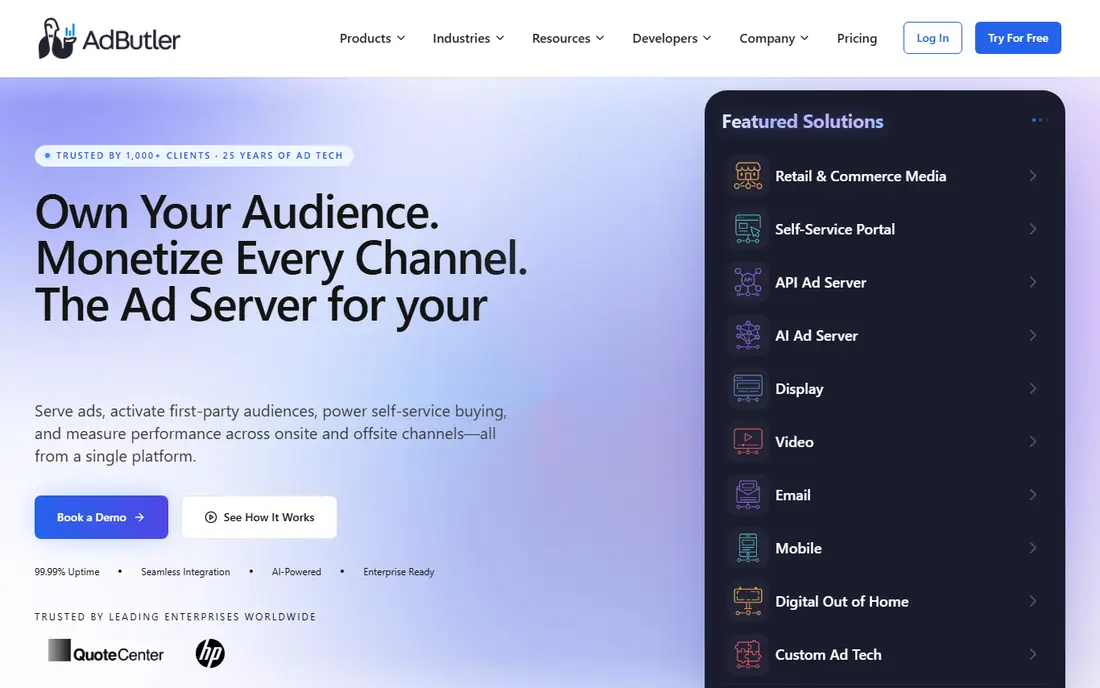
AdButler is our pick for publishers and retail media networks that want to launch fast. Its API first design, self serve advertiser portal and product catalogue tools help a marketplace turn its own search results into sponsored listings, while newsletter ads can be updated after sending. Inventory forecasting on every tier is a practical bonus for sales teams planning campaigns.
The tier caps need attention. The entry plan limits advertisers and users, and geographic targeting costs extra, so a growing network should price the plan it will need in six months, not just the plan it needs today. If your advertiser count stays within the caps, AdButler offers strong value for a branded ad platform.
- Starts at $179 per month for 1M requests
- White label domains from $59 per month
- Retail media and newsletter features
- Advertiser and user caps on lower tiers
- Geographic targeting is a costly add-on at every tier

Epom suits ad networks that want to resell inventory under their own brand and add programmatic demand. Its plans bundle targeting, analytics and API access, which avoids the add-on stack that can inflate some rivals. The white label option lets you use your company name, logo and domain, and you keep ownership of your campaign and client data.
Annual billing saves about 15 percent on the published monthly prices, which helps if you plan to stay for a year. Check the impression limits on each tier against your real volume, and confirm whether you need the SSP module for programmatic selling. For a network that wants one branded platform for direct and programmatic, Epom is a strong fit.
- All inclusive plans from $250 per month
- White label add-on at $250 per month
- DSP and SSP modules available
- White label is an add-on, not included
- Enterprise pricing needs a sales discussion
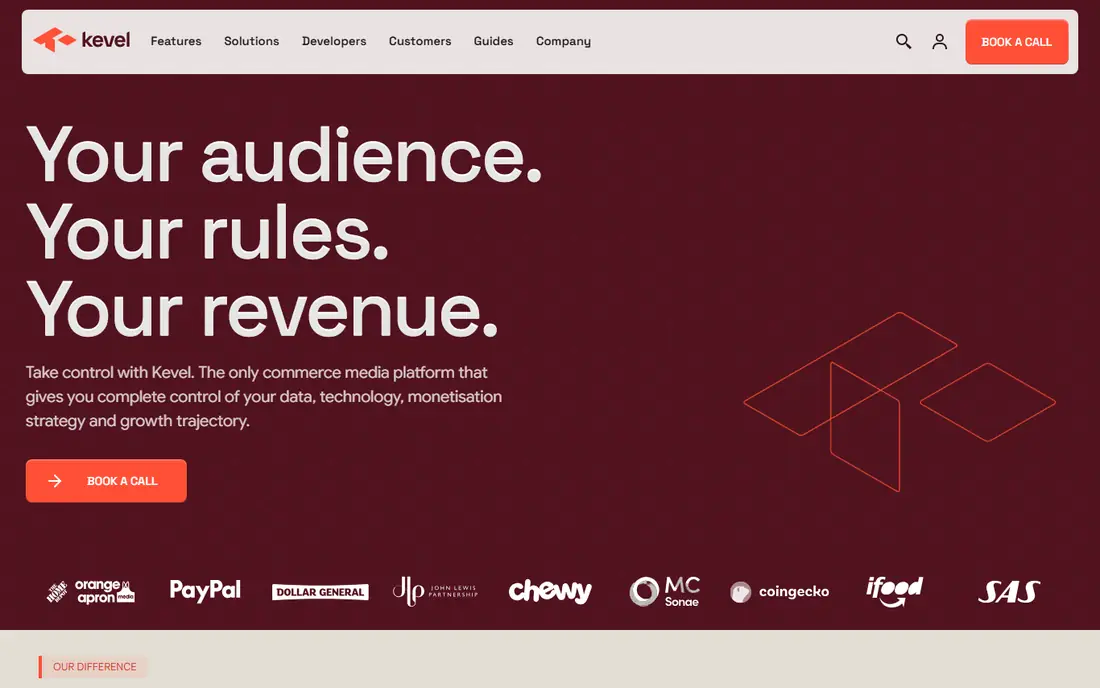
Kevel, formerly Adzerk, is for teams that want to build a distinct ad product, not just run standard banners. Its APIs let developers control ad selection, targeting and delivery inside their own product, which suits marketplaces, job boards and apps with sponsored listings. That flexibility is the reason product teams choose it over a more rigid ad server.
The trade-off is effort. Kevel is not a plug and play dashboard for a small publisher with no developers, and quote based pricing makes early budgeting harder. If you have engineering time and a clear ad product idea, Kevel gives you more control than a standard white label server. If you do not, start with AdButler or Epom.
- Built for custom ad products via APIs
- Flexible ad decisioning
- Used by marketplaces and publishers
- Needs developer time
- Pricing is quote based, so budgeting takes a sales call
AdGlare appeals to smaller networks and agencies that want a branded ad server without enterprise complexity. Campaign setup, targeting and reporting cover the daily needs of direct sold advertising, and white label branding lets an agency present the platform as its own service to clients. That presentation matters when you resell ad management as part of your offer.
Larger networks with heavy programmatic demand should check the DSP and SSP connections carefully, because AdGlare strength is direct serving rather than deep programmatic trading. For a small to mid sized network, though, its simplicity and branded portal are a good match, and the trial lets you test the workflow with real campaigns.
- White label branding
- Straightforward campaign management
- Supports display, video and mobile
- Smaller ecosystem than AdButler or Epom
- Programmatic depth varies by plan
Broadstreet is designed for local news sites, niche publishers and associations that sell ads directly to local businesses. Its tools handle sponsorships, newsletter ads and direct campaigns in a way that fits small sales teams, and it avoids the complexity of a platform built mainly for programmatic trading. For a publisher whose revenue is mostly direct, that focus is a benefit.
If programmatic revenue is your main goal, Broadstreet may not be the deepest choice, so pair it with a separate programmatic partner or choose a platform with stronger DSP links. For direct first publishers who want a branded, easy to manage server, Broadstreet is a practical and publisher friendly option.
- Built for local and niche publishers
- Direct sold ad tools
- Newsletter and sponsorship features
- Less focused on large scale programmatic
- Pricing needs a quote
AdSpeed has served small ad networks for years, and its appeal is still price and simplicity. It covers the core job, serving display and mobile ads with targeting, frequency capping and reporting, without forcing a small team into an enterprise contract. For a startup network testing whether paid ad serving can work, that low barrier matters.
The design and feature set are less modern than AdButler or Kevel, and teams that need rich retail media or advanced programmatic tools will outgrow it. Treat AdSpeed as a budget start or a backup server, and plan a migration path if your volume or product ambition grows. For a lean launch, it does the job.
- Low cost entry for small networks
- Ad serving across web and mobile
- Targeting and reporting included
- Interface feels older than newer rivals
- Advanced programmatic features are limited
Equativ, which includes the former Smart AdServer, suits larger publishers and broadcasters that need programmatic scale, video and connected TV support. Its platform handles high volumes and complex deals, and its programmatic tools are deeper than those of small business servers. For an enterprise publisher, that scale and video strength can justify the sales led process.
Smaller teams will find the pricing and implementation heavier than they need, and there is no self serve free plan to test casually. If you run a large, video heavy operation and need a trusted enterprise server, Equativ belongs on your shortlist. If you run a small network, start elsewhere and revisit Equativ when volume demands it.
- Former Smart AdServer heritage
- Strong programmatic and video capabilities
- Enterprise scale
- Sales led pricing
- Heavier implementation than small business servers
Revive Adserver is the only free option here, and it works for teams with developer skills and a tight budget. You install it on your own server, control the data and branding, and serve standard display campaigns without a monthly fee. For a small publisher or a student project, that freedom is valuable.
The hidden cost is maintenance. You must handle hosting, security patches, backups and troubleshooting, and programmatic demand needs separate integrations that paid platforms bundle. If you have no developer time, the free licence can become expensive in staff hours. With developer help, Revive is a capable and honest open source start.
- Free open source software
- You host and control it
- No monthly licence fee
- You handle hosting, updates and security
- No built in programmatic DSP or vendor support
How we picked these
We compared official pricing pages, white label documentation and product features for ad servers that offer branded serving in October 2026. We favoured platforms with clear white label options, published or verifiable pricing, and a distinct use case, from retail media to enterprise video. We left out generic ad networks that do not let you run your own branded server, and platforms with no current public product information.
How to choose a white label ad server
Start with your revenue model. Direct sold campaigns need a good advertiser portal, order management and reporting. Programmatic revenue needs DSP or SSP connections, header bidding support and deal management. Retail media needs catalogue ingestion and sponsored listing tools. A platform that is excellent for one model may be weak for another, so rank your models before you demo anything.
Price on real volume, not the entry tier
Ad server prices scale with requests or impressions, and add-ons for white labelling, geo targeting, video or support can change the total a lot. Model your monthly volume, add the white label fee, and ask for the price at double your current volume. That test reveals whether a cheap entry plan stays cheap as you grow, or whether you will be forced into a much higher tier.
Test branding and the advertiser experience
White label is more than a logo. Check the domain, the login page, the reports your advertisers will see, and whether your brand appears in emails and invoices. Run a trial campaign end to end, from advertiser signup to reporting, and ask a real advertiser to try the portal. If the vendor brand leaks through, or the portal confuses clients, the white label promise is only half kept.
FAQ
What is a white-label programmatic ad serving platform?
It is an ad server branded as your company, with your domain, logo and colours, that also connects to programmatic demand through DSP or SSP tools. You sell and manage ads as your own product, while the vendor maintains the serving technology.
How much does a white label ad server cost?
Entry prices in this list start at $179 per month for AdButler and $250 per month for Epom, plus a white label fee on some plans. Larger volumes, video, and enterprise support raise the price, and several platforms are quote based, so get a written quote for your volume.
Do I need a DSP as well as an ad server?
Not always. Direct sold campaigns need only an ad server. Programmatic revenue needs demand, which can come from a built in DSP or SSP module, or from a separate DSP you connect. Check whether your chosen server includes that connection or sells it as an add-on.
Can I migrate from another ad server?
Yes, most platforms offer migration help for campaigns, creatives and targeting, but the effort depends on your volume and custom setup. Plan the migration in phases, run both servers in parallel briefly, and confirm reporting matches before you switch off the old server.
Is open source Revive Adserver a good choice?
It can be, if you have developer time for hosting, security and maintenance, and your needs are mainly direct display ads. For programmatic scale, vendor support, or a polished advertiser portal, a paid platform usually saves more staff time than the licence costs.
What should I check before signing a contract?
Check impression or request limits, overage pricing, white label scope, data ownership, support hours, contract length and exit terms. Ask how you export your campaign and advertiser data if you leave, because that data is a core business asset.