Best WFM Software for Call Centers in 2026: 10 Tools Compared
Compare the best WFM software for call centers, including NICE, Verint, Genesys, Assembled, Talkdesk, and Five9, with pricing, forecasting, and fit. today
- Editor's choice
 NICE
Deep forecasting
Starts at$20 per agent per monthVisit nice.comFull review - Great alternative
 Verint
Regulated large operations
Starts at$1,500 per monthVisit verint.comFull review - Also consider
 Genesys Cloud CX
All in one CCaaS WFM
Starts atSee websiteVisit genesys.comFull review
TL;DR:
- NICE IEX is our pick for deep forecasting, with a starting price around $20 per agent per month for standalone workforce management.
- Assembled and Zendesk WFM suit modern support teams that want fast setup and clean scheduling, starting at $25 per user per month.
- Verint suits large, regulated operations that need deep configuration and industry templates, with pricing from about $1,500 per month.
- Suite tools such as Genesys, Talkdesk, and Five9 make sense if you already run their contact center platform, since WFM sits inside the same system.
- Model pricing at real headcount, including part time agents, because per agent pricing rises fast when you add seasonal and part time staff.
Quick comparison
| Tool | Best for | Starts at | Free plan? | |
|---|---|---|---|---|
| NICE | Deep forecasting | $20 per agent per month | No | Visit |
| Verint | Regulated large operations | $1,500 per month | No | Visit |
| Genesys Cloud CX | All in one CCaaS WFM | See website | No | Visit |
 Assembled | Fast modern scheduling | $25 per user per month | Free trial | Visit |
 Talkdesk | Talkdesk native WFM | See website | No | Visit |
 Five9 | Five9 native WFM | See website | No | Visit |
 Alvaria | Complex labor rules | See website | No | Visit |
 Zendesk WFM | Zendesk native WFM | $25 per user per month | No | Visit |
 Playvox | Modern WEM suite | See website | Free trial | Visit |
 Surfboard | Lightweight scheduling | $10 per seat per month | Free trial | Visit |
The best WFM software for call centers
We compared official pricing, forecasting depth, scheduling, adherence tracking, and platform fit to find tools for centers ranging from small support teams to large enterprise operations.
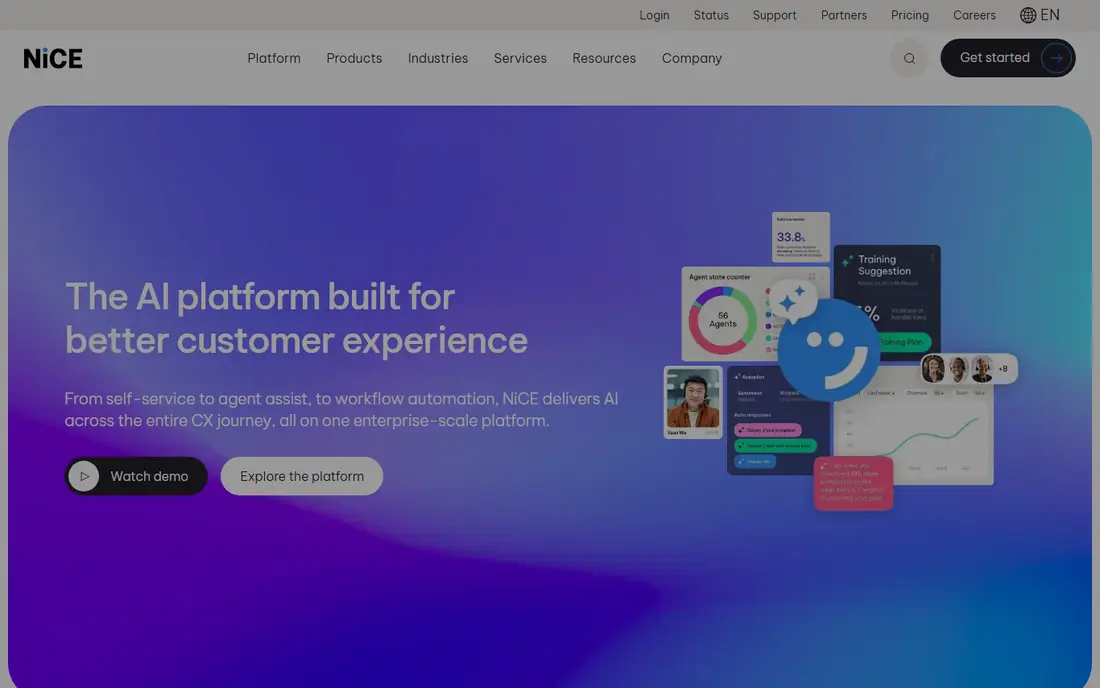
NICE Workforce Management, often called NICE IEX, is our pick for centers that need forecasting depth above all else. It offers dozens of forecasting methods, schedule optimization, intraday re forecasting, and adherence tracking, which helps large centers match staffing to demand across voice, chat, email, and back office work. It can run inside CXone or alongside another ACD, which suits centers that do not want to switch phone platforms.
The trade off is complexity. Implementation, training, and tuning take real effort, and the full CXone suite, which bundles WFM with routing and AI, starts at a much higher per agent price. For a center with 50 or more agents and variable demand, that depth pays off. For a small team, a lighter tool will be faster to adopt.
- Deep forecasting with many algorithms
- Intraday management and adherence
- Integrates with CXone and other ACDs
- Setup and training take time
- Full CXone suite pricing is much higher
- Interface feels enterprise heavy
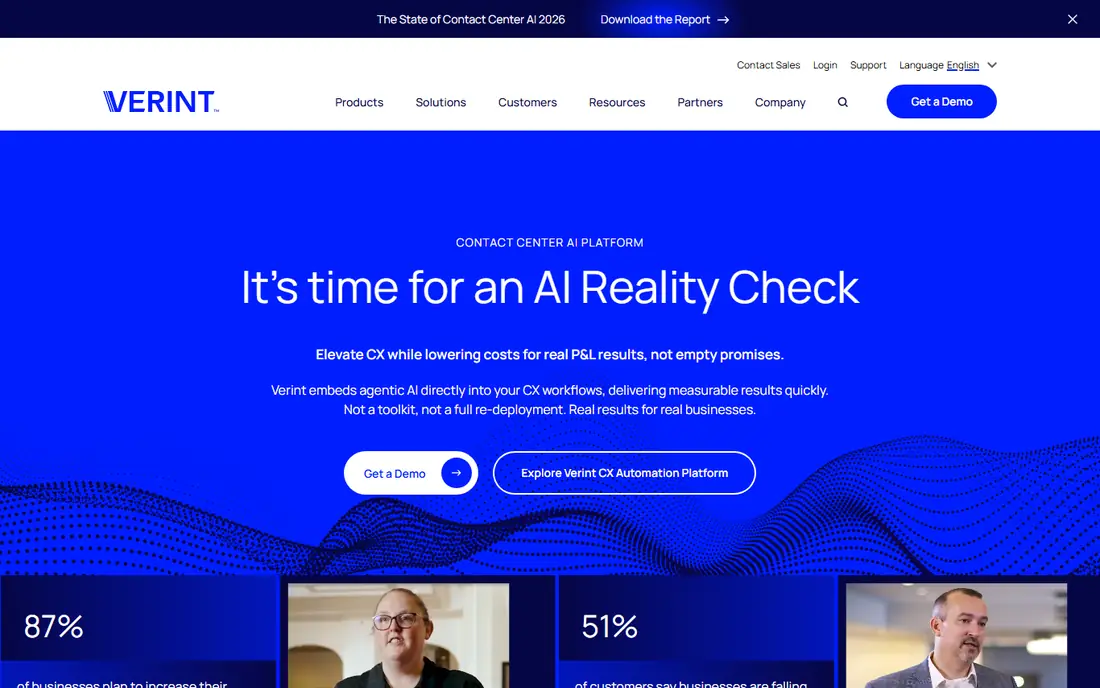
Verint Workforce Management suits large, regulated contact centers that need configurable forecasting, scheduling, and reporting in one system. Pre built templates for banking, healthcare, and government help teams meet compliance and audit needs, and integration with HR, payroll, and CRM systems keeps time off, skills, and schedules in sync. Verint also now includes Calabrio capabilities after their combination, which broadens its quality and analytics options.
Pricing starts around $1,500 per month in recent listings, with costs scaling by users and modules, so it is not a small team tool. Implementation and training also take time, and reviewers note that mobile access trails the desktop app. For a large operation that can absorb that setup, Verint offers depth few rivals match.
- Deep forecasting and scheduling
- Industry templates for banking, healthcare, and government
- Strong reporting
- Flat monthly starting price suits larger teams
- Implementation takes time
- Mobile experience trails desktop

Genesys Cloud CX is the best choice for centers already running Genesys, or planning to move their whole contact center to the cloud. Workforce engagement, including forecasting, scheduling, and adherence, sits inside the same platform as routing, voice, chat, and AI, so volume data flows directly into schedules without manual imports. That integration reduces errors and makes intraday changes faster.
Standalone buyers get less value, since WFM pricing is tied to Genesys tiers and quotes. Small centers may also find the full platform cost high compared with a standalone scheduler. For a Genesys shop that wants one vendor for routing and workforce planning, however, the fit is strong.
- WFM inside a full cloud contact center
- AI forecasting and scheduling
- Omnichannel volume in one system
- Pricing is quote based for WFM tiers
- Best value only for Genesys customers
- Full platform cost is high
Assembled suits modern support and CX teams that want WFM without a long enterprise rollout. Setup is fast, the scheduling interface is clean, and forecasting uses machine learning across chat, email, and voice volume. Agents can view schedules, swap shifts, and request time off from a mobile friendly app, which helps retention for support teams.
Forecasting depth is lighter than NICE or Verint, so very large voice centers with complex labor rules may outgrow it. Pricing also includes a platform fee on top of the per user rate, so confirm the total. For SaaS support teams and mid size centers, Assembled offers the best balance of speed and capability.
- Fast setup
- Clean scheduling interface
- AI forecasting for support and omnichannel teams
- Forecasting depth trails NICE and Verint
- Per user price plus platform fee
- Less suited to very large voice only centers
Talkdesk Workforce Management suits mid size centers already on Talkdesk, or moving to it for voice and digital channels. Forecasting and scheduling use Talkdesk volume data directly, and AI helps suggest schedule changes as demand shifts during the day. Agents manage schedules inside the same workspace they use for calls and chats.
WFM is not in the cheapest Talkdesk tiers, and the full platform price rises with the tier that includes it, so standalone buyers should compare the combined cost with a dedicated WFM tool. For a Talkdesk center, though, native WFM avoids integration work and keeps data in one place.
- AI driven scheduling inside Talkdesk
- Forecasting tied to Talkdesk volume
- Unified agent workspace
- WFM sits in higher tiers
- Full Talkdesk cost is high
- Less useful outside Talkdesk
Five9 Workforce Management is the natural pick for centers running Five9 for voice and digital contact center work. It uses Five9 routing and volume data for forecasting, scheduling, and adherence, which keeps staffing aligned with actual call patterns. That native link is valuable for voice heavy centers where intraday changes happen often.
As with Talkdesk, WFM lives in higher, quoted tiers, so the total platform cost matters more than the WFM line alone. Centers not on Five9 should look at standalone tools such as NICE IEX or Assembled instead. For a Five9 shop, native WFM is the simplest path to better schedules.
- Forecasting and scheduling inside Five9
- Strong voice center fit
- Integration with Five9 routing data
- WFM sits in quoted higher tiers
- Platform cost is high
- Less useful outside Five9
Alvaria Workforce, formerly Aspect Workforce, suits large enterprises with complex labor rules, outbound and blended operations, and strict compliance needs. Its forecasting, scheduling, and adherence tools handle multi skill, multi site, and multi channel centers, including outbound campaigns that simpler tools struggle to model. That depth matters for centers where labor law, union rules, or shift bidding add constraints.
Pricing is quote based, and setup takes enterprise level effort, so small and mid size centers will find faster options elsewhere. The interface also feels older than Assembled or Playvox. For a large, complex operation, Alvaria remains a serious, proven choice.
- Strong fit for outbound and blended operations
- Handles complex labor rules
- Enterprise forecasting depth
- Quote based pricing
- Enterprise setup time
- Interface feels dated next to modern rivals
Zendesk WFM suits support teams already running Zendesk for tickets, chat, and email. It adds forecasting, scheduling, and agent tracking tied directly to Zendesk ticket volume, without a separate integration project. Setup is faster than enterprise WFM, and agents already know the Zendesk interface, which lowers training time.
Dedicated WFM depth is lighter, especially for large voice centers with complex adherence and intraday needs. Per user pricing also adds up for large teams. For a Zendesk support operation that needs better schedules without leaving its help desk, Zendesk WFM is a practical, low friction upgrade.
- Native to Zendesk support
- Forecasting and scheduling tied to ticket volume
- Easy setup for Zendesk teams
- Depth trails dedicated WFM platforms
- Best only for Zendesk customers
- Per user pricing adds up at scale
Playvox offers a modern workforce engagement suite with forecasting, scheduling, quality management, and coaching in one place. It suits digital first teams and back office operations that need to schedule chat, email, and task work alongside voice, with a cleaner interface than legacy WFM tools. AI forecasting helps smaller planning teams produce credible schedules without a dedicated analyst.
Pricing requires a quote, and Playvox is now a NICE company, so buyers should confirm product roadmap and support plans during evaluation. Voice heavy centers with deep forecasting needs may still prefer NICE IEX. For a modern, digital first team, Playvox is a strong alternative.
- Modern interface
- AI forecasting across digital and back office work
- Quality and coaching tools in same suite
- Pricing is quote based
- Now part of NICE, so roadmap should be confirmed
- Less voice center depth than NICE IEX
Surfboard is a lightweight WFM tool for fast growing support teams that need scheduling without enterprise cost or complexity. Starting at $10 per seat per month in recent listings, it covers shift planning, time off, and basic forecasting in a simple interface. Setup is quick, which suits startups and scale ups that outgrow spreadsheets but do not need NICE depth yet.
Forecasting and adherence features are lighter than enterprise platforms, and integration choice is narrower. Teams with hundreds of agents, complex labor rules, or heavy voice volume will outgrow Surfboard. For a small to mid size support team, it offers the fastest, cheapest path to organized schedules.
- Low starting price
- Simple scheduling for growing support teams
- Fast setup
- Lighter forecasting than enterprise tools
- Best for smaller teams
- Fewer integrations than suites
How we picked these
We compared official and vendor published pricing, forecasting and scheduling depth, adherence tracking, and platform fit. We favored tools that are live in 2026, publish a pricing path or a clear quote route, and serve a distinct center type, from enterprise voice to modern digital support. We excluded generic scheduling apps with no contact center volume forecasting, since call center WFM needs demand based schedules, not just shift calendars.
How to choose WFM software for your call center
Start with your channel mix and center size. Voice heavy centers with hundreds of agents need forecasting depth and intraday management, while digital support teams with dozens of agents need fast setup and clean agent self service. Count all agents, including part time and seasonal staff, when modeling per agent pricing.
Test forecasting on your own data
Ask vendors to run a forecast on your past volume, not demo data. Check accuracy by interval, how the tool handles holidays, campaigns, and absences, and how easy it is to adjust a forecast by hand. A tool that looks good in a demo but misses your Monday morning peak will not help staffing.
Check adherence, time off, and integrations
Confirm that adherence tracking works with your ACD, that time off and shift swaps sync with HR, and that agents can use the mobile app for schedules. Also check reporting: managers need service level, occupancy, shrinkage, and adherence views without exporting to spreadsheets every day. Pilot with one team before rolling out to the whole center.
FAQ
What is WFM software for call centers?
Workforce management software forecasts contact volume, builds agent schedules, tracks adherence to those schedules, and manages time off and shift swaps. It helps call centers staff the right number of agents at the right times, which protects service levels and controls labor cost, the largest cost in most centers.
How much does call center WFM software cost?
Prices range from $10 per seat per month for lightweight tools such as Surfboard, to $20 to $25 per agent per month for NICE IEX, Assembled, and Zendesk WFM, to quote based enterprise pricing for Verint, Genesys, Talkdesk, and Five9. Verint starts around $1,500 per month in recent listings. Always model total cost at real headcount, including part time agents.
What is the difference between WFM and WEM software?
WFM focuses on forecasting, scheduling, and adherence. WEM, or workforce engagement management, adds quality management, performance coaching, and agent feedback to WFM. Many vendors now sell WEM suites that include WFM as a core module, so check whether you are buying scheduling alone or a wider suite.
Can small call centers use WFM software?
Yes, but the tool should match the size. Teams under 50 agents often start with scheduling inside their contact center platform, or with lightweight tools such as Assembled, Zendesk WFM, or Surfboard. Enterprise platforms such as NICE IEX and Verint deliver more value once headcount, channels, and demand variability grow.
Does WFM software replace my contact center platform?
No. Dedicated WFM tools sit alongside your ACD or CCaaS platform, pulling volume data from it to build forecasts and schedules. All in one platforms such as Genesys, Talkdesk, and Five9 bundle WFM with the contact center, so you manage one system, but the WFM function itself does not replace routing or voice handling.
Which WFM tools are best for call centers in 2026?
NICE IEX is best for deep forecasting, Verint for large regulated operations, and Assembled for fast modern setup. Genesys, Talkdesk, and Five9 are best inside their own platforms, while Zendesk WFM suits Zendesk support teams and Surfboard suits small growing teams. Shortlist two or three based on your platform, size, and channel mix, then pilot one team before a full rollout.