8 Best Website Builders for Construction Companies in 2026
We compared the best website builder for construction company options in 2026 on templates, lead forms, local search tools and ease of use for busy crews.
- Editor's choice
 Wix
Construction firms wanting design freedom and many templates
Starts atSee websiteVisit wix.comFull review - Great alternative
 Squarespace
Construction firms prioritizing clean visuals and simple editing
Starts atSee websiteVisit squarespace.comFull review - Also consider
 WordPress
Larger firms wanting full control over pages and search structure
Starts atSee websiteVisit wordpress.comFull review
TL;DR:
- Project photos and clear service pages matter more than fancy design effects.
- Quote forms should ask for enough detail to qualify a lead without scaring visitors away.
- Local search pages for each service area help homeowners find you first.
- Mobile speed matters, since many homeowners search from a phone at the job site or at home.
Quick comparison
| Tool | Best for | Starts at | Free plan? | |
|---|---|---|---|---|
| Wix | Construction firms wanting design freedom and many templates | See website | No | Visit |
| Squarespace | Construction firms prioritizing clean visuals and simple editing | See website | No | Visit |
| WordPress | Larger firms wanting full control over pages and search structure | See website | No | Visit |
 Hostinger | Small construction firms wanting a low-cost, fast launch | See website | No | Visit |
 HubSpot Content Hub | Construction firms wanting content, search guidance and CRM tools | See website | No | Visit |
 Contractor Gorilla | Small contractors wanting a fast, contractor-specific site | See website | No | Visit |
 Duda | Agencies and firms wanting fast, clean contractor sites | See website | No | Visit |
 GoDaddy | Small firms wanting a builder plus domain and hosting in one place | See website | No | Visit |
The best website builders for construction companies

For construction firms wanting design freedom and many templates, Wix stands out because a general website builder with a large template range and a drag-and-drop editor. It fits readers who want a named service with a clear process, rather than a vague promise about outcomes.
Its clearest strength is design freedom, which helps firms that want a distinct look. The trade-off is added app costs and manual local search setup, so check the total monthly cost including apps you need before you commit. Pricing is listed as See website in the field lines above, and terms can vary by case.
- Large template range, drag-and-drop editor, app options for forms and chat
- App costs can add up, and local search setup needs manual work
Squarespace
Best for: Construction firms prioritizing clean visuals and simple editing

If you fall into the construction firms prioritizing clean visuals and simple editing group, Squarespace is worth a close look, mainly because a design-focused builder with clean templates and built-in hosting. The service is structured enough to compare against other options on this list.
What we liked most was clean visuals, which suit firms that lead with project photos. On the other side, limited flexibility for complex quoting or multi-location needs, so check whether your service and location pages fit its structure before you commit. Pricing is listed as See website in the field lines above, and terms can vary by case.
- Clean templates, built-in hosting, simple editor
- Less flexibility for complex multi-location or custom quoting needs
WordPress
Best for: Larger firms wanting full control over pages and search structure
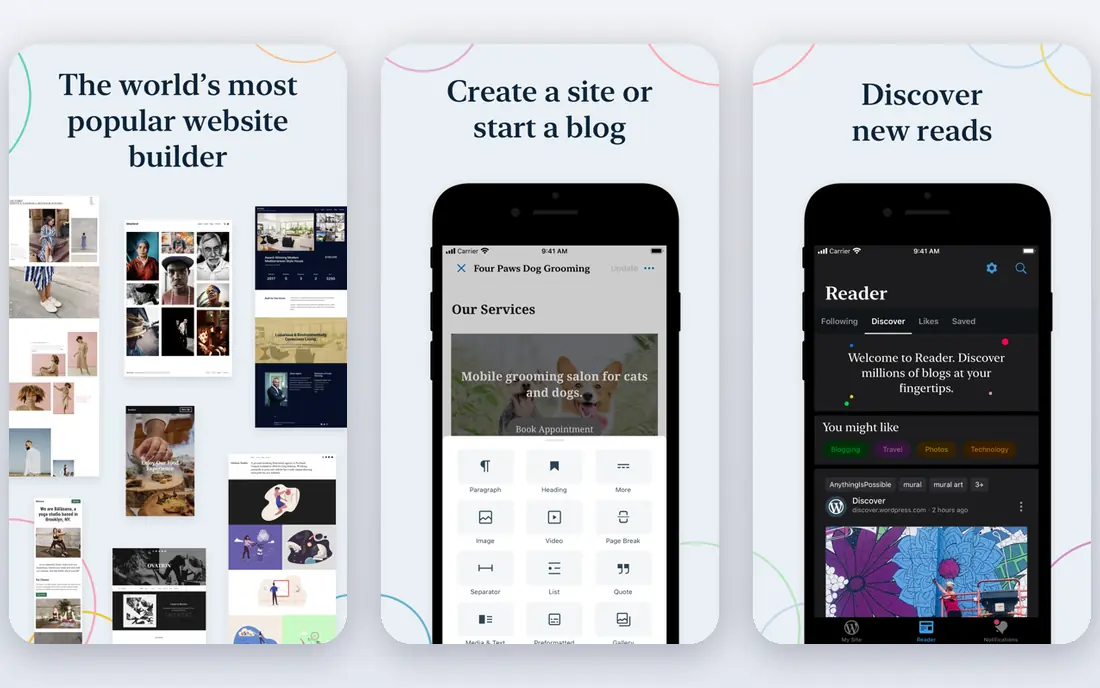
WordPress suits larger firms wanting full control over pages and search structure who want an open website platform with a huge plugin range and full structural control. That focus makes it easier to judge whether the fit is right before you spend time on a sales call.
The strongest point here is full control, which suits larger firms with technical help. The drawback is ongoing maintenance, which adds cost and time, so check hosting, plugin and maintenance costs before you commit. Pricing is listed as See website in the field lines above, and terms can vary by case.
- Open platform, huge plugin range, full control over structure
- Needs hosting, maintenance and technical help in many cases
Owners in the small construction firms wanting a low-cost, fast launch group often land on Hostinger, and a low-cost builder with hosting included and AI-assisted setup explains why. It is a practical option when you want help without handing over every decision.
On balance, the main draw is low cost and fast setup, which suit small firms. The limitation is a smaller template range and limited advanced features, so check the renewal price after any introductory period before you commit. Pricing is listed as See website in the field lines above, and terms can vary by case.
- Low-cost plans, AI setup help, hosting included
- Template range is smaller than larger builders, and advanced features are limited
HubSpot Content Hub
Best for: Construction firms wanting content, search guidance and CRM tools
Among the firms on this list, HubSpot Content Hub earns a place for construction firms wanting content, search guidance and CRM tools because a content platform with CRM options, search guidance and content tools. It is best treated as a specialist partner, not a do-it-all vendor.
The standout benefit is content and CRM tools, which help firms that publish project and service content. The trade-off is tiered pricing, which can exceed small firm budgets, so check the tier that includes the tools you will use before you commit. Pricing is listed as See website in the field lines above, and terms can vary by case.
- Built-in CRM options, search guidance, content tools
- Pricing rises with features, and it may exceed small firm needs
Contractor Gorilla
Best for: Small contractors wanting a fast, contractor-specific site
For readers focused on small contractors wanting a fast, contractor-specific site, Contractor Gorilla is a practical shortlist pick because a contractor-focused builder with templates, hosting and quote forms. The scope is clear enough to test against your own needs.
Where it wins is contractor-specific templates, which speed up launch. The catch is less design freedom than general builders, so check whether the template fits your services and areas before you commit. Pricing is listed as See website in the field lines above, and terms can vary by case.
- Contractor templates, managed hosting, quote forms
- Less design freedom than general builders
When your priority is agencies and firms wanting fast, clean contractor sites, Duda deserves attention because a website builder used by agencies and firms for fast, clean business sites. It works best when you know what you want the service to handle.
Its best feature is a fast editor, which helps firms that need many pages quickly. The weakness to weigh is lower owner familiarity, which can slow self-editing, so check the editing workflow for your team before you commit. Pricing is listed as See website in the field lines above, and terms can vary by case.
- Fast editor, clean templates, client management tools
- Less well known to owners who want to edit sites themselves
GoDaddy
Best for: Small firms wanting a builder plus domain and hosting in one place
A closer look at GoDaddy shows a service built around small firms wanting a builder plus domain and hosting in one place and a builder that combines domain, hosting and website tools in one account. That combination gives it a distinct role in this comparison.
The real advantage is one-account simplicity, which suits owners who want fewer vendors. The downside is generic templates, which may need more customization, so check the template fit and total renewal cost before you commit. Pricing is listed as See website in the field lines above, and terms can vary by case.
- Domain, hosting and builder in one account, simple setup
- Templates can feel generic, and search tools need manual setup
How we picked these
We compared official builder pages and public contractor website guides for 2026. We did not build sites with each platform ourselves, and we did not rank builders by template count alone, since lead tools and local search matter more for contractors. We favored builders with clear pricing, project gallery support, form tools, and local search features.
We mixed general builders with contractor platforms because construction firms differ in size and technical help. A solo contractor needs speed and simplicity. A regional builder needs location pages and deeper structure. Test the editor and a sample quote form before you commit to a year-long plan.
How to choose a builder for a construction firm
Lead with services and proof. Build a page for each core service and each main service area, with real project photos, service details, and a clear next step. A homepage alone rarely ranks well or converts well. Add reviews, licenses where relevant, and a short description of your process.
Keep forms short but useful. Ask for name, contact, service needed, location, and a brief project description, plus an option to upload photos. Long forms reduce completions, while very short forms create weak leads. Route form fills to a person who can respond the same business day.
Plan for local search and mobile use. Use clear page titles, service area pages, and a Google Business Profile that matches your site. Test every page on a phone, since many homeowners will first see your site on mobile. Check loading speed with large project photos, and compress images before publishing.
FAQ
What are the best website builder for construction companies?
The builders above include general options such as Wix, Squarespace and WordPress, plus contractor-focused options such as Contractor Gorilla. General builders suit firms that want design freedom, while contractor builders suit firms that want a faster launch.
Is WordPress good for construction companies?
WordPress suits larger firms with technical help, because it offers full control over pages, plugins, and search structure. Smaller firms without technical help may find maintenance harder. Factor hosting, updates, and plugin costs into the total.
What should a construction website include?
It should include service pages, service area pages, project photos, reviews, a quote form, contact details, and a clear next step. Licenses, insurance details, and process notes also help trust. Keep navigation simple and phone numbers easy to find.
How much does a construction website cost?
Builder plans vary, and contractor platforms often charge a monthly subscription. Custom agency sites cost more, often thousands of dollars upfront. Compare builder fees, domain costs, and any design help you need before you choose.
Do I need local SEO for a construction website?
Yes, in most cases. Homeowners usually search for a trade plus a city or neighborhood. Service area pages, a complete business profile, and reviews help you appear for those searches. A builder with clean page structure makes this work easier.
Sources
https://www.wix.com https://www.squarespace.com https://www.wordpress.com https://www.hostinger.com https://www.hubspot.com https://www.contractorgorilla.com https://www.duda.co https://www.godaddy.com