Best Warehouse Inventory Software in 2026: 7 Tools Compared
Compare the best warehouse inventory software for 2026, with Cin7, Fishbowl, Zoho, and more on price, barcode scanning, and multi-location stock control.

- Editor's choice
 Cin7
Multichannel sellers needing inventory and warehouse in one system
Starts at$349 per monthVisit cin7.comFull review - Great alternative
 Fishbowl
Manufacturers and QuickBooks-based warehouses
Starts at$229 per monthVisit fishbowl.comFull review - Also consider
 Zoho Inventory
Small warehouses and startups on a budget
Starts at$29 per monthVisit zoho.comFull review
TL;DR:
- Cin7 is our pick for multichannel sellers that need inventory, warehouse, and order flow in one system at a published starting price.
- Fishbowl suits manufacturers and QuickBooks shops that need work orders, bills of materials, and warehouse depth.
- Zoho Inventory is the best low-cost starting point for a small warehouse, with a free plan and paid tiers from $29 per month.
- inFlow suits B2B and wholesale teams that need customer pricing, showrooms, and invoicing alongside stock control.
- Quote-based enterprise tools such as ShipHero and Logiwa suit high-volume fulfillment, but budget for implementation as well as licenses.
Quick comparison
| Tool | Best for | Starts at | Free plan? | |
|---|---|---|---|---|
| Cin7 | Multichannel sellers needing inventory and warehouse in one system | $349 per month | Free trial | Visit |
| Fishbowl | Manufacturers and QuickBooks-based warehouses | $229 per month | No | Visit |
| Zoho Inventory | Small warehouses and startups on a budget | $29 per month | Yes | Visit |
 inFlow Inventory | B2B and wholesale warehouses | $99 per month | Free trial | Visit |
 ShipHero | High-volume ecommerce fulfillment | $1,850 per month | No | Visit |
 Finale Inventory | Simple multichannel warehouse tracking | $99 per month | Free trial | Visit |
 Logiwa | Multi-warehouse operations and third-party logistics | See website | No | Visit |
The best warehouse inventory software
Warehouse inventory software must do more than count items. It needs receiving, putaway, picking, packing, shipping, and cycle counts, plus accurate stock across locations and sales channels. The tools below cover small warehouses, manufacturers, wholesalers, and high-volume ecommerce fulfillment.

Cin7 is built for a brand that sells on Shopify, through wholesale accounts, and from a retail store at the same time. Stock updates across those channels, so a sale in one place reduces available stock everywhere. Purchase orders, manufacturing, and EDI tools sit in the same system, which helps a growing product business avoid separate tools for each job.
The $349 starting price is a floor, not a ceiling. Integrations beyond the included set cost extra, and the choice between Core and Omni tiers shapes warehouse depth. Still, for a seller that has outgrown a basic inventory app, Cin7 offers transparent pricing and broad coverage in one subscription.
- One stock figure across channels
- Many integrations
- Purchasing and manufacturing tools
- Entry price is mid-market
- Extra integrations cost more
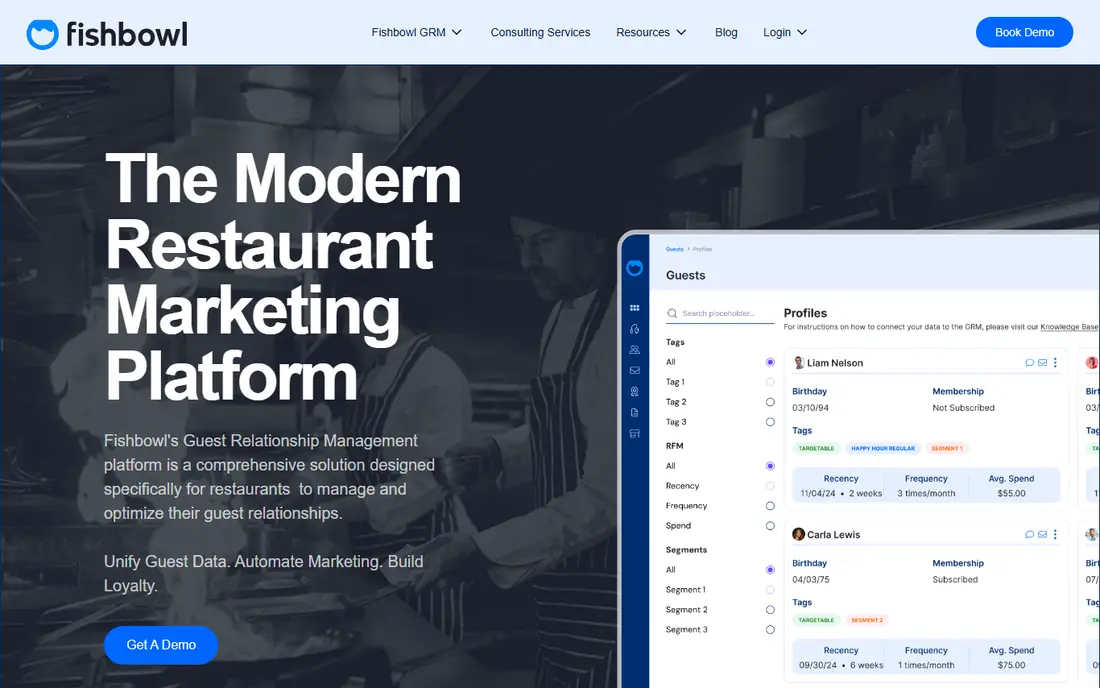
Fishbowl suits a warehouse that also makes or assembles products. Bills of materials, work orders, and material tracking connect stock to production, so a team can see what is available, what is on order, and what is tied to a job. Sync with QuickBooks Desktop, QuickBooks Online, and Xero keeps inventory movements aligned with the books.
A business that does not use QuickBooks or Xero will get less from Fishbowl, since accounting sync is a core strength. Setup also takes planning, especially for locations, bins, and manufacturing steps. For a QuickBooks shop with real warehouse work, Fishbowl is a strong fit.
- Work orders and bills of materials
- Deep QuickBooks sync
- Mobile scanning app
- Less value for firms not on QuickBooks or Xero
- Setup needs planning
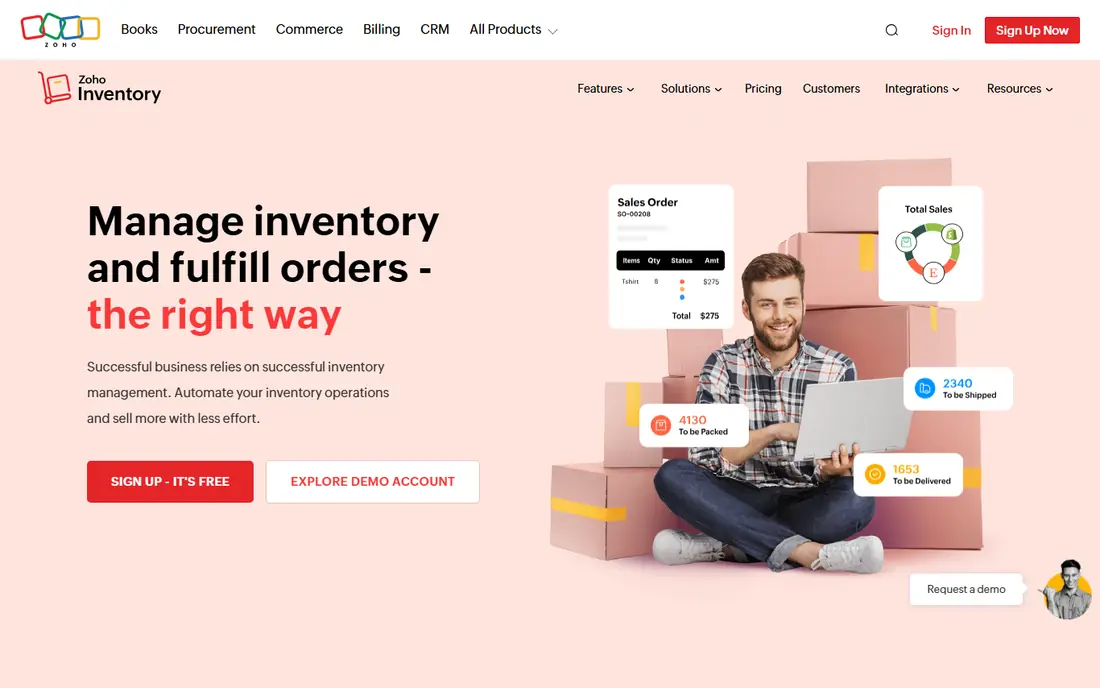
Zoho Inventory is the easiest low-cost entry point in this guide. A free plan covers low order volume, and paid plans from $29 per month on annual billing add more orders, users, and warehouses. Bundling, kitting, and multi-channel order handling help a small seller grow without switching systems at once.
Advanced warehouse tools, such as deeper bin tracking and automation, sit on higher tiers. A high-volume warehouse will outgrow Zoho sooner than Cin7 or ShipHero. For a small warehouse that needs accurate stock, orders, and shipping in one low-cost tool, Zoho is hard to beat.
- Free plan for low volume
- Low paid tiers
- Bundling and kitting tools
- Advanced warehouse features need higher tiers
- Support depth varies by plan
inFlow suits a wholesaler or distributor that sells to other businesses at different prices. Customer-specific pricing, private B2B portals, and invoicing sit alongside stock control, so a sales team can share a catalog and prices without a separate portal tool. Barcode scanning supports receiving, picking, and counts in the warehouse.
Ecommerce breadth is thinner than Cin7, so a brand selling across many marketplaces may need extra tools. The monthly rate is also higher than the annual rate, so a buyer should compare the same billing term. For B2B stock and invoicing, inFlow is a practical choice.
- B2B portals and customer pricing
- Invoicing built in
- Barcode scanning
- Monthly price is higher than annual rate
- Ecommerce depth is thinner than Cin7
ShipHero is built for ecommerce brands where pick accuracy and speed directly affect profit. It handles high order volume, warehouse zones, picking waves, and shipping workflows in a system designed for fulfillment teams. That focus helps a brand that ships hundreds or thousands of orders a day.
The $1,850 starting price puts it out of reach for a small warehouse, and implementation needs planning. A team shipping a few dozen orders a day will not use its depth. For a high-volume brand that has outgrown a basic inventory app, ShipHero is a serious fulfillment option.
- Built for pick accuracy at volume
- Warehouse automation tools
- Strong shipping workflows
- High entry price
- Overkill for a small warehouse
Finale Inventory suits a seller that wants reliable stock tracking without a full ERP. It tracks inventory across sales channels, supports barcode scanning, and handles purchase orders and stock counts in a direct interface. That simplicity helps a small team adopt it quickly.
Manufacturing tools are thinner than Fishbowl or Cin7, so a maker with complex assemblies may need more depth. Larger teams also move to higher tiers for users and locations. For straightforward warehouse tracking, Finale offers a clear and affordable path.
- Clear stock tracking across channels
- Barcode and RFID support
- Straightforward setup
- Manufacturing depth is limited
- Higher tiers needed for larger teams
Logiwa is built for operations with more than one warehouse or for third-party logistics providers that manage stock for many clients. It handles receiving, putaway, picking, packing, and shipping across locations, with mobile apps for warehouse staff. Order routing and client-level views help a 3PL keep each brand separate.
Pricing is by quote, so a buyer should budget for licenses and implementation. A single small warehouse will find it heavy. For a multi-warehouse or 3PL operation, Logiwa offers depth that a basic inventory app cannot match.
- Multi-warehouse and 3PL workflows
- Mobile warehouse apps
- Strong order routing
- Quote-based pricing
- Implementation takes time
How we picked these
We compared official pricing pages, feature lists, and public reviews for warehouse and inventory tools in October 2026. We favored tools with barcode scanning, multi-location stock, purchase orders, and shipping or marketplace links. We also weighed published pricing, since quote-only tools make budgeting harder for a small warehouse.
How to choose warehouse software
Map your warehouse flow first
Write down how goods arrive, where they are stored, how picks are made, and how orders are packed and shipped. Then test each tool against that flow, not against a feature list. A tool that handles your actual pick path will beat a tool with more features that do not fit your floor.
Test scanning and counts in the warehouse
Use a trial to receive stock, move it to a bin, pick an order, and run a cycle count with a scanner or phone. Check how the tool handles damaged stock, returns, and partial picks. These daily tasks reveal more than a sales demo.
Check integrations and total cost
Confirm links to your sales channels, shipping carriers, and accounting software. Add the cost of users, locations, integrations, and implementation to the subscription price. The best software for warehouse inventory in your case is the one that fits your flow at a total cost you can sustain.
A final point on warehouse choice is staff training. Even a strong system will fail when receiving, picking, and counting steps differ between shifts. Write short standard steps for each task, train every new hire on the scanner app, and review error rates by task each month. That discipline keeps stock accuracy high and makes the software investment pay off sooner.
FAQ
What is the best software for warehouse inventory for a small business?
Zoho Inventory is a strong low-cost start, with a free plan and paid tiers from $29 per month. inFlow and Finale suit small teams that need more B2B or multichannel depth. Cin7 suits a seller that has outgrown basic tools.
How much does warehouse inventory software cost?
Entry pricing here ranges from free or $29 per month for Zoho to $349 per month for Cin7 and $1,850 per month for ShipHero. Quote-based enterprise tools vary by users, locations, and volume, so request a written quote.
Do I need a warehouse management system or just inventory software?
Inventory software tracks stock levels and orders, while a warehouse management system adds detailed bin, pick, pack, and labor workflows. A small warehouse often starts with inventory software, then moves to a WMS such as Logiwa or ShipHero as volume and locations grow.
Can warehouse software handle multiple locations?
Yes, most tools here support multiple warehouses or locations, though the number included varies by plan. Check how stock transfers, location-level counts, and location-specific pricing work before you buy.
Does barcode scanning really improve accuracy?
Yes, when it is used consistently for receiving, picking, and counts. Scanning reduces manual entry errors and speeds up counts. Choose a tool with a mobile app your staff will actually use on the warehouse floor.
Should I choose a tool that integrates with QuickBooks?
If you already use QuickBooks, a strong sync saves re-entry and keeps stock costs aligned with your books. Fishbowl is a strong pick for QuickBooks shops, while Zoho and Cin7 also offer accounting links. Confirm the sync depth for your QuickBooks version.