Best Warehouse Automation Companies in 2026: 8 Companies Compared
Compare the best warehouse automation companies in 2026, from AutoStore and Locus Robotics to Dematic and Geekplus, with systems, costs and buyers compared.
- Editor's choice
 AutoStore
High-density cube storage
Starts atSee websiteVisit autostoresystem.comFull review - Great alternative
 Geekplus
Goods-to-person mobile robots
Starts atSee websiteVisit geekplus.comFull review - Also consider
 Locus Robotics
Collaborative picking robots
Starts atSee websiteVisit locusrobotics.comFull review
TL;DR:
- AutoStore and Geekplus lead on high-density goods-to-person storage, while Locus Robotics and 6 River Systems lead on collaborative mobile robots for picking.
- Dematic, Honeywell Intelligrated and Swisslog offer full warehouse systems, from conveyors and sorters to software and integration.
- Berkshire Grey suits parcel, e-commerce and retail operations that need robotic picking, packing and sortation at scale.
- Pricing is quoted per project, so compare throughput, footprint, integration and support together, not just robot or system cost.
Quick comparison
| Tool | Best for | Starts at | Free plan? | |
|---|---|---|---|---|
| AutoStore | High-density cube storage | See website | No | Visit |
| Geekplus | Goods-to-person mobile robots | See website | No | Visit |
| Locus Robotics | Collaborative picking robots | See website | No | Visit |
 Dematic | Full warehouse automation systems | See website | No | Visit |
 Honeywell Intelligrated | Conveyors, sorters and software | See website | No | Visit |
 Swisslog | Automated storage and software | See website | No | Visit |
 Berkshire Grey | Robotic picking and sortation | See website | No | Visit |
 6 River Systems | Collaborative warehouse robots | See website | No | Visit |
The best warehouse automation companies
We compared official product, system and case pages for warehouse automation vendors with live deployments in 2026. The list covers cube storage, mobile robots, full systems and robotic picking, since different warehouses need different automation, not one robot type.
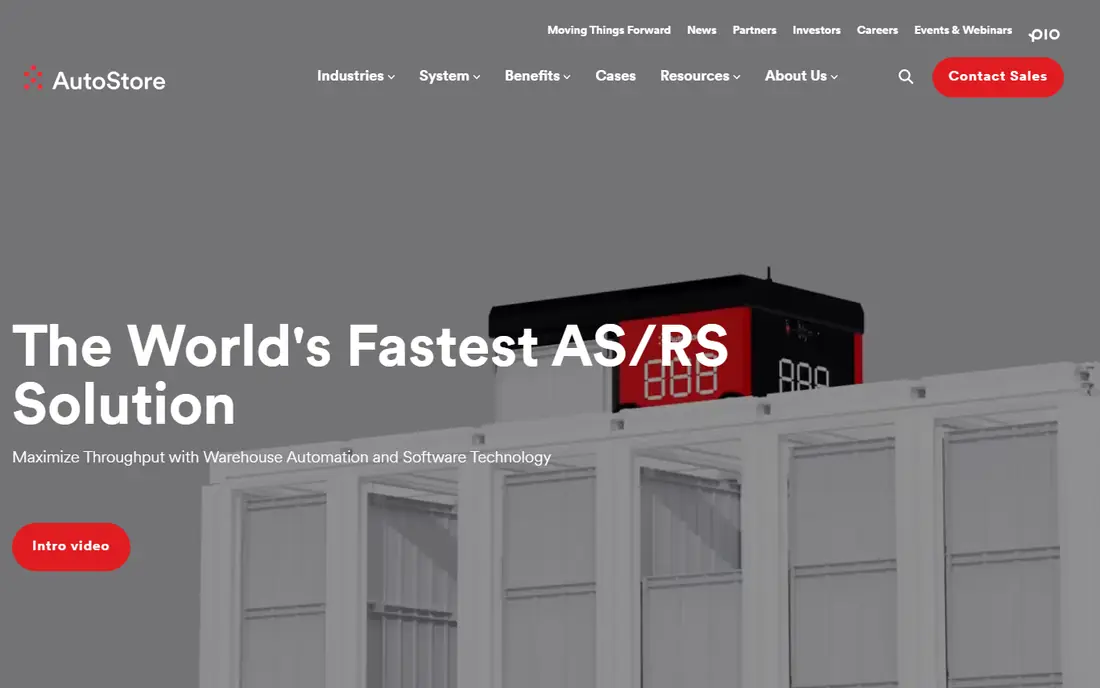
AutoStore stores bins in a dense cube grid, with robots running on top to retrieve bins and deliver them to picking stations. That design saves floor space and cuts walking for pickers, which helps e-commerce, grocery, healthcare and retail warehouses with many small items and high order volumes.
The system suits warehouses with a suitable product mix and order profile, and it needs careful integration with warehouse management software. Upfront cost is high, so buyers should model throughput, labor savings and space savings together, not just the robot count.
- Very high storage density
- Goods-to-person picking
- Modular grid that can expand
- High upfront project cost
- Needs integration with warehouse software
- Best for suitable SKU profiles
Geekplus offers autonomous mobile robots that bring shelves or bins to pickers, plus sorting robots for parcel and e-commerce operations. Its fleets can scale by adding robots, which suits warehouses whose volumes grow in steps rather than all at once.
Flexibility is the main advantage over fixed systems, since robots can be moved and fleets resized. Buyers should still plan integration, charging, floor markings and safety zones carefully, and test throughput with their own order mix before committing to a large fleet.
- Flexible mobile robot fleets
- Goods-to-person and sorting robots
- Large global deployments
- Integration and fleet management take planning
- Pricing is quoted
- Support varies by region
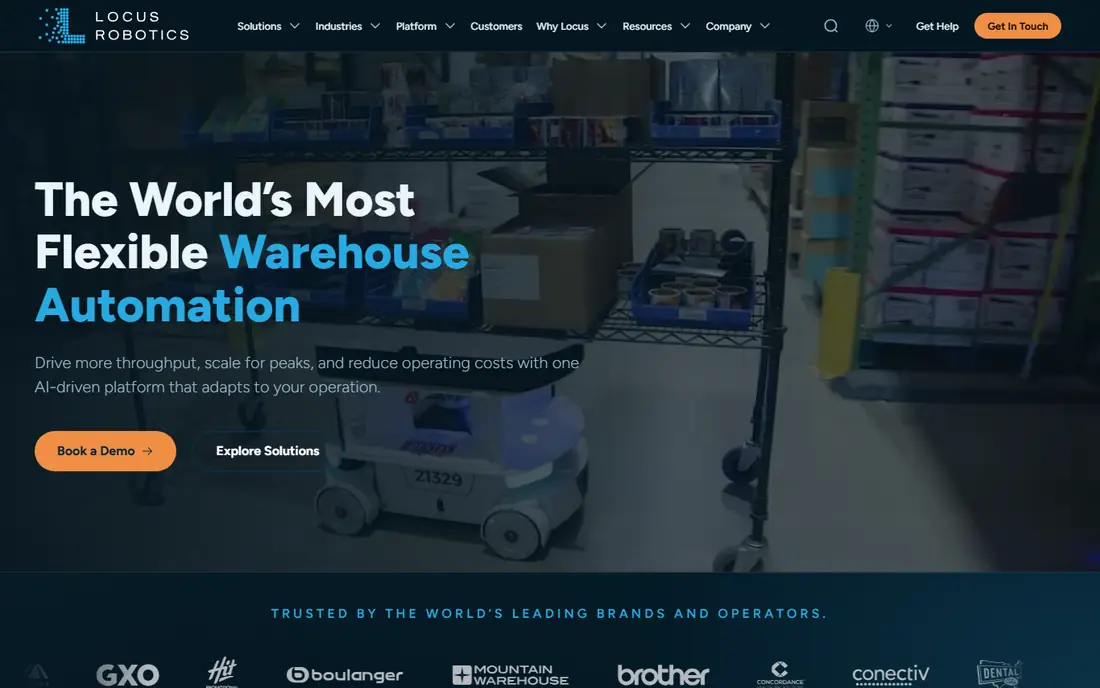
Locus Robotics makes collaborative mobile robots that travel with human pickers, guiding them to locations and carrying picked items. That model improves picking speed and accuracy without replacing the whole warehouse layout, and it can be deployed faster than fixed automation.
Locus is often sold as robots-as-a-service, with monthly fees per robot, so total cost depends on fleet size and contract length. For e-commerce and retail warehouses with high piece-picking volumes, it is one of the most proven collaborative options.
- Robots work alongside people
- Fast deployment
- Strong e-commerce picking results
- Robots-as-a-service fees add up
- Needs warehouse software integration
- Best for piece picking
Dematic designs and integrates complete warehouse systems, including conveyors, sorters, automated storage, pallet systems and warehouse software. Its scale suits large distribution centers, grocery networks and retail operations that need a coordinated system rather than a single robot type.
Full-system projects are major investments with long timelines, so requirements, throughput modeling and phased rollout planning matter greatly. For large warehouses planning a new build or major retrofit, Dematic is a leading systems integrator to compare.
- Full systems from conveyors to software
- Large global install base
- Strong grocery and retail experience
- Large project scope and cost
- Long implementation
- Needs detailed requirements planning
Honeywell Intelligrated, part of Honeywell, supplies conveyors, sorters, palletizers and warehouse execution software for distribution and fulfillment centers. Its strength is combining material handling hardware with software that controls order flow, sortation and shipping.
Buyers should expect a project-based sale with engineering, installation and support phases. For high-throughput parcel, retail and e-commerce centers, Honeywell offers a broad, proven hardware and software range with a large service network.
- Broad conveyor and sorter range
- Warehouse software
- Large service network
- Project pricing and timelines are large
- Product range can be complex
- Integration effort
Swisslog, part of KUKA, offers automated storage and retrieval systems, pallet and tote handling, and warehouse software, with strong experience in healthcare, retail and e-commerce. Its systems suit warehouses that need reliable, high-throughput storage and order handling with tight software control.
As with other full-system vendors, cost and timeline depend on scope, and smaller warehouses may find modular robot options more practical. For larger operations planning a coordinated automation program, Swisslog is a credible, global choice.
- Automated storage and retrieval
- Warehouse software
- Healthcare and retail experience
- Project cost is high
- Implementation takes time
- Best for larger operations
Berkshire Grey builds robotic systems for picking, packing, sortation and returns, using AI vision to handle varied items in e-commerce, retail and parcel operations. Its systems aim to automate the hardest manual tasks, where labor shortages and peak volumes strain human teams.
Robotic picking works best with a suitable product range and packaging mix, so buyers should test with their own items, including odd shapes and fragile goods. For high-volume parcel and e-commerce operations, Berkshire Grey offers a focused robotic alternative to full conveyor systems.
- Robotic picking, packing and sortation
- AI vision for varied items
- Retail and parcel focus
- Project pricing
- Needs suitable product mix
- Integration with existing systems takes work
6 River Systems, part of Shopify, makes collaborative mobile robots that guide warehouse associates through picking tasks and carry items, similar in concept to Locus. Its cloud software manages tasks, routes and performance, and its Shopify link suits merchants already using Shopify fulfillment tools.
The Shopify ownership shapes the roadmap, so non-Shopify warehouses should check integration and support terms carefully. For piece-picking warehouses, especially Shopify merchants, 6 River Systems offers a proven collaborative robot option with relatively fast deployment.
- Collaborative robots that guide pickers
- Cloud software
- Shopify-linked fulfillment ecosystem
- Part of Shopify, so roadmap ties to that group
- Pricing is quoted
- Best for piece picking
How we picked these
We compared official product, system and case pages for warehouse automation vendors with live deployments in 2026. We favored vendors with published system details, throughput cases and service networks, and we excluded pure research firms and single-robot prototypes. Pricing is quoted per project, so we list See website rather than inventing figures.
How to choose a warehouse automation company
Start with throughput and order profile, not robot type. Count orders per day, lines per order, units per line and peak versus average volumes, and model how each system handles your peak week. A system that works at average volume but fails at peak will disappoint during the busiest, most valuable period.
Next, check integration with your warehouse management system, enterprise software and shipping carriers. Automation that cannot share inventory, order and shipping data cleanly will create manual workarounds that erase labor savings. Ask vendors to show a live integration with a system like yours, not just a slide.
Finally, plan for people, safety and support. Confirm training, safety zones, maintenance response times, spare parts and software updates, and involve warehouse staff early. Automation succeeds when pickers, managers and maintenance teams trust the system and know how to work with it daily.
Cube storage versus mobile robots
Cube storage saves the most floor space and suits dense, small-item storage, while mobile robots offer more flexibility and faster deployment. Choose cube storage for space-constrained, high-density sites, and mobile robots for growing or changing operations.
Pilot and phased rollout
Pilot in one zone or product family, measure picking speed, accuracy, labor hours and error rates, then expand in phases. A phased rollout limits risk and gives staff time to learn new workflows before the whole warehouse changes.
FAQ
What is the best warehouse automation company?
AutoStore leads on dense storage, Locus Robotics and 6 River Systems lead on collaborative picking, and Dematic, Honeywell and Swisslog lead on full systems. The best choice depends on your order profile, footprint and throughput needs.
How much does warehouse automation cost?
Costs are quoted per project based on system type, throughput, footprint, integration and support, so public prices are rare. Request scoped quotes with your order volumes and peak requirements for a fair comparison.
Is warehouse automation suitable for small warehouses?
Modular mobile robots, such as Locus and Geekplus fleets, can suit smaller warehouses, while fixed cube and conveyor systems usually need larger volumes to justify cost. Start with a small robot fleet or a single automated zone.
How long does warehouse automation take to install?
Mobile robot fleets can deploy in weeks to a few months, while full conveyor and storage systems can take many months, including engineering and integration. Ask vendors for a phased timeline with clear milestones.
Will automation replace warehouse workers?
Automation usually changes roles rather than removing all of them, shifting work from walking and lifting to picking with robots, system monitoring and maintenance. Plan training and new roles early, and involve staff in the change.
What software do I need with warehouse automation?
You need a warehouse management system that can share inventory and order data with the automation, plus warehouse execution software in many cases. Confirm integration, data formats and support responsibilities before signing.