Best UI UX Design Companies in USA in 2026: 10 Firms Compared
We compared the best ui ux design companies in usa on research, product craft, pricing and fit, so teams can hire the right design partner for 2026 today.
- Editor's choice
 Work & Co
Enterprise flagship products
Starts atSee websiteVisit work.coFull review - Great alternative
 Clay
Brand led product design
Starts atSee websiteVisit clay.globalFull review - Also consider
 IDEO
Research led innovation
Starts atSee websiteVisit ideo.comFull review
TL;DR:
- Work & Co and Huge suit large enterprise products where senior teams and scale matter more than low cost.
- Clay and Fantasy suit brand led products where visual quality and polish are the main buying decision.
- IDEO and frog suit complex, open ended problems where research and service design must come before screens.
- Momentum Design Lab, Ramotion and Instrument suit B2B and mid sized teams that need strong dashboards and design systems.
- Code and Theory suits teams that want design and engineering from one partner, cutting the handoff between firms.
Quick comparison
| Tool | Best for | Starts at | Free plan? | |
|---|---|---|---|---|
| Work & Co | Enterprise flagship products | See website | No | Visit |
| Clay | Brand led product design | See website | No | Visit |
| IDEO | Research led innovation | See website | No | Visit |
 Huge | Enterprise experience design | See website | No | Visit |
 frog | Service and ecosystem design | See website | No | Visit |
 Fantasy | Consumer interface craft | See website | No | Visit |
 Ramotion | SaaS brand and product design | See website | No | Visit |
 Momentum Design Lab | B2B dashboards and data products | See website | No | Visit |
 Instrument | Brand plus product ecosystems | See website | No | Visit |
 Code and Theory | Design plus engineering delivery | See website | No | Visit |
The best UI UX design companies in USA
We compared US based UI and UX firms on shipped product work, research depth, design system skill, industry fit and engagement model. Prices are project based and quoted, so we mark them as See website and note published minimums in the text where third party listings report them.
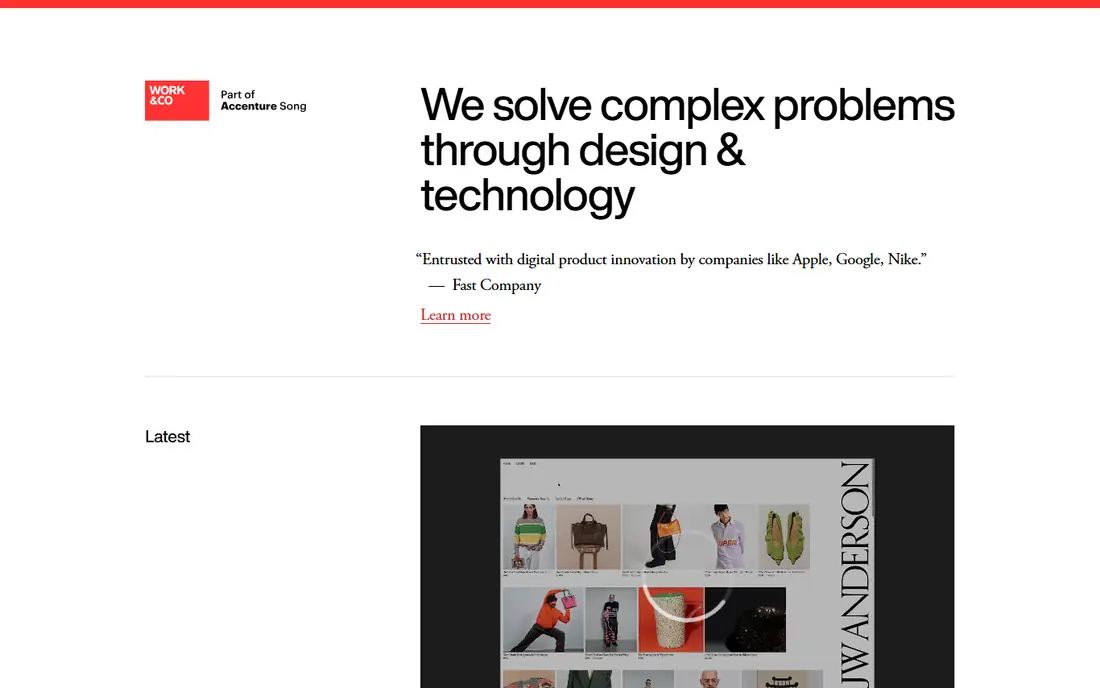
Work & Co, based in Brooklyn, is built for flagship products where the stakes are high and the audience is large. Its teams are senior led, and its work spans mobile apps, web platforms and connected products for major brands. That model suits companies that need a product shipped well, not just designed well on paper.
The catch is access. Projects commonly start at six figures, and the firm is selective about fit. Smaller startups may get more attention elsewhere. For a large company redesigning a core product, though, Work & Co is one of the safest hires in the US.
- Senior led product teams
- Strong record on large consumer and enterprise launches
- Product native delivery model
- Enterprise budgets required
- Selective about smaller projects
Clay, based in San Francisco, ties brand and product design closely together. That matters when a product must look like a category leader from the first screen, since logo, type, color and interface are designed as one system. Its client list includes large tech and consumer names, and its case work shows that polish clearly.
Clay is less of a fit for internal enterprise tools where visual polish matters less than workflow speed. Published listings put its minimums near $50,000 and often higher, so budget accordingly. For a brand led launch, that spend buys a level of finish that cheaper firms rarely match.
- Brand and interface design in one team
- Polished work for large tech and consumer brands
- Strong design system output
- Minimum project sizes are high
- Brand focus may suit marketing led products more than internal tools
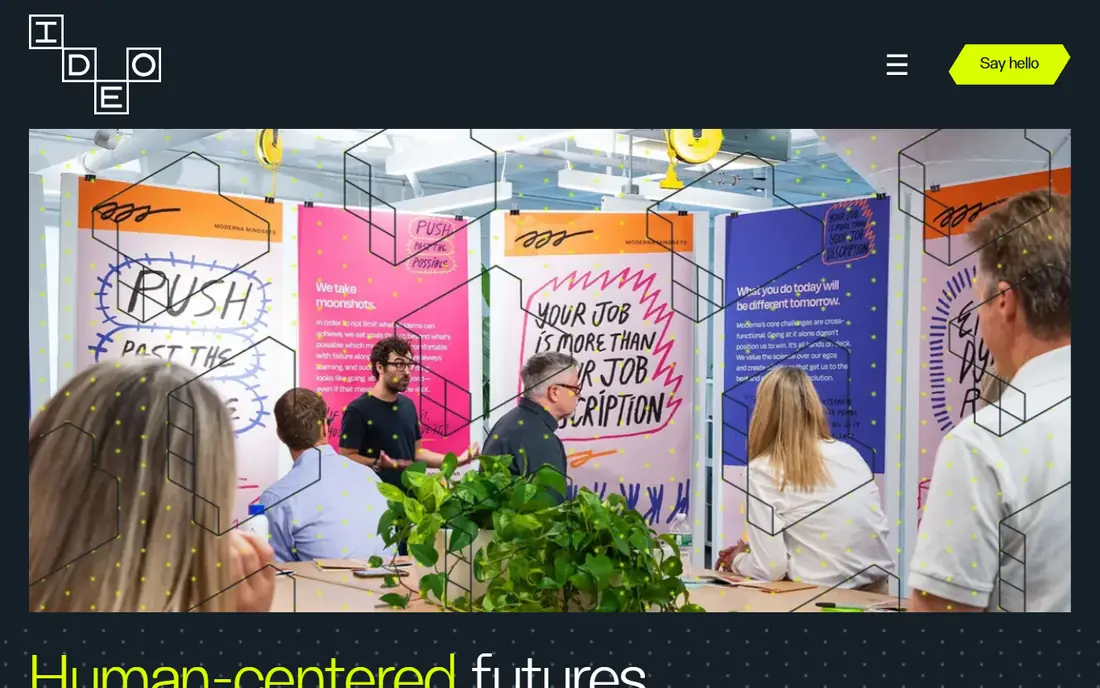
IDEO, based in Palo Alto with other US studios, is the research first choice on this list. It is best when the problem is not yet clear: a new service, a new market, or a product that must change how people behave. Its design thinking methods, interviews, prototypes and testing help teams learn before they build.
That breadth is also the weakness for teams that just need screens redesigned quickly. IDEO engagements can be large, exploratory and costly, and they may not suit a team with a fixed interface brief and a tight deadline. When the brief itself needs work, IDEO earns its fee.
- Deep research and design thinking heritage
- Strong for new products and services
- Global team and methods
- Institutional budgets
- Projects can be broader and slower than a pure interface redesign
Huge, based in Brooklyn, works at enterprise scale across websites, apps, content and customer experience. Large organizations with many channels, markets and internal teams often need that coordination, and Huge is built to provide it. Its work covers brand systems as well as product interfaces, so a redesign can stay consistent across touchpoints.
Smaller teams may find Huge heavy. Its processes, staffing and pricing reflect large programs, not quick sprints. For a company with a complex digital estate and a multi year roadmap, that scale is a strength rather than a burden.
- Scale for large digital ecosystems
- Brand, content and experience under one roof
- Long enterprise track record
- Large firm processes can feel slow
- Enterprise pricing excludes smaller teams
frog, based in San Francisco, designs products, services and ecosystems together, which suits companies whose digital product connects to hardware, retail or a wider service. Its heritage in industrial design shows in work that treats the physical and digital experience as one.
The risk is scope. frog projects can span strategy, service and product, and without a disciplined build plan, a strong concept can stall. Teams that hire frog should agree early on who builds, who owns the roadmap, and how success will be measured after launch.
- Cross platform and service design strength
- Strong industrial and digital blend
- Global delivery
- Enterprise budgets
- Concept work needs a clear path to build
Fantasy, based in New York, is known for cinematic, high fidelity consumer interfaces. Its work often sets a visual standard that other firms then follow, and it suits consumer apps where first impressions and delight drive downloads and retention. Motion, typography and detail are handled with unusual care.
That craft comes at premium prices, and its consumer strength does not always translate to dense B2B workflows. Teams building internal dashboards should weigh Fantasy against a B2B specialist. Teams launching a consumer product where look and feel decide success will find Fantasy hard to beat.
- High fidelity consumer interfaces
- Strong motion and visual design
- Vision work that excites stakeholders
- Premium pricing
- Consumer focus may fit B2B tools less well
Ramotion, based in San Francisco, combines brand identity with product UI and UX, which helps SaaS companies keep marketing and product feeling like one brand. Its work for developer tools, fintech and SaaS products shows clean interfaces tied to clear brand systems, not generic templates.
It is a mid sized studio, so very large enterprise programs may need a bigger partner for scale. For a SaaS team that needs a brand refresh plus a product redesign, Ramotion offers a practical balance of quality and attention.
- Brand plus product design in one studio
- Strong SaaS and fintech work
- Design system focus
- Minimums near $50,000 on listings
- Smaller team than the largest firms
Momentum Design Lab, based in San Jose, specializes in data heavy B2B products: dashboards, analytics tools and complex workflows. Its research led process suits products where users must complete hard tasks quickly and without error, and its published case work often includes measured outcomes.
Consumer teams looking for visual spectacle may prefer Clay or Fantasy. B2B teams that need a dashboard users can trust on first use will find Momentum a better fit. Listings put its minimums near $50,000, so plan for a serious engagement, not a quick audit alone.
- Strong data heavy B2B work
- Research and testing emphasis
- Engineering support through its parent group
- B2B focus means less consumer brand flair
- Project minimums still significant
Instrument, based in Portland, connects product design to a larger brand ecosystem, including websites, content and campaigns. That helps consumer technology brands whose app, site and marketing must feel consistent. Its teams cover strategy, design and technology, so a product can move from concept to build with fewer handoffs.
Narrow B2B workflow products are not its main focus, so teams building internal tools should compare it with Momentum or a research specialist. For a consumer brand with a broad digital presence, Instrument offers a coherent partner.
- Product design connected to brand and content
- Strong consumer tech work
- Full digital team
- Larger engagements favored
- Less specialized in narrow B2B workflows
Code and Theory combines design and engineering, which removes the classic handoff problem where a design agency hands screens to a separate build team and details get lost. Its work for large platforms, publishers and enterprises shows that model at scale, with design systems that engineers can actually build from.
Small teams may find it larger than they need, and its pricing reflects enterprise programs. For a large platform that needs design and build to stay in step, that combined team is a clear advantage.
- Design and engineering in one firm
- Strong for large platforms and publishing
- Reduces handoff rework
- Enterprise scale and pricing
- Creative style may suit platforms more than small apps
How we picked these
We compared agency portfolios, published case studies, Clutch style listings, research methods and US presence for UI and UX firms active in 2026. We favored firms with shipped products, not only concept work, and we balanced large enterprise firms with mid sized studios so different budgets and product types are covered.
We did not audit client results ourselves. Case study outcomes come from agencies and third party listings, so we recommend asking any finalist for a case study in your industry with measured results, plus references you can speak with directly.
How to brief and hire a design firm
Start with a one page brief that states the product, the users, the job they must complete, and the metric that matters, such as activation, task completion time or support tickets. Vague briefs produce pretty screens that miss the real problem. Ask finalists to show work for a similar user task, not just a similar industry, and ask how they tested it with real users.
Agree on ownership and process before signing. Confirm who owns the design files and design system, how research findings are shared, how many revision rounds are included, and what happens after launch. A phased start, such as an audit or a single flow redesign, lets you test the working relationship before committing to a full rebuild.
FAQ
What are the best ui ux design companies in usa?
Work & Co and Huge lead for enterprise products, Clay and Fantasy lead for brand led consumer products, and IDEO and frog lead for research led innovation. Momentum Design Lab, Ramotion, Instrument and Code and Theory round out the list for B2B, SaaS and design plus engineering needs.
How much does a US UI UX agency cost?
Most specialist studios on this list start near $25,000 to $50,000 for a scoped project, with enterprise programs running well into six figures. Average agency projects reported on listings run near $85,000 over several months. A phased audit first can control spend and test fit.
Should we hire an agency or build an in house team?
Hire an agency for a focused redesign, a launch, or expertise you lack, such as research or design systems. Build in house when design is a daily, ongoing need and you want deep product knowledge on staff. Many teams use a hybrid: agency for the redesign, in house team for ongoing iteration.
What should we ask in a first meeting?
Ask for a case study with a measured outcome, the senior staff who will actually work on your project, the research plan, and the design system deliverables. Also ask how they handle engineering handoff and post launch measurement, since those steps decide whether good design ships well.
Do US agencies work with remote teams?
Yes, most US firms on this list work with remote and distributed clients as standard practice. Confirm time zone overlap, meeting cadence and how workshops and user testing will run remotely, especially if your users are in several regions.
How long does a UI UX redesign take?
A focused flow redesign can take four to eight weeks, while a full product redesign often takes three to nine months, depending on research, scope and engineering. Ask for a phased timeline with clear milestones, so you can review progress before the full budget is spent.