Best Telecom Expense Management Software in 2026: 8 Tools Compared
Compare the best telecom expense management software for invoice audit, inventory and cost control, with honest notes on quote based pricing in 2026 now.

- Editor's choice
 Tangoe
Global enterprise telecom spend
Starts atSee websiteVisit tangoe.comFull review - Great alternative
 Calero
Network visibility and SaaS spend
Starts atSee websiteVisit calero.comFull review - Also consider
 Sakon
Modular enterprise telecom management
Starts atSee websiteVisit sakon.comFull review
TL;DR:
- Almost every enterprise telecom expense tool is quote based, so budget on a written quote for your spend, services and locations.
- Tangoe, Calero and Sakon are the best known enterprise platforms, while Lightyear suits teams that want modern procurement and inventory tools.
- Invoice audit and dispute management, not dashboards alone, are where telecom expense tools save money, by catching billing errors.
- Small businesses with a few phone lines do not need enterprise telecom expense software, and a carrier portal plus accounting software may be enough.
Quick comparison
| Tool | Best for | Starts at | Free plan? | |
|---|---|---|---|---|
| Tangoe | Global enterprise telecom spend | See website | No | Visit |
| Calero | Network visibility and SaaS spend | See website | No | Visit |
| Sakon | Modular enterprise telecom management | See website | No | Visit |
 Lightyear | Modern procurement and inventory | See website | No | Visit |
 Cass | Managed telecom expense services | See website | No | Visit |
 Upland Cimpl | Procure to pay for telecom and IT | See website | No | Visit |
 Valicom | Mid market telecom expense help | See website | No | Visit |
 Tellennium | Audit and cost allocation | See website | No | Visit |
The best telecom expense management software
Telecom expense management, often called TEM, covers the full lifecycle of phone, data, mobile and cloud services: inventory, contracts, invoices, audit, disputes, cost allocation and optimisation. We compared enterprise platforms that are actively sold in 2026, using vendor pages and independent TEM comparisons. Pricing is quote based for nearly every tool here, so we list See website honestly rather than inventing a price.
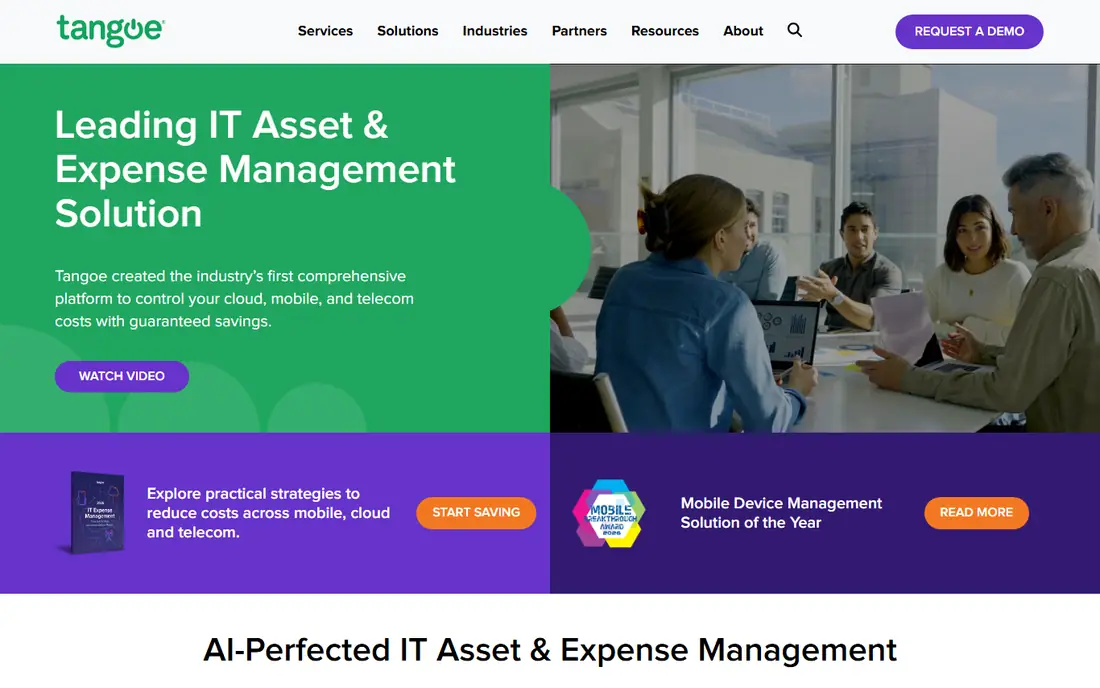
Tangoe One is the best known enterprise TEM platform, built to manage telecom, mobile and cloud spending from one place. It automates invoice processing, flags cost and usage spikes, supports many currencies and countries, and connects to business systems for cost allocation. That global scope suits multinationals with carriers, contracts and currencies that a smaller tool cannot handle.
The main drawback is opacity on price and setup. Tangoe publishes no entry price, and subscriptions typically tie to spend under management or to devices and accounts, so a quote is essential. Public reviews also note limited portal customisation and occasional manual work during implementation. For a large global enterprise, Tangoe scale and carrier coverage still make it a first shortlist pick.
- Global carrier ecosystem and multi currency support
- Invoice automation and dispute tools
- Telecom, mobile and cloud in one platform
- No published pricing
- Portal customisation is limited in public reviews
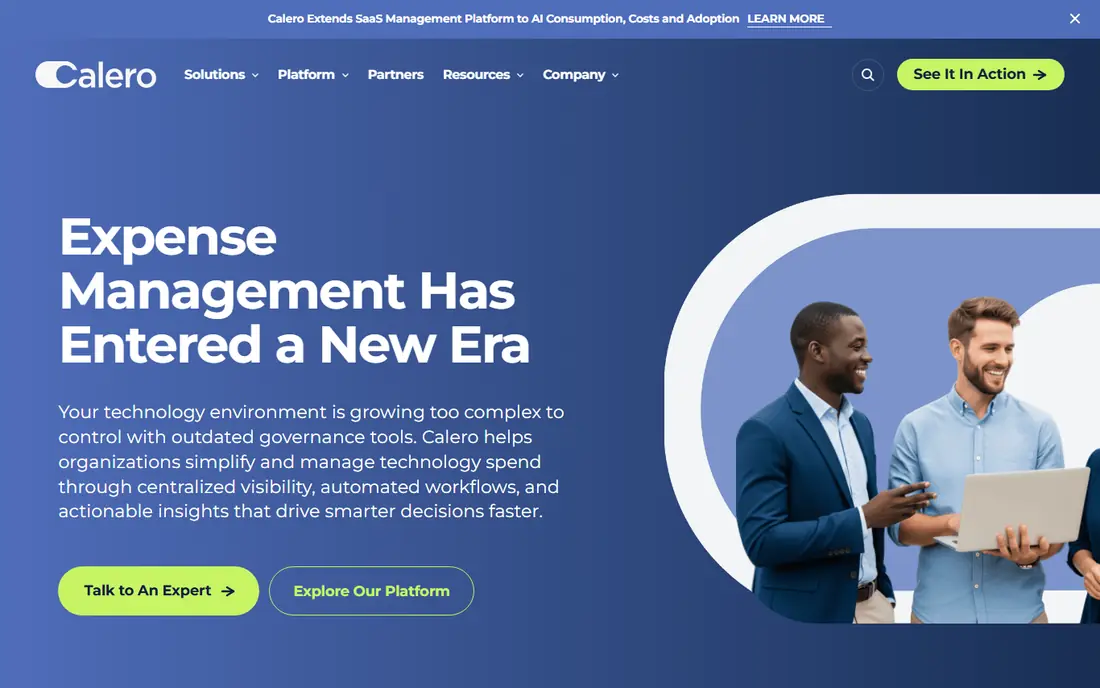
Calero takes a network first approach to TEM, with visualisation tools that map what telecom assets exist across an organisation before you renegotiate contracts or clean up unused services. It also covers invoice audit, dispute management, inventory lifecycle and benchmarking, and it extends into SaaS expense management, which helps teams that now pay for software alongside circuits and mobile lines.
Pricing is not publicly listed, and the platform is enterprise grade, so smaller teams without dedicated procurement staff may find the learning curve steep. Calero suits organisations that need to see their whole network estate clearly, and that have the staff to act on that visibility. Ask for a demo with your own inventory data, not a generic demo, to judge the fit.
- Network visualisation and inventory tools
- Automated dispute management
- SaaS expense visibility
- No published pricing
- Enterprise grade setup can feel heavy for smaller teams
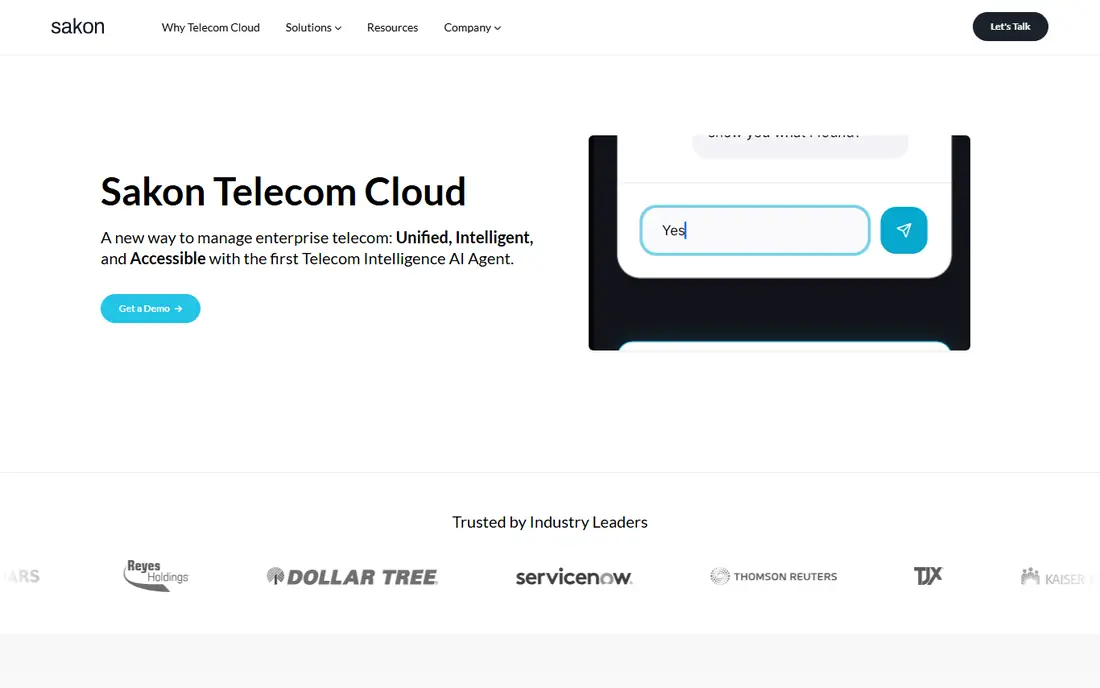
Sakon stands out for modularity. Instead of buying a full suite you use at partial capacity, you buy the modules your environment actually needs, such as invoice lifecycle, asset management or cost allocation. Integrations with ERP and ITSM systems such as SAP and ServiceNow connect invoice and expense data to finance and IT workflows, rather than creating a parallel silo.
Pricing is quote based, and onboarding still involves data work, especially for organisations with messy inventory records. Sakon suits large enterprises that want a tailored platform and strong system integrations, and that can commit to cleaning inventory data as part of the project. Get a modular quote, and compare it module by module against a full suite price.
- Modular buying so you pay for what you need
- ERP and ITSM integrations
- Global invoice and asset management
- No published pricing
- Manual data work can remain during onboarding
Lightyear is a newer telecom operating system that digitises the full lifecycle from procurement to renewal. Teams can configure services online, receive validated best price quotes, have implementations project managed, and track inventory and expenses in one system. Its procurement platform is free to use in published comparisons, while Network Inventory Manager and Expense Management are priced per service based on network size, not as a percentage of spend.
That per service model appeals to teams that dislike percentage of spend pricing, which can feel like paying more for saving more. Lightyear is less proven at the largest enterprise scale than Tangoe or Calero, and some reviews note limited built in voice tools. For a mid sized or growing enterprise that wants a modern interface and clearer pricing structure, it is a strong alternative to legacy TEM platforms.
- Modern procurement with validated quotes
- Network inventory manager
- Expense management priced per service
- Newer vendor with less enterprise history
- Voice tools are more limited in some reviews
Cass Information Systems offers telecom expense management as a managed service as well as software, which suits organisations that want a partner to handle invoice processing, audit and payment work, not just a tool to do it themselves. Its long history in the space and global invoice handling make it a steady choice for finance teams that want outsourcing depth alongside technology.
The trade-off is control and price transparency. Cass pricing is quote based and tied to scope, and a managed service means you rely on the vendor team for day to day work. If your finance team is small and wants a partner to run TEM, that is a plus. If you want a self service platform your own team controls daily, Tangoe, Calero or Lightyear may fit better.
- Long history in telecom expense management
- Managed services alongside software
- Global invoice handling
- No published pricing
- Managed service model may suit less hands on teams
Upland Cimpl helps enterprise IT, finance, procurement and vendor management teams manage the procure to pay lifecycle for mobile, telecom and cloud services. It covers budgets, inventory, invoices and vendor management in one platform, with cost allocation to departments and projects. Published vendor summaries claim optimisation savings in the 20 to 30 percent range for technology portfolios, though your result will depend on your starting contracts and data quality.
Pricing is quote based, and implementation needs clean inventory and contract data to work well. Cimpl suits organisations that already use Upland tools, or that want a single procure to pay view across telecom and IT spend. Smaller teams will find the enterprise scope heavier than they need.
- Procure to pay lifecycle for mobile, telecom and cloud
- Budget and cost allocation tools
- Vendor management
- No published pricing
- Enterprise setup needs planning and data work
Valicom is a mid market focused TEM provider that combines software with audit and optimisation services. It helps organisations track telecom invoices, find billing errors, optimise contracts and allocate costs, without the full enterprise platform weight of Tangoe or Calero. That focus makes it a practical option for a mid sized business that has outgrown spreadsheets and carrier portals, but does not need a global multinational platform.
The limit is scale and global coverage. Valicom is smaller than the largest vendors, so a multinational with many countries and currencies may need a larger platform. Pricing is quote based, so ask for a scope tied quote that covers invoice volume, locations and whether you want managed audit help or software only.
- Focused on mid market telecom expense management
- Audit and optimisation services
- Clear reporting
- No published pricing
- Smaller scale than global enterprise platforms
Tellennium offers telecom expense management focused on audit, invoice management and cost allocation, with reporting that finance teams can use to explain telecom spend by department or location. It suits organisations that want to catch billing errors, allocate costs fairly, and keep a clear record of what was audited and disputed, without buying a full global platform.
The interface and feature breadth are less modern than Lightyear, and pricing is quote based, so a demo with your own invoices is the best test. If audit accuracy and allocation matter more than procurement or network visualisation, Tellennium is a focused and often cheaper path than a full suite. Compare its audit findings on a sample of your invoices before you commit.
- Telecom audit and invoice management
- Cost allocation to departments
- Reporting for finance teams
- No published pricing
- Less modern interface than newer rivals
How we picked these
We compared vendor pages and independent TEM comparisons from 2026, and we kept only platforms that are actively sold and cover invoice, inventory or audit work for telecom spend. We favoured platforms with global or mid market coverage, clear audit and dispute features, and a verifiable product page. Tools that were only a carrier portal, or that had no usable TEM product page, were left out.
What to check before you buy
Start with your inventory, not with a demo. List every circuit, mobile line, cloud service and contract, with location, owner and renewal date. A TEM tool is only as good as that inventory, and a vendor that cannot import and clean it will leave you with the same mess in a new system.
Compare pricing models, not just quotes
Some vendors charge a percentage of spend under management, others charge per service, per device or a flat subscription. A percentage model can penalise savings, while a per service model can penalise growth. Ask each vendor to price the same scope, with the same inventory count, so quotes are comparable.
Test audit on your own invoices
Ask each shortlisted vendor to audit a sample of your real invoices and show the errors, disputes and savings they find. That test reveals more than a dashboard demo, because it shows how the tool handles your carriers, formats and contract terms in practice.
Plan for disputes and renewals
Invoice audit saves money only if disputes are filed and followed up. Check who owns disputes, how contract renewals are tracked, and what happens when a contract auto renews. A tool that flags a renewal but does not assign an owner will not prevent the renewal.
FAQ
What is telecom expense management software?
It is software that manages the lifecycle of telecom, mobile and cloud services, including inventory, contracts, invoices, audit, disputes, cost allocation and optimisation. It helps organisations see what they pay for, catch billing errors, and allocate costs to the teams that use the services.
How much does telecom expense management software cost?
Almost all enterprise TEM tools are quote based, with pricing tied to spend under management, services, devices or locations. Get written quotes for the same scope from each vendor, and ask whether the price is a percentage of spend, per service, or a flat subscription.
Do small businesses need TEM software?
Usually not. A small business with a few phone lines and one internet service can usually manage with carrier portals and accounting software. TEM software pays off once you have many locations, mobile lines, carriers or contracts, and billing errors become hard to spot manually.
How does TEM software save money?
It saves money mainly through invoice audit and dispute management, by finding billing errors, unused services and contract terms that were not applied correctly. It also helps at renewal time, by showing usage and contract dates before you renegotiate.
What is the difference between TEM and managed TEM services?
TEM software is a platform your team runs, while managed TEM services add a vendor team that processes invoices, audits bills and handles disputes for you. Managed services suit small finance teams, while larger teams may prefer a self service platform they control daily.
Which TEM tool is best for a global enterprise?
Tangoe, Calero and Sakon are the best known global enterprise platforms, thanks to carrier coverage, multi currency support and ERP integrations. Lightyear is a strong modern alternative for teams that want per service pricing and a newer procurement experience.