Best Tax Research Software in 2026: 7 Tools Compared
Compare detailed the best tax research software for firms and advisers, with federal and state coverage, IRS guidance, journals and practice tools in 2026.
- Editor's choice
 Thomson Reuters Checkpoint
Full federal and state research
Starts atSee websiteVisit thomsonreuters.comFull review - Great alternative
 Bloomberg Tax
Analysis, news and practitioner tools
Starts atSee websiteVisit bloombergtax.comFull review - Also consider
 CCH AnswerConnect
Guided answers and Wolters Kluwer content
Starts atSee websiteVisit wolterskluwer.comFull review
TL;DR:
- Thomson Reuters Checkpoint and Wolters Kluwer CCH AnswerConnect are the two fullest research platforms for US firms, with deep federal and state content.
- Bloomberg Tax suits firms that want strong analysis, news and practitioner tools in one subscription.
- TaxNotes is essential for news, IRS documents and policy tracking, but it is a news and document service rather than a full code library.
- Solo practitioners can often start with Parker Tax Pro or TheTaxBook, then add a full platform when client complexity grows.
Quick comparison
| Tool | Best for | Starts at | Free plan? | |
|---|---|---|---|---|
| Thomson Reuters Checkpoint | Full federal and state research | See website | No | Visit |
| Bloomberg Tax | Analysis, news and practitioner tools | See website | No | Visit |
| CCH AnswerConnect | Guided answers and Wolters Kluwer content | See website | No | Visit |
 LexisNexis Tax | Broad legal and tax research | See website | No | Visit |
 TaxNotes | Tax news and primary documents | See website | No | Visit |
 Parker Tax Pro Library | Affordable practitioner research | See website | No | Visit |
 TheTaxBook | Quick reference for preparers | See website | No | Visit |
The best tax research software
Tax research tools must answer a precise question fast, with a citable source, whether the issue is federal income tax, state conformity or an IRS notice. The platforms below differ in depth, price and audience, from large firms to solo preparers. This article is general information only, not tax advice.
Checkpoint is the most complete tax research platform many US firms use. It brings the Internal Revenue Code, regulations, IRS guidance, cases, rulings and state content together with Thomson Reuters editorial analysis, practice tools and citators that show whether an authority is still good law. Search, filters and document history help researchers move from a question to a supported answer.
Pricing is quote-based and varies by content sets and users, so firms should request a quote for the exact libraries they need. New users need training to use citators and advanced search well. For firms that handle varied federal and state issues, Checkpoint remains the default full research choice.
- Deep US federal and state libraries
- Editorial analysis
- Strong search and citators
- Quote-based pricing
- Learning curve for new researchers
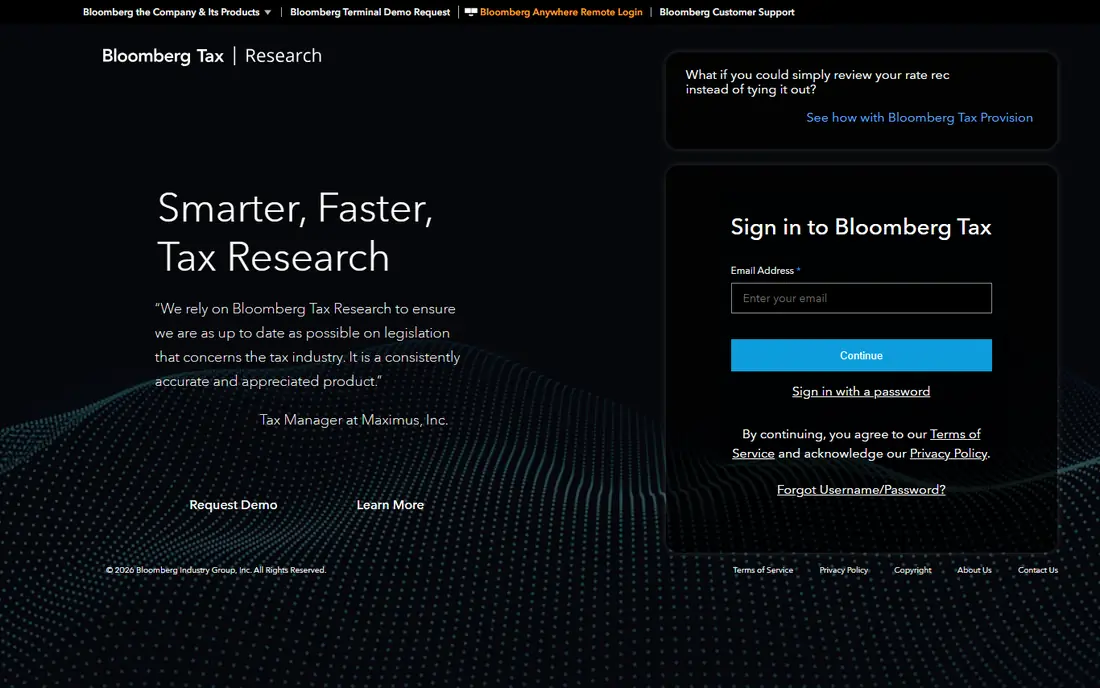
Bloomberg Tax combines primary law, IRS and state guidance with practitioner-written analysis, portfolios on common topics and daily tax news. Firms use it for planning research, client alerts and keeping up with legislation, and its tools help track issues across jurisdictions. The platform suits advisers who want analysis written for practitioners, not just raw documents.
Subscriptions are quote-based, and the exact libraries included depend on the package, so buyers should confirm state coverage and portfolio access. Smaller firms may find the full package costly. For mid-size and larger firms that value analysis alongside primary sources, Bloomberg Tax is a strong alternative to Checkpoint.
- Strong practitioner analysis
- Timely news
- Portfolios and practice tools
- Quote-based pricing
- Content depth varies by subscription tier
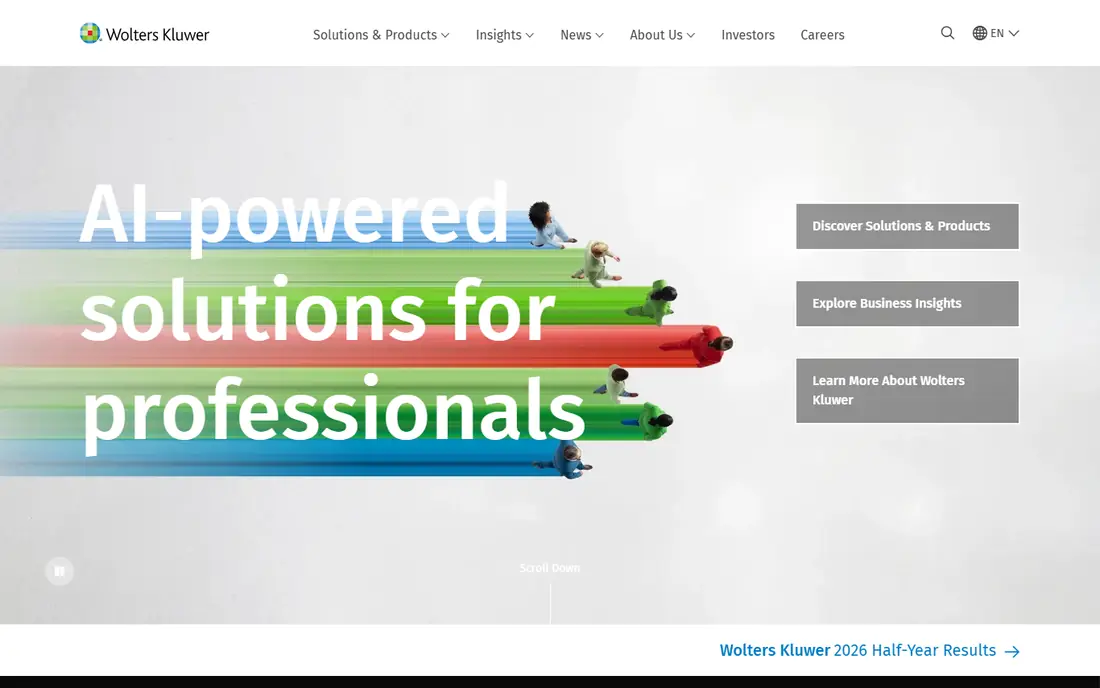
CCH AnswerConnect, from Wolters Kluwer, is built around guided research. Users can start with a plain question, follow editorial answers and drill into primary sources, which helps researchers who are less sure of the exact code section. It includes federal, state and international content, plus journals and practice aids from the Wolters Kluwer stable.
Pricing is quote-based, and the interface rewards training, since the guided paths and libraries are extensive. Firms already using Wolters Kluwer compliance tools benefit from a shared vendor relationship. For teams that want answers with clear source trails, AnswerConnect is a full-strength platform.
- Guided question-and-answer research
- Deep Wolters Kluwer libraries
- State coverage
- Quote-based pricing
- Interface takes time to learn
LexisNexis is best known for legal research, and its tax offering draws on that strength, with cases, statutes, regulations, IRS materials and secondary sources in one search environment. Firms that already use Lexis for litigation or general legal work can add tax research without a second vendor. Citator tools help check whether a case or ruling remains reliable.
Tax-only firms may find the broader legal platform more than they need, and pricing is quote-based. Content packaging matters, so buyers should confirm which tax libraries are included. For law firms and firms with mixed legal and tax work, LexisNexis is a natural fit.
- Huge legal research base
- Tax cases and guidance
- Strong citator tools
- Quote-based pricing
- Tax content sits inside a larger legal platform
TaxNotes, from Tax Analysts, is the go-to source for tax news, IRS documents, proposed guidance and expert commentary. Practitioners use it to track legislation, read full IRS releases and follow debates that have not yet reached a code library. Its document archive is a genuine research asset, especially for policy and controversy work.
It is not a substitute for Checkpoint or AnswerConnect as a sole code and regulation library. Most firms pair TaxNotes with a full platform, using TaxNotes for news and documents and the platform for structured research. Pricing is subscription-based, so confirm the document and news tiers that fit the firm.
- Timely tax news
- IRS documents and commentary
- Strong for policy tracking
- Not a full editorial code library
- Best paired with a research platform
Parker Tax Pro Library offers practitioner-focused tax research at a lower price than the large platforms. It covers federal law, IRS guidance and common planning topics with explanations aimed at preparers and advisers, rather than academic commentary. Solo firms and small practices use it as a primary research tool when budgets cannot stretch to Checkpoint.
State coverage and depth are thinner than the full platforms, so multi-state firms should check the states they serve. Pricing should be confirmed on the publisher site, since plans and updates change. For federal-heavy solo and small-firm work, Parker Tax Pro gives solid value.
- Lower cost than full platforms
- Practitioner-focused explanations
- Federal focus
- Less state depth than Checkpoint
- Smaller editorial team
TheTaxBook is a quick-reference resource that preparers reach for during filing season. It summarises rules, thresholds, tables and common issues in plain language, with online and print formats. It answers everyday questions fast, without the search depth of a full research platform.
It does not replace Checkpoint or Bloomberg Tax for complex research, controversy or unusual transactions. Firms should treat it as a desk reference alongside a research platform, or as a primary tool only for routine preparation work. Pricing is published on the vendor site, so confirm the current edition and online terms before buying.
- Fast, plain-language reference
- Popular with preparers
- Print and online options
- Reference tool, not a deep research platform
- Limited case and ruling depth
How we picked these
We compared official product pages, content descriptions and practitioner use, and favoured platforms still sold and updated in 2026. We used See website where vendors publish no public list price, and we distinguished full research platforms from news and reference tools so buyers can pair them correctly.
How to build the right research stack
Start by listing the questions your firm actually answers. Federal-only preparers need less than a firm handling multi-state businesses, credits and controversy. Buying the fullest platform for simple returns wastes money, while a thin reference tool slows complex work and risks missed authority.
Trial with real client questions
Run a trial using closed, anonymised client questions, not vendor sample searches. Time how long it takes to find a citable answer, check state conformity where relevant, and confirm the citator flags weak authority. The platform that answers your real questions fastest is the right one, regardless of feature count.
Keep a research trail for every answer
Save the source, the date and the citator result for any position that affects a filed return, since a client or reviewer may ask for it months later. Most platforms let researchers save searches and documents, and firms should agree on a simple filing habit for those records. A short note on why an authority was chosen, and what alternatives were considered, turns research into defensible advice rather than a forgotten search.
Share research across the firm
Agree on how researchers save and share answers, so a colleague does not repeat the same search next month or contradict an earlier position. A shared folder or saved search library, with dates and citator notes, builds institutional knowledge and speeds up repeat questions. It also helps new staff learn how the firm approaches common issues, without relying on one person memory of past advice.
FAQ
What is the best tax research software for a small firm?
Checkpoint and CCH AnswerConnect are the fullest choices, but Parker Tax Pro Library and TheTaxBook suit smaller, federal-heavy firms at lower cost. Many small firms pair a reference tool with TaxNotes for news.
Do I need TaxNotes if I have Checkpoint?
Many firms use both. Checkpoint covers structured code and regulation research, while TaxNotes adds timely news, full IRS documents and policy commentary that help advisers stay ahead of changes.
Is tax research software tax-deductible for a firm?
Research subscriptions are generally an ordinary business expense for a tax practice, but deductibility depends on the firm structure and local rules. Ask your own adviser about the treatment for your business.
How do I check if a tax authority is still valid?
Use the citator tools inside Checkpoint, Bloomberg Tax or LexisNexis, which flag whether a case, ruling or regulation has been overruled, modified or superseded. Always read the citator note, not just the flag.
Can solo preparers afford full tax research platforms?
Full platforms are quote-based and can be costly for one person, which is why Parker Tax Pro and TheTaxBook are popular with solos. Some vendors offer solo or small-firm packages, so ask for that tier specifically.