Best Tai Chi Walking App in 2026: 8 Apps Compared
Looking for the best tai chi walking app in 2026? We compare 8 apps for slow walking, balance, gentle strength, and easy at-home sessions for beginners.
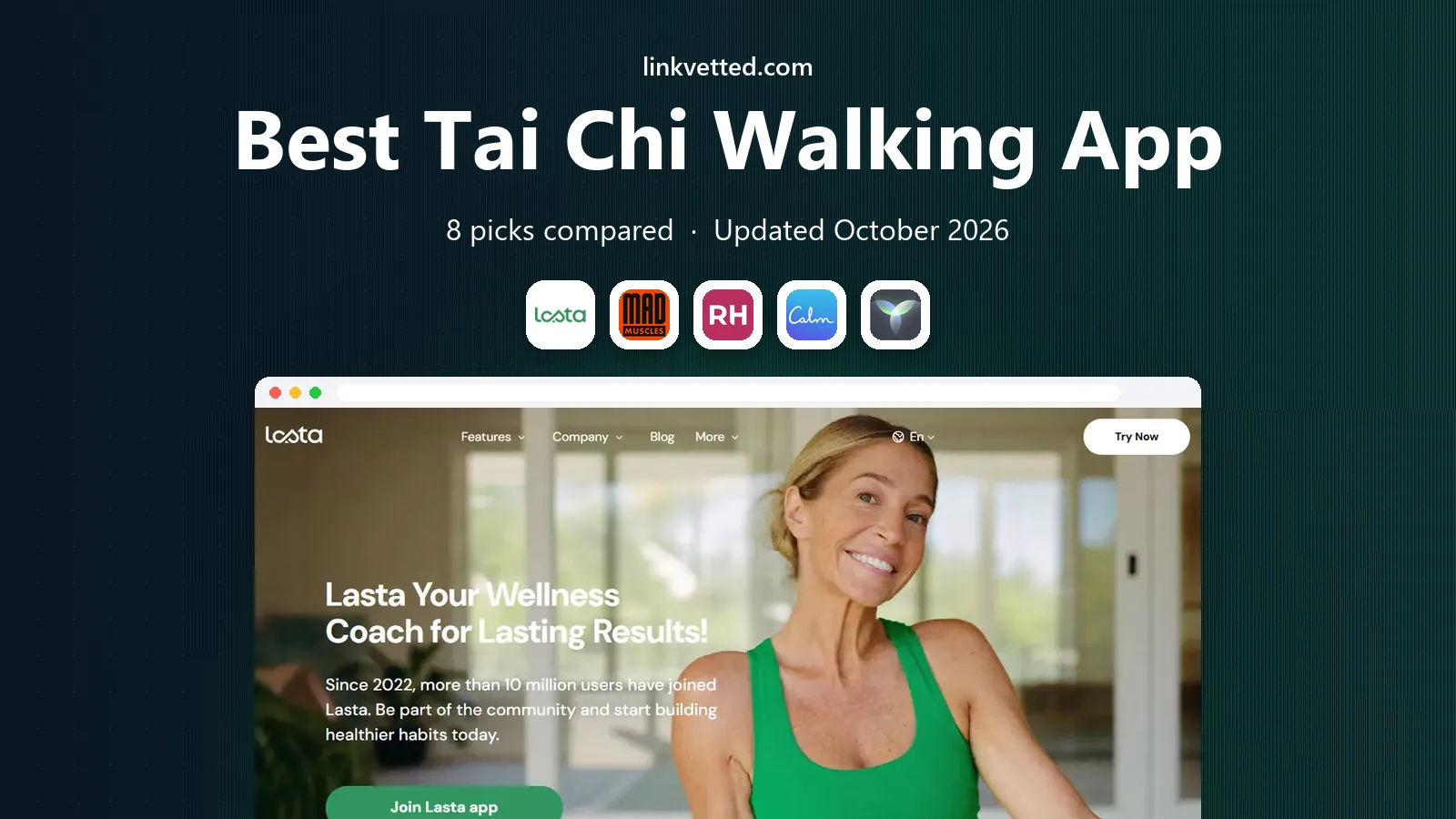
- Editor's choice
 Lasta
Structured slow walking plans
Starts atSee websiteVisit lasta.appFull review - Great alternative
 MadMuscles
Tai chi with strength work
Starts atSee websiteVisit madmuscles.comFull review - Also consider
 Reverse Health
Gentle programs for women over 40
Starts atSee websiteVisit reverse.healthFull review
TL;DR:
- Lasta is our pick for structured slow walking plans, with guided video, streaks, and a low-impact pace that suits daily use.
- MadMuscles and Reverse Health suit people who want a set program with progression, rather than a loose library of videos.
- If you already pay for Apple Fitness+ or Peloton, check their gentle movement libraries before adding another subscription.
- Short, slow sessions done often beat long, intense sessions for balance and steadiness, especially for beginners.
- Stop and talk to a clinician if you have balance problems, a recent fall, joint pain, or a condition that affects walking.
Quick comparison
| Tool | Best for | Starts at | Free plan? | |
|---|---|---|---|---|
| Lasta | Structured slow walking plans | See website | Free trial | Visit |
| MadMuscles | Tai chi with strength work | See website | No | Visit |
| Reverse Health | Gentle programs for women over 40 | See website | Free trial | Visit |
 Calm | Slow movement plus breathing | $14.99 per month | Free trial | Visit |
 Peloton | Guided classes at home | $12.99 per month | Free trial | Visit |
 Apple Fitness+ | Short guided workouts | $9.99 per month | Free trial | Visit |
 FitOn | Free gentle workouts | Free | Yes | Visit |
 Daily Yoga | Yoga and gentle movement | See website | Yes | Visit |
The best tai chi walking apps
Tai chi walking is slow, deliberate walking with weight shifts, relaxed shoulders, and steady breathing. It is not a race, and it is not a high-intensity workout. The best app for tai chi walking gives you a real instructor on video, sessions that fit in 10 to 30 minutes, and a pace you can follow without equipment or a large room. We compared official feature pages, pricing pages, app store listings, and public reviews to find apps that cover that style of movement well.

Lasta stands out because it treats slow walking as a program, not a single video. Its flow workouts use continuous, low-impact movement, with video guidance on technique and pace, and plans that adapt to your fitness level. That structure helps people who know they want to move gently every day but who lose momentum without a next step. Reminders and streaks add a light nudge without turning the practice into a competition.
The trade-off is transparency. Pricing appears after an onboarding quiz, so you should read the plan terms, billing period, and cancellation steps before you pay. Lasta also covers wider fitness and weight topics, so if you want pure traditional tai chi forms, you may need to search inside the app for the slow walking sessions. For most people looking for the best app for tai chi walking as a daily habit, Lasta is a practical first try.
- Guided video for slow movement
- Personalized plans
- Streaks and reminders for consistency
- Pricing is shown after a quiz, not upfront
- Content is broader than tai chi alone

MadMuscles covers a useful range for this topic: chair tai chi, standing tai chi variants, tai chi walking, and indoor walking cardio, all inside one personalized plan. That breadth matters when your energy or mobility changes from week to week. You can switch tracks without learning a new app, and the sessions are built for home use with no extra equipment. For people who want tai chi walking plus gentle strength, that combination is appealing.
We do flag the buying experience. Like Lasta, MadMuscles shows pricing after a quiz, and public reviews include complaints about billing clarity, so check the subscription terms carefully and set a reminder to review it. Content quality also varies by track, so try the free or trial period, if offered, before you commit for months. Used with that caution, it is one of the stronger all-in-one options here.
- Tai chi, chair tai chi, and indoor walking tracks
- Adaptive options
- Personalized plan
- Pricing is shown after onboarding
- Some users report billing confusion in public reviews

Reverse Health frames its tai chi for beginners as a gentle, structured program with short flows that build over time. Instructors explain why a movement is done a certain way, which helps beginners who feel lost following silent video. Sessions are short enough to fit into a morning routine, and the pace stays slow, with an emphasis on balance, mobility, and calm breathing rather than speed or sweat.
The audience focus is both a strength and a limit. People outside that target group may still enjoy the flows, but the coaching language and wider lifestyle content are aimed at women over 40. Pricing also follows an assessment flow, so confirm the full cost and renewal terms before subscribing. If that audience and style fit you, Reverse Health is a calm, well-guided way into tai chi walking.
- Beginner-friendly tai chi flows
- Structured progression
- Video instructors explain each move
- Focus is aimed mainly at women over 40
- Pricing is shown after an assessment
Calm is best known for sleep and meditation, but its gentle movement and breathing sessions suit the same slow, mindful style as tai chi walking. If you already use Calm to wind down, adding a short slow-walking or stretching session in the same app can make the habit stick, because you do not need to open a second program. The interface is simple, the audio guidance is clear, and there is no pressure to hit a step count or a heart-rate target.
The limit is depth. Calm does not offer a full tai chi walking curriculum with weight-shift drills and form progression in the way a specialist app does. Treat it as a good companion for breathing, balance awareness, and short mindful walks, rather than as your only tai chi teacher. If you want one app for calm evenings and gentle mornings, it earns its place.
- Clear, calm instruction style
- Breathing and sleep content in the same app
- Simple interface
- Tai chi walking content is limited compared with specialist apps
- Monthly price is high for movement alone
Peloton is a surprising entry here, but it fits a specific buyer: someone who already has the app for walking, yoga, or strength, and who wants guided slow movement without another subscription. Its library includes walking, yoga, and mobility classes that pair well with tai chi walking principles, such as posture, breathing, and controlled steps. Filtering by duration and difficulty makes it easy to find a 10 or 20 minute session.
Do not buy Peloton only for tai chi. Its tai chi-related content is limited next to a specialist program, and the app is built around a much broader fitness world. If you already use it, though, search for gentle walking and mobility classes, follow them slowly, and focus on weight shifts rather than speed. That approach can give you a useful tai chi walking routine at no extra cost.
- Large class library
- Live and on-demand guidance
- Classes you can filter by length and level
- Tai chi is a small part of a much larger fitness library
- Best value if you use other classes too
Apple Fitness+ offers short yoga, mindful cooldown, and walking-related sessions that work well as a gentle daily practice. The production quality is high, instructors give clear cues, and sessions are easy to start from a phone, tablet, or TV. For Apple users, the Watch integration also shows heart rate and effort without making the session feel like a test. That low-friction start matters for a habit you hope to keep.
The gap is specificity. There is no step-by-step tai chi walking course with form drills, so you would be adapting yoga and mindful movement sessions to a slow walking practice. That can still work if you move slowly, keep your steps short, and focus on balance. If you want a true tai chi curriculum, pair this with a specialist app, or pick a specialist app instead.
- Short, well-produced sessions
- Works with Apple Watch metrics
- Family sharing available
- No dedicated tai chi walking program
- Requires Apple devices for the full experience
FitOn is the best free starting point on this list. Its core plan costs nothing, and its library includes yoga, stretching, Pilates, and low-impact workouts that share the slow, controlled style of tai chi walking. Beginners can try short sessions, learn what pace suits them, and build a routine before paying for anything. That makes it a low-risk way to test whether gentle guided movement fits your life.
As with other general fitness apps, you will not find a deep tai chi walking program here. Use FitOn to build the habit of daily gentle movement, practice balance and breathing, and see which session lengths you enjoy. If you then want formal tai chi walking instruction, move to Lasta, MadMuscles, or Reverse Health with a clearer sense of what you need.
- Free core plan
- Yoga, stretching, and low-impact classes
- Short sessions for beginners
- Tai chi walking content is general, not a specialist course
- Premium features cost extra
Daily Yoga suits people who want tai chi walking alongside a broader gentle practice. Its beginner programs cover balance, flexibility, and breathing, and its structured courses give you a path to follow over several weeks. That structure helps if a loose video library leaves you unsure what to do next. Sessions can be done at home with little space, which matches indoor walking practice well.
The honest limit is focus. This is a yoga app first, so tai chi walking sessions are not its core strength. Use it if you enjoy yoga-style guidance and want slow movement, balance work, and breathing in one place. If tai chi form itself is your main goal, a specialist app from the top of this list will serve you better.
- Large gentle and beginner library
- Structured programs
- Offline options on some plans
- Yoga-first library, so tai chi walking is not the main focus
- Subscription pricing varies by plan
How we picked these
We compared official feature pages, pricing pages, and app store listings, plus public reviews, for apps available in the US in October 2026 that include tai chi, slow walking, or closely related gentle movement. We favored apps with video instructors, short sessions, home-friendly routines, and a clear progression, and we noted where pricing is shown only after a quiz. Where an app covers tai chi walking only as part of a wider library, we say so, so you can judge whether it fits your goal.
We did not claim hands-on testing. Our view comes from comparing what each vendor publishes, what users report in public reviews, and how each library matches the slow, balance-focused style of tai chi walking. Talk to a clinician before starting if you have a health condition, and start with short sessions on a clear, flat surface.
How to build a tai chi walking habit
Keep sessions short and slow
Start with 10 to 15 minutes. Walk slowly, shift your weight fully from one foot to the other, keep your knees soft, and breathe in a steady rhythm. Speed is not the goal. Steadiness, posture, and control are the point, and a short daily session builds those skills faster than an occasional long one.
Make the space safe
Use a clear hallway, living room, or garden path with no loose rugs or clutter. Wear flat, supportive shoes, keep a chair or rail nearby at first, and stop if you feel dizzy or unsteady. Indoor walking works well in bad weather, and circling a room can be just as useful as walking outdoors.
Track consistency, not intensity
Streaks, reminders, and a simple calendar check can help, but do not chase step counts or calories. Note how steady you feel, how long you can walk slowly without losing form, and whether your breathing stays calm. Those signs tell you more about progress than a fitness score.
FAQ
What is the best app for tai chi walking?
Lasta is our pick for most people because it offers structured slow walking plans with video guidance and reminders. MadMuscles and Reverse Health are strong alternatives if you want a set program with progression, while FitOn is the best free way to test gentle movement first.
Can beginners do tai chi walking at home?
Yes, with a clear space, flat shoes, and short sessions. Start with 10 minutes, keep steps small, and use a chair or rail for support if needed. Stop if you feel pain, dizziness, or unsteadiness, and ask a clinician about balance concerns before you begin.
How long should a tai chi walking session last?
Most beginners do well with 10 to 30 minutes. Shorter sessions done most days build balance and habit better than one long weekly session. Increase time gradually, and keep the pace slow enough that you can breathe steadily and shift your weight with control.
Is tai chi walking good for balance?
Slow weight shifts, soft knees, and focused posture can support balance and steadiness over time, and many programs are designed with that goal in mind. Results vary by person, and tai chi walking is not a treatment for a medical condition. Talk to a clinician if you have fallen before or have a condition that affects balance.
Do I need equipment for tai chi walking?
No. You need comfortable clothes, flat supportive shoes, and a clear, flat surface. A chair nearby for support is helpful at first. No weights, bands, or special gear are required, which is part of why the practice suits home use.