Best SOX Compliance Software in 2026: 8 Platforms Compared
Compare the best SOX compliance software for 2026, from AuditBoard and Workiva to MetricStream and FloQast, with pricing, fit, and audit-ready controls.
- Editor's choice
 AuditBoard
Large SOX programs
Starts atSee websiteVisit auditboard.comFull review - Great alternative
 Workiva
Reporting-linked controls
Starts atSee websiteVisit workiva.comFull review - Also consider
 MetricStream
Large enterprise GRC
Starts atSee websiteVisit metricstream.comFull review
TL;DR:
- SOX compliance software centralizes financial controls, evidence, testing, and audit workflows so teams can prove controls work.
- AuditBoard and Workiva suit large public companies with complex SOX programs, while FloQast suits close-focused finance teams.
- Most enterprise pricing is quote based, so budget by modules, users, and implementation help, not a single headline rate.
- This is not financial or legal advice; SOX scope and control design should be confirmed with your auditors and counsel.
Quick comparison
| Tool | Best for | Starts at | Free plan? | |
|---|---|---|---|---|
| AuditBoard | Large SOX programs | See website | No | Visit |
| Workiva | Reporting-linked controls | See website | No | Visit |
| MetricStream | Large enterprise GRC | See website | No | Visit |
 Diligent | Board and audit together | See website | No | Visit |
 LogicGate Risk Cloud | Flexible risk workflows | See website | No | Visit |
 ServiceNow Integrated Risk Management | ServiceNow shops | See website | No | Visit |
 Archer | Highly regulated programs | See website | No | Visit |
 FloQast | Close and control tracking | See website | No | Visit |
The best sox compliance software
We compared these platforms on control libraries, evidence collection, testing workflows, audit collaboration, reporting, and price. SOX work touches finance, IT, and audit teams, so cross-team workflow matters as much as any single feature.
AuditBoard is widely used for SOX because its SOX hub connects controls, risks, processes, and evidence in one system. Teams can manage control design, assign testing, track deficiencies, and share evidence with external auditors without juggling spreadsheets. Links to risk and internal audit modules help a company see how a SOX issue relates to wider risks. That connected view is why many large public companies standardize on it.
Pricing is quote based and typically enterprise scale, and rollout needs ownership from finance, IT, and audit together. Smaller companies may find the cost hard to justify before their SOX program grows. For large SOX programs with many controls and entities, AuditBoard is a leading shortlist choice.
- Dedicated SOX hub
- Connected audit, risk, and compliance modules
- Strong reporting
- Quote-based enterprise pricing
- Implementation needs planning
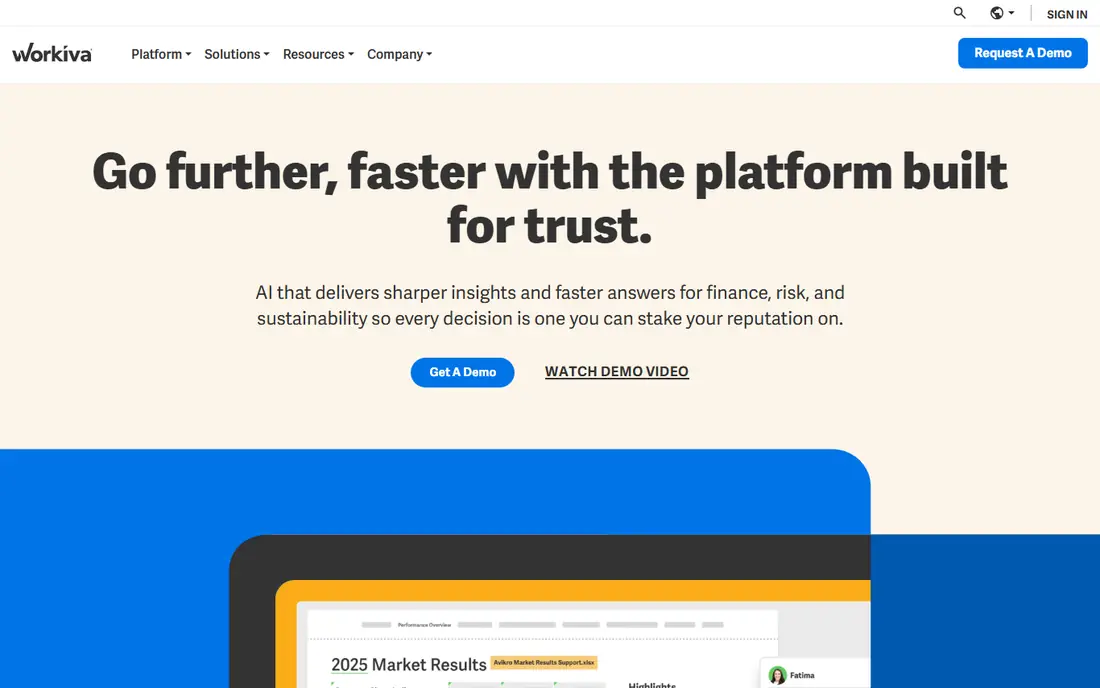
Workiva connects SOX controls to the financial reports and filings they support. When a number changes in a report, linked controls and evidence stay visible, which helps teams trace issues quickly. Collaboration features let finance, legal, and audit teams work on the same documents with version control and approvals. That link between reporting and control testing is Workiva's main advantage over a standalone control tracker.
Workiva pricing is modular and quote based, and implementation costs can be significant for larger deployments. Teams that only need control testing, without reporting and filing workflows, may pay for breadth they do not use. Teams that file with the SEC and want controls tied to reports should test Workiva closely.
- Links controls to financial reporting
- SEC filing workflows
- Strong collaboration
- Higher price for larger deployments
- Broader platform can feel complex
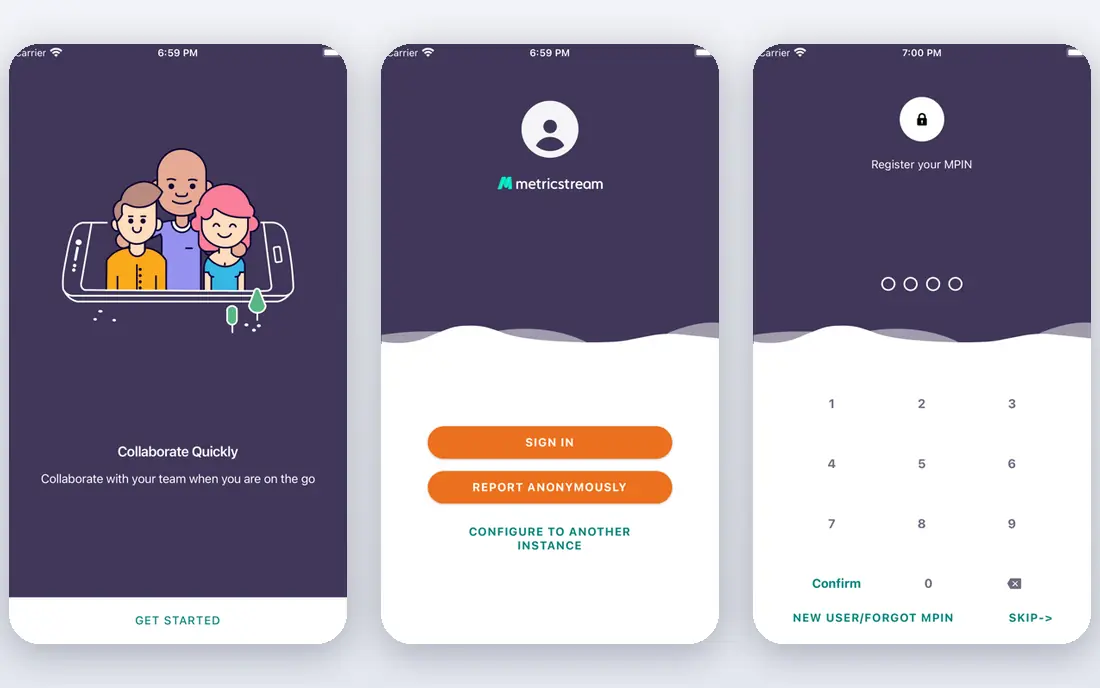
MetricStream offers a broad governance, risk, and compliance platform that includes SOX, internal audit, risk, and third-party management. AI-assisted features help with control testing, issue tracking, and reporting across large programs. Enterprises with many entities, regulations, and business units value that breadth, because one platform can serve several compliance needs at once.
MetricStream is built for scale, with enterprise pricing and implementation effort to match. Small and mid-sized SOX teams may find it heavier than needed. Large enterprises that want a single GRC platform for SOX and beyond should include MetricStream in a structured pilot.
- Broad GRC platform
- AI-assisted workflows
- Strong enterprise controls
- Enterprise pricing and setup
- Interface can feel heavy for small teams
Diligent combines board management, audit, risk, and compliance tools, which suits companies that want governance oversight and SOX work in related systems. Board members can review materials securely, while audit and compliance teams manage controls and issues in connected modules. That link helps leadership see SOX status without separate reports.
Diligent pricing is quote based and bundled by module, so total cost depends on which products you add. Onboarding also takes time when board and audit workflows both change. Companies that value board-level governance visibility alongside SOX should test Diligent, while teams that only need SOX may prefer a narrower tool.
- Board management plus audit and compliance
- Strong governance reporting
- Secure collaboration
- Quote-based pricing
- Breadth requires onboarding
LogicGate Risk Cloud lets business users build their own risk and compliance workflows without heavy coding. Teams can model controls, risks, issues, and approvals to match how their company actually works, rather than forcing work into a fixed template. That flexibility helps mid-sized companies whose SOX program does not fit a rigid legacy system, and setup is often faster than older GRC platforms.
Flexibility still needs design. A poorly planned workflow can create confusion, so teams should map controls and owners before building. Pricing is quote based by application and user count. For teams that want adaptable SOX workflows and can invest in design, LogicGate is a strong option.
- No-code workflow building
- Flexible control and risk models
- Faster setup than legacy GRC
- Needs design work for complex programs
- Enterprise pricing still quote based
ServiceNow Integrated Risk Management brings SOX controls into the ServiceNow platform many IT teams already use. Controls can link to incidents, changes, and assets, which helps IT general controls and audit evidence collection. Workflow automation routes tasks, approvals, and reminders, and reporting ties risk data to operational data. For ServiceNow-standardized companies, that integration reduces duplicate systems.
The value depends on ServiceNow commitment. Licensing and module selection need planning, and teams outside ServiceNow may prefer a standalone SOX tool. Companies already running ServiceNow for IT and operations should compare its risk modules before buying a separate platform.
- Links SOX to ITSM and workflows
- Strong automation
- Familiar platform for ServiceNow users
- Best value requires ServiceNow commitment
- Licensing complexity
Archer, long known as RSA Archer, is an enterprise GRC platform with deep customization for risk, compliance, and audit programs. Highly regulated companies use it to model complex control frameworks, manage issues across business units, and produce audit-ready reports. Its history in large banks, insurers, and healthcare organizations reflects that depth.
Implementation can take months and needs skilled administrators to maintain custom applications. Smaller SOX teams may find Archer more than they need. Large, regulated programs that need deep customization and can staff the platform should include Archer in evaluation.
- Deep GRC customization
- Strong for complex risk programs
- Long enterprise history
- Implementation can be long
- Needs skilled administrators
FloQast focuses on the month-end close, with checklists, reconciliations, and task tracking that finance teams already understand. SOX controls can be tied to close tasks and evidence, which helps teams prove controls operated as part of normal close work rather than as a separate exercise. ERP integrations pull in balances and task data, reducing manual copying.
FloQast is not a full GRC platform like MetricStream or Archer. Companies with very large, multi-framework GRC needs may still need a broader tool. Finance teams whose SOX pain centers on the close, evidence, and task accountability will find FloQast practical and easier to adopt than a legacy GRC suite.
- Close management tied to controls
- Familiar checklist workflow
- ERP integrations
- Less full GRC depth than AuditBoard or MetricStream
- SOX needs close alignment
How we picked these
We compared official product pages, pricing pages, and independent audit software comparisons for SOX and GRC platforms. We favored tools that exist today, support control management, evidence, testing, and auditor collaboration, and serve public companies or their auditors. We excluded pure checklist apps without control testing and audit workflows. Where vendors do not publish prices, we list See website rather than inventing a figure. This article is general information, not financial or legal advice.
How to choose SOX compliance software
Start with your control count, entity count, and auditor expectations. Ask your external auditors what evidence formats and access they prefer, because a tool that auditors can use easily saves time during testing. Map who owns each control, how evidence is collected, and how deficiencies are tracked today, then pick a tool that improves those steps without adding duplicate work.
Pilot with one process area, such as revenue or procure-to-pay, and run a full test cycle in the tool before rolling out company-wide. Check ERP and system integrations, user permissions, and audit trail quality. Also price implementation, training, and second-year growth, since SOX scope often expands after the first year. A tool that fits your current program but cannot scale to new entities will cost more to replace later.
For mid-sized public companies
Shortlist AuditBoard, Workiva, LogicGate, and FloQast, depending on whether your pain is reporting, workflow flexibility, or close management. Run a pilot with finance and audit together, and confirm auditor access early.
For large enterprises
Shortlist AuditBoard, MetricStream, Archer, and ServiceNow, and run a structured evaluation with finance, IT, risk, and audit. Check multi-entity reporting, IT general controls, and third-party risk links, because those often decide the winner at scale.
FAQ
What is the best software for SOX compliance?
AuditBoard is a leading choice for large SOX programs, while Workiva suits teams that want controls linked to financial reporting. LogicGate suits flexible workflows, and FloQast suits close-focused finance teams. The best pick depends on program size, reporting needs, and existing systems.
What is the best SOX compliance platform for small public companies?
Smaller public companies often do best with a focused tool like FloQast or LogicGate, or a scoped AuditBoard deployment, rather than a full enterprise GRC suite. Start with one process area, keep the control set tight, and confirm auditor needs before buying breadth you may not use.
How much does SOX compliance software cost?
Most enterprise SOX platforms are quote based, with mid-sized deployments often running into five or six figures per year depending on modules and users. Always request a quote for your control count, entity count, and user count, and include implementation and training in the budget.
Does SOX software replace auditors?
No. Software organizes controls, evidence, and testing, but auditors still exercise judgment, test controls independently, and form opinions. A good tool makes auditor work faster and more transparent, but it does not replace audit procedures or management responsibility for controls.
What are IT general controls in SOX software?
IT general controls cover access, change management, and operations for systems that support financial reporting. SOX software tracks these controls alongside business process controls, links evidence from IT systems, and helps teams show auditors that system controls operated consistently.
How long does SOX software implementation take?
Implementation varies from weeks for a focused close tool to several months for a full enterprise GRC platform. Scope, control count, integrations, and auditor input all affect timing. A phased rollout by process area keeps momentum and lets teams learn the tool before company-wide use.