Best Software to Manage Audits Efficiently in 2026: 8 Tools Compared
Find the best software to manage audits efficiently. We compare 8 audit and compliance platforms on workflow, evidence, reporting, and pricing in 2026.

- Editor's choice
 AuditBoard
Mid-to-large enterprises running SOX and internal audit
Starts atSee websiteVisit auditboard.comFull review - Great alternative
 Workiva
Connecting audit work to financial reporting
Starts atSee websiteVisit workiva.comFull review - Also consider
 TeamMate+
Traditional internal audit departments
Starts atSee websiteVisit wolterskluwer.comFull review
TL;DR:
- AuditBoard, Workiva, and TeamMate+ form the enterprise core for internal audit, SOX, and connected reporting work.
- LogicGate and MetricStream suit teams that want flexible risk and compliance workflows, with different price and complexity trade-offs.
- Drata, Hyperproof, and Trullion cover the faster, automation-led end: compliance readiness, evidence collection, and financial audit workflows.
- Almost all enterprise audit pricing is quoted and modular, so map your modules and user count before you compare quotes.
Quick comparison
| Tool | Best for | Starts at | Free plan? | |
|---|---|---|---|---|
| AuditBoard | Mid-to-large enterprises running SOX and internal audit | See website | No | Visit |
| Workiva | Connecting audit work to financial reporting | See website | No | Visit |
| TeamMate+ | Traditional internal audit departments | See website | No | Visit |
 LogicGate Risk Cloud | Business users building their own risk workflows | See website | No | Visit |
 MetricStream | Massive enterprises with AI-driven risk programs | See website | No | Visit |
 Drata | Growing companies automating compliance audits | See website | No | Visit |
 Hyperproof | Evidence collection and framework management | See website | No | Visit |
 Trullion | AI-automated financial audit workflows | From $3,000 per year | Free trial | Visit |
The best software to manage audits efficiently
Audit software should do three jobs: plan the audit, collect evidence without endless email chains, and report findings with a clear trail. The tools below split between enterprise audit suites, flexible GRC platforms, and automation-led compliance tools, so the right pick depends on your audit type and team size.
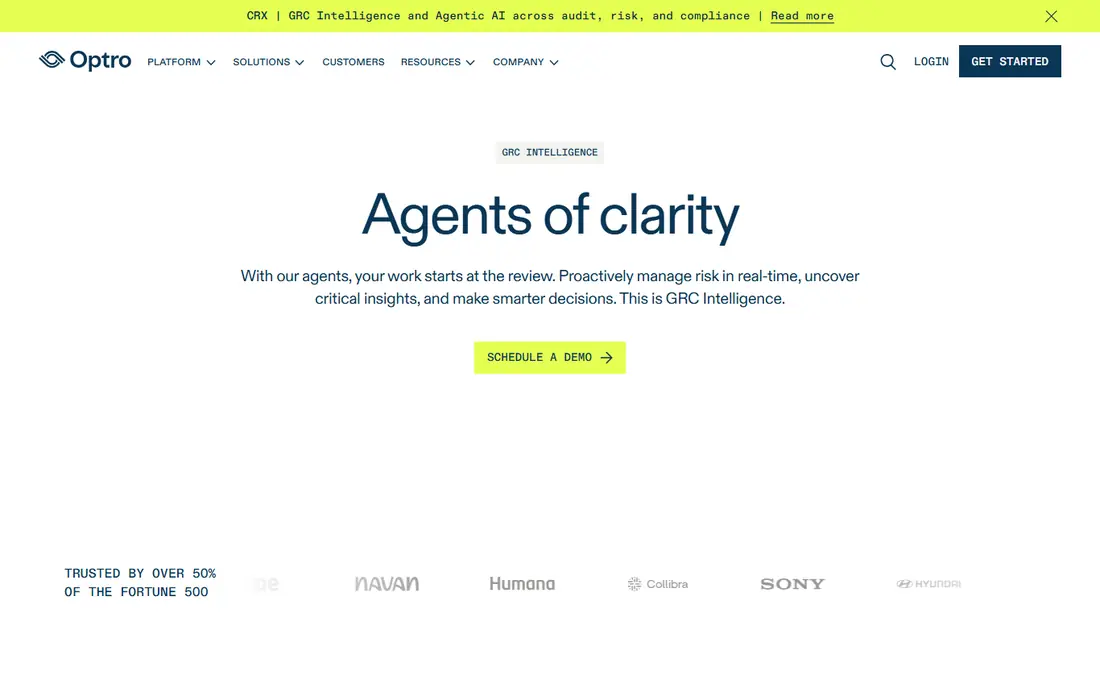
AuditBoard is our pick for a mid-to-large enterprise running SOX, internal audit, and risk work in one place. Its modules connect audit planning, controls testing, evidence, issues, and reporting, so a control change flows through to the audit plan instead of living in a spreadsheet. That connection is why large audit teams adopt it, despite the price.
The catch is cost and setup. Pricing is quoted per user and per module, and implementation needs real planning, data cleanup, and training. A small team with one annual audit will find it heavy. For a team managing many audits, entities, and controls year-round, AuditBoard is the most complete audit suite on this list.
- Connected audit, risk, and compliance modules
- Strong SOX and controls workflows
- Used by many large enterprises
- Quote-based pricing
- Implementation takes planning
- Smaller teams may find it heavy and costly
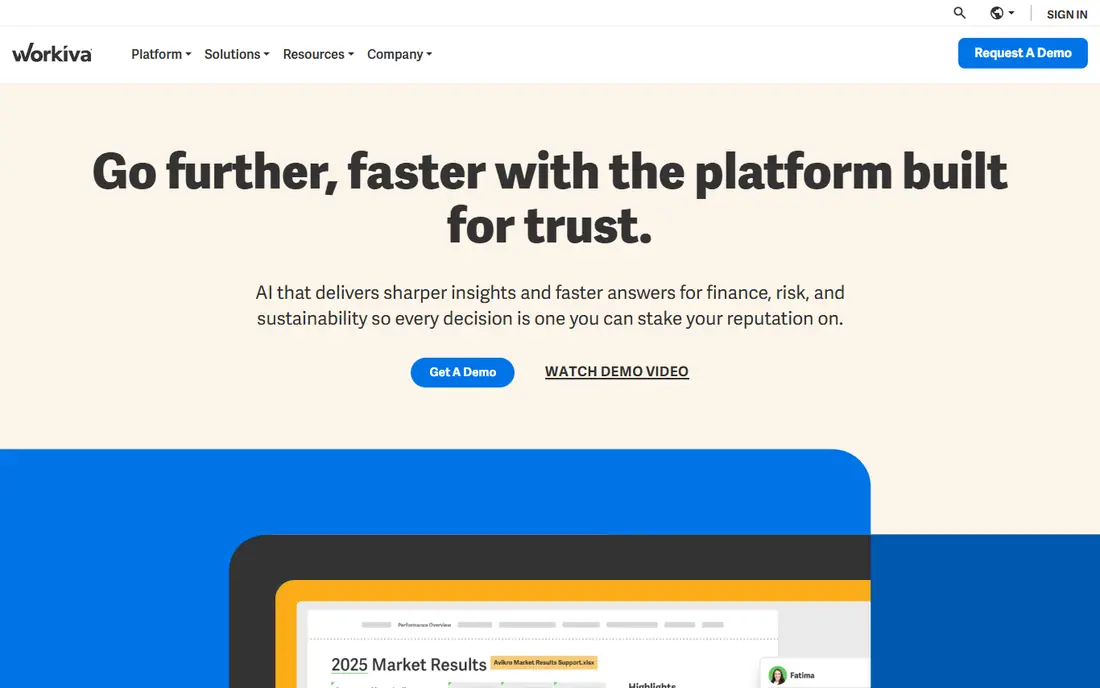
Workiva suits companies where audit work must tie directly to financial reporting, SEC filings, or ESG reports. Its platform links numbers, evidence, and narrative in one controlled document, so a change to a figure updates every place it appears. That linkage cuts the copy-and-paste errors that plague audit season.
Workiva is not a cheap, narrow audit tool. Pricing is quoted, implementation can be involved, and teams must scope carefully to avoid paying for reporting breadth they do not need. If your audit, finance, and reporting teams share the same data, Workiva is a strong choice. If you only need audit workflow, a narrower tool may fit better.
- Links audit evidence to financial reports and filings
- Strong collaboration and version control
- Broad reporting reach
- Quote-based pricing
- Implementation can be complex
- Broader than a pure audit tool, so scoping matters
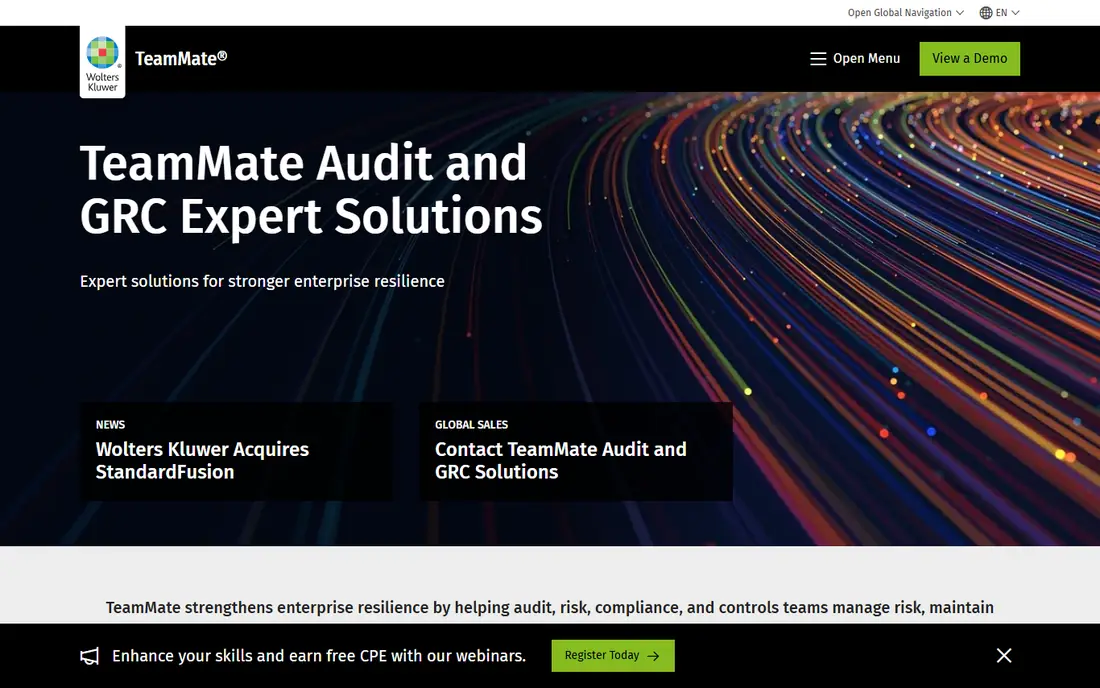
TeamMate+, from Wolters Kluwer, is built for traditional internal audit departments that want proven workflows rather than a new way of working. It covers audit planning, risk assessment, fieldwork, evidence, issues, and reporting in a structure auditors recognize. Teams moving from spreadsheets will find the transition smoother than with a generic GRC platform.
The interface feels more traditional than newer cloud tools, and deep customization can require vendor support. Pricing is quoted, so budget for a sales process. For an audit department that values stability and audit-specific design, TeamMate+ remains a dependable pick.
- Proven internal audit workflows
- Strong planning, fieldwork, and reporting tools
- Long history with audit teams
- Quote-based pricing
- Interface feels traditional next to newer tools
- Customization can need vendor help
LogicGate Risk Cloud suits teams that want to build their own audit and risk workflows without waiting on developers. Business users can design applications for audits, risk assessments, controls, and issues, then change them as processes evolve. That flexibility helps companies whose audit needs do not match a fixed template.
Flexibility is also the risk. Without governance, teams can build too many workflows that drift apart, and audit depth is less than a dedicated audit suite. Pricing is quoted per application and user. If your team needs adaptable GRC workflows more than a fixed audit template, LogicGate is a strong fit.
- No-code workflow building for business users
- Flexible risk, audit, and compliance apps
- Faster to adapt than rigid suites
- Quote-based pricing
- Flexibility needs governance, or workflows sprawl
- Audit depth is less than a pure audit suite
MetricStream is built for massive enterprises with complex, multi-entity risk and audit programs. Its platform covers audit, risk, compliance, and third-party risk at a scale few rivals match, with AI features that help surface issues across large data sets. Regulated industries with deep reporting needs are its natural audience.
That scale comes with heavy implementation and enterprise pricing, so MetricStream is a poor fit for a team running a handful of audits. Smaller companies will get faster value from Drata, Hyperproof, or LogicGate. For a global enterprise consolidating GRC onto one platform, MetricStream is worth a serious evaluation.
- Broad GRC coverage for very large programs
- AI-assisted risk and audit features
- Strong regulated-industry history
- Quote-based enterprise pricing
- Implementation is heavy
- Overkill for small and mid-size teams
Drata suits a growing company heading toward its first SOC 2, ISO 27001, or similar compliance audit. It connects to your cloud, HR, and security tools, pulls evidence automatically, and tracks readiness against each framework control. That automation cuts the manual evidence gathering that makes a first audit painful.
Drata is a compliance automation tool, not a full internal audit suite, so it will not replace AuditBoard for a SOX program. Pricing is quoted, and value depends on clean integrations: if your tools are not connected, evidence collection stays manual. For a company preparing for a framework audit, Drata is one of the fastest routes to readiness.
- Automates evidence collection for SOC 2 and other frameworks
- Continuous monitoring
- Clear readiness tracking
- Quote-based pricing
- Focused on compliance frameworks, not full internal audit
- Needs clean system integrations to shine
Hyperproof helps teams manage controls and evidence across multiple frameworks without duplicating work. A single piece of evidence can map to several controls, and tasks, owners, and deadlines stay visible through audit prep. That mapping is valuable for companies juggling SOC 2, ISO, and customer security reviews at once.
Hyperproof is less deep on traditional internal audit planning than AuditBoard or TeamMate+, so large audit departments may still need a dedicated suite. Pricing is quoted. For a compliance team that lives in evidence and frameworks, Hyperproof is a practical, focused choice.
- Strong evidence and control mapping across frameworks
- Good collaboration for audit prep
- Clear task tracking
- Quote-based pricing
- Narrower audit planning depth than enterprise suites
- Best paired with a clear framework scope
Trullion is the newcomer that stands out for price transparency. Starting from $3,000 per year, with a free trial, it uses AI to automate financial audit workflows such as lease accounting, data extraction, and audit preparation. For a finance team drowning in lease schedules or audit data requests, that focus can save real time.
Trullion does not replace a full GRC or internal audit platform, and its scope is narrower than AuditBoard or MetricStream. It is also a newer vendor, so enterprise buyers should check support and integration coverage. For financial audit automation at a published price, Trullion is the most accessible option on this list.
- Published starting price
- AI-assisted lease accounting and audit workflows
- Free trial, rare in this category
- Narrower scope than a full audit suite
- Best for financial audit work, not enterprise GRC
- Newer vendor than the largest rivals
How we picked these
We compared official product pages, vendor documentation, and 2026 comparisons of audit software, focusing on audit workflow, evidence handling, reporting, and pricing transparency. We favored tools that are live today and serve a distinct audit need, from enterprise SOX to first-time SOC 2 readiness. We did not claim hands-on audit testing, and we treated quoted pricing as quoted.
How to buy audit software without regret
Map your audit types before you talk to vendors. SOX, internal audit, SOC 2, and financial audit each need different workflows, and a tool built for one can disappoint on another. List your entities, controls, frameworks, and user count, then ask each vendor to price that exact scope.
Run a pilot on a real audit
Use a trial or pilot on one real audit cycle, not a demo data set. Test evidence requests, issue tracking, reporting, and how auditors outside your team access the system. A pilot reveals integration gaps and training needs before you commit to a multi-year contract.
Price the full first year
Add implementation, training, integrations, and any module fees to the subscription price. Enterprise audit tools often add 10 to 30 percent for implementation, and multi-year deals can change the total. Get the full first-year cost in writing before you sign.
FAQ
What is the best software to manage audits efficiently for a small company?
For a small company, Drata or Hyperproof usually fit best, since they automate evidence collection for compliance frameworks without enterprise cost or setup. If you only run internal audits, LogicGate offers flexible workflows at a more manageable scale than AuditBoard or MetricStream.
Does audit software replace auditors?
No. Audit software plans work, collects evidence, and tracks issues, but auditors still judge risk, test controls, and form opinions. The software removes manual chasing and spreadsheet work so auditors can spend time on judgment, not administration.
How much does audit software cost?
Small compliance tools can start in the low thousands per year, while enterprise audit suites are quoted and often run well into five or six figures annually, depending on users and modules. Always confirm implementation costs, since they can add a large share to the first-year total.
Can audit software handle SOX compliance?
Yes, enterprise suites such as AuditBoard, Workiva, and TeamMate+ are built for SOX controls testing, evidence, and reporting. Smaller compliance tools cover SOC 2 and ISO frameworks better than SOX, so match the tool to the framework you must satisfy.
What should I check in a trial?
Check evidence requests, permissions for external auditors, issue tracking, reporting exports, and integrations with your finance, HR, and cloud tools. Test with a real audit sample, and ask how long implementation and training will take for your team size.