Best Software for Boosting Employee Engagement in 2026: 8 Options Compared
Compare the best software for boosting employee engagement, from pulse surveys and recognition to feedback, goals, benchmarks, and manager action plans.
- Editor's choice
 Culture Amp
Deep engagement surveys and benchmarks
Starts atSee websiteVisit cultureamp.comFull review - Great alternative
 Lattice
Engagement tied to performance
Starts at$11 per user per monthVisit lattice.comFull review - Also consider
 15Five
Weekly check-ins and manager feedback
Starts at$4 per user per monthVisit 15five.comFull review
TL;DR:
- The best engagement tool depends on whether you need surveys, recognition, performance links, or all three.
- Survey tools only help if managers act on results, so check action planning and follow up features.
- Recognition tools work fastest for daily morale, while survey tools work better for finding deeper problems.
- Watch minimums and per user fees, because a low headline price can still mean a high annual bill for a small team.
Quick comparison
| Tool | Best for | Starts at | Free plan? | |
|---|---|---|---|---|
| Culture Amp | Deep engagement surveys and benchmarks | See website | No | Visit |
| Lattice | Engagement tied to performance | $11 per user per month | No | Visit |
| 15Five | Weekly check-ins and manager feedback | $4 per user per month | Free trial | Visit |
 Bonusly | Peer recognition and rewards | $3 per user per month | Yes | Visit |
 Workleap Officevibe | Simple pulse surveys | $4,999 per year | No | Visit |
 Leapsome | All in one people platform | See website | Free trial | Visit |
 Quantum Workplace | Survey action planning | See website | No | Visit |
 Motivosity | Manager feedback and recognition | See website | Free trial | Visit |
The best software for boosting employee engagement
Engagement software helps teams listen to staff, recognize good work, and fix problems before people leave. These eight tools cover surveys, recognition, and performance links.
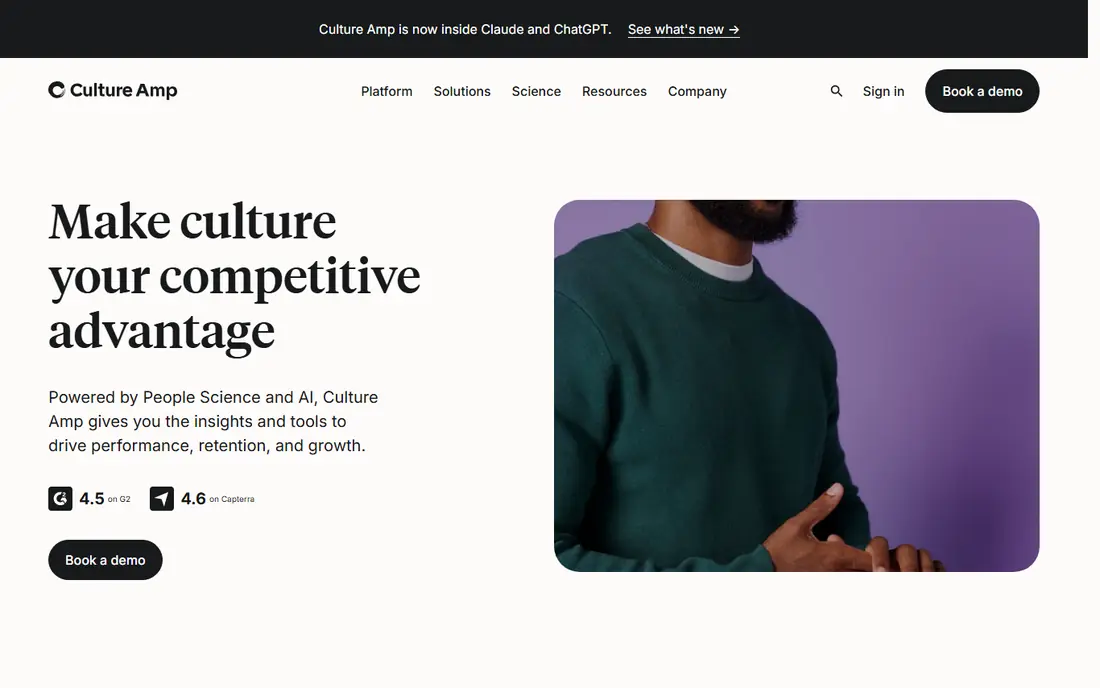
Culture Amp is a leading choice for companies that want serious engagement research, not just a quick poll. It offers validated survey templates, benchmark comparisons, and analysis that shows which factors drive engagement scores. HR teams can slice results by team, location, or tenure, while keeping individual responses anonymous where thresholds are met.
The main drawback is cost and setup. Pricing is quoted, and implementation takes planning, survey design, and manager training. Small teams may find Culture Amp more than they need, while midsize and large firms that run regular surveys will get the most from its depth. If benchmarks and driver analysis matter to your board or leadership team, Culture Amp is hard to beat.
- Research backed surveys
- Benchmark data
- Detailed driver analysis
- Quoted pricing
- Onboarding can take weeks

Lattice combines engagement surveys with performance reviews, goals, and feedback, which helps teams connect survey results to daily work. Managers can run engagement pulses, review results, and link action items to goals or one to one meetings in the same platform. That link is useful, because survey scores alone rarely change behavior without follow up.
Lattice pricing needs careful reading. The headline per user price applies to a base platform, and engagement features may sit in a module, with a minimum annual agreement reported for some plans. Small teams should get a written quote for their exact headcount before comparing Lattice to a cheaper survey only tool. For teams that already want performance tools, the combined system can save admin time.
- Engagement plus reviews and goals in one system
- Manager tools
- Clear reporting
- Minimum annual agreement can raise small team costs
- Engagement is an add on for some plans
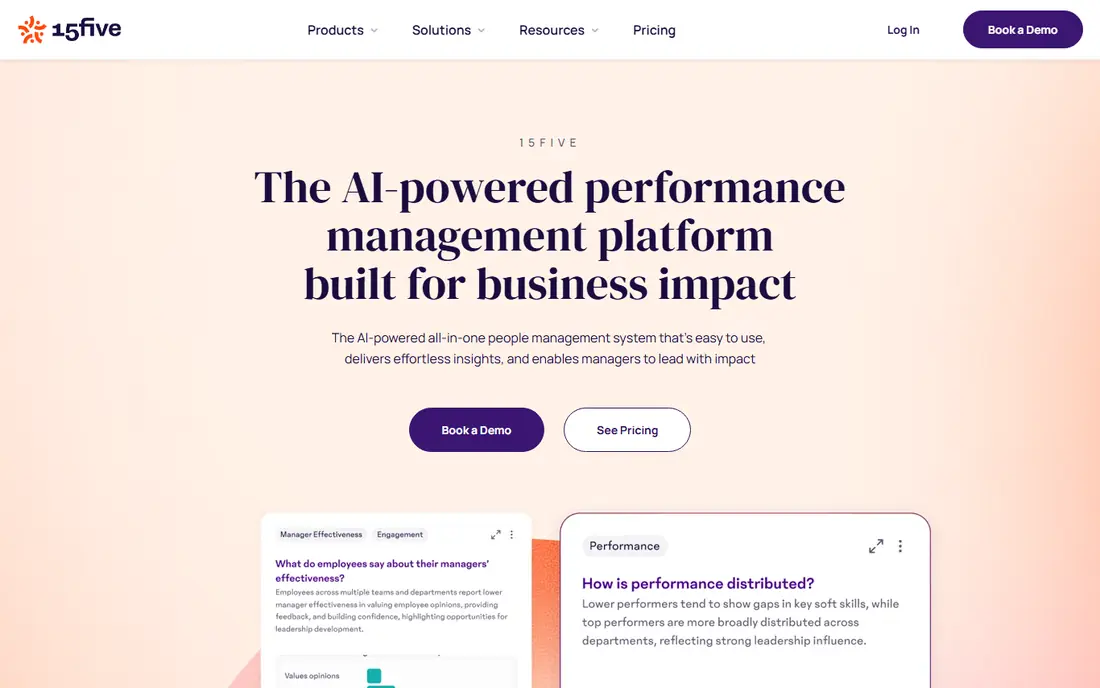
15Five is built around short weekly check-ins, where staff share progress, blockers, and mood, and managers reply with feedback. That weekly rhythm catches problems earlier than an annual survey, and it gives managers a regular reason to talk with each person. The Engage module adds pulse surveys, while other modules cover goals, reviews, and one to ones.
15Five works best when managers commit to the weekly habit. If managers ignore check-ins, staff will stop writing useful updates, and the tool will look like extra admin. Teams should also check which features sit on each tier, because the lowest price may not include the full survey or performance set. For manager led engagement, 15Five is a strong and practical pick.
- Weekly check-ins managers actually use
- Engagement surveys
- Goal tracking
- Best value needs the wider platform
- Some features sit on higher tiers
Bonusly lets staff give small public recognition points to colleagues, with a short note about what they did well. Points can be redeemed for rewards, and managers can see who is recognized often, who is overlooked, and which company values appear most. That daily visibility often lifts morale faster than a quarterly survey, especially in remote or hybrid teams.
Bonusly is not a replacement for engagement surveys. It shows appreciation patterns, but it does not diagnose pay, workload, or manager problems in depth. Reward funding is also separate from the subscription, so teams should set a monthly points budget. For a first step into engagement, or as a companion to a survey tool, Bonusly is easy to start and easy to explain.
- Easy peer recognition
- Points and rewards
- Free plan for small teams
- Recognition first, not a full survey platform
- Reward budgets add cost
Workleap Officevibe, formerly Officevibe, focuses on short pulse surveys that staff can answer quickly, with reports that help managers see team mood and trends. The tool is designed to run with little admin work, which suits HR teams that do not have time for a large survey project. Anonymous feedback options also help staff raise concerns they might not raise in person.
Pricing changed to flat annual tiers, which changes the math for small teams. A team of ten will pay far more per person than a team of one hundred on the same tier, so get a quote for your headcount and check what is included. For teams that want simple, regular listening without a full people platform, Officevibe remains a clean option.
- Simple pulse surveys
- Manager reports
- Low admin effort
- Flat annual tier pricing
- Less performance depth than Lattice or 15Five
Leapsome brings engagement surveys together with performance reviews, goals, feedback, and learning paths in one platform. That breadth suits midsize companies that want one people system, rather than separate tools for surveys, reviews, and development. The interface is modern, and the platform supports multiple languages, which helps global teams.
The trade off is scope. A team that only needs pulse surveys may find Leapsome broader and pricier than a focused tool, and pricing is quoted. Setup also takes more thought, because review cycles, goals, and survey cadence need to be designed together. For a growing company that plans to expand people tools over time, Leapsome is a flexible base.
- Surveys plus reviews, goals, and learning
- Modern interface
- Good for global teams
- Quoted pricing
- Breadth can mean more setup
Quantum Workplace focuses on engagement surveys that lead to action, with tools that help managers build plans, assign owners, and track progress after results arrive. That follow through matters, because staff quickly lose faith in surveys when nothing changes. The platform also offers benchmarks and reporting that help HR teams compare teams and track change over time.
Quantum Workplace is a survey led platform, so teams that want peer recognition or daily rewards will need another tool or a different pick. Pricing is quoted, which makes direct comparison harder for small buyers. For companies that run formal engagement surveys and want managers to act on them, Quantum Workplace is a disciplined choice.
- Research backed surveys
- Action planning tools
- Benchmark data
- Quoted pricing
- Less recognition depth than Bonusly
Motivosity combines peer recognition, manager feedback, and rewards in a tool aimed at building manager relationships and daily appreciation. Staff can recognize colleagues, managers can give structured feedback, and teams can track recognition patterns over time. That mix suits companies that believe engagement grows from manager habits, not just from surveys.
Motivosity is less of a deep survey research platform than Culture Amp or Quantum Workplace, so teams that need benchmark science should shortlist those instead. Pricing is also less transparent on the public site for some plans, so request a written quote. For a team that wants recognition and manager feedback in one friendly system, Motivosity is worth a trial.
- Peer recognition plus manager tools
- Feedback and rewards
- Simple team use
- Quoted pricing for many plans
- Smaller survey depth than Culture Amp
How we picked these
We compared official feature pages, pricing pages, and public documentation for engagement tools in October 2026. We looked for survey design, anonymity controls, recognition, manager action tools, reporting, and integrations with HR systems and chat tools. We marked quoted tools as See website and favored tools with current vendor pages and real use by small to large teams.
What to check before you buy
Start with the problem you are trying to solve. If turnover is high in one team, you need survey and manager tools that find the cause, not just a recognition feed. If morale is low but you have no survey data, start with a short pulse survey and a clear action plan. If staff already feel unseen, recognition may be the fastest first step. Buying a survey tool and never acting on results will hurt trust, so plan the follow up before launch.
Next, check anonymity, frequency, and manager workload. Ask how many responses are needed before a team report shows, how often surveys run, and what managers must do after each cycle. Test the staff experience on mobile, because frontline and remote staff will not use a clunky desktop only survey. Also confirm integrations with your HR system, Slack or Teams, and single sign on, plus data export if you switch later.
Questions for a vendor demo
Ask to see a sample manager report, an action plan, and a follow up survey, not just the survey builder. Ask how the tool handles small teams, anonymity thresholds, and survey fatigue. If you have hourly or frontline staff, ask about access without a company email and about language options. A good vendor will talk about manager adoption, not just features.
FAQ
What is the best software for boosting employee engagement for small teams?
Small teams often do best with Bonusly for recognition, or 15Five for weekly check-ins, because both are easy to start and priced per user. Workleap Officevibe can work for simple pulses, but its flat annual tier needs checking for a small headcount. Start with one habit, such as weekly check-ins or peer recognition, and expand only if staff use it.
Do engagement surveys actually improve engagement?
Surveys alone do not improve engagement. They help when leaders share results, pick a few clear actions, assign owners, and report progress. Staff trust grows when they see change after a survey, and falls when surveys repeat with no action. Choose a tool with action planning and manager follow up, not just a score.
How often should we run engagement surveys?
Many teams run a longer survey once or twice a year, plus short pulses monthly or quarterly. Too frequent surveys cause fatigue, while annual only surveys miss problems early. Weekly check-ins in a tool like 15Five are different from formal surveys, because they are short and manager led. Pick a cadence your managers can actually follow.
Is recognition software enough on its own?
Recognition helps morale and visibility, but it does not fix pay, workload, manager quality, or career growth problems. It works best alongside listening tools that surface deeper issues. If you only buy recognition, pair it with regular one to ones and occasional surveys, even if those surveys run in a simple tool.
How much does employee engagement software cost?
Costs range from free or a few dollars per user per month for recognition and check-in tools, to quoted enterprise pricing for survey research platforms. Watch minimums, annual agreements, and add on modules, because they can raise the real bill. Get a written quote for your exact headcount and required modules before signing.
Can engagement software work for remote and frontline teams?
Yes, if the tool works well on mobile, supports staff without a desk or company email where needed, and offers language options. Test the staff experience for your hardest to reach group first, not just for office staff. Anonymous options and short surveys also help frontline staff share honest feedback.