Best Social Listening Software in 2026: 8 Tools Compared
Compare the best social listening software for 2026, from monitoring and sentiment tracking to competitor research and alerts, with prices and free options.
- Editor's choice
 Brandwatch
Large-scale consumer research
Starts atSee websiteVisit brandwatch.comFull review - Great alternative
 Sprout Social
Social teams that publish and listen
Starts at$199 per monthVisit sproutsocial.comFull review - Also consider
 Hootsuite
Listening inside a publishing suite
Starts at$99 per monthVisit hootsuite.comFull review
TL;DR:
- The best social listening tools cover social networks, news, blogs, and forums, not just one network.
- Brand24 and Awario give smaller teams a clear entry price, while Brandwatch and Talkwalker are built for larger research needs.
- Sprout Social and Hootsuite suit teams that also want to publish and reply from the same workspace.
- Sentiment labels help, but they still need a human check before you act on a spike.
Quick comparison
| Tool | Best for | Starts at | Free plan? | |
|---|---|---|---|---|
| Brandwatch | Large-scale consumer research | See website | No | Visit |
| Sprout Social | Social teams that publish and listen | $199 per month | Free trial | Visit |
| Hootsuite | Listening inside a publishing suite | $99 per month | Free trial | Visit |
 Mention | Simple brand and competitor alerts | See website | Free trial | Visit |
 Brand24 | Affordable mention tracking | $199 per month | Free trial | Visit |
 Awario | Low-cost monitoring for small brands | $29 per month | Free trial | Visit |
 Talkwalker | Enterprise listening and visual mentions | See website | No | Visit |
 Keyhole | Hashtag and campaign tracking | See website | Free trial | Visit |
The best social listening software
We compared official feature pages, pricing pages, app store listings, privacy policies, and public reviews to find tools that track mentions across social and web sources and turn them into usable alerts and reports.
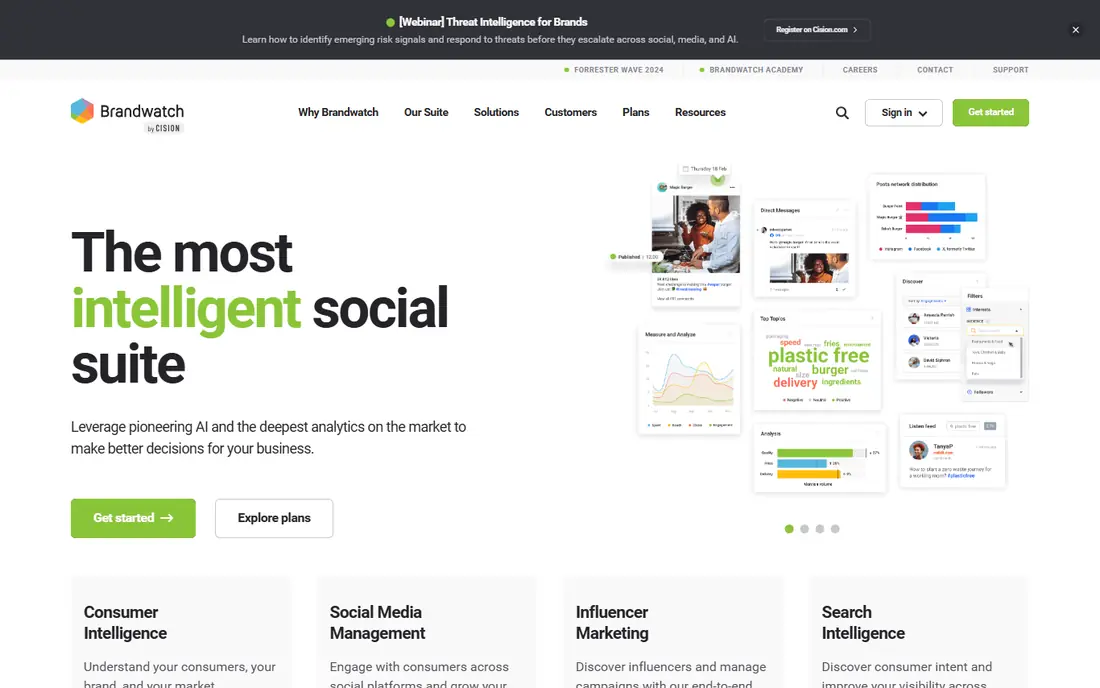
Brandwatch fits large brands, agencies, and research teams that need to compare conversations over long periods and across markets. Its strength is depth, with tools for sentiment, topics, and audience patterns that go past a simple mention count. If you need to explain why a topic rose, not just that it rose, this is where that detail lives. The catch is cost and complexity. Smaller teams may find the quote-based pricing hard to plan around, and the full setup rewards a team that will use reports often. For a one-off check of a brand name, a cheaper tracker will do the same basic job faster.
- Very deep historical data
- Strong sentiment and trend analysis
- Covers many social and web sources
- Pricing is by quote, which slows budgeting
- Setup takes more time than simpler tools
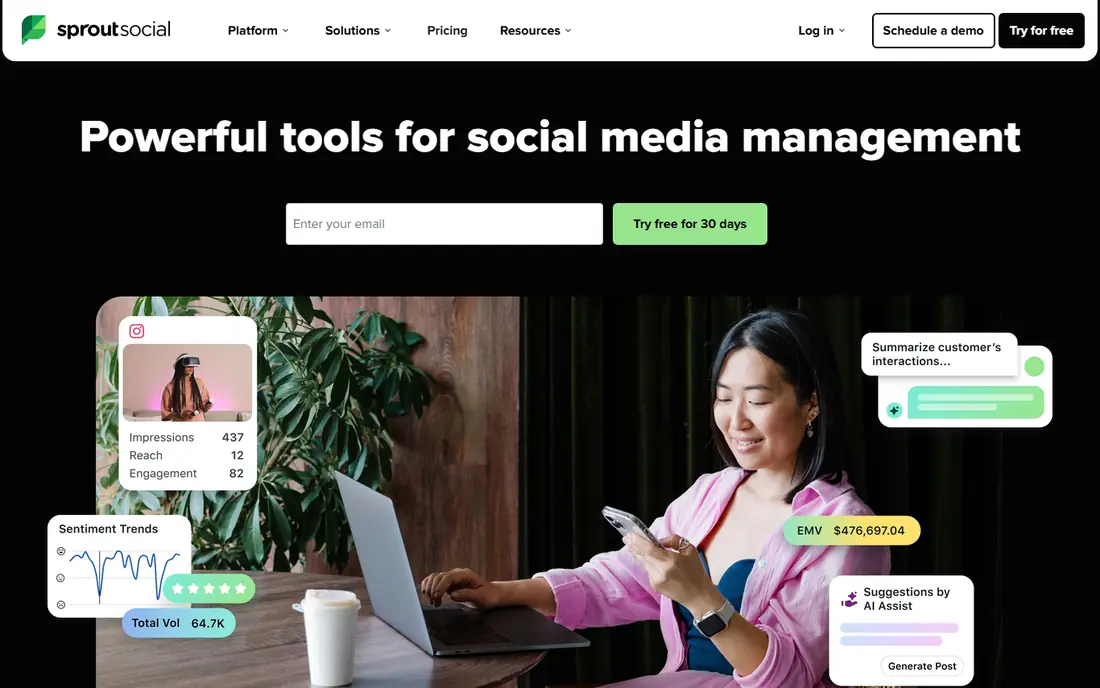
Sprout Social works best when listening is part of daily social work, not a separate research project. A mention can move from a listening view into a reply, an assigned task, or a scheduled post without switching tools. That flow saves time for teams that handle community work every day. Pricing needs a careful read. The entry price covers the suite, and listening may add cost depending on the plan you choose. Check the total per seat before you commit, and trial the listening views with your own brand terms so you see real results, not demo data.
- Listening sits next to publishing and inbox work
- Clear reporting for teams
- Strong support resources
- Listening is an add-on on some plans
- Per-seat pricing adds up with a large team
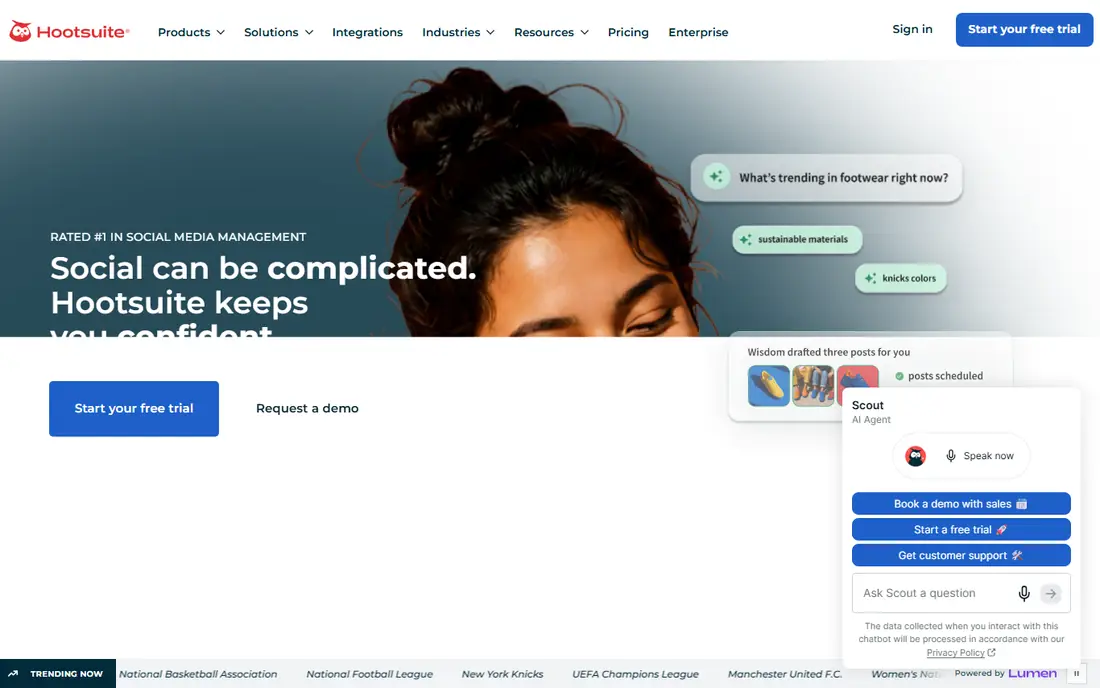
Hootsuite suits teams that already plan content in a calendar and want listening in the same place. You can watch brand terms, competitor names, and topic keywords, then act on what you find by drafting a post or assigning a reply. For busy social managers, that single workspace matters more than a separate research dashboard. The trade-off is depth on lower plans. Basic listening covers the essentials, while deeper analysis and forecasting tend to sit higher up the price ladder. If research is your main job, compare its higher tiers with a specialist tool before you decide.
- Familiar publishing and scheduling tools
- Listening for brands and competitors
- Wide network coverage
- Advanced listening sits on higher plans
- Per-user pricing can rise quickly
Mention is a good fit for small and mid-size brands that want alerts without a long setup. You add keywords, set alert rules, and get mentions in a feed you can filter, tag, and export. It also works well for watching competitors and industry terms alongside your own name. It is less suited to deep consumer research. Sentiment and trend tools exist, but teams that need long historical comparisons or complex queries will outgrow it. For day-to-day awareness and fast replies, its simplicity is the point.
- Fast setup for brand alerts
- Covers social and web sources
- Clean alert and report views
- Entry pricing is not always clear without a quote
- Advanced analysis is limited next to enterprise tools
Brand24 appeals to brands that want serious monitoring without an enterprise contract. You can track keywords, filter by sentiment and source, and get alerts when mention volume changes. Its pricing is easier to budget than quote-only tools, since the plan price is the main cost. Watch the mention and keyword limits on your plan. A product launch or a viral post can push you past them, so set alerts early and check usage during busy weeks. Used within its limits, it gives small teams a clear view of what people say and where they say it.
- Clear flat pricing by plan
- Sentiment in many languages
- Useful alerts by email and chat apps
- No free plan, only a trial
- Mention limits vary by plan and need watching
Awario is the budget pick for freelancers, startups, and small brands that still want real listening, not just a free alert tool. Boolean search lets you narrow terms, exclude noise, and track phrases that matter, such as buying-intent language around a product type. That control is rare at this price. The downside is polish and breadth. The dashboard does not feel as modern as larger rivals, and some networks and data sources are thinner. If low cost and precise keyword control matter most, Awario is hard to beat for a first listening tool.
- Low entry price
- Boolean search for precise queries
- Lead and sales mention features
- Interface feels dated next to newer tools
- Coverage is narrower than enterprise platforms
Talkwalker fits global brands, PR teams, and agencies that need to watch many markets, languages, and media types at once. It can surface mentions in images and video as well as text, which helps when a logo or product appears without a written brand name. Reporting tools support regular briefings and crisis checks. That power comes with enterprise pricing and a sales-led buying process. Small teams will find the cost hard to justify, and setup takes planning. For a large organisation with many stakeholders, the breadth and reporting depth can justify the step up.
- Very broad global coverage
- Visual and audio mention detection
- Strong reporting for large teams
- Quote-based pricing
- Best value only for larger organisations
Keyhole stands out for campaigns, events, and hashtag work. Instead of a general mention feed, it gives focused reports on a hashtag, account, or keyword over a set period, with reach, engagement, and top posts. Agencies and event teams can share those reports with clients without extra formatting work. It is not a full replacement for a broad listening tool if you also need news, blogs, and forums in depth. Pair it with a general tracker if you need both campaign reports and always-on brand monitoring. On its own, it is a strong pick for measuring a specific campaign.
- Clear hashtag and campaign reports
- Influencer tracking included
- Easy to share reports with clients
- Less suited to broad web monitoring
- Pricing requires a check on the current page
How we picked these
We compared official feature pages, pricing pages, app store listings, privacy policies, and public reviews. We looked for tools that track more than one source, offer sentiment or filtering, provide alerts, and still exist as active products in October 2026. We gave weight to clear pricing, usable reports, and a fit for a real team size, from a solo brand owner to a large enterprise team.
What to check before you buy a listening tool
A listening tool is only useful if it hears the right conversations and shows them in a way your team will act on. Start with your sources, then your alerts, then your reports, and test each one with your own terms during a trial.
Match sources to where your customers talk
List the networks, forums, review sites, and news sources where your customers actually post. Some tools are strong on X, Instagram, and TikTok, while others add Reddit, YouTube, blogs, and news. If your audience talks mainly in forums or reviews, a social-only tool will miss the most useful comments. Run the same three test terms in each trial and compare what each tool finds.
Set alerts you will actually read
Alerts should reach you by email or a chat app, with filters for sentiment, source, and reach. Too many alerts lead to ignoring them, and too few mean you miss a problem early. Start narrow, with your brand name, product names, and common misspellings, then widen slowly. Check whether you can mute noise, such as job posts or unrelated uses of a common word.
Check sentiment, limits, and exports
Sentiment labels are a guide, not a verdict. Read a sample of positive and negative mentions in a trial to see how accurate the labels are for your industry. Also check mention limits, keyword limits, and historical data, since those caps decide the real cost. Finally, confirm you can export reports and share them with people who do not use the tool every day.
FAQ
What is the best social listening software for a small business?
For most small businesses, Brand24 or Awario offer a good balance of coverage and price, with Mention as a simpler option. Start with a trial, test your own brand terms, and check whether alerts and sentiment labels match what you see by hand. A tool you check daily beats a larger tool you open once a month.
What is the best tool for social listening across many languages?
Brandwatch and Talkwalker offer broad global coverage and multilingual sentiment, which suits brands in many markets. Brand24 also lists sentiment in many languages on its plans, which can work for smaller global teams. Test terms in each language you need, since accuracy varies by language and topic.
Is social media monitoring software the same as social listening?
Monitoring usually means tracking mentions and alerts as they happen. Listening goes further, by grouping mentions into topics, trends, and sentiment over time. Many tools do both, but research tools lean toward listening, while alert tools lean toward monitoring. Choose based on whether you need fast alerts or longer trend analysis.
Do I need a free social listening tool or a paid one?
Free alerts can work for a very small brand with one name to watch. Paid tools add wider sources, sentiment, filters, historical data, and reports, which matter once volume grows. If you track competitors, campaigns, or several products, a paid plan usually pays for itself in time saved.
How do social listening platforms handle privacy?
Reputable platforms collect public posts and web pages, not private messages, and they publish privacy policies that explain data handling. Check how long data is kept, who can access reports, and whether you can delete tracked terms. Avoid tools that claim access to private accounts or direct messages, since that is a red flag.
What is the best social listening platform for competitor research?
Brandwatch and Talkwalker give the deepest competitor comparisons, with share of voice, topics, and sentiment over time. Brand24 and Mention also support competitor terms at a lower price, which suits smaller teams. Compare the same competitors in a trial, and look for topic gaps, not just mention counts.