Best Share of Voice Tools for AI Search in 2026: 9 Tools Compared
Best share of voice tools for ai search in 2026: compare 9 tools on prompt tracking, engines and price, with a buying guide and FAQs to help you choose.
- Editor's choice
 Profound
Enterprise brands with large AI visibility programs
Starts atSee websiteVisit profound.comFull review - Great alternative
 Scrunch AI
Brands that want monitoring plus site audits
Starts at$250 per monthVisit scrunch.comFull review - Also consider
 Otterly.AI
Small teams on a tight budget
Starts at$29 per monthVisit otterly.aiFull review
TL;DR:
- Share of voice in AI search is a share of answers, not a share of clicks, so pick a tool that tracks the prompts buyers actually ask.
- Otterly.AI suits small budgets, while Profound and Scrunch AI suit larger brands that need depth, audits and enterprise reporting.
- Compare cost per tracked prompt per engine, not just the monthly headline price, because prompt and engine limits change the real bill.
- Freeze your prompt list before you start, since changing prompts mid-program breaks the trend line that makes share of voice useful.
Quick comparison
| Tool | Best for | Starts at | Free plan? | |
|---|---|---|---|---|
| Profound | Enterprise brands with large AI visibility programs | See website | Free trial | Visit |
| Scrunch AI | Brands that want monitoring plus site audits | $250 per month | Free trial | Visit |
| Otterly.AI | Small teams on a tight budget | $29 per month | Free trial | Visit |
 Peec AI | SEO teams and agencies that need competitor benchmarks | €85 per month | Free trial | Visit |
 AthenaHQ | Mid-market teams that want wide model coverage | $295 per month | Free trial | Visit |
 ZipTie.dev | Teams that want to pay only for what they track | See website | Free trial | Visit |
 SE Visible | Teams already using SE Ranking for SEO | $99 per month | Free trial | Visit |
 Semrush AI Visibility Toolkit | Teams already invested in Semrush | $199 per month | Free trial | Visit |
 Ahrefs Brand Radar | Teams that already rely on Ahrefs data | $129 per month | Free trial | Visit |
The best share of voice tools for AI search
AI answers now shape which brands buyers hear about first, so share of voice tools track how often your brand appears across chat and AI search answers, and who else gets mentioned instead. We compared official feature pages, pricing pages and public documentation for each option below, and we note where pricing is quote-based so you can judge the comparison fairly.
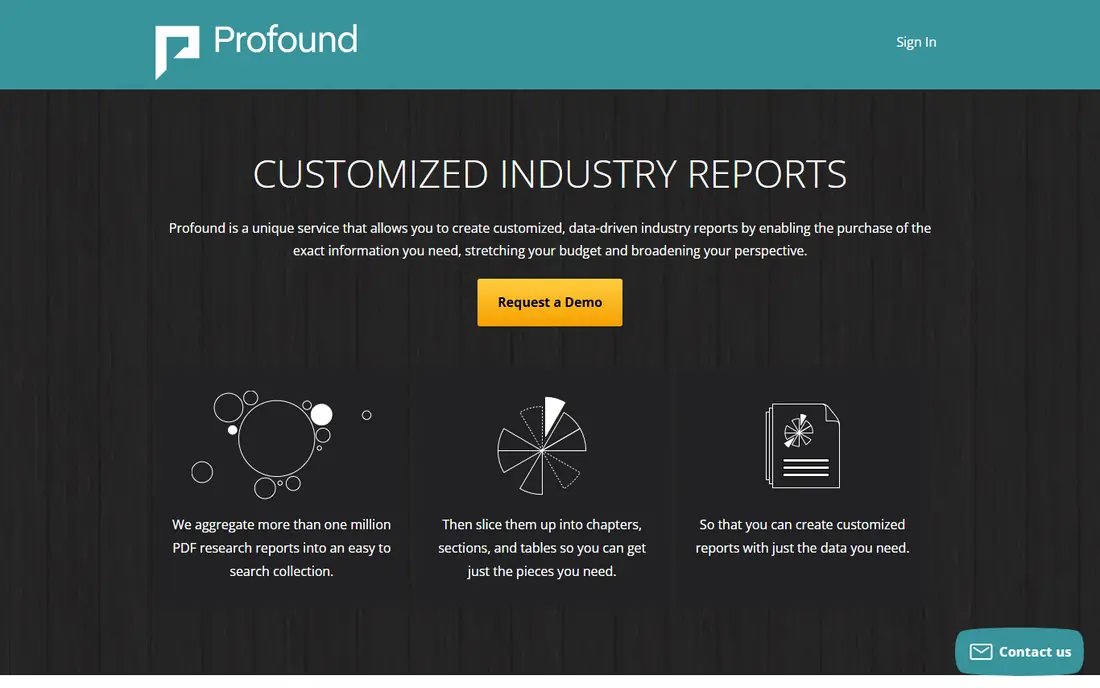
Our first pick for enterprise brands is Profound, because its prompt intelligence goes beyond a simple mention count, showing which prompts, answers and sources drive visibility for a brand. In daily use, that strength shows up in reporting that links a brand mention to the conversation and citation behind it, which helps a content team decide what to fix. Profound suits a brand needing a broad view rather than a single-engine check.
The honest catch is that the quote-based enterprise model makes it hard for a small team to judge cost quickly, and the depth suits larger programs best. That weakness does not make it a poor product, but it does change who should choose it. If that catch matches your situation, try a smaller option on this list instead, and use the trial to test the exact prompts you will rely on, not just a demo.
- Deep prompt intelligence across many engines
- Enterprise reporting
- Conversation and citation analysis
- Enterprise pricing is quote-based
- Smaller teams may find it oversized
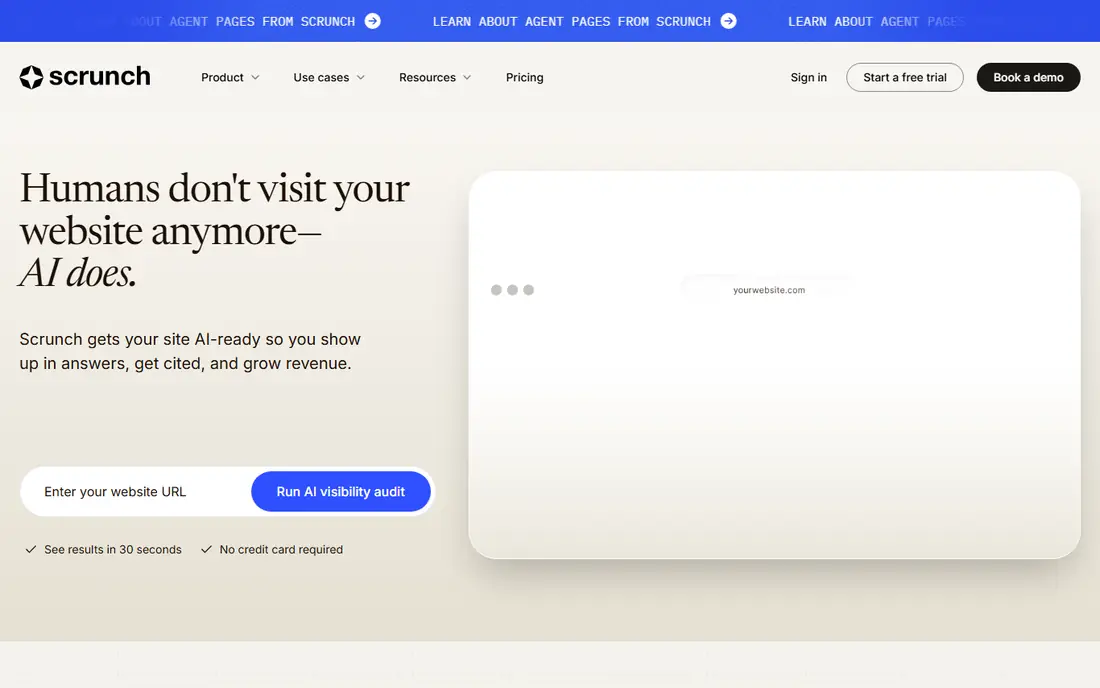
Next, consider Scrunch AI, because its combination of brand monitoring and site audits helps a team fix the pages that AI answers cite, not just watch the numbers move. In daily use, that strength shows up when a lost prompt leads to a clear site fix, rather than a vague report. It also helps a brand spot false claims in AI answers before they spread widely.
The honest catch is that the entry cost puts it out of reach for a solo marketer, and prompt allowances need checking against the questions that matter most. That weakness does not make it a poor product, but it does change who should choose it. If that catch matches your situation, try a lower-priced option on this list instead, and use the trial to test the exact prompts you will rely on, not just a demo.
- Tracking across major AI engines
- Site audit features
- Misinformation detection
- Entry price is high for small teams
- Prompt limits apply on entry plans
A different kind of buyer will prefer Otterly.AI, because its low entry price makes daily AI visibility tracking reachable for a small team that could not justify an enterprise platform. In daily use, that strength shows up in a simple dashboard that tracks a focused prompt list across major engines every day. Unlimited members help a small agency share results with clients without extra seat fees.
The honest catch is that the entry prompt limit means a team with many products or competitors will need a higher tier fairly soon. That weakness does not make it a poor product, but it does change who should choose it. If that catch matches your situation, try a higher-volume option on this list instead, and use the trial to test the exact prompts you will rely on, not just a demo.
- Low entry price
- Daily tracking across major engines
- Unlimited team members
- Entry plan covers fewer prompts
- Some engines are paid add-ons
For teams that want a simpler path to competitor reporting, Peec AI offers competitor benchmarking that shows share of voice as a contest, not a single-brand score, which makes reporting to clients much clearer. In daily use, that strength shows up in side-by-side brand comparisons across the same prompt list. Unlimited users help an agency share dashboards without worrying about seat counts.
The honest catch is that the euro pricing needs converting for US budgets, and the model limit on the entry plan should be matched to the engines buyers actually use. That weakness does not make it a poor product, but it does change who should choose it. If that catch matches your situation, try a dollar-priced option on this list instead, and use the trial to test the exact prompts you will rely on, not just a demo.
- Daily prompt tracking
- Competitor share comparisons
- Unlimited users
- Prices are in euros
- Entry plan limits the models tracked
Another strong choice is AthenaHQ, because its wide model coverage and large answer volume suit a team that wants one panel across many AI systems instead of several small tools. In daily use, that strength shows up in comparisons across many models on the same prompts, which helps a team see whether a visibility problem is broad or engine-specific. Attribution features help a mid-market team connect visibility to business results more clearly than a raw mention count.
The honest catch is that the entry price is a serious commitment, and without a focused prompt list the volume can produce noise rather than decisions. That weakness does not make it a poor product, but it does change who should choose it. If that catch matches your situation, try a focused option on this list instead, and use the trial to test the exact prompts you will rely on, not just a demo.
- Many models on one plan
- Large answer volumes
- Revenue attribution features
- High entry price
- Setup needs a clear prompt strategy
If budget is the deciding factor, ZipTie.dev offers a usage-based model that suits a team with a focused prompt list, since the bill follows the work tracked rather than a flat seat count. In daily use, that strength shows up in flexible tracking frequency, so a team can check key prompts daily and others weekly. It lets a team pay for the engines that matter instead of a fixed bundle.
The honest catch is that a team that tracks hundreds of prompts daily may find a flat plan cheaper, so model the monthly volume before choosing. That weakness does not make it a poor product, but it does change who should choose it. If that catch matches your situation, try a flat-priced option on this list instead, and use the trial to test the exact prompts you will rely on, not just a demo.
- Usage-based pricing
- Choice of tracking frequency
- Multiple engines
- Usage pricing makes monthly bills vary
- Smaller feature set than full suites
For larger or more complex needs inside an SEO suite, SE Visible offers a high daily answer count per dollar, and pairing AI visibility with rank tracking keeps search work in one place. In daily use, that strength shows up when a team checks AI visibility, rankings and site health without switching tools. Competitor tracking helps a team see AI share alongside traditional search performance.
The honest catch is that a team that does not need the wider SEO suite may prefer a standalone AI visibility tool with a simpler scope. That weakness does not make it a poor product, but it does change who should choose it. If that catch matches your situation, try a standalone option on this list instead, and use the trial to test the exact prompts you will rely on, not just a demo.
- High daily answer counts per dollar
- AI search plus SEO tools
- Competitor tracking
- Works best inside the SE Ranking suite
- AI features are an add-on area
A practical middle ground for Semrush users comes from its AI Visibility Toolkit, because AI visibility sits next to keyword, content and competitor data a team may already use daily. In daily use, that strength shows up in one login for SEO and AI search work, with prompt tracking that fits existing reporting. Competitor insight helps a team compare AI visibility with the wider search picture.
The honest catch is that a team buying it only for AI share of voice pays for a much larger suite, so the value depends on using the rest of Semrush too. That weakness does not make it a poor product, but it does change who should choose it. If that catch matches your situation, try a standalone option on this list instead, and use the trial to test the exact prompts you will rely on, not just a demo.
- AI visibility inside a full SEO and marketing suite
- Prompt tracking
- Competitor insight
- Entry cost is high if only AI visibility is needed
- Prompt limits apply
Finally, a specialist option for Ahrefs users is Brand Radar, because its large prompt index helps a team research any brand, not just its own, which is useful for competitor share comparisons. In daily use, that strength shows up in brand research that sits next to link and content data. It tracks mentions across the AI systems buyers increasingly use.
The honest catch is that the add-on structure means the headline plan price is not the full AI visibility cost, so check the add-on price for each platform. That weakness does not make it a poor product, but it does change who should choose it. If that catch matches your situation, try a simpler-priced option on this list instead, and use the trial to test the exact prompts you will rely on, not just a demo.
- Brand mention tracking across AI platforms
- Link and content data nearby
- Large prompt index
- Full AI coverage needs add-ons
- Entry plan has fewer tracked brands
How we picked these
We started from the topic itself, best share of voice tools for ai search, and kept only products that exist, work today and truly fit that job. We compared official pricing pages, feature pages and public documentation, and we used See website where a vendor does not publish a clear entry price, rather than guessing a number. We mixed well-known leaders with smaller options, and we favoured products with clear pricing, support and limits, while noting honest weaknesses for each one.
We did not claim hands-on testing that did not happen. Our comparison rests on vendor pages, pricing and public documentation, plus the practical fit of each product for a specific kind of buyer. That method keeps the list honest, and it also means you should run your own trial before committing, since your prompts, competitors and workflow will surface issues no list can predict.
How to choose the right option
Start with your must-have job
Write down the one job this tool must do well in its first month, then judge every option against that job alone. A tool with a long feature list that handles your core job poorly will cost more time than a focused tool that handles it well. Trials should test that job with real prompts, not a sample list.
Check the true cost, not just the headline price
Add up seats, add-ons, usage limits and any per-prompt or per-engine charges before you compare prices. A low headline price can grow quickly once your prompt list or engine count grows. Ask for a written quote where pricing is not published, and check renewal terms before you pay annually.
Plan for growth and exit
Check how easy it is to add prompts, raise limits and export your data if you later switch tools. A tool that locks your work inside its own format creates a costly move later. Also check support hours, onboarding help and documentation, since a good tool with weak support can still slow a team down.
FAQ
What is the best share of voice tool for ai search for most teams?
There is no single winner for every buyer, since the best share of voice tools for ai search choice depends on budget, prompt volume and the engines buyers use. Start with the options whose best-for description matches your situation, then trial two of them on real prompts. That short trial usually reveals which dashboard, limits and price fit your team better than a longer list can.
How many prompts should I track?
A focused list of 20 to 50 prompts, mapped to buying intent, usually works better than hundreds of loose prompts. Fewer than 20 makes the share statistic noisy, while more than 50 often adds prompts that do not lead to sales. Freeze the list once you start, so the trend line stays meaningful over time.
Is there a free option worth trying?
Several tools on this list offer a free trial, and those are a good way to test the core workflow before paying. Free trials usually limit prompts, engines or history, so check those limits against your real prompt list. A trial with your own prompts is more useful than a demo with sample data.
How do I increase my share of voice in AI search?
Read the source attribution to find which pages win the prompts you lose, then create or update grounding content for those questions, such as comparison pages, documentation and clear pricing pages. Fix cited third-party sources where you can, then re-measure on the same prompt list.
Should I pay annually or monthly?
Monthly billing suits a trial period and a team whose prompt list may change, while annual billing usually lowers the monthly rate. Pay annually only after a trial has confirmed the tool fits your workflow and your team will use it for a full year. Check the renewal and cancellation terms in writing before you commit.