Best SEO Research Tool in 2026: 8 Tools Compared
Compare the best SEO research tool options in 2026, with current pricing, keyword data, backlink research, audits, and rank tracking for small teams now.

- Editor's choice
 Ahrefs
Keyword and backlink depth
Starts at$129 per monthVisit ahrefs.comFull review - Great alternative
 Semrush
All-in-one SEO and PPC
Starts at$139 per monthVisit semrush.comFull review - Also consider
 Moz Pro
Beginner-friendly research
Starts atSee websiteVisit moz.comFull review
TL;DR:
- Ahrefs is our pick for most SEO professionals because its keyword and backlink data are deep and widely trusted.
- Semrush suits teams that also need PPC, content, and social data in one platform, but it costs more as seats grow.
- Ubersuggest and Mangools are the best low-cost research options for beginners and small sites.
- Google Keyword Planner is free and useful for volume checks, but it does not replace a full research platform.
Quick comparison
| Tool | Best for | Starts at | Free plan? | |
|---|---|---|---|---|
| Ahrefs | Keyword and backlink depth | $129 per month | Yes | Visit |
| Semrush | All-in-one SEO and PPC | $139 per month | Yes | Visit |
| Moz Pro | Beginner-friendly research | See website | Free trial | Visit |
 SE Ranking | Mid-market all-in-one | See website | Free trial | Visit |
 Mangools | Simple keyword research | $29.90 per month | Free trial | Visit |
 Ubersuggest | Budget keyword research | $12 per month | Yes | Visit |
 SpyFu | Competitor keyword history | $39 per month | Yes | Visit |
 Google Keyword Planner | Free volume data | Free | Yes | Visit |
The best seo research tool
SEO research means answering three questions well, which are what people search for, how hard it is to rank, and what competitors already win. The tools below differ in database depth, ease of use, and price. We compared official feature pages, pricing pages, and public reviews for tools active in 2026.

Ahrefs is the tool most SEO professionals open first for research. Keywords Explorer offers clickstream-adjusted volume, difficulty scores, and clustering that turns a long list into a content plan. The backlink index is also the strongest for link research, which feeds directly into keyword strategy, since you can see which pages earn links for a topic.
The free option, Ahrefs Webmaster Tools, is genuinely useful for your own verified sites, with Site Explorer and audits included. For paid research, Lite covers a small team, while larger teams often need Standard. If backlinks and keyword depth are your main needs, Ahrefs is the benchmark.
- Large keyword database
- Trusted backlink index
- Keyword difficulty and parent-topic clustering
- Lite plan at $129 per month is steep for small sites
- Daily rank tracking costs extra on some plans
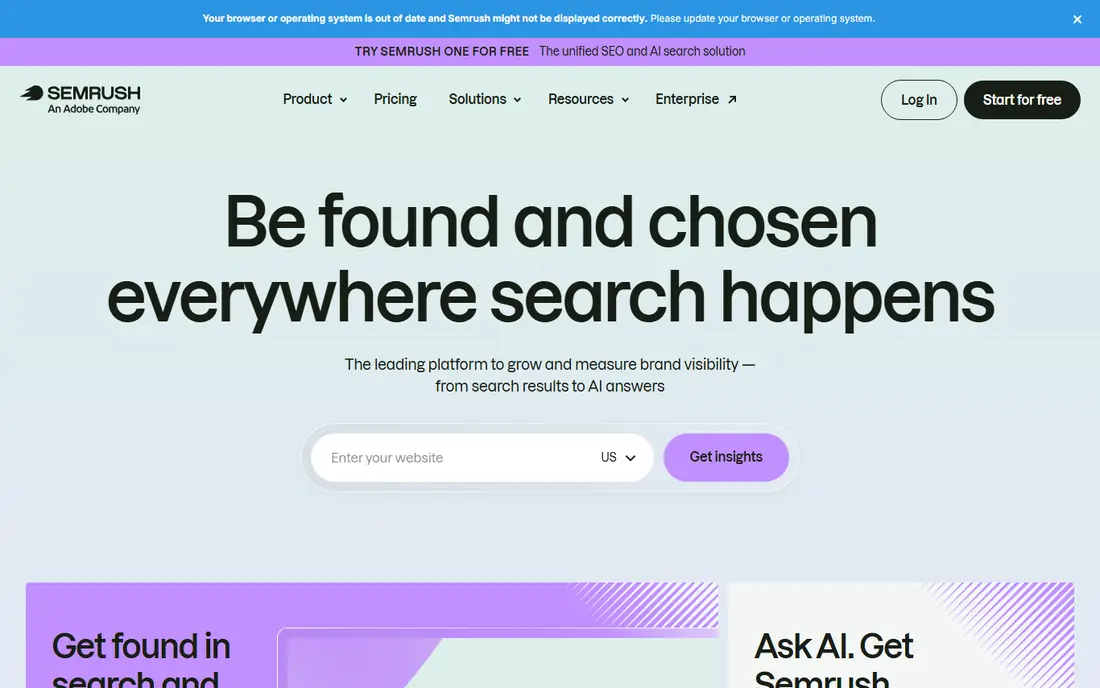
Semrush is the broadest research platform on this list. It covers keyword research, competitor gaps, backlink analysis, site audits, rank tracking, and PPC, with newer AI visibility features for ChatGPT, Perplexity, and Gemini. For a marketing team that needs SEO and paid search in one place, that breadth can replace several tools.
The trade is cost and complexity. The entry SEO plan at $139 per month is already a serious subscription, and seats and add-ons add up. A limited free account lets you run a handful of searches per day, which is enough to test the interface. Choose Semrush when you will use several of its modules, not just keyword research.
- Huge keyword and backlink databases
- Site audit, rank tracking, and PPC tools
- AI visibility features
- Price rises fast with seats and add-ons
- Interface can feel large for beginners
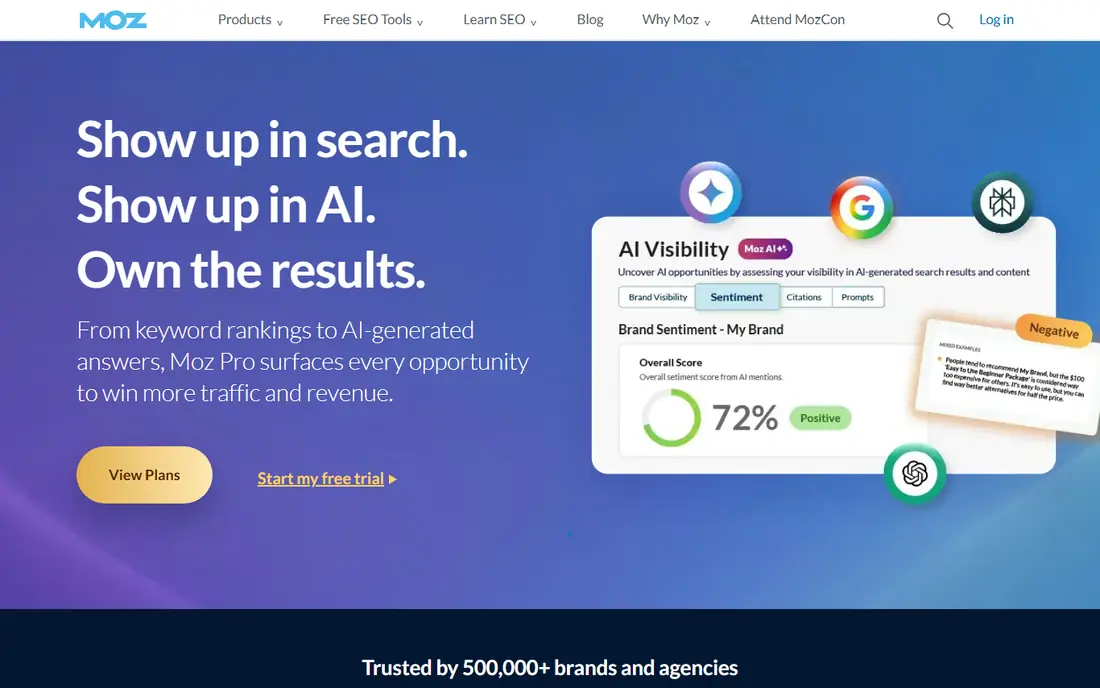
Moz Pro has long been a friendly entry point into SEO research. Its interface is easier to learn than larger platforms, and Domain Authority gives a quick, if imperfect, way to compare sites. Keyword Explorer, site audits, and rank tracking cover the core research workflow for a small team or a single site.
The honest limit is data depth. For deep backlink research or large-scale keyword work, Ahrefs and Semrush offer more. Moz Pro suits beginners, small agencies, and teams that want a clear dashboard without a steep learning curve. Use it to learn SEO research, then upgrade only if data depth becomes a bottleneck.
- Clear interface for beginners
- Domain Authority for quick benchmarking
- Useful keyword and audit tools
- Backlink data is less deep than Ahrefs
- Pricing varies by plan and region
SE Ranking is a practical middle option between a budget tool and a large platform. It combines keyword research, competitor analysis, site audits, rank tracking, and backlink checks in one dashboard. Agencies like its white-label reporting and its ability to manage many projects without the highest enterprise prices.
The trade is depth in some markets. For very large or highly competitive niches, Ahrefs or Semrush may offer deeper data. For most mid-size teams, SE Ranking covers the daily research workflow well. Check keyword and rank tracking limits on your plan, since those limits decide whether the price stays fair as you grow.
- All-in-one research, audit, and tracking
- Clear agency and white-label options
- Good value for mid-size teams
- Some databases are smaller than Ahrefs and Semrush
- Plan limits need checking at scale
Mangools, which includes KWFinder, is built for people who want keyword research without a large platform. You can find keywords, check difficulty, view SERP results, and track a small set of rankings in a clean interface. That simplicity helps beginners and bloggers who need answers fast, not a full marketing suite.
The limit is scale. Mangools is not a replacement for Ahrefs backlink research or Semrush PPC data. It is a focused research tool, and it works best when paired with Google Search Console for your own site data. For a small site with a clear niche, it offers strong value.
- Clean, simple keyword tool
- Useful SERP previews
- Lower price than large platforms
- Less backlink depth
- Fewer advanced features for large agencies
Ubersuggest is the cheapest usable research tool on this list for many beginners. At $12 per month for an individual plan, it offers keyword ideas, volume estimates, difficulty scores, and basic site audits. The free tier is limited, but it lets you test the workflow before paying.
The trade is accuracy and depth. Volume and difficulty estimates are guides, not exact measures, and backlink data is basic. Use Ubersuggest to find topic ideas and to learn keyword research, and cross-check important decisions with Google Search Console or a larger tool. For a new blog or a small business site, it is a sensible start.
- Low entry price
- Simple keyword ideas and content suggestions
- Free tier for light use
- Data depth is limited
- Some features feel basic compared with Ahrefs and Semrush
SpyFu stands out for history. It shows which keywords competitors have ranked for and advertised on over time, which helps you spot stable topics and seasonal patterns. For a team that wants to learn from competitors, that history is more useful than a single snapshot of current rankings.
The limit is discovery. SpyFu is best when you already know your competitors, and less strong as a pure keyword brainstorming tool. Pair it with a discovery tool such as Ahrefs, Mangools, or Ubersuggest for new ideas. Used that way, SpyFu adds a historical view that other tools do not emphasise.
- Long competitor keyword and PPC history
- Useful ad history
- Clear competitor comparisons
- Less strong for fresh keyword discovery
- Interface feels dated to some users
Google Keyword Planner is free, and it is the closest source to Google own search data. It is useful for checking whether a topic has meaningful search interest, and for finding related terms. Every SEO researcher should know how to use it, even if they also pay for a larger platform.
The limits are clear. Volume data is shown in broad ranges unless you run ads, and Planner does not offer backlink research, audits, or rank tracking. Use it as a free check alongside Search Console, and use a paid tool for depth. For a zero-budget start, Planner plus Search Console is a strong free stack.
- Free volume data from Google
- Useful for broad topic checks
- No subscription needed
- Volume ranges are broad without an active ads account
- No backlink or audit features
How we picked these
We compared official feature pages, pricing pages, and public reviews for tools that cover keyword research, competitor analysis, backlink data, audits, or rank tracking. We favoured tools active in 2026, with clear pricing or a free option, and with a real research workflow rather than a single metric. We also weighed ease of use, since many readers are small teams without a dedicated SEO specialist.
We did not include tools with no clear product or pricing information, or tools that only sell rankings without research data. A good research tool should help you choose topics with evidence, not just report a score. The eight tools above cover free, budget, mid-market, and professional tiers.
How to use an SEO research tool well
Start with search intent, not volume alone
A high-volume keyword with the wrong intent will not convert. Check the current top pages for a keyword and ask what the searcher wants, such as a guide, a comparison, a product, or a local service. Match your page to that intent before you worry about volume.
Compare difficulty with your own site strength
Keyword difficulty is relative. A new site will struggle with a competitive term that an established site can win. Compare your site authority, content depth, and backlink profile with the top pages, and start with terms where you can realistically compete in the next few months.
Build topic clusters, not single pages
Group related keywords into a topic, with one main page and supporting pages that answer sub-questions. That structure helps readers and search engines understand your coverage. Most tools on this list offer clustering or related keyword views to support this workflow.
Check your own data before you trust a tool
Use Google Search Console to see which queries already bring traffic, which pages rank near the top, and where a small improvement could move you up. Tool data is an estimate, while Search Console shows real impressions and clicks for your own site.
FAQ
What is the best SEO research tool for beginners?
Mangools and Ubersuggest are good beginner choices because they are simple and affordable. Moz Pro is also friendly if you want a fuller platform. Start with one, learn keyword intent and difficulty, and upgrade only when data depth limits your work.
Is Ahrefs or Semrush better for SEO research?
Ahrefs is stronger for backlink depth and keyword research, while Semrush is broader, with PPC, content, and social tools in one platform. If you only need SEO research, Ahrefs is often the pick. If you need SEO plus PPC, Semrush may be better value.
Can I do SEO research for free?
Yes, with Google Keyword Planner and Google Search Console, plus free tiers from Ahrefs Webmaster Tools and Ubersuggest. Free tools cover basic volume and site data, but paid tools offer deeper keyword, competitor, and backlink research.
How accurate are keyword volume estimates?
They are estimates, not exact counts, and they vary by tool and method. Use volume as a guide to relative interest, not as a promise of traffic. Cross-check with Search Console data and with the quality of the top-ranking pages.
Do I need rank tracking as well as keyword research?
Rank tracking helps you see whether your work is moving, but it is not required on day one. Start with research and content, add rank tracking for your most important pages, and expand tracking as your site grows.
How often should I do keyword research?
Do a focused research session when you plan new content, and review your main topics each quarter. Search demand and competition change, but weekly research without action wastes time. Research should lead to published pages, not just longer lists.