Best SEO Monitoring Tools in 2026: 8 Tools Compared
Compare the best SEO monitoring tools in 2026, from Semrush and Ahrefs to Moz Pro, SE Ranking, and Google Search Console, with prices, features, and best uses.
- Editor's choice
 Semrush
All-in-one SEO and monitoring
Starts at$139 per monthVisit semrush.comFull review - Great alternative
 Ahrefs
Backlinks and competitor research
Starts atSee websiteVisit ahrefs.comFull review - Also consider
 Moz Pro
Beginners and small teams
Starts atSee websiteVisit moz.comFull review
TL;DR:
- Semrush is the broadest all-in-one choice, covering rank tracking, site audits, content, and paid search in one account.
- Ahrefs leads for backlink and competitor research, while Moz Pro suits smaller teams that want a simpler start.
- Google Search Console is free and essential, since it shows first-party data from Google itself.
- SE Ranking, Nightwatch, and Mangools offer lower-cost rank tracking for freelancers and small agencies.
- Rank data alone is not enough in 2026, since AI Overviews and other search features now affect clicks, so track visibility, not just position.
Quick comparison
| Tool | Best for | Starts at | Free plan? | |
|---|---|---|---|---|
| Semrush | All-in-one SEO and monitoring | $139 per month | Free trial | Visit |
| Ahrefs | Backlinks and competitor research | See website | Yes | Visit |
| Moz Pro | Beginners and small teams | See website | Free trial | Visit |
 SE Ranking | Agencies on a budget | See website | Free trial | Visit |
 Google Search Console | Free first-party search data | Free | Yes | Visit |
 Nightwatch | Accurate local and AI visibility tracking | $32 per month | Free trial | Visit |
 AccuRanker | On-demand rank refreshes | See website | Free trial | Visit |
 Mangools SERPWatcher | Simple rank tracking for freelancers | $29 per month | Free trial | Visit |
The best SEO monitoring tools
SEO monitoring means watching rankings, traffic, site health, backlinks, and search visibility over time, not just checking a keyword once. The best SEO monitoring software for an agency differs from the best tool for a small site owner, since keyword volume, reporting needs, and budget vary a lot. The tools below cover all-in-one suites, dedicated rank trackers, and the free baseline every site should use.
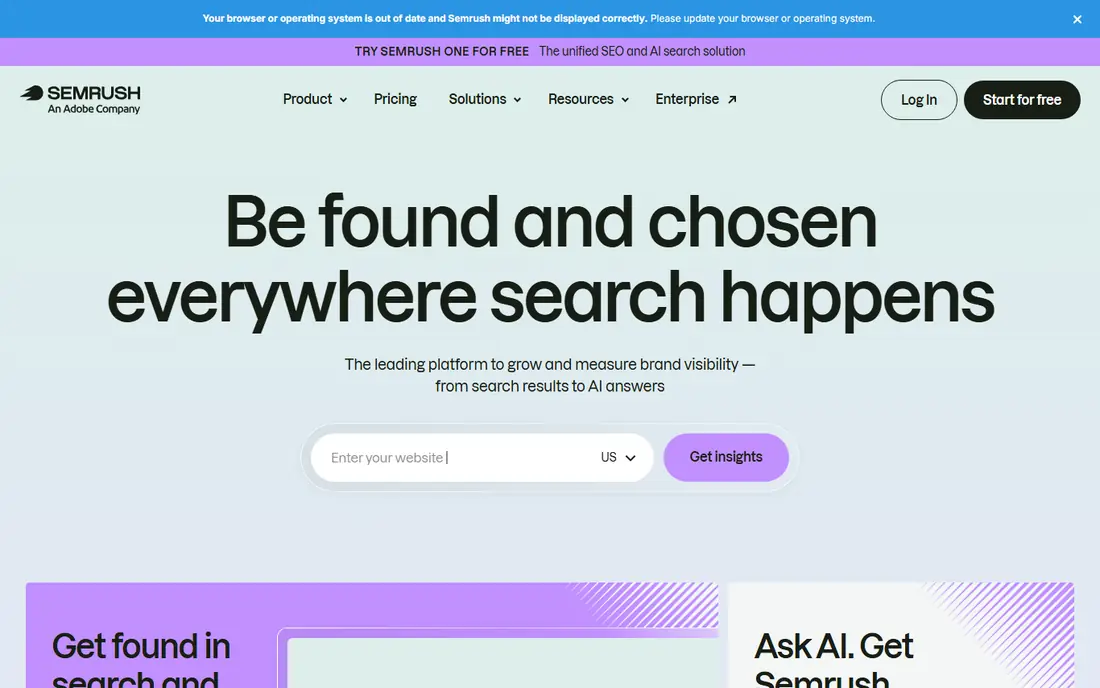
Semrush tracks keyword rankings daily, audits a site for technical issues, checks backlinks, and reports on competitors, all in one account. Its rank tracker covers city and region targeting, SERP features, and, on recent plans, AI visibility in tools such as ChatGPT and Google AI Overviews. For an agency or a growing marketing team, that breadth means fewer separate subscriptions and one reporting flow for clients.
The entry plan starts around $139 per month in recent public comparisons, which is steep for a hobby site or a single local business. The interface also packs a lot in, so new users should start with rank tracking and site audit before exploring content and paid search tools. If you want one tool for SEO, content, and ads, Semrush is the most complete pick on this list.
- Daily rank tracking
- Site audit and content tools
- AI visibility tracking
- Entry price is high for a single site
- Full feature set takes time to learn
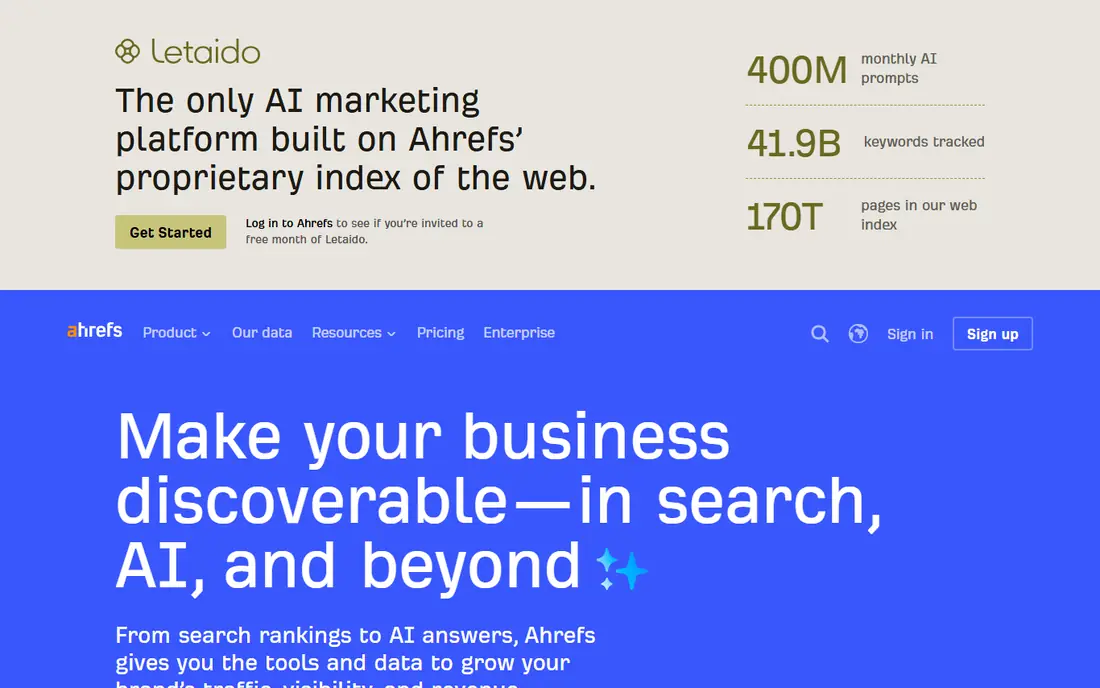
Ahrefs is best known for its backlink database, which helps SEOs see who links to a site, which pages earn links, and how competitors build authority. Its rank tracker, keyword explorer, and site audit tools are also strong, and Brand Radar tracks mentions in AI answers on some plans. Free Ahrefs Webmaster Tools give owners of a verified site limited Site Explorer and Site Audit data at no cost, which is useful for a first check.
Rank tracking frequency depends on the plan, with some plans updating weekly unless a daily add-on is used, so agencies that need daily client reporting should confirm the plan details. Pricing is also plan and credit based, so model keyword and report volume before buying. For link building and competitor research, Ahrefs remains the tool many SEOs check first.
- Large backlink index
- Strong competitor research
- Free Webmaster Tools for owned sites
- Rank updates can be weekly on some plans
- Pricing varies by plan and credits
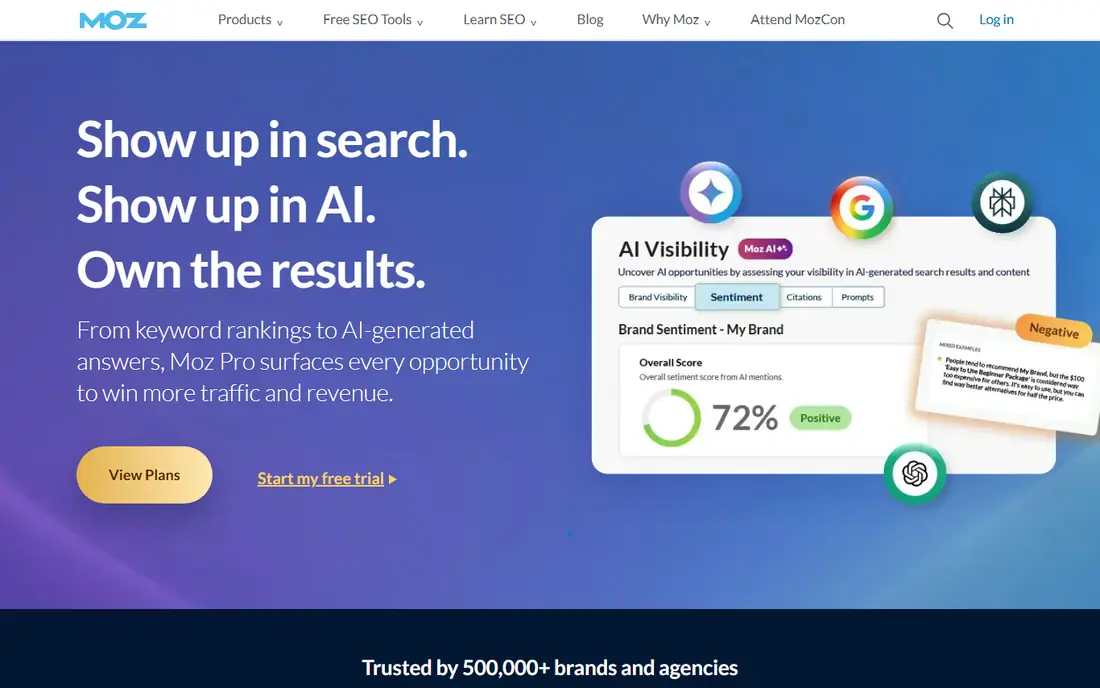
Moz Pro offers rank tracking, keyword research, site audits, and link data in a cleaner interface than the largest suites, which helps small teams get started without a long training period. Its Domain Authority and Page Authority scores are widely used as shorthand for site strength, even though they are Moz metrics rather than Google scores. A free trial lets a team test rank tracking and audits on its own sites before paying.
The trade-offs are update frequency and database size, since Moz rank tracking has often been weekly and its link index is smaller than Ahrefs. Small teams with one to three sites will rarely notice those limits, while large agencies may. For a beginner team that wants a guided, simpler SEO suite, Moz Pro is a sensible start.
- Beginner-friendly interface
- Domain authority metrics
- Keyword and link tools in one place
- Rank updates can be weekly
- Database is smaller than the largest rivals
SE Ranking combines daily rank tracking, site audits, keyword research, backlink checks, and white-label reporting at a lower price than the largest suites. Agencies like it because client reports can carry their own branding without an enterprise tier, and local tracking covers city-level positions that matter for service businesses. Recent comparisons put its entry price in the $39 to $65 per month range depending on plan and billing, so check the current vendor page for the exact tier.
Backlink depth is the main gap versus Ahrefs, so link-heavy teams may pair SE Ranking with a dedicated link tool. The interface also takes a day or two to learn, since many tools sit in one account. For a small agency or a multi-site owner who needs daily ranks and client reports on a budget, SE Ranking offers strong value.
- Daily rank tracking
- White-label reports on all plans
- Broad SERP feature coverage
- Backlink data is thinner than Ahrefs
- Interface can feel dense at first
Google Search Console is the free baseline every site owner should use, since it shows how Google sees a site, which queries bring clicks, average position, indexing errors, and mobile usability issues. It does not track competitors or show a simple daily rank for a chosen keyword list, but its first-party data is the closest check against what paid tools estimate. It also alerts owners to manual actions, security issues, and pages that Google cannot index.
Paid tools estimate rankings from their own crawls, while Search Console reports actual impressions and clicks, so the two often differ and both are useful. Use Search Console to confirm whether a ranking change actually changed traffic, and use a paid tracker for competitor and local detail. No SEO monitoring setup is complete without it, and it costs nothing.
- Free and direct from Google
- Shows queries, clicks, and indexing status
- No keyword cap for owned sites
- No competitor data
- No daily rank tracking in the same way as paid tools
- Data is averaged over days
Nightwatch is a dedicated rank tracker that focuses on accuracy, local granularity, and newer AI visibility reporting. It updates daily, tracks rankings by country, city, and ZIP code for local SEO, and reports on mentions in AI search surfaces alongside traditional positions. Reporting and Looker Studio links help agencies share results with clients without building custom sheets.
It is not a full replacement for an all-in-one suite, since content, PPC, and deep backlink research sit elsewhere. Teams that already use a separate audit or link tool will feel that gap less. For local SEO and for teams that want to watch AI visibility without paying for a full suite, Nightwatch is a focused, affordable pick.
- Daily updates
- Local tracking to city and ZIP level
- AI visibility reports
- Smaller all-in-one suite than Semrush
- Backlink tools are limited
AccuRanker is built for agencies and in-house teams that need accurate, on-demand rank data rather than waiting for the next scheduled crawl. Users can refresh a keyword when a page changes or a client asks for a fresh check, and local tracking covers city-level positions. White-label reports and integrations help agencies present results cleanly, and the tool focuses on doing rank tracking well rather than covering every SEO task.
The entry price is higher than budget trackers such as Mangools or Nightwatch, and it does not replace a site audit or backlink suite. Teams that report to many clients and need fresh data on demand will value that focus. For a single site with a small keyword list, a cheaper tracker may be enough.
- Daily plus on-demand updates
- Strong local tracking
- White-label reporting
- Higher entry price than budget trackers
- Mainly a rank tool, not a full suite
Mangools SERPWatcher, part of the Mangools suite, tracks daily rankings with a simple visibility score and a clean interface that freelancers and small site owners can learn in an afternoon. It pairs with KWFinder for keyword research, SERPChecker for search result analysis, and LinkMiner for basic link checks, so a solo SEO can cover the basics in one low-cost suite. Recent comparisons put the entry price around $29 per month.
Keyword limits on the entry plan are modest, and large agencies will outgrow it quickly. Reporting is also simpler than agency-focused tools. For a freelancer, blogger, or small business owner who wants daily ranks without a steep learning curve or a large bill, SERPWatcher is an easy recommendation.
- Clean, simple interface
- Daily updates
- Low entry price
- Smaller keyword limits on entry plans
- Less depth for large agencies
How we picked these
We compared official pricing and feature pages, recent public tool comparisons, and current product availability to shortlist tools that actively track rankings, site health, or search visibility in 2026. We included all-in-one suites, dedicated rank trackers, and the free Google baseline, and we set aside tools that only do keyword research or content writing without monitoring. Prices shown reflect vendor pages and recent comparisons, with See website used where pricing varies by plan, credits, or billing term.
How to set up SEO monitoring that actually helps
Start with Google Search Console and a short keyword list tied to pages that matter, such as service pages, product pages, and key blog posts. Add a rank tracker for competitor and local detail, and set a weekly review rhythm instead of checking ranks every hour. Track traffic and conversions beside positions, since a higher rank that brings no clicks, often because of AI Overviews or ads, is not a win on its own. Fix technical errors from site audits in order of impact, starting with indexing, page speed, and broken links. Finally, keep a change log, so a ranking shift can be linked to a page edit, a site migration, or a Google update.
Metrics worth watching each week
Watch average position and clicks in Search Console, tracked keyword movement in your rank tool, indexed page count, core site errors, and new or lost backlinks. Add AI visibility mentions if your tool supports them, since AI answers now shape clicks for many informational queries. A short weekly note on what changed and why beats a long monthly report that no one reads.
FAQ
What is the best SEO monitoring tool?
Semrush is the broadest all-in-one choice, Ahrefs leads for backlinks and competitor research, and Moz Pro suits beginners. For rank tracking alone, SE Ranking, Nightwatch, and Mangools offer strong value, while Google Search Console is the free baseline every site needs.
Is Google Search Console enough for SEO monitoring?
It is essential but not complete on its own. Search Console shows first-party traffic, queries, and indexing data, but it does not track competitors, local ranks in detail, or backlinks. Pair it with a paid rank tracker for a fuller picture.
How often should rankings be checked?
Daily tracking helps agencies and sites that change pages often, while weekly checks suit most small sites. Avoid reacting to single-day moves, since rankings vary by location, device, and search features, and trends over weeks matter more.
What is AI visibility tracking?
AI visibility tracking shows whether a brand or page is cited in AI answers from tools such as ChatGPT, Perplexity, and Google AI Overviews. It matters because AI answers can reduce clicks even when a traditional ranking stays high.
How much should a small business spend on SEO software?
Most small businesses are well served in the $29 to $139 per month range, depending on keyword count and reporting needs. Start low, with Search Console plus one tracker, and upgrade only when keyword caps or client reporting limits are hit.
Do I need both Semrush and Ahrefs?
Almost certainly not for most teams, since their core features overlap heavily. Choose Semrush for breadth across SEO, content, and ads, or Ahrefs for depth in backlinks and competitor research, and add a cheaper tracker only if daily local ranks are a separate need.