Best SEO Keyword Tracking Software in 2026: 8 Tools Compared
Our guide to the best seo keyword tracking software compares rank tracking, keyword data and pricing so you can follow your rankings with confidence today.

- Editor's choice
 Semrush
All-in-one SEO teams
Starts at$139.95 per monthVisit semrush.comFull review - Great alternative
 Ahrefs
Backlink and keyword depth
Starts at$129 per monthVisit ahrefs.comFull review - Also consider
 SE Ranking
Agencies and freelancers
Starts atSee websiteVisit seranking.comFull review
TL;DR:
- Semrush and Ahrefs lead on data depth, while AccuRanker leads on pure tracking speed and clarity.
- Daily updates matter for competitive pages, but weekly tracking is often enough for stable, low-competition sites.
- Check tracked keyword limits before you buy, since that limit usually decides the real monthly cost.
- Local and mobile rankings can differ sharply from desktop national rankings, so track the view your customers actually use.
Quick comparison
| Tool | Best for | Starts at | Free plan? | |
|---|---|---|---|---|
| Semrush | All-in-one SEO teams | $139.95 per month | Free trial | Visit |
| Ahrefs | Backlink and keyword depth | $129 per month | Free trial | Visit |
| SE Ranking | Agencies and freelancers | See website | Free trial | Visit |
 Moz Pro | Beginners and small teams | $99 per month | Free trial | Visit |
 Mangools | Bloggers and small sites | See website | Free trial | Visit |
 Ubersuggest | Budget-conscious site owners | See website | Yes | Visit |
 Serpstat | Mid-size teams wanting one suite | See website | Free trial | Visit |
 AccuRanker | Rank tracking specialists | See website | Free trial | Visit |
The best seo keyword tracking software
We compared official feature pages, pricing pages and public documentation to put this list together. Each option below is a real product that is available now, and we note where pricing is quoted rather than published.

For many buyers, this is the first option worth a close look. It fits teams that want research, tracking and audits together rather than buying three separate tools. Its main strength is daily rank tracking paired with a large keyword database, site audits and competitor reports in one account, which is the reason it appears here. Pricing and plan details are taken from the vendor site where published, and we mark quoted pricing as See website so you can confirm the figure for your own situation before you commit.
The honest catch is the entry plan caps tracked keywords, so growing sites may need a higher tier sooner than expected. That trade-off does not make it a poor choice, but it does mean you should check the fit against your own needs, especially around support, limits and renewal terms. If those points line up, it can be a practical and dependable pick.
- Daily rank tracking
- Large keyword database
- Competitor tracking
- Price rises fast for larger limits
- Interface can feel busy for beginners

This one suits a different kind of buyer, so read it on its own terms. It fits SEO professionals who value data depth and competitor analysis above a low entry price. Its main strength is deep keyword and backlink data that many professionals treat as a benchmark for research quality, which is the reason it appears here. Pricing and plan details are taken from the vendor site where published, and we mark quoted pricing as See website so you can confirm the figure for your own situation before you commit.
The honest catch is rank tracking updates and credit limits need attention on lower plans, so check update frequency before you buy. That trade-off does not make it a poor choice, but it does mean you should check the fit against your own needs, especially around support, limits and renewal terms. If those points line up, it can be a practical and dependable pick.
- Deep keyword and backlink data
- Rank tracking
- Content gap tools
- Weekly rank updates on lower plans unless upgraded
- Credit limits apply
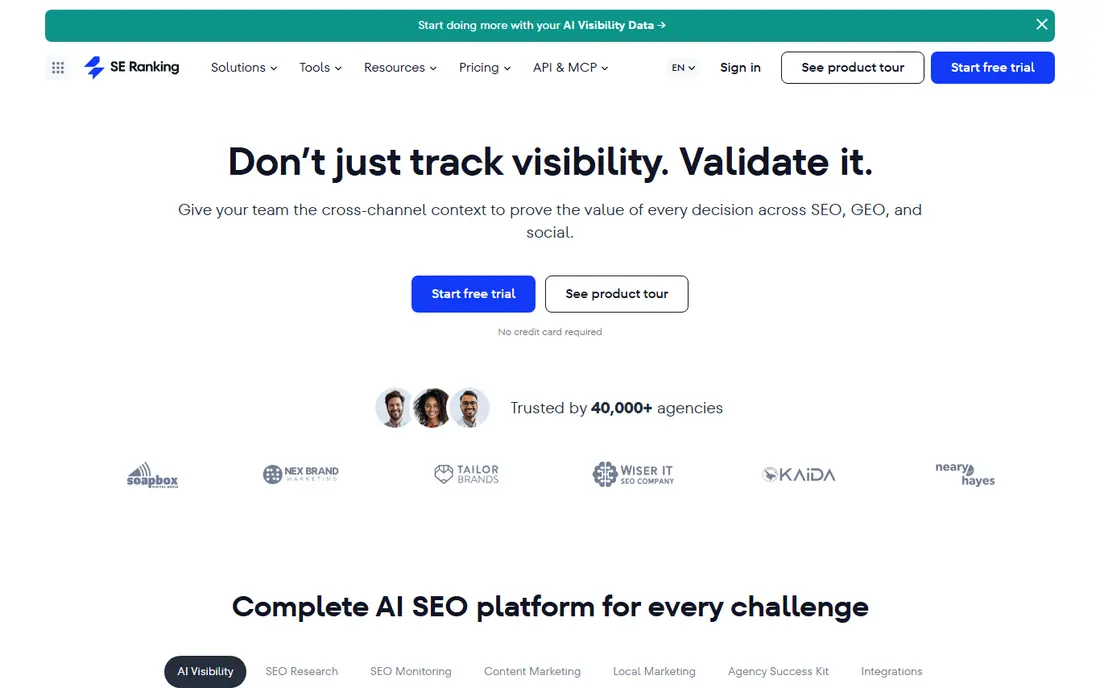
If the first options feel too broad, this narrower choice may fit better. It fits agencies and freelancers who report rankings to clients every month. Its main strength is flexible rank tracking with white-label client reports and local search tracking, which is the reason it appears here. Pricing and plan details are taken from the vendor site where published, and we mark quoted pricing as See website so you can confirm the figure for your own situation before you commit.
The honest catch is report setup takes time to get right, and some advanced tools require a higher tier. That trade-off does not make it a poor choice, but it does mean you should check the fit against your own needs, especially around support, limits and renewal terms. If those points line up, it can be a practical and dependable pick.
- Flexible rank tracking
- White-label reports
- Local tracking
- Some advanced features sit on higher tiers
- Learning curve for reporting setup
This option earns its place through a clear strength, not through size alone. It fits small teams that want dependable tracking without a steep learning curve. Its main strength is clear rank tracking and familiar authority metrics in a layout that beginners can follow, which is the reason it appears here. Pricing and plan details are taken from the vendor site where published, and we mark quoted pricing as See website so you can confirm the figure for your own situation before you commit.
The honest catch is entry limits may feel tight for sites tracking many keywords across many locations. That trade-off does not make it a poor choice, but it does mean you should check the fit against your own needs, especially around support, limits and renewal terms. If those points line up, it can be a practical and dependable pick.
- Clear rank tracking
- Domain Authority metrics
- Site crawl tools
- Keyword limits are modest on entry plans
- Database is smaller than the largest rivals
Consider this one when budget or simplicity matters more than extra features. It fits bloggers and small sites that want clarity over sheer data volume. Its main strength is a clean, friendly set of keyword tools that keeps research and rank tracking simple, which is the reason it appears here. Pricing and plan details are taken from the vendor site where published, and we mark quoted pricing as See website so you can confirm the figure for your own situation before you commit.
The honest catch is its database is smaller than the biggest suites, so niche or local terms may show thinner data. That trade-off does not make it a poor choice, but it does mean you should check the fit against your own needs, especially around support, limits and renewal terms. If those points line up, it can be a practical and dependable pick.
- Clean keyword research
- Simple rank tracker
- Friendly interface
- Smaller database than Semrush or Ahrefs
- Fewer enterprise features
This is a solid middle option, with a few trade-offs worth knowing before you pay. It fits solo owners who need direction on a budget and can accept simpler data. Its main strength is a low-cost route into keyword ideas and basic rank tracking for a single site, which is the reason it appears here. Pricing and plan details are taken from the vendor site where published, and we mark quoted pricing as See website so you can confirm the figure for your own situation before you commit.
The honest catch is data depth and historical coverage fall short of premium suites, which matters for competitive niches. That trade-off does not make it a poor choice, but it does mean you should check the fit against your own needs, especially around support, limits and renewal terms. If those points line up, it can be a practical and dependable pick.
- Low entry price
- Keyword ideas
- Rank tracking basics
- Data depth is thinner than premium suites
- Some features feel basic
Buyers who want depth in one area should give this one serious attention. It fits mid-size teams that want one suite rather than several single-purpose tools. Its main strength is rank tracking combined with site audits, research and competitor data at a mid-market price, which is the reason it appears here. Pricing and plan details are taken from the vendor site where published, and we mark quoted pricing as See website so you can confirm the figure for your own situation before you commit.
The honest catch is the interface takes a little learning, and the best value appears on higher tiers. That trade-off does not make it a poor choice, but it does mean you should check the fit against your own needs, especially around support, limits and renewal terms. If those points line up, it can be a practical and dependable pick.
- Rank tracking plus audit and research
- Competitor data
- API access
- Interface takes time to learn
- Support quality varies by plan
This final pick rounds out the list for a specific use case that the bigger names cover less well. It fits teams whose main need is accurate daily rankings, not a full SEO suite. Its main strength is fast, focused rank tracking with local and mobile breakdowns and clear reporting, which is the reason it appears here. Pricing and plan details are taken from the vendor site where published, and we mark quoted pricing as See website so you can confirm the figure for your own situation before you commit.
The honest catch is it is a tracker first, so you will still need a separate tool for deep keyword research. That trade-off does not make it a poor choice, but it does mean you should check the fit against your own needs, especially around support, limits and renewal terms. If those points line up, it can be a practical and dependable pick.
- Fast daily rank updates
- Local and mobile tracking
- Clear reporting
- Narrower than all-in-one suites
- No full keyword research database
How we picked these
We started with products that are currently offered by their vendors and that clearly fit the topic, then we compared official feature pages, pricing pages and public help documentation. We left out products with no working official homepage, products that only partly fit the topic, and products where pricing or core features could not be checked at all. Where a vendor quotes pricing instead of publishing it, we say so rather than guessing a number.
How to pick SEO keyword tracking tools that match your site
Start with the number of keywords you truly need to track, not the number you could track. A blog with 50 target pages needs a very different plan from an agency tracking thousands of client keywords. Next, decide how often rankings must update and whether local, mobile and desktop views all matter. Then test reporting: can you see wins, losses and competitors at a glance, and can you share a clean report without manual work? Finally, trial the tool on your own site for a few weeks, since data freshness and ease of use only show up with real keywords.
FAQ
What are the best seo tools for keyword tracking for beginners?
Mangools and Moz Pro are strong beginner options because their tracking views are clear and their research tools are easy to follow. Semrush and Ahrefs add more depth, but beginners may pay for data they rarely use in the first months.
What are the best seo keyword tracking tools for agencies?
SE Ranking and Semrush suit agencies because they support many projects, client reporting and white-label options. AccuRanker also works well when an agency wants fast daily tracking as a dedicated layer.
How often should rank tracking update?
Daily updates help when you publish often or compete in fast-moving niches, since you can link changes to specific edits. Weekly updates are fine for stable sites, and they keep costs lower.
Do I need a separate keyword research tool?
Not always. All-in-one suites include research, while dedicated trackers like AccuRanker focus on rankings alone. If research matters as much as tracking, choose a suite; if rankings are the job, a tracker may be cheaper.
Can free tools track keywords well?
Google Search Console shows real ranking data for your own site at no cost, but it lacks competitor tracking and clean historical reports. Paid tools add those views, plus alerts and local breakdowns.