Best Search Visibility Software in 2026: 8 Tools Compared
Compare the best search visibility software in 2026, from Semrush and Ahrefs to Moz, SE Ranking, and BrightEdge, with prices, features, and team guidance.

- Editor's choice
 Semrush
All round search and AI visibility
Starts at$139.95 per monthVisit semrush.comFull review - Great alternative
 Ahrefs
Backlinks and keyword research
Starts at$129 per monthVisit ahrefs.comFull review - Also consider
 Moz Pro
Clear rank tracking for small teams
Starts atSee websiteVisit moz.comFull review
TL;DR:
- Semrush is the broadest all round suite, covering search, AI visibility, content, and paid search in one place.
- Ahrefs leads for backlink data and keyword research depth, with a strong focus on organic search.
- SE Ranking and Moz Pro suit smaller teams that want clear rank tracking without enterprise pricing.
- BrightEdge and Conductor fit larger companies that need enterprise reporting, forecasting, and team workflows.
Quick comparison
| Tool | Best for | Starts at | Free plan? | |
|---|---|---|---|---|
| Semrush | All round search and AI visibility | $139.95 per month | Yes | Visit |
| Ahrefs | Backlinks and keyword research | $129 per month | Yes | Visit |
| Moz Pro | Clear rank tracking for small teams | See website | Yes | Visit |
 SE Ranking | Affordable rank and site tracking | See website | Free trial | Visit |
 BrightEdge | Enterprise search performance | See website | No | Visit |
 Conductor | Enterprise content and search teams | See website | No | Visit |
 Similarweb | Market and competitor traffic views | See website | Yes | Visit |
 SpyFu | Competitor keywords and paid search | See website | Yes | Visit |
The best search visibility software
Search visibility software shows where your site appears in search, which keywords drive traffic, and what competitors are doing. These eight cover rank tracking, backlinks, technical checks, and newer AI search visibility, so match the tool to your team size and budget.

Semrush is our pick for teams that want one tool for most search work. It tracks rankings, audits a site, researches keywords, checks backlinks, and now includes AI visibility tracking for brands appearing in AI answers. The free plan allows limited reports each day, which is enough to test the workflow before paying.
The main drawback is cost and complexity. Entry pricing is already at a professional level, and add ons for trends, local search, or extra users can push the monthly bill higher. Small sites with a single focus may do better with a narrower tool. For agencies and growing companies that use search daily, Semrush breadth is hard to match.
- Broad suite for SEO, AI visibility, content, and paid search
- Large keyword database
- Useful competitor reports
- Price rises quickly with add ons
- Interface can feel large for beginners
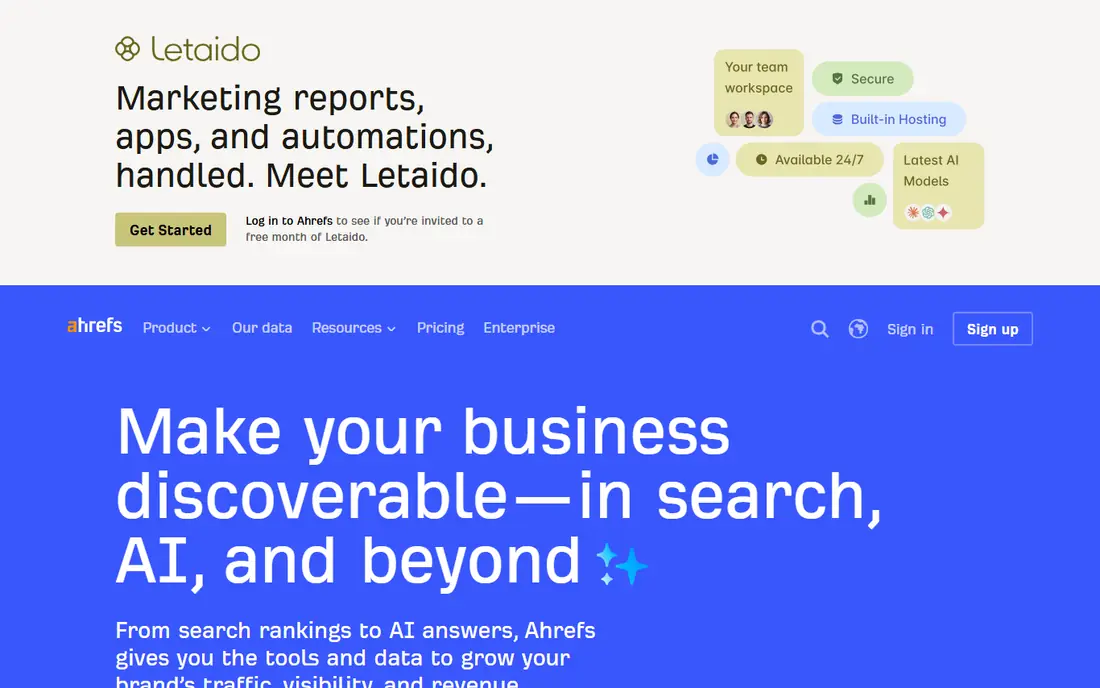
Ahrefs is the first tool many SEO specialists open for backlink and keyword work. Site Explorer shows who links to a site, which pages earn links, and where a competitor is gaining ground, while Keywords Explorer gives search volume, difficulty, and click estimates. Free Webmaster Tools give site owners limited data for their own verified sites, which helps small sites start without paying.
Paid plans use credits for some reports, so heavy teams need to watch limits and user seats. Ahrefs also focuses more on organic search than on paid search or social tools, which is a plus for pure SEO teams and a gap for teams that want one suite for everything. For link building and keyword research, it remains a leader.
- Strong backlink index and Site Explorer
- Clear keyword data
- Free Webmaster Tools for your own sites
- Credits and limits can surprise new users
- No free trial on paid plans in recent listings
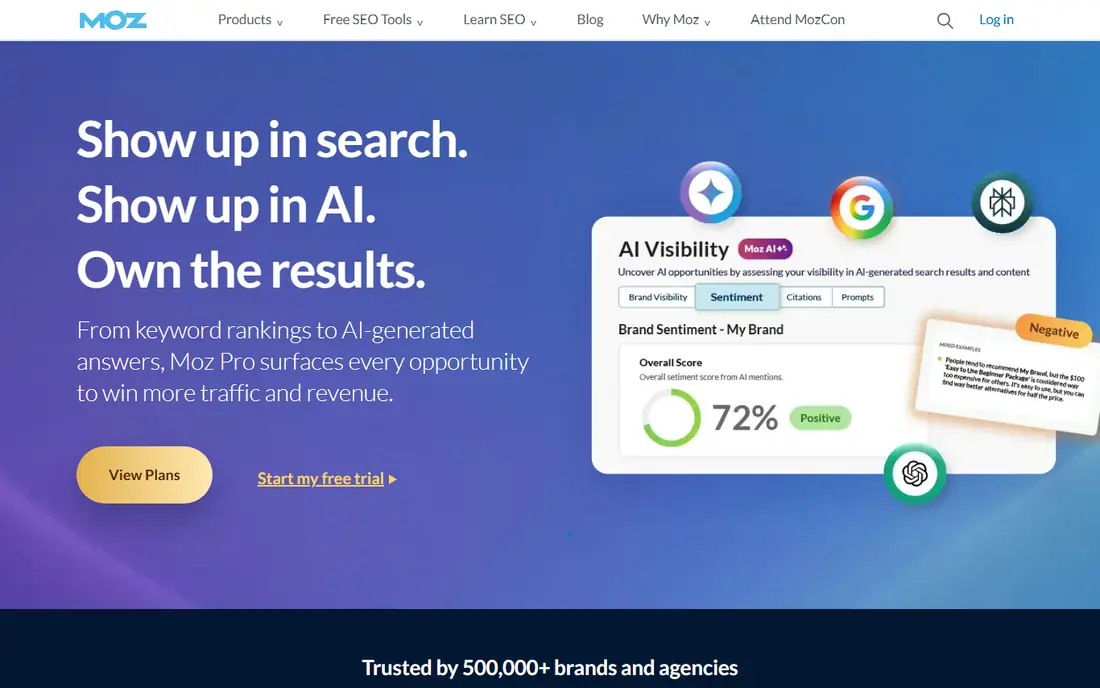
Moz Pro suits small teams that want clear answers without a steep learning curve. Rank tracking, site audits, and keyword research are presented in plain reports, and Moz learning guides help new users understand what to fix first. For local businesses and content teams, that clarity matters more than having the largest database.
Larger SEO teams may find Moz link data and international coverage less deep than Ahrefs or Semrush. If your work is mostly US focused, with a modest set of keywords and a need for clean reporting, Moz Pro is a solid, less overwhelming choice. Check the current plan limits, since tracked keywords and crawled pages vary by tier.
- Easy to read rank and site reports
- Helpful learning resources
- Useful for local and small business SEO
- Keyword database is smaller than Semrush or Ahrefs
- Advanced link data is less deep
SE Ranking is a practical pick for freelancers, small agencies, and startups that need reliable rank tracking without enterprise pricing. Plans scale by tracked keywords, so a small site pays for what it tracks, not for a large suite it will not use. Site audits, keyword research, and competitor checks cover the core SEO workflow in one dashboard.
Backlink depth is the main trade off. SE Ranking can show links and referrers, but teams that build links daily will still want Ahrefs for deeper analysis. For rank tracking, reporting, and site health, SE Ranking offers strong value, and the trial lets you test accuracy on your own keywords before committing.
- Good value for rank tracking
- Clear site audits and competitor views
- Flexible plans by keyword count
- Backlink data is less extensive than Ahrefs
- AI visibility features are newer and still developing
BrightEdge is built for large companies that manage thousands of pages and need to prove search impact to leadership. It combines rank tracking, content recommendations, forecasting, and reporting in a platform designed for teams, workflows, and approvals. Enterprises with complex sites, multiple brands, or regulated content often value its structure.
Small businesses should look elsewhere. Pricing is custom, implementation takes time, and the feature set is far larger than a small site needs. For enterprise teams that already spend heavily on search and content, BrightEdge can bring order to a large, scattered workflow.
- Enterprise reporting and forecasting
- Strong for large sites and teams
- AI search and content insights
- Pricing is custom and usually high
- Onboarding takes time
- Overkill for small sites
Conductor focuses on helping content and search teams work together. It tracks visibility, shows which content drives results, and gives writers and strategists data they can act on without needing deep technical SEO skills. Large publishers, retailers, and service companies use it to connect content plans to search performance.
Like BrightEdge, Conductor is priced for companies, not solo bloggers. Implementation and training matter, and a small team may get faster value from Semrush, Ahrefs, or SE Ranking. For organisations where content is a major investment, Conductor reporting can justify and guide that spend.
- Strong content and search reporting for teams
- Useful insights for writers and strategists
- Enterprise integrations
- Custom pricing
- Learning curve for new users
- Less suited to solo site owners
Similarweb answers a different question from rank trackers. Instead of only showing where you rank, it estimates how much traffic competitors get, where it comes from, and which channels matter in your market. That view helps with market research, partnership decisions, and understanding whether search is even the main channel for a rival.
Treat its numbers as estimates, not as a replacement for Google Analytics or Search Console. Free data gives a useful overview, while detailed competitor breakdowns need a paid plan. Pair Similarweb with a rank tracker for the best picture: Similarweb for the market, and Semrush or Ahrefs for your own rankings and keywords.
- Useful traffic and market estimates for competitors
- Good for industry research
- Broad web data beyond search
- Traffic figures are estimates, not exact analytics
- Detailed data needs a paid plan
SpyFu is best for competitor research, especially when paid search matters. You can see which keywords a rival buys, which ads they run, and how their organic keywords have changed over time. That history helps small businesses find gaps, plan ad budgets, and avoid bidding blindly on expensive terms.
It is not a full replacement for Semrush or Ahrefs if you need deep site audits, backlink analysis, and large scale rank tracking. Use SpyFu as a focused competitor tool, or as a lower cost starting point for a business that mainly needs to understand rivals. The free tier gives a useful taste of its keyword and ad data.
- Clear competitor keyword and ad history
- Useful for paid search research
- Unlimited searches on some plans
- Rank tracking and site audit tools are lighter than full suites
- Data depth varies by market
How we picked these
We compared official feature pages, pricing pages, and product documentation for search visibility tools widely used in the United States in October 2026. We looked for rank tracking quality, keyword and backlink data, site audit tools, reporting, and newer AI visibility features. We also balanced enterprise platforms with tools for small teams, so readers can match price and depth to their actual search workload.
How to choose search visibility software
Start with the job you do most often. If you track rankings and fix site issues, SE Ranking or Moz Pro may be enough. If you build links and research keywords daily, Ahrefs is stronger. If you need search, content, paid, and AI visibility in one place, Semrush is the broader choice. Enterprise teams should shortlist BrightEdge and Conductor and request a demo on their own data.
Check limits before you buy: tracked keywords, crawled pages, users, and report credits all affect the real cost. Connect Google Search Console and Analytics where offered, since first party data improves accuracy. Finally, set a review date after three months. A tool that no one opens is wasted spend, even if its feature list looked impressive at signup.
FAQ
What is the best search visibility tool for small businesses?
SE Ranking and Moz Pro are strong small business picks, thanks to clear rank tracking and lower entry costs than enterprise platforms. Semrush free limited reports can also help a small site test the workflow before paying.
What is the best tool for search visibility and AI search?
Semrush is the broadest choice for combined search and AI visibility, with AI tracking alongside classic SEO tools. Ahrefs also offers AI visibility features, including Brand Radar, but check whether it is included in your plan or sold as an add on.
Is Semrush or Ahrefs better for backlinks?
Ahrefs is generally stronger for backlink depth and link research, while Semrush offers a broader suite that includes paid search, content, and social tools. Many agencies use Ahrefs for links and Semrush for overall reporting.
Do I need paid search visibility software if I use Google Search Console?
Search Console is essential and free, but it only shows your own site data. Paid tools add competitor keywords, backlink data, rank history, and site audits that Search Console does not provide, which is why most growing sites use both.
How many keywords should I track?
Track the keywords that drive business, not every related term. Most small sites do well with 50 to 200 tracked keywords across core services, locations, and key pages, while larger sites may need thousands across categories and regions.
Can search visibility software improve rankings by itself?
No, software shows what to fix and where you stand, but rankings improve when you fix technical issues, publish useful content, and earn quality links. Use the tool to prioritise work, then measure the result after changes go live.