Best Sales Intelligence Platforms in 2026: 10 Platforms Compared
We compared the best sales intelligence platforms in 2026 on contact data, buying signals, integrations, and pricing, so sales teams can pick with confidence.

- Editor's choice
 ZoomInfo
Large sales teams
Starts atSee websiteVisit zoominfo.comFull review - Great alternative
 Apollo
Startups and midsize sales teams
Starts atSee websiteVisit apollo.ioFull review - Also consider
 Cognism
Teams focused on Europe and compliance
Starts atSee websiteVisit cognism.comFull review
TL;DR:
- Contact accuracy matters more than list size, since bad emails waste time and harm sender reputation.
- Buying signals help teams focus on accounts that are hiring, raising funds, or changing tech, not only on firm size.
- CRM and outreach integrations matter, since data that stays outside the workflow rarely gets used.
- Pricing often depends on seats, credits, and data regions, so compare total cost for your team size.
Quick comparison
| Tool | Best for | Starts at | Free plan? | |
|---|---|---|---|---|
| ZoomInfo | Large sales teams | See website | Free trial | Visit |
| Apollo | Startups and midsize sales teams | See website | Free trial | Visit |
| Cognism | Teams focused on Europe and compliance | See website | Free trial | Visit |
 Lusha | Reps needing quick contact details | See website | Free trial | Visit |
 Clay | Teams enriching and scoring leads | See website | Free trial | Visit |
 6sense | B2B teams using account intent | See website | Free trial | Visit |
 LinkedIn Sales Navigator | Teams prospecting on LinkedIn | See website | Free trial | Visit |
 Crunchbase | Teams tracking funding and growth | See website | Free trial | Visit |
 LeadIQ | Reps capturing leads from LinkedIn | See website | Free trial | Visit |
 RocketReach | Small teams needing email lookup | See website | Free trial | Visit |
The best sales intelligence platforms
We compared current plans, core features, and limits for each option below, and we ordered the list by overall fit for most buyers rather than by brand size alone.
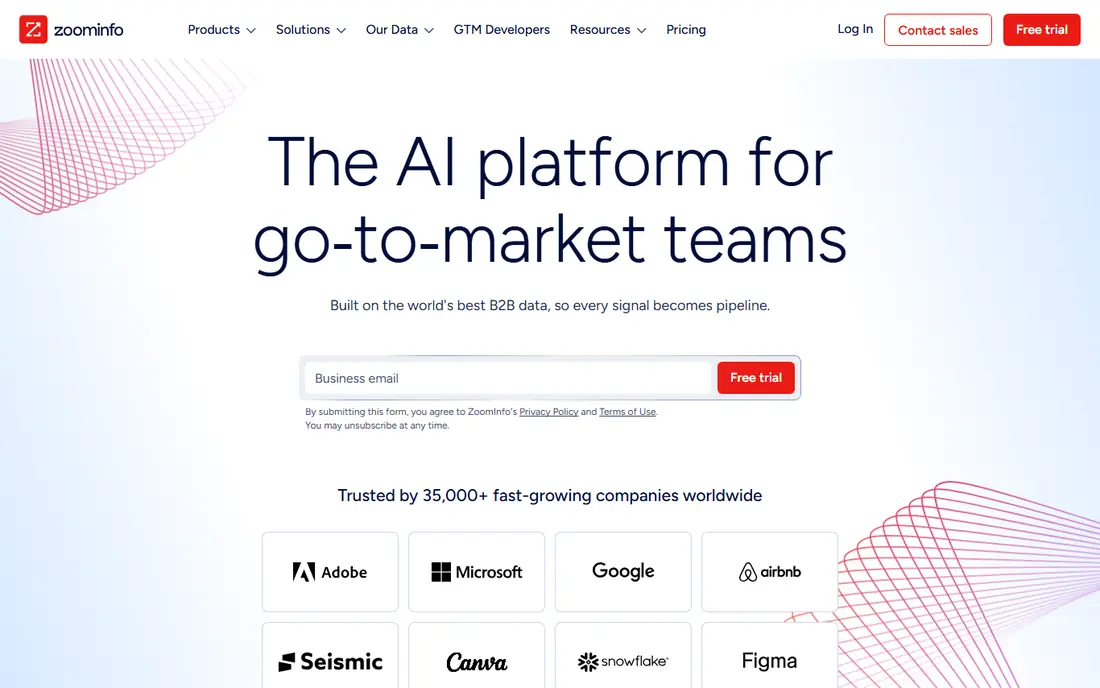
ZoomInfo fits large sales teams that need deep company and contact data. ZoomInfo offers a large business database with firm details, contacts, and buying signals, plus tools to build lists and track intent. That depth helps enterprise teams that prospect across many industries. That clarity makes it easier to judge whether it matches your volume, your channels, and your staffing.
The honest catch is enterprise pricing and a sales-led buying process that can feel heavy for small teams. Before you commit, check whether your required data regions and seats fit the quoted plan, and run a short trial with real work from your own tasks. If that trial feels calm, ZoomInfo is a sensible shortlist pick.
- Large B2B database
- Buying signals
- Strong CRM links
- Enterprise pricing
- Smaller teams may find it costly

Apollo fits startups and midsize teams that want data plus outreach in one tool. Apollo combines a contact database with sequences, so reps can find prospects and start outreach without switching tools. That mix suits smaller teams that need one system for prospecting. That clarity makes it easier to judge whether it matches your volume, your channels, and your staffing.
The honest catch is accuracy that varies by niche and tier limits on some outreach features. Before you commit, check coverage and accuracy for your target industries during a trial, and run a short trial with real work from your own tasks. If that trial feels calm, Apollo is a sensible shortlist pick.
- Database plus sequences and CRM links
- Fair starter tiers
- Data accuracy varies by niche
- Some features need higher tiers
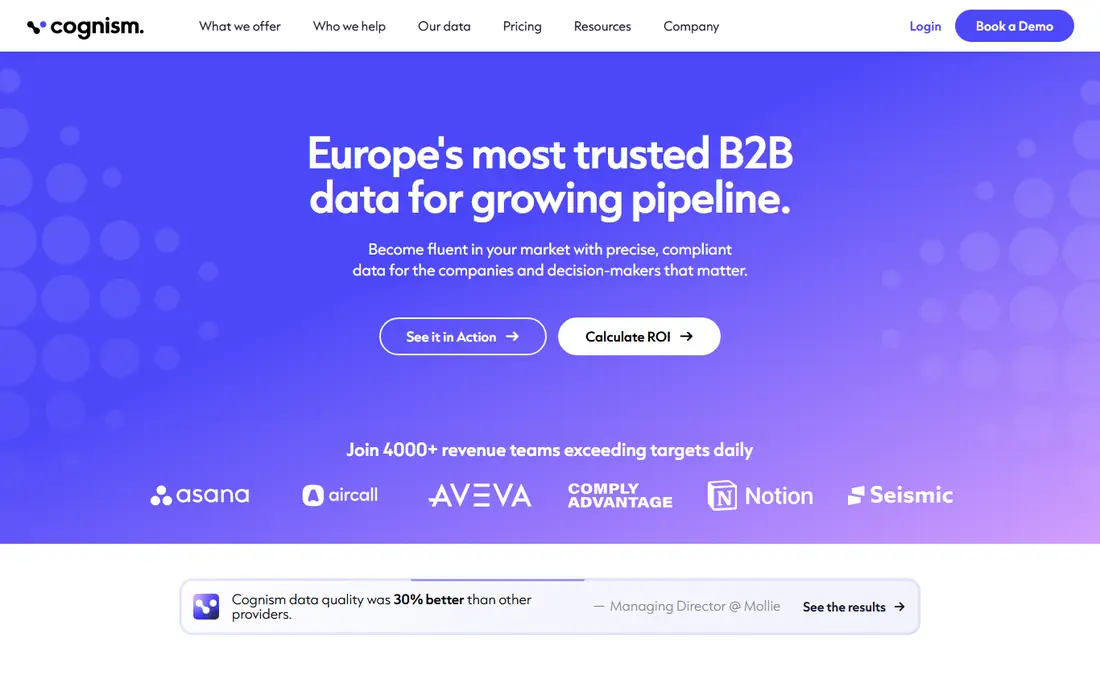
Cognism fits teams that prospect mainly in Europe and need clear compliance steps. Cognism is a strong pick for European prospecting, with verified mobile numbers and a clear focus on data rules. Its intent data helps teams spot accounts that are showing buying activity. That clarity makes it easier to judge whether it matches your volume, your channels, and your staffing.
The honest catch is quote-based pricing that makes quick comparison harder. Before you commit, check which regions and data types are covered in your quote, and run a short trial with real work from your own tasks. If that trial feels calm, Cognism is a sensible shortlist pick.
- Strong European coverage
- Verified mobile data
- Compliance focus
- Pricing is quote-based
- US coverage may be thinner than rivals
Lusha fits reps who need fast contact details while browsing company sites. Lusha works through a browser extension, so reps can pull email and phone details while they research a company. That speed helps teams that prospect account by account. That clarity makes it easier to judge whether it matches your volume, your channels, and your staffing.
The honest catch is credit limits that can bind heavy users, and depth that varies by market. Before you commit, check how many credits your team will use in a typical month, and run a short trial with real work from your own tasks. If that trial feels calm, Lusha is a sensible shortlist pick.
- Simple prospecting extension
- Quick email and phone lookup
- CRM sync
- Credit limits can bind heavy users
- Database depth varies
Clay fits teams that want to enrich, score, and route leads with flexible workflows. Clay lets teams pull data from many sources, enrich records, and build scoring workflows in one workspace. That flexibility suits teams with a clear data model and a need to clean messy lists. That clarity makes it easier to judge whether it matches your volume, your channels, and your staffing.
The honest catch is a learning curve and usage-based costs that need careful setup. Before you commit, check which data sources you will use and how credits are charged, and run a short trial with real work from your own tasks. If that trial feels calm, Clay is a sensible shortlist pick.
- Flexible enrichment from many sources
- Strong workflow builders
- Learning curve
- Costs depend on data sources and usage
6sense fits B2B teams that sell to accounts and want intent-based focus. 6sense focuses on account intent, helping teams see which accounts are researching and prioritize them. That account view suits firms that sell larger deals to a defined list. That clarity makes it easier to judge whether it matches your volume, your channels, and your staffing.
The honest catch is an enterprise focus that can be heavy for small teams, plus setup needs. Before you commit, check whether your CRM data is clean enough to use intent well, and run a short trial with real work from your own tasks. If that trial feels calm, 6sense is a sensible shortlist pick.
- Account intent and predictive tools
- Good advertising links
- Enterprise focus
- Needs solid CRM and marketing setup
LinkedIn Sales Navigator fits teams that prospect mainly through LinkedIn relationships. Sales Navigator gives advanced LinkedIn search, saved leads, and alerts on job changes and posts. That view helps reps who build pipeline through relationships and social research. That clarity makes it easier to judge whether it matches your volume, your channels, and your staffing.
The honest catch is a lack of direct email data by default, so teams often pair it with another tool. Before you commit, check whether your buyers are active on LinkedIn and how InMail limits apply, and run a short trial with real work from your own tasks. If that trial feels calm, LinkedIn Sales Navigator is a sensible shortlist pick.
- Direct LinkedIn search and lead lists
- InMail and alerts
- No direct emails by default
- Value depends on LinkedIn use
Crunchbase fits teams that track funding, growth, and new companies. Crunchbase shines for company research, with funding rounds, growth signals, and leadership changes. That view helps teams find young firms at the right moment. That clarity makes it easier to judge whether it matches your volume, your channels, and your staffing.
The honest catch is thinner contact depth than dedicated prospecting databases. Before you commit, check whether you need company signals, contacts, or both, and run a short trial with real work from your own tasks. If that trial feels calm, Crunchbase is a sensible shortlist pick.
- Funding, growth, and company signals
- Useful account research
- Contact depth is thinner than pure prospecting tools
- Some data needs higher tiers
LeadIQ fits reps who capture leads while browsing LinkedIn and company sites. LeadIQ helps reps capture contact details from LinkedIn and company pages and push them to a CRM. That simple flow suits teams that prospect one account at a time. That clarity makes it easier to judge whether it matches your volume, your channels, and your staffing.
The honest catch is depth that varies by market and credit limits for heavy users. Before you commit, check credit needs and CRM sync for your workflow, and run a short trial with real work from your own tasks. If that trial feels calm, LeadIQ is a sensible shortlist pick.
- Simple capture from LinkedIn and sites
- CRM sync
- Team tools
- Depth varies by market
- Credit limits apply
RocketReach fits small teams that need straightforward email and phone lookup. RocketReach offers a clear lookup tool for emails and phones, with bulk search and API options for larger jobs. That simplicity suits teams that do not need a full sales platform. That clarity makes it easier to judge whether it matches your volume, your channels, and your staffing.
The honest catch is data depth that varies by industry and tier limits on bulk work. Before you commit, check accuracy for your target roles and companies in a trial, and run a short trial with real work from your own tasks. If that trial feels calm, RocketReach is a sensible shortlist pick.
- Simple email and phone lookup
- Bulk options
- API access
- Data depth varies
- Some advanced features need higher tiers
How we picked these
We compared official feature and pricing pages for each platform, and we checked that each product is still sold in 2026. We favored platforms with verified contact data, useful buying signals, and clear CRM links. We did not claim hands-on testing, and we treated accuracy claims with care, since vendors measure accuracy in different ways. Where a current price could not be confirmed, we wrote See website.
How to buy sales data without wasting budget
Test accuracy on your own market
Ask for a trial and check 50 contacts from your real target list, including direct dials and emails. A platform that shines on US tech firms may be thin on your niche or region. Track bounce rates and wrong numbers during the trial, not only the size of the database.
Decide which signals you will act on
Hiring, funding, tech changes, and job moves are useful only if your team has a play to use them. Pick two or three signals, write the follow-up steps, and assign an owner. Without that plan, signal feeds become noise.
Check credits, seats, and compliance
Confirm how credits are used, whether unused credits roll over, and what happens when you export data. Also check regional data rules and opt-out handling, since sales data carries privacy duties. A cheaper plan can cost more if credits run out mid-quarter.
FAQ
What is a sales intelligence platform?
A sales intelligence platform gives sales teams contact details, company facts, and buying signals in one place. It helps reps find the right people, learn about an account, and time outreach better. Most platforms link to a CRM, so the data flows into records and sequences.
Which sales intelligence platform has the best data?
Data quality varies by industry, company size, and region, so the best choice depends on your target market. Test contacts from your own list during a trial, and compare bounce rates and coverage. A platform with a huge database is not helpful if your niche is thin.
Do sales intelligence platforms replace prospecting?
No, they support prospecting by giving better targets and context, but reps still need a clear message and follow-up plan. Data alone does not close deals. Teams that pair good data with a focused play tend to get better results than teams that only buy lists.
How much do sales intelligence platforms cost?
Pricing varies by seats, credits, and features, and some platforms require an annual contract. Check the vendor pricing page for your team size, and ask about credit limits and renewal terms. See website is shown where a current price could not be confirmed.
Are sales intelligence tools compliant with privacy rules?
Reputable vendors explain their data sources, opt-out process, and regional compliance steps. Read those pages before you buy, and check your own duties for email and calls in each region you target. When in doubt, ask the vendor for its compliance documentation.