Best Sales Enablement Software Compared in 2026: 8 Platforms Compared
Our best sales enablement software comparison covers content, coaching and deal tools, with honest pricing notes and picks for teams of every size today.

- Editor's choice
 Seismic
Large enterprise content libraries
Starts atSee websiteVisit seismic.comFull review - Great alternative
 Highspot
Guided selling during live deals
Starts atSee websiteVisit highspot.comFull review - Also consider
 Showpad
Field teams presenting in person
Starts atSee websiteVisit showpad.comFull review
TL;DR:
- Most leading platforms price by quote, so budget for implementation and admin time as well as the seat price.
- Seismic and Highspot suit large teams with big content libraries, while Spekit and HubSpot suit teams that want a faster start.
- Coaching features matter most when managers actually review calls and practice sessions, not just assign courses.
- Our pick for most teams starting out is HubSpot Sales Hub, because it pairs a free tier with a familiar CRM.
Quick comparison
| Tool | Best for | Starts at | Free plan? | |
|---|---|---|---|---|
| Seismic | Large enterprise content libraries | See website | No | Visit |
| Highspot | Guided selling during live deals | See website | No | Visit |
| Showpad | Field teams presenting in person | See website | No | Visit |
 Mindtickle | Onboarding and sales certification | See website | No | Visit |
 Allego | Video coaching for distributed teams | See website | No | Visit |
 Salesloft | Outreach sequences and cadences | See website | No | Visit |
 HubSpot Sales Hub | Small teams on HubSpot CRM | Free | Yes | Visit |
 Spekit | In-workflow guidance for reps | See website | Free trial | Visit |
The best sales enablement software
These eight platforms cover the main jobs in sales enablement: finding the right content, preparing reps, coaching conversations, and seeing what works. We compared official feature pages, pricing pages, and public reviews, and we left out tools that only do one narrow job.
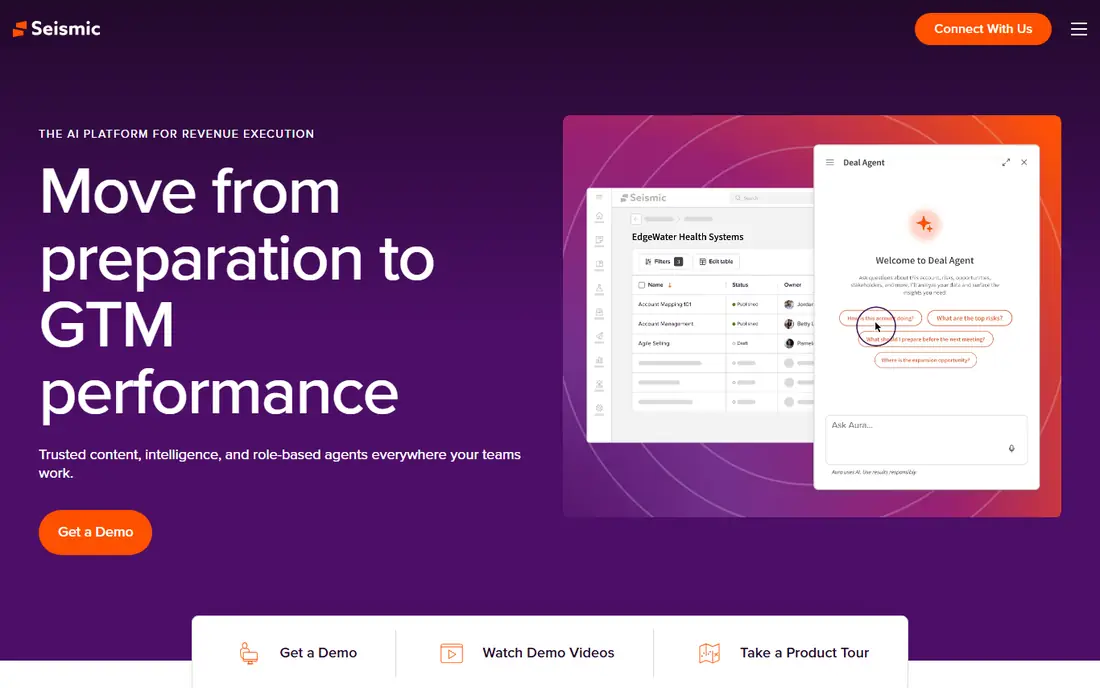
Seismic is built for companies where sales content lives in many places and needs strict control. It helps teams organize decks, one-pagers, and playbooks, then surface the right version at the right stage of a deal. That control matters when regulated teams must prove which version a rep sent.
The trade-off is weight. Smaller teams may find the setup and admin work heavy for what they get in the first months. If your library is small and your main problem is prospecting volume, a lighter tool will serve you better.
- Strong content management and personalization
- Buyer engagement tools
- Broad integrations
- Quote-only pricing
- Implementation can be long for large teams
Highspot, now sold as Highspot by Seismic after the 2026 merger, focuses on what a rep should do next in a live deal. It pairs content with plays, training, and analytics, so managers can see which assets actually get used. For teams with long sales cycles, that link between content and deals is the main draw.
Pricing is not published, and buyers should ask for the full cost including any implementation services. Teams that already use Seismic should ask how the combined product changes their contract before renewing.
- Clear sales plays and guidance
- Strong analytics on content use
- Training built in
- Quote-only pricing
- Can be costly at enterprise scale
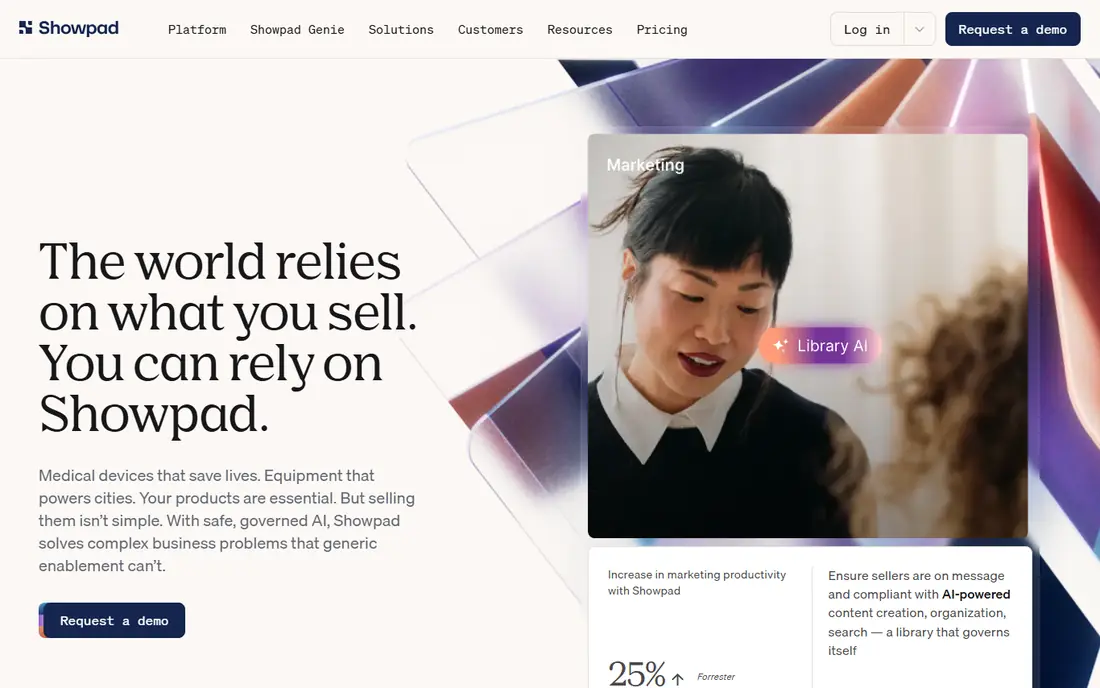
Showpad works well for reps who present face to face or on video calls. Content can be shared as a branded microsite or presentation, and managers can track which pages a buyer viewed. That feedback helps a rep follow up with a relevant next step instead of a generic check-in.
The platform has changed ownership and packaging in recent years, so buyers should confirm which coaching and analytics features sit in their tier. It is a strong content-first pick, but teams that need deep certification may prefer Mindtickle or Allego.
- Strong presentation and sharing tools
- Good offline access for field use
- Coaching add-ons
- Quote-only pricing
- Coaching is an add-on rather than the core
Mindtickle is the coaching-led choice on this list. New hires work through courses, practice with AI role-play, and earn certifications before they take live calls. Managers get readiness scores that show who is ready and who needs more practice, which beats guessing from course completion alone.
The catch is that role-play only helps if managers review results and coach the gaps. Teams without that habit may pay for a training platform they rarely use. Ask for a pilot with one team and a clear readiness target before a company-wide rollout.
- Structured onboarding paths
- AI role-play practice
- Readiness scoring
- Quote-only pricing
- Best value needs regular manager review
Allego leans on video. Reps record pitches, get feedback from managers and peers, and build a library of good examples. For remote teams, that async practice is often more practical than scheduling live role-play for every rep.
Allego also offers conversation intelligence and digital sales rooms, so it can grow beyond coaching. The main risk is price and contract length, so smaller teams should compare it with HubSpot or Spekit before committing to a multi-year deal.
- Video practice and peer feedback
- Mobile access
- Digital sales rooms
- Quote-only pricing
- Contracts are often annual or longer
Salesloft is best understood as sales engagement rather than pure enablement, and that is why it earns a place here. Many teams fail not because content is missing, but because follow-up is inconsistent. Salesloft helps reps run structured sequences across email, calls, and social touches, then track what gets replies.
If your main gap is content governance, look at Seismic or Highspot first. If your main gap is pipeline activity and follow-up discipline, Salesloft is the more direct fix, especially for outbound teams.
- Mature cadence and sequencing tools
- Call and email workflow in one place
- Deal insights
- Quote-only pricing
- Less of a content library than Seismic or Highspot
HubSpot Sales Hub is our pick for most people starting out, because it lowers the barrier to a working system. The free tier covers basic CRM, deal tracking, and email tools, and paid tiers add sequences, playbooks, and forecasting. Because it shares the HubSpot CRM, reps do not need to learn a separate system to log activity.
The honest limit is depth. It does not match Seismic on content governance or Mindtickle on certification. For a team under 50 reps that needs content, sequences, and a CRM in one place, that trade is usually worth it.
- Free tier for small teams
- Native CRM connection
- Easy setup
- Advanced enablement features sit on paid tiers
- Reporting depth grows with price
Spekit takes a different angle. Instead of asking reps to open another portal, it surfaces short guidance, playbooks, and answers inside Salesforce and other daily tools. That in-workflow design helps adoption, because reps get help at the moment they need it.
Spekit is not a full replacement for a coaching platform or a large content library. It shines as a companion tool, or as the main enablement layer for teams whose content is already in good shape and whose problem is simply that reps cannot find it in time.
- Guidance inside the tools reps already use
- Fast rollout
- Easy content updates
- Quote-based pricing on higher tiers
- Less of a full coaching suite
How we picked these
We compared official feature pages, pricing pages, and public reviews for platforms that cover content, readiness, coaching, or engagement. We favored tools with a current product in 2026, a clear buyer fit, and enough public documentation to verify what each tier actually includes. Where vendors do not publish prices, we say so instead of repeating third-party estimates as fact. Teams should also check contract renewal terms, since enterprise pricing often rises at renewal even when usage stays flat. Ask for renewal caps and for a clear list of which users count as paid seats.
What to check before you buy
Start with the job that is failing today. If reps send outdated decks, you need content control. If new hires take too long to ramp, you need onboarding and practice. If follow-up is patchy, you need engagement. Buying a broad suite for a narrow problem wastes money and slows adoption.
Pricing and implementation
Ask for the total first-year cost, including implementation, onboarding, and any platform fee. Ask how long rollout takes for a team your size, and who on your side must manage content and permissions. A platform that needs a full-time admin is a different purchase than one a sales manager can run.
Adoption and measurement
Agree on two or three measures before signing, such as ramp time, content use in won deals, or practice completion. Run a pilot with one team, review the results after 60 to 90 days, and only then expand. The best sales enablement platforms comparison is the one your reps actually open each week.
FAQ
What is the best sales enablement software comparison for a small team?
For a small team, start with HubSpot Sales Hub or Spekit. HubSpot gives you a CRM plus basic enablement at a low entry cost, while Spekit adds guidance inside tools you already use. Larger suites make sense once you have enough reps and content to justify their admin load.
What is the difference between sales enablement platforms and sales engagement tools?
Enablement platforms focus on content, readiness, and coaching, while engagement tools focus on sequences, calls, and follow-up activity. Some products cover both, but most lean one way. Check which job your team needs most before you compare feature lists.
Do sales enablement platforms publish pricing?
Most leading enterprise platforms do not publish full pricing and sell by quote. HubSpot is the clear exception here, with a free tier and published paid tiers. Always ask for implementation and renewal terms in writing.
How long does implementation take?
It varies from days for HubSpot or Spekit to weeks or months for enterprise suites such as Seismic or Highspot. Content migration, CRM integration, and manager training are usually the longest parts, not the software install itself.
Should we buy coaching and content in one platform?
One platform is simpler to manage, but a best-of-breed mix can work if the tools integrate well. If you buy two tools, assign one owner for content and one for coaching, or the overlap will confuse reps.