Best Sales AI Software According to Reviews in 2026: 8 Tools Compared
See the best sales ai software according to reviews in 2026, covering Gong, Clari, Apollo, Clay, Outreach and more, with pricing and honest trade-offs.
- Editor's choice
 Gong
Call insight and coaching
Starts atSee websiteVisit gong.ioFull review - Great alternative
 Clari
Forecasting and pipeline
Starts atSee websiteVisit clari.comFull review - Also consider
 Apollo
Data plus outreach
Starts at$49 per user per monthVisit apollo.ioFull review
TL;DR:
- Reviewers consistently praise Gong for call insight and coaching, Clari for forecasting, and Apollo for value, but each tool solves a different sales problem.
- The highest rated tool overall is not always the best fit, because a forecasting platform and a prospecting tool are bought for different jobs.
- Published pricing is rare at the enterprise end, so budget for a platform fee and an annual contract on top of the per-seat price.
- Data quality and CRM write-back matter more in reviews than AI novelty, because bad contact data wastes every other feature.
Quick comparison
| Tool | Best for | Starts at | Free plan? | |
|---|---|---|---|---|
| Gong | Call insight and coaching | See website | No | Visit |
| Clari | Forecasting and pipeline | See website | No | Visit |
| Apollo | Data plus outreach | $49 per user per month | Yes | Visit |
 Clay | Enrichment workflows | $167 per month | Yes | Visit |
 Outreach | Outbound sequences | See website | No | Visit |
 Salesloft | Rep-friendly engagement | See website | No | Visit |
 HubSpot Sales Hub | CRM plus sales AI | $20 per seat per month | Yes | Visit |
 Lavender | Email coaching | $29 per user per month | Yes | Visit |
The best sales AI software according to reviews
Reviewers rate these tools highly for different reasons, so we grouped them by the job they do best rather than by a single score.
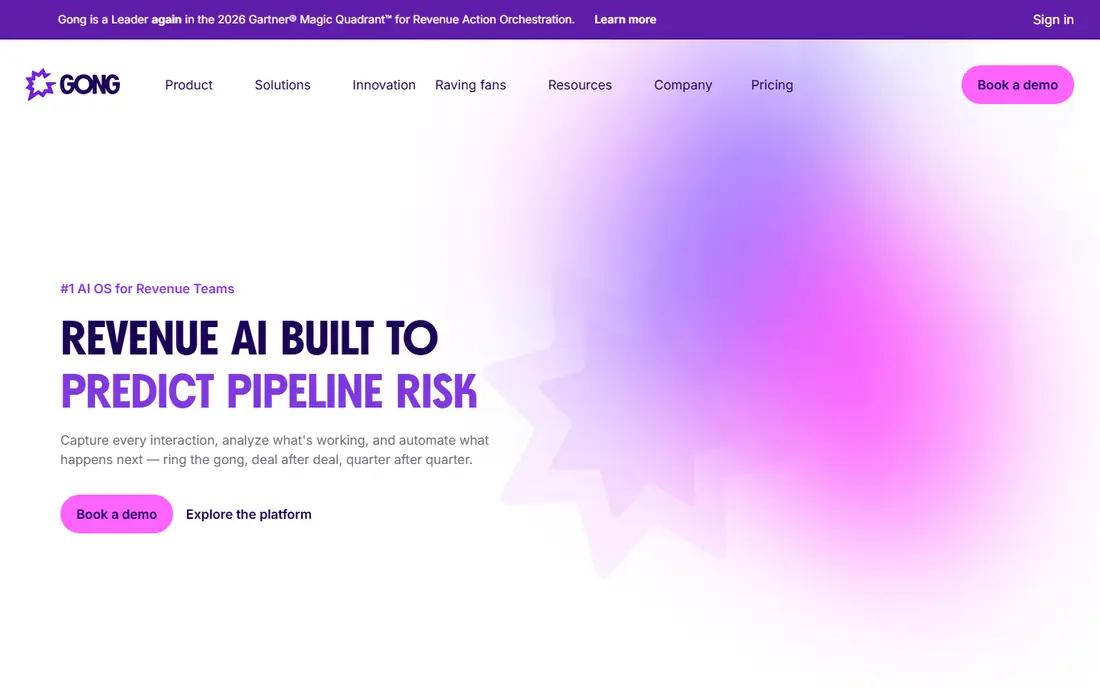
Gong earns its high review scores from managers who coach from real calls instead of from memory. It records, transcribes and analyses sales calls, flags deal risks, and surfaces the moments that changed a deal. For a team with five or more reps on the phone each day, that record becomes the coaching library and the pipeline review in one place.
The honest catch is price and scale. Gong does not publish pricing, and reviewers often note platform fees and annual contracts. A small team with light call volume will not get the same return as a larger team. If calls are your main selling channel, Gong is the review leader. If they are not, start with a cheaper tool.
- Deep call transcription and deal insight
- Strong coaching and pipeline views
- Widely used by larger sales teams
- No public pricing and a platform fee on top of seats
- Needs enough call volume to justify the cost
Clari is the tool reviewers cite when the forecast keeps missing. It pulls pipeline data together, shows which deals are at risk, and gives leaders a consistent view across teams. After its combination with Salesloft, it also covers more of the engagement side, though forecasting remains its core strength.
Clari is not a small team purchase. Pricing is quote based, and the value depends on clean CRM data and a regular inspection habit. If your problem is forecast accuracy at scale, Clari belongs at the top of the list. If your problem is finding prospects, Apollo or Clay will help sooner.
- Strong forecast roll-ups and pipeline inspection
- Useful deal scoring and activity capture
- Suited to Salesforce-led teams
- Enterprise pricing with no public entry price
- Implementation takes time and RevOps support
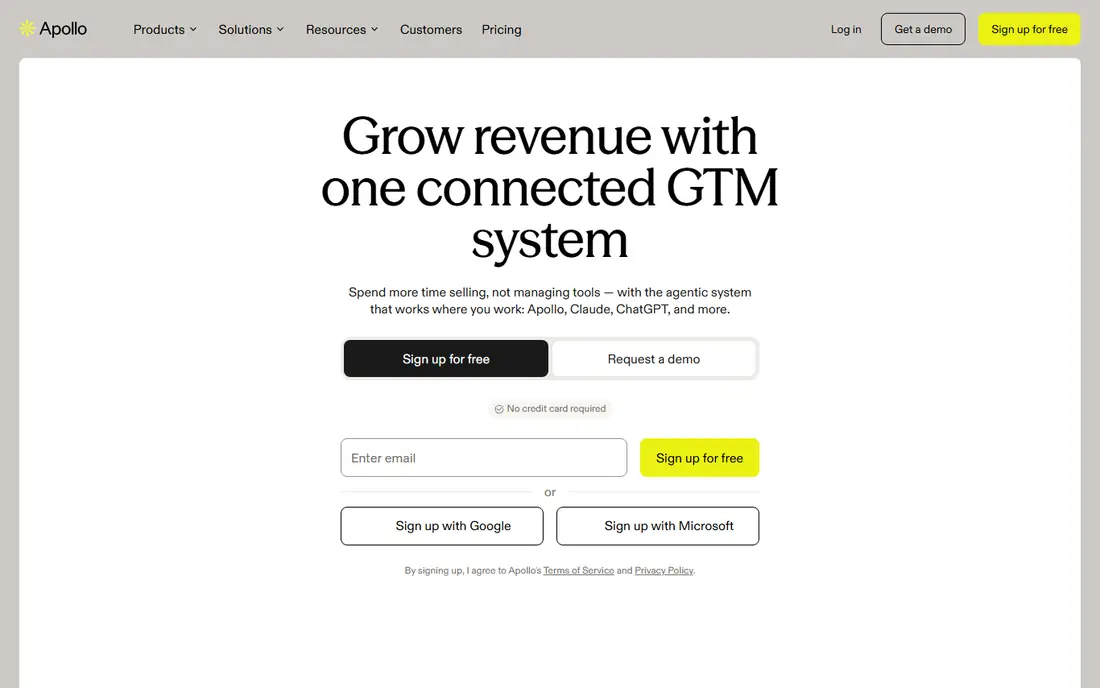
Apollo is the review favourite for small and mid-size teams that want one tool for prospecting and outreach. You can search for contacts, enrich them, build sequences, and call from the same platform, which removes the need for three separate subscriptions. The free plan lets a team test the data before paying.
Reviewers also warn that no database is perfect, and Apollo is no exception. Bounce rates and stale records still happen, especially in smaller niches, so verify high value contacts before a campaign. For budget-conscious teams, though, Apollo offers the most complete starting stack for the price.
- Large contact database with sequencing and dialer in one tool
- Published pricing and a free plan
- Fast to start
- Data accuracy varies by segment, so verify key contacts
- Credit limits shape how much you can use each month
Clay is the power tool in this list. Instead of relying on one data source, it runs lookups through several providers in sequence, so a record only falls through to an expensive source when cheaper ones fail. Reviewers praise that control, plus AI agents that research companies and draft personalised outreach inputs.
The trade-off is complexity. Clay rewards teams that enjoy building workflows and testing data sources, and it can frustrate teams that want a simple search box. Credit use also needs watching on large lists. If you have a RevOps owner or a technically minded operator, Clay can produce lists no single database can match.
- Waterfall enrichment across many providers
- Flexible workflows and AI research
- Strong fit for RevOps teams
- Steep learning curve
- Credit costs can grow fast on large lists
Outreach remains a review leader for outbound execution at scale. It handles email, call and social steps in one sequence, measures what works, and gives managers clear activity and performance views. Teams with dedicated SDRs and a high volume of outbound work get the most from its depth.
Smaller teams often find Outreach heavy and expensive, and pricing is not published. Implementation and training also take time. If you run a serious outbound motion with ten or more SDRs, Outreach is a strong contender. If you have two reps and a modest list, Apollo or Salesloft will feel lighter.
- Deep sequencing and multi-channel engagement
- Strong analytics and AI assistance
- Built for larger SDR teams
- Quote-based pricing and annual contracts
- More tool than a small team usually needs
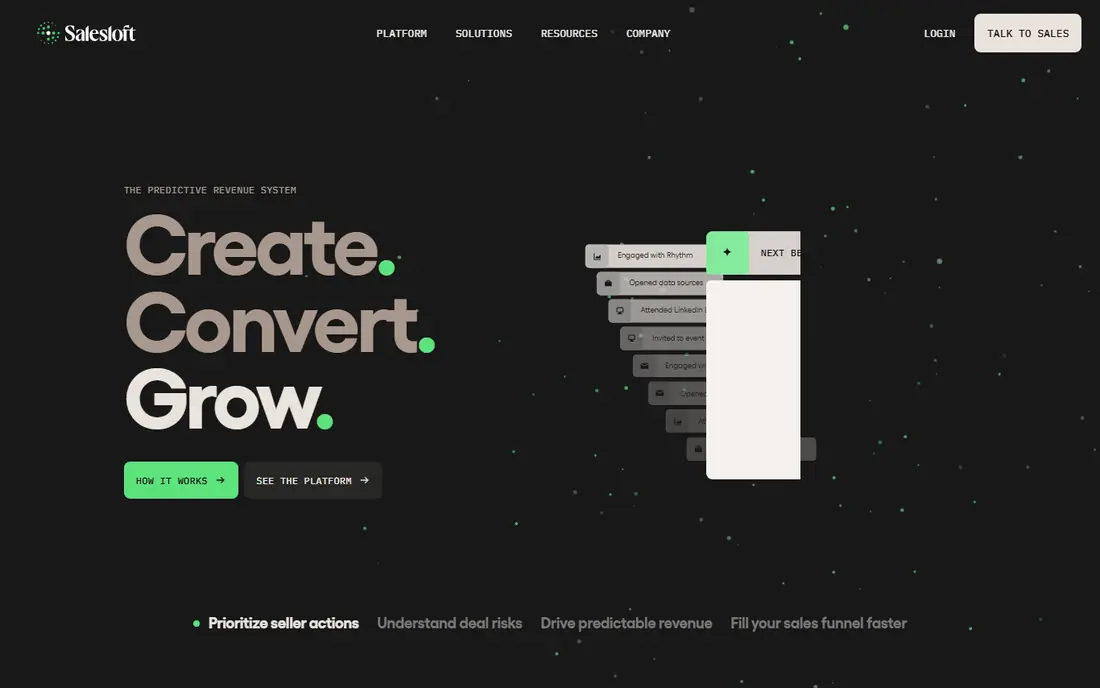
Reviewers often describe Salesloft as the more usable alternative to Outreach, with faster adoption and a cleaner rep experience. Cadences, dialer, email and coaching sit in one workspace, and the combination with Clari gives leaders a stronger forecasting view than Salesloft offered alone.
The catch is that Salesloft still sells through quotes, so small teams cannot budget from a public price page. Its call analytics also do not match Gong for depth. For mid-market teams that value rep adoption and coaching, Salesloft is a balanced pick. For pure forecasting or pure call intelligence, Clari or Gong may still win.
- Easier adoption than some enterprise rivals
- Good cadences, calling and coaching features
- Now paired with Clari forecasting
- Pricing is quote based
- Conversation analytics are less deep than Gong
HubSpot Sales Hub suits teams that want sales AI inside their CRM, not bolted on beside it. Deals, contacts, sequences, call summaries and AI-assisted prospecting live in one record, which keeps data cleaner and reduces tool switching. The free CRM and the low Starter price make it easy to begin.
Reviewers note that the most useful AI and reporting features require Professional or Enterprise tiers, and larger rollouts can carry onboarding fees. HubSpot is also not a dedicated data provider, so teams that need large prospect lists usually pair it with Apollo or Clay. As a foundation, though, it is the safest all-round choice here.
- CRM, sequences, deal insight and AI tools in one system
- Free CRM to start
- Broad integration range
- Advanced AI and reporting features sit on higher tiers
- Onboarding costs can apply on larger plans
Lavender is the narrowest tool on this list, and reviewers like it for exactly that reason. It scores emails as reps write them, suggests clearer subject lines and shorter copy, and tracks reply rates by template and coach. For reps sending dozens of cold emails a day, small improvements in open and reply rates add up.
Lavender does not find prospects, run sequences or forecast pipeline, so it works best as an add-on to Apollo, Outreach, Salesloft or HubSpot. If your team already has a prospecting tool and your emails underperform, Lavender is a cheap, focused fix. If you have no prospecting tool yet, buy that first.
- Real-time email scoring and coaching in the inbox
- Helps reps write shorter, clearer outreach
- Low price and free plan
- Email only, so it needs a CRM or sequencing tool beside it
- Coaching value depends on reps acting on the scores
How we picked these
We compared vendor feature and pricing pages with public review themes on G2 and similar review sites, focusing on tools that are actively sold in October 2026. We looked for consistent praise across many reviewers, not a single high score, and we kept tools that cover distinct jobs: call insight, forecasting, data, enrichment, sequencing, CRM and email coaching. We excluded narrow point tools with too few reviews to judge fairly.
How to choose from the review leaders
Start with the bottleneck, not the rating. If you cannot find good prospects, buy data first with Apollo or Clay. If prospects exist but deals slip, look at Gong for call insight or Clari for forecasting. If reps struggle to run outbound consistently, Outreach or Salesloft will help more than another data tool.
Then check the total cost, including platform fees, credits and implementation, and run a trial on your own pipeline. Ask reviewers questions in your own trial: does the data match your market, does the CRM write-back work, and do managers actually use the forecast view each week. A tool that scores highly for another company may still fail on your data, your CRM, or your team size.
FAQ
What is the best sales AI software for a small team?
Apollo is the most common review-backed pick for small teams, because it combines data, sequencing and a dialer at a published price with a free plan. HubSpot Sales Hub Starter is a good alternative if you need a CRM first and plan to add a data tool later. Larger tools such as Gong and Clari usually make sense only once you have enough reps and pipeline to justify enterprise pricing.
Do AI sales tools replace sales reps?
No, and reviewers are clear on this point. AI tools handle research, drafting, scoring and admin, but humans still run discovery, objection handling and closing. The best results come from pairing AI volume with human judgement, especially on high value deals where trust matters.
Why do Gong and Clari not publish prices?
Both sell mainly to mid-market and enterprise teams, where price depends on seats, modules, platform fees and contract length. That model lets vendors tailor deals, but it makes budgeting harder for buyers. Ask for a written quote that separates seat cost, platform fees and implementation, and compare the annual total, not just the per-seat figure.
How important is CRM integration?
It is central. If call notes, activities and scores do not land cleanly in your CRM, managers lose trust in the data and reps keep a second record elsewhere. Before you buy, test the CRM write-back with your own objects and fields, and check whether the tool updates structured deal fields or only logs notes.
Can I use more than one of these tools together?
Yes, and many teams do. A common stack pairs Apollo or Clay for data, Outreach or Salesloft for sequences, Gong for call insight, and Clari for forecasting, all feeding HubSpot or Salesforce. Watch for overlap, because call insight, forecasting and engagement features now appear in several tools, and paying twice for the same view wastes budget.