Best Regulatory Compliance Software in 2026: 8 Platforms Compared
Compare the best regulatory compliance software for 2026, from Vanta and Drata to Hyperproof and OneTrust, with pricing, frameworks, and honest fit notes.
- Editor's choice
 Vanta
Fast-growing tech companies
Starts atSee websiteVisit vanta.comFull review - Great alternative
 Drata
Security-first teams
Starts atSee websiteVisit drata.comFull review - Also consider
 Hyperproof
Multi-framework programs
Starts atSee websiteVisit hyperproof.ioFull review
TL;DR:
- Regulatory compliance software automates evidence collection, control testing, and audit readiness across frameworks like SOC 2, ISO 27001, HIPAA, and GDPR.
- Vanta and Drata suit fast-growing tech companies seeking SOC 2 and ISO readiness, while Hyperproof suits teams managing many frameworks at once.
- OneTrust suits large privacy programs, while Secureframe suits first-time certification with guided help.
- This is general information, not legal advice; framework scope should be confirmed with your auditors and counsel.
Quick comparison
| Tool | Best for | Starts at | Free plan? | |
|---|---|---|---|---|
| Vanta | Fast-growing tech companies | See website | No | Visit |
| Drata | Security-first teams | See website | No | Visit |
| Hyperproof | Multi-framework programs | See website | No | Visit |
 Secureframe | First-time certification | See website | No | Visit |
 OneTrust | Enterprise privacy programs | See website | No | Visit |
 LogicGate Risk Cloud | Flexible compliance workflows | See website | No | Visit |
 MetricStream | Large enterprise GRC | See website | No | Visit |
 ServiceNow Integrated Risk Management | ServiceNow shops | See website | No | Visit |
The best regulatory compliance software
We compared these platforms on framework coverage, automation, integrations, evidence workflows, auditor collaboration, and price. The best pick depends on which frameworks you need, how much automation your stack allows, and how much expert help you want.
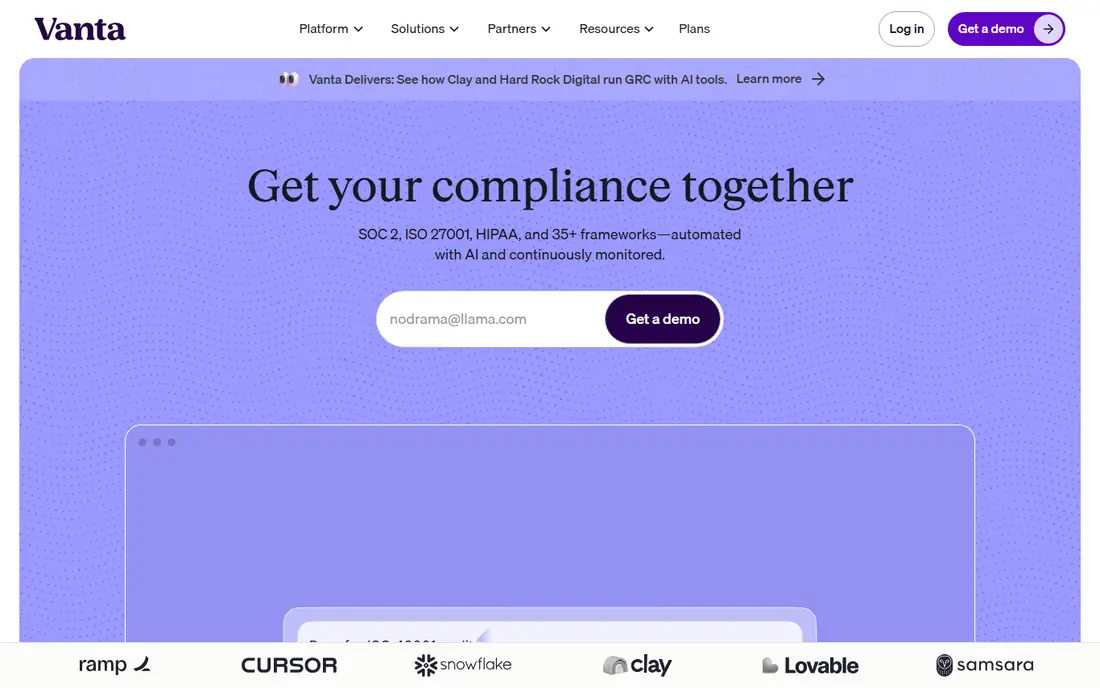
Vanta is a leading compliance automation platform for SOC 2, ISO 27001, HIPAA, GDPR, PCI DSS, and other frameworks. It connects to cloud, identity, HR, and code tools, pulls evidence automatically, and flags controls that drift out of compliance. A trust center lets customers view security posture without repeated questionnaires, which saves sales and security teams time. That automation is why many startups choose Vanta for a first SOC 2 audit.
Pricing is quote based and rises with frameworks, integrations, and headcount, so get a written quote for year one and year two. Vanta also does not replace judgment: scoping, risk decisions, and auditor conversations still need an owner. For tech companies that want fast, automated audit readiness, Vanta is a safe default shortlist pick.
- Broad framework coverage
- Hundreds of integrations
- Continuous monitoring and trust center
- Quote-based pricing
- Costs rise with frameworks and company size
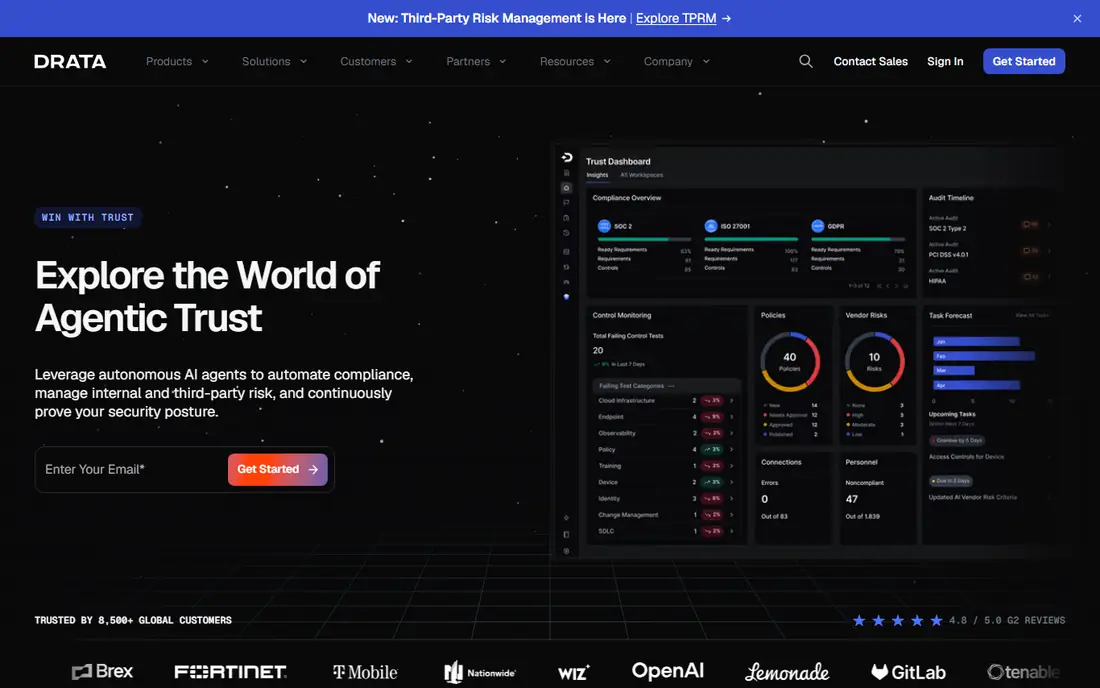
Drata competes closely with Vanta on compliance automation, with continuous control monitoring, evidence collection, and auditor collaboration for SOC 2, ISO 27001, HIPAA, PCI DSS, and other frameworks. Users often praise its interface and support, and its integration set covers common cloud and SaaS tools. Drata also offers trust center features and policy management that help teams share compliance status with customers.
Like Vanta, Drata pricing is quote based and depends on frameworks and company size, so compare total cost for your exact framework set. Some teams prefer Drata's experience, others prefer Vanta's integration breadth, and auditor preference can tip the choice. Trial both with your real stack before deciding, since integration fit matters more than marketing claims.
- Strong automation and user experience
- Broad integrations
- Auditor-friendly workflows
- Quote-based pricing
- Framework additions can raise cost

Hyperproof helps teams manage many frameworks at once by mapping one control to multiple requirements. That crosswalk saves duplicate work when SOC 2, ISO 27001, and other frameworks overlap, which is common for growing companies. Collaboration features let compliance, security, engineering, and legal teams work on evidence together, with clear ownership and deadlines.
Hyperproof automation depends on integration depth for your stack, so test your key systems during a trial. Pricing is quote based. Teams that already juggle several frameworks, or plan to add more soon, will get more value from Hyperproof than teams that need only one certification.
- Framework crosswalks
- Strong collaboration
- Good admin and support ratings
- Quote-based pricing
- Automation depth varies by integration
Secureframe focuses on helping companies get certified for the first time, with guided workflows, policy templates, and access to auditors familiar with the platform. That guidance helps small teams that lack a dedicated compliance hire, because the platform explains what to do next instead of leaving teams to design a program alone. Framework coverage includes SOC 2, ISO 27001, HIPAA, PCI DSS, and others.
Secureframe's integration set is smaller than Vanta or Drata, so check your stack before buying. Larger enterprises with complex multi-framework needs may outgrow it sooner. For first-time SOC 2 or ISO certification, Secureframe is a practical, guided choice.
- Guided first-time certification
- Policy templates
- Auditor network support
- Smaller integration set than Vanta or Drata
- Enterprise depth is newer
OneTrust is an enterprise platform for privacy, data governance, and compliance, covering GDPR, CCPA, and many other privacy laws. Features include consent management, data mapping, assessments, and incident response workflows, which suit large companies with global privacy obligations. Governance and reporting tools help privacy teams show regulators and leadership how data is handled.
OneTrust pricing is enterprise scale and quote based, and setup needs planning and staffing. Smaller teams that only need SOC 2 will find it more than they need. Large companies with global privacy programs, especially those handling EU and US state laws together, should shortlist OneTrust.
- Broad privacy law coverage
- Consent and data mapping
- Enterprise governance
- Enterprise pricing
- Setup complexity for smaller teams
LogicGate Risk Cloud lets teams build compliance workflows to match their own processes, rather than forcing work into a fixed template. That flexibility suits companies with custom controls, unique risk models, or programs that span compliance, risk, and audit. Business users can design applications without heavy coding, which speeds up changes when regulations shift.
Flexibility needs design discipline, and out-of-box automation for cloud evidence is thinner than Vanta or Drata. Teams should map controls and owners before building. For companies that want adaptable compliance workflows and can invest in design, LogicGate is a strong alternative to automation-first tools.
- No-code workflow building
- Adaptable control models
- Good for custom programs
- Needs workflow design
- Less out-of-box automation than Vanta or Drata
MetricStream offers a broad GRC platform that covers regulatory compliance, risk, audit, and third-party management in one system. AI-assisted features help with control testing, issue tracking, and reporting across large, multi-entity programs. Enterprises in banking, healthcare, and manufacturing use it to manage many regulations and business units together.
MetricStream is built for scale, with enterprise pricing and longer implementation than automation-first tools. Small teams seeking a first SOC 2 will find it heavy. Large enterprises that need one GRC platform for many regulations should include MetricStream in a structured evaluation.
- Broad GRC coverage
- AI-assisted workflows
- Strong enterprise reporting
- Enterprise pricing and implementation
- Heavier for small teams
ServiceNow Integrated Risk Management brings regulatory compliance into the ServiceNow platform, linking controls to incidents, changes, assets, and vendors. That link helps IT and security teams manage compliance as part of daily operations, not as a separate spreadsheet exercise. Automation routes evidence tasks and approvals, and reporting ties compliance status to operational data.
Value depends on ServiceNow commitment, and licensing needs planning. Teams outside ServiceNow may prefer a standalone compliance tool. Companies already standardized on ServiceNow should compare its risk modules before buying a separate platform, since integration can reduce duplicate work.
- Links compliance to ITSM workflows
- Strong automation
- Familiar for ServiceNow users
- Best value requires ServiceNow commitment
- Licensing complexity
How we picked these
We compared official product pages, pricing pages, and independent compliance platform comparisons for regulatory and GRC software. We favored tools that exist today, support multiple frameworks, automate evidence or workflows, and offer auditor collaboration. We excluded single-framework checklist apps and pure policy document libraries, because they do not manage a full compliance program. Where vendors do not publish prices, we list See website. This article is general information, not legal advice.
How to choose regulatory compliance software
Start with your framework list and audit timeline. List every framework you need now and in the next two years, then check which tools cover them natively and how controls map across frameworks. Next, test integrations with your cloud, identity, HR, and code tools, because automation only works if evidence flows automatically. A tool with a long framework list but weak integrations for your stack will leave manual work.
Price year two, not just year one. Framework additions, headcount growth, and auditor scope changes often raise costs. Also ask about auditor access, trust center features, and support during audit season, when response time matters most. Pilot with one framework and a real evidence set, and judge the tool on time saved per control, not on demo polish.
For startups seeking a first audit
Shortlist Vanta, Drata, and Secureframe. Compare integration fit, auditor preference, and total quote for your framework set. Choose the tool your team will actually use weekly, since stale evidence helps no audit.
For enterprises with many regulations
Shortlist Hyperproof, OneTrust, MetricStream, and ServiceNow, depending on whether privacy, multi-framework mapping, or ITSM integration matters most. Run a structured pilot with compliance, security, legal, and IT together.
FAQ
What is the best regulatory compliance software?
Vanta and Drata are the safest defaults for tech companies seeking SOC 2 and ISO readiness. Hyperproof suits multi-framework programs, OneTrust suits enterprise privacy, and Secureframe suits first-time certification. The best pick depends on frameworks, stack, and team size.
What are the best regulatory compliance tools for SOC 2?
Vanta, Drata, Secureframe, and Hyperproof all support SOC 2 with automation, evidence collection, and auditor collaboration. Compare integration fit for your cloud and SaaS stack, and ask auditors which platform they prefer working with, since auditor familiarity can speed the audit.
How much does regulatory compliance software cost?
Most platforms are quote based, with small to mid-sized deployments often starting around $10,000 to $25,000 per year depending on frameworks and size, and enterprise programs costing much more. Always request a quote for your exact framework set and headcount, and price year two as well.
Does compliance software replace a compliance hire?
No. Software replaces evidence chasing, not judgment. Scoping, risk decisions, policy choices, and auditor conversations still need an owner. A good tool lets one owner manage a program that once needed a team, but it does not remove the need for ownership.
What is the difference between GRC and compliance automation?
GRC is the broader discipline covering governance, risk, and compliance together. Compliance automation focuses on evidence, controls, and audit readiness for specific frameworks. Many GRC platforms include compliance automation, but automation-first tools like Vanta and Drata focus more narrowly on faster certification.
How long does it take to get SOC 2 ready with software?
Timelines vary by scope and readiness, but many startups reach audit readiness in weeks to a few months with automation, compared with longer manual efforts. Evidence gaps, policy work, and auditor scheduling still affect timing, so start early and treat the tool as a workflow aid, not a shortcut.