Best Recruitment Software for Direct Hire in 2026: 8 Tools Compared
Compare the best recruitment software for direct hire in 2026, with ATS features, pricing, sourcing tools and structured hiring for in-house teams today.
- Editor's choice
 Workable
Small in-house teams
Starts at$299 per monthVisit workable.comFull review - Great alternative
 Greenhouse
Structured hiring
Starts atSee websiteVisit greenhouse.comFull review - Also consider
 Lever
Pipeline building
Starts atSee websiteVisit lever.coFull review
TL;DR:
- Workable is our pick for small in-house teams that want published pricing and a fast start.
- Greenhouse suits mid-market teams that need structured interviews, scorecards, and strong reporting.
- Lever is best for teams that build talent pipelines before a role opens, with ATS and CRM in one product.
- Ashby offers strong analytics and published size-based pricing for startups and scaleups.
- Always trial with real roles and real hiring managers, since ease of use decides adoption more than feature lists.
Quick comparison
| Tool | Best for | Starts at | Free plan? | |
|---|---|---|---|---|
| Workable | Small in-house teams | $299 per month | Free trial (15 days) | Visit |
| Greenhouse | Structured hiring | See website | No | Visit |
| Lever | Pipeline building | See website | No | Visit |
 Ashby | Analytics-led hiring | $300 per month | No | Visit |
 Zoho Recruit | Budget teams | Free | Yes | Visit |
 Breezy HR | Simple hiring | Free | Yes | Visit |
 JazzHR | Small business hiring | See website | Free trial | Visit |
 SmartRecruiters | High-volume hiring | See website | Free trial | Visit |
The best recruitment software for direct hire
Direct hire means hiring employees onto your own payroll, not through an agency or temp firm, so the software must handle job posts, applications, interviews, and offers cleanly. The tools below are built for in-house teams, with different strengths for small businesses, structured mid-market hiring, and high-volume recruiting.
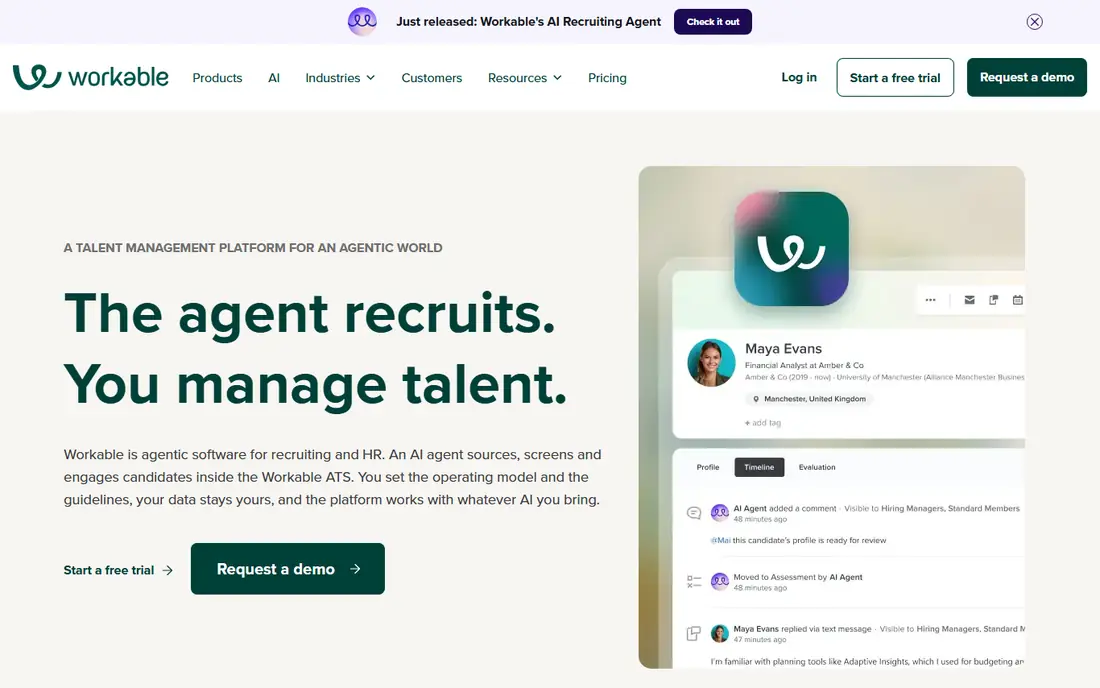
Workable covers the full hiring flow in one place, from job posting and application screening to interview scheduling and offers. It posts to many job boards, tracks candidates on a clear pipeline board, and lets hiring managers comment and score candidates without long training. That simplicity helps small teams hire without a dedicated recruiter.
The catch is add-ons. Texting, video interviews, and assessments can cost extra on lower plans, and pricing scales with total company headcount, not just hiring volume. Still, for a team hiring a few roles per quarter, Workable is the fastest, most transparent start on this list.
- Published pricing
- Broad job board posting
- Simple collaboration
- Some tools are add-ons
- Price rises with company headcount
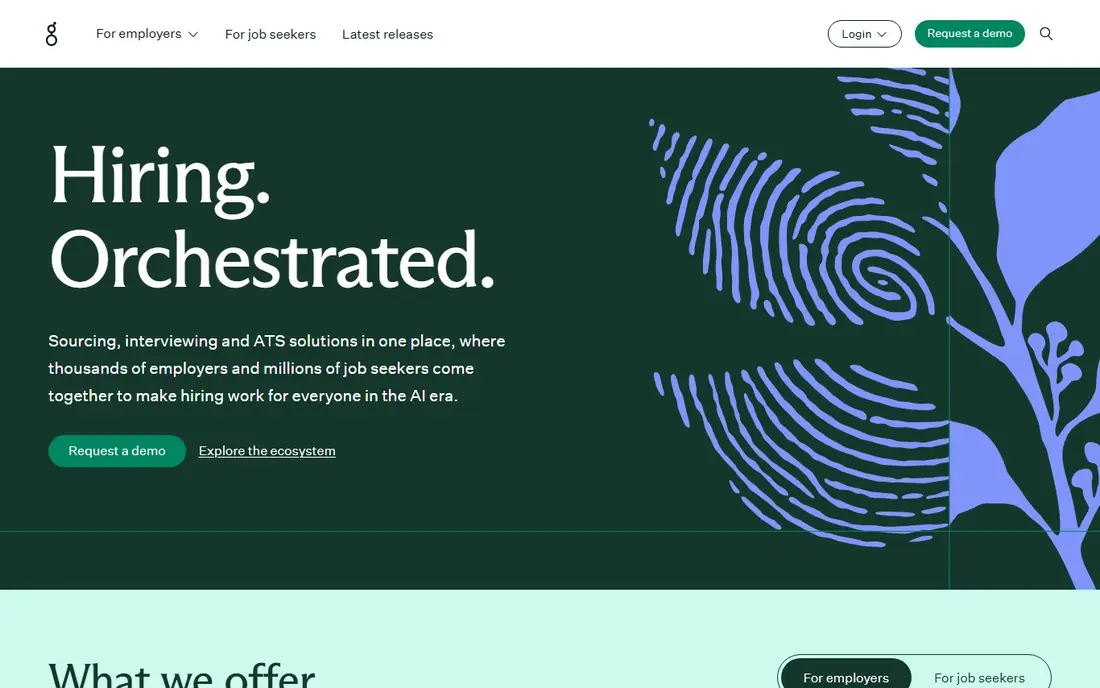
Greenhouse is the standard pick for teams that want consistent, fair hiring. Interview kits define questions and scorecards for each role, so every candidate gets a comparable assessment, and hiring managers give structured feedback instead of vague notes. Reporting covers time to hire, source quality, and pipeline conversion in depth.
Pricing is quote-based and typically higher than Workable, with contracts often in the mid five figures for mid-market teams. Setup also takes more time, since structured hiring works best when roles, scorecards, and approval flows are designed up front. Buy Greenhouse when hiring quality and consistency matter more than low cost.
- Structured interview kits
- Scorecards
- Deep reporting and integrations
- Quote-only pricing
- Heavier setup for small teams
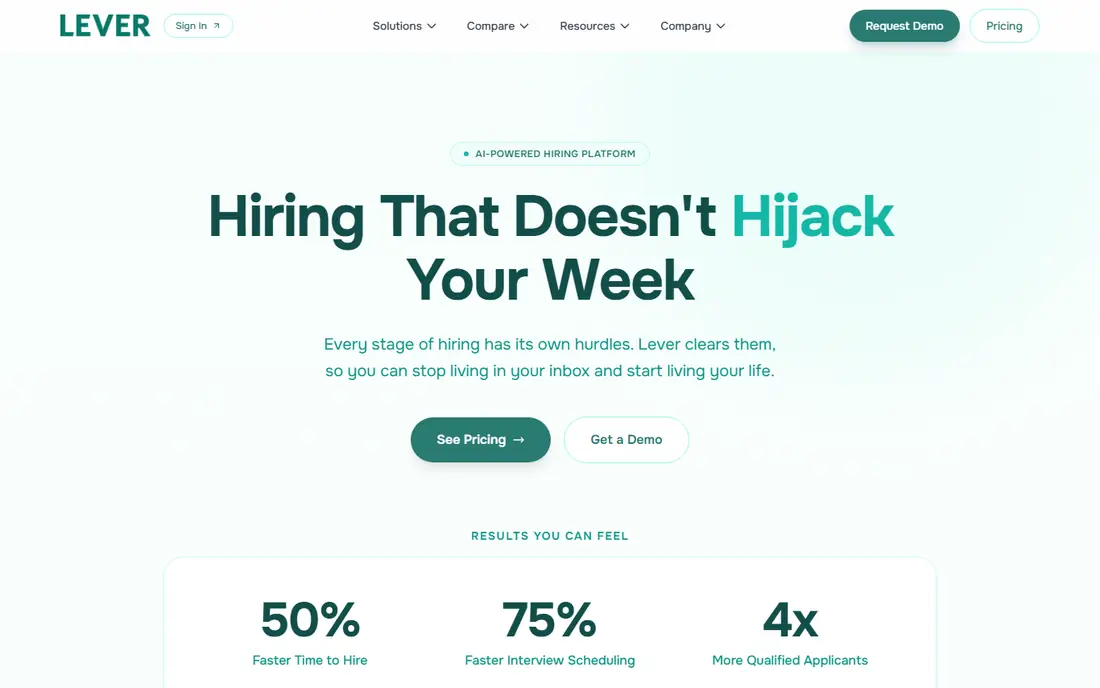
Lever combines an applicant tracking system with a candidate relationship tool, so teams can nurture talent long before a role opens. Sourcing, campaigns, and pipeline views help recruiters stay in touch with strong candidates, and interview scheduling and feedback sit in the same record. That mix suits companies that hire repeatedly for similar roles.
Cost is the main barrier, since Lever is quote-based and positioned at a premium. Small teams hiring rarely may not need CRM depth, but growth-stage companies that compete for scarce talent often find the pipeline tools worth the price.
- ATS plus CRM in one
- Strong sourcing tools
- Good candidate nurturing
- Quote-only pricing
- Premium cost for small teams
Ashby bundles ATS, CRM, scheduling, and analytics with pricing based on company size, which is clearer than many rivals. Founders and heads of talent like its reports, which show where candidates drop off, which sources work, and how long each stage takes. Unlimited recruiter seats on early plans also help growing teams.
Once a company passes 100 employees, pricing moves to quote, so larger teams should get a written proposal early. Some features, such as texting and single sign-on, can also cost extra. For startups and scaleups under that threshold, Ashby is a strong, data-led choice.
- Strong analytics
- Published size bands
- Scheduling and CRM included
- Price moves to quote above 100 employees
- Some add-ons cost extra
Zoho Recruit gives budget-conscious teams a real ATS with a free plan, plus paid plans from a low per-user price. It covers job posting, resume parsing, candidate tracking, and interview scheduling, and it connects well with other Zoho apps for email, forms, and HR. That value is hard to beat for a small business.
The interface packs a lot onto each screen, and some automation and reporting features need higher tiers. Teams that already use Zoho will adapt fastest, while others should trial the workflow with a real role before committing.
- Free plan included
- Low paid entry
- Wide Zoho integrations
- Interface can feel dense
- Advanced automation needs higher plans
Breezy HR suits small teams that want hiring to feel simple. Its visual pipeline, drag-and-drop stages, and built-in messaging keep candidates moving without complex setup. The free plan covers a single active job, which is enough to test the product or hire for one urgent role.
Larger teams may miss deeper reporting, CRM tools, and the integration depth of Greenhouse or Lever. Paid plans add more jobs and features, but Breezy remains best for straightforward hiring rather than complex, high-volume programs.
- Free plan for one job
- Visual pipeline
- Easy candidate messaging
- Paid plans rise with features
- Smaller integration list than leaders
JazzHR focuses on the core hiring tasks small businesses need most: posting jobs, screening resumes, scheduling interviews, and making offers. Its workflow is easy to learn, and support is often praised by small teams without a dedicated recruiter. That focus keeps hiring moving when HR wears many hats.
Advanced analytics and CRM-style pipeline tools are thinner than Ashby or Lever, so data-heavy teams may want more. For a small business hiring a handful of roles each year, JazzHR offers a calm, practical workspace at a manageable cost.
- Simple posting and screening
- Interview tools
- Good support
- Pricing varies by plan
- Advanced analytics are limited
SmartRecruiters is built for companies that hire at volume across many locations and roles. It handles large application flows, job board distribution, and marketplace integrations, with controls for compliance and multi-team hiring. Enterprises with ongoing, high-volume needs benefit most from that scale.
Small teams will find it heavier and pricier than Workable or Breezy, and pricing is quote-based. Choose SmartRecruiters when volume, consistency across sites, and enterprise controls are daily needs, not occasional wants.
- High-volume posting
- Strong marketplace
- Enterprise controls
- Quote-based pricing
- Heavier for small teams
How we picked these
We compared official pricing pages, feature pages, and public reviews in October 2026. We kept only tools that serve in-house direct hire teams, not staffing agencies alone, and we favoured tools with clear hiring workflows, interview tools, and reporting. Where pricing was quote-based, we wrote See website rather than guessing.
How to choose for direct hire
Start with hiring volume and structure. A team hiring two roles a year needs simplicity and low cost, while a team hiring fifty roles needs pipeline tools, structured interviews, and reporting. Map your current process first, including who posts jobs, who screens, who interviews, and who approves offers, then score each tool on that exact flow.
Next, trial with a live role and real hiring managers. Ask managers to review candidates, leave feedback, and schedule interviews in the trial, since their adoption decides success. Check job board coverage for your roles, test resume parsing with real resumes, and confirm data export options before signing an annual contract.
Compliance and candidate experience tips
Use structured scorecards for key roles, keep interview notes factual, and respond to candidates promptly, even with a short rejection note. A clear, respectful process improves offer acceptance and reduces legal risk. Also, confirm that the tool supports your local hiring compliance needs, including data retention and equal opportunity reporting.
Before you sign an annual contract, run a full hiring cycle in the trial, from job post to offer, with the hiring managers who will use the tool daily. Ask them to score candidates, schedule interviews, and leave feedback without help from HR, since that test reveals usability problems fast. Also, export a sample candidate record during the trial to confirm your data can leave the system cleanly if you later switch tools.
FAQ
What is the best recruitment software for small business direct hire?
Workable is our pick for most small in-house teams, thanks to published pricing and a simple workflow. Zoho Recruit and Breezy HR are strong budget options, with free plans for testing. Trial each with a real role before choosing.
How much does recruitment software cost?
Costs range from free plans for small teams to hundreds of dollars per month for mid-market tools, and quote-based enterprise contracts above that. Workable starts around $299 per month, while Greenhouse and Lever require quotes. Always get a written quote for your team size and hiring volume.
What is the difference between an ATS and a CRM for recruiting?
An ATS tracks active applicants for open roles, while a CRM nurtures candidates for future roles. Lever and Ashby combine both, which helps teams that hire repeatedly. Teams that only fill occasional roles may only need an ATS.
Can recruitment software post to multiple job boards?
Yes, most tools on this list post to many job boards from one job record, and some include sourcing databases. Check that the boards that matter for your roles are included, since coverage varies by industry and region.
Do I need recruitment software if I only hire rarely?
A free plan from Zoho Recruit or Breezy HR may be enough for occasional hiring, since it keeps candidates organised and improves follow-up. If you hire less than once a year, a simple spreadsheet plus a job board may still work, but an ATS saves time once hiring becomes regular.