Best Recruitment Marketing Software in 2026: 8 Tools Compared
Best recruitment marketing software for 2026, compared on career sites, talent CRM, campaigns and pricing to help hiring teams attract strong candidates.
- Editor's choice
 Phenom
Large employers and talent experience
Starts atSee websiteVisit phenom.comFull review - Great alternative
 Gem
Sourcing and talent CRM
Starts atSee websiteVisit gem.comFull review - Also consider
 Jobvite
Mid-size to large hiring teams
Starts at$400 per monthVisit jobvite.comFull review
TL;DR:
- Recruitment marketing software turns one-off job posts into ongoing talent pipelines, with career sites, campaigns and talent CRM tools working together.
- Phenom and Beamery suit larger employers that want a full talent experience platform, while smaller teams often get more value from simpler tools.
- Gem stands out for sourcing and outreach, while Jobvite and Lever cover the full path from career site to hire.
- Price is mostly quote-based at the top end, so ask for a full quote that includes seats, career site work and any AI add-ons before you sign.
- The best choice depends on where candidates drop off, so fix that stage first rather than buying every feature at once.
Quick comparison
| Tool | Best for | Starts at | Free plan? | |
|---|---|---|---|---|
| Phenom | Large employers and talent experience | See website | No | Visit |
| Gem | Sourcing and talent CRM | See website | No | Visit |
| Jobvite | Mid-size to large hiring teams | $400 per month | No | Visit |
 Lever | Relationship-led hiring | See website | No | Visit |
 Beamery | Enterprise talent pipelines | See website | No | Visit |
 SmartRecruiters | Global hiring at scale | See website | No | Visit |
 Breezy HR | Small teams that need speed | See website | Free trial | Visit |
 JazzHR | Small businesses on a budget | See website | Free trial | Visit |
The best recruitment marketing software
Recruitment marketing software helps you attract candidates before they apply, keep them warm while they decide, and turn past applicants into future hires. These eight tools cover that full job.

Phenom is built for employers that treat hiring like marketing, with a branded career site, talent CRM and internal mobility tools in one place. Candidates can explore roles, get matched to jobs and receive tailored content, while recruiters see where people enter and leave the pipeline. That breadth is the point, and it is why large and mid-size employers with steady hiring volumes tend to get the most from it.
The trade-off is scale and cost. Phenom is not a quick, low-cost fix for a team hiring one role a quarter, and pricing sits behind a sales conversation. If you hire at volume, run employer brand campaigns and want one system for external and internal talent, it is a strong shortlist pick. If you only need job posting and a simple applicant list, start with a lighter tool instead.
- Career site, CRM and internal mobility in one platform
- AI tools for screening and career coaching
- Strong analytics for talent pipelines
- Quote-based pricing makes early budgeting hard
- Implementation can take time for large employers
- Some smaller teams will find it more platform than they need
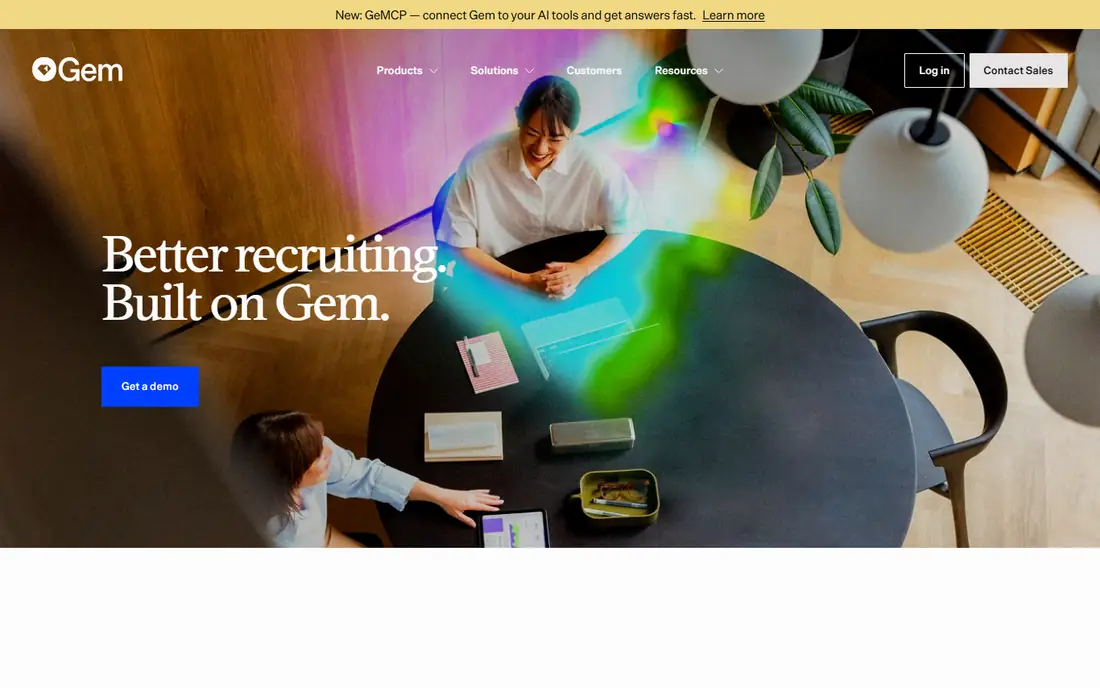
Gem focuses on the top of the funnel, where many hiring teams lose good candidates. Recruiters can source, message and nurture prospects in sequences, then track replies, meetings and hires by source. The CRM view keeps silver-medalist candidates warm instead of letting them sit in an old spreadsheet. For tech and professional hiring teams that source heavily, that focus matters more than a long feature list.
Gem also offers an all-in-one plan with its own applicant tracking system, so teams can choose between layering it on top of an existing system or replacing that system. The catch is that value depends on sourcing volume. If most of your applicants arrive on their own, a simpler CRM may do. If your team lives in outbound sourcing, Gem earns its place quickly.
- Sourcing across a large profile pool
- Outreach sequences and CRM in one place
- Analytics that show which sources convert
- Pricing varies by team size and plan
- Works best alongside an applicant tracking system for some teams
- Smaller teams may not use the full sourcing depth

Jobvite covers the full recruiting path, from career site and job distribution to applicant tracking, referrals and onboarding. Its social recruiting reach is a real strength for teams that need to post across many networks at once, and SMS applications help with hourly and frontline roles where candidates prefer phones to desktops. Hiring managers can comment and score candidates in one place, which keeps feedback moving.
The honest catch is depth versus polish. Out-of-the-box reports may not answer every question, and heavier customisation can take vendor help. Still, for a mid-size to large team that wants one well-rounded platform with broad reach, Jobvite is a sensible pick. Ask for a demo using your own roles and reports, not a generic walkthrough.
- Branded career sites and broad social posting
- SMS applications and referral tools
- Integrations with major hiring tools
- Reporting can feel thin without custom work
- Complex customisation may need extra help
- Performance can slow under heavy use
Lever puts relationships first. Instead of treating every applicant as a ticket, it gives recruiters a candidate-centred view, personalised campaigns and tools to re-engage past applicants. Structured interview kits and diversity surveys help teams run fairer, more consistent interviews, which matters when hiring managers interview in different styles. That combination suits growing companies that want hiring to feel human at scale.
Lever is less appealing if you need a very wide integration catalogue or a published price to compare quickly. Pricing sits behind a quote, so budget planning takes a sales call. If pipeline visibility and candidate relationships are your main gaps, Lever belongs on the shortlist. If you need the cheapest tool with a public price, look further down this list.
- Candidate-centred pipeline views
- Personalised email campaigns and nurture tools
- Structured interview kits and diversity surveys
- Quote-based pricing
- Fewer third-party integrations than some rivals
- Support resources can feel limited
Beamery is an enterprise talent platform that helps large employers build pipelines before roles open. Recruiters can segment talent by skill, location and interest, run targeted campaigns and surface internal candidates for new roles. For global employers with many recruiters and long hiring cycles, that structure keeps talent data in one place instead of scattered across inboxes.
The downside is effort. Beamery needs clean data, clear ownership and time to set up well, and it is priced for enterprise budgets. Small teams will find it heavy and expensive for the return. Large employers that already treat talent as a long-term asset, rather than a series of urgent vacancies, are the right fit here.
- Talent CRM built for large, complex hiring
- Skills and internal mobility focus
- Campaign tools for targeted talent audiences
- Enterprise pricing and implementation effort
- More than most small teams need
- Success depends on clean talent data
SmartRecruiters combines applicant tracking with recruitment marketing features, including branded career sites and job distribution across boards and social channels. Its marketplace lets teams add assessment, background check and scheduling tools without rebuilding the core system. For companies hiring across countries and business units, that flexibility and scale are useful.
The catch is that SmartRecruiters is a broad hiring platform first, so teams that want a pure recruitment marketing tool may prefer a more focused CRM. It also prices by quote, which makes direct comparison slower. If your main need is one global system that hiring managers in many locations can use, it is worth a demo. If you only need campaigns and a talent CRM, a focused tool may fit better.
- Career sites and job distribution for global teams
- Marketplace of hiring integrations
- Collaboration tools for hiring managers
- Quote-based pricing
- Can feel broad rather than specialised for recruitment marketing alone
- Setup needs planning for multi-country hiring
Breezy HR is a friendly option for small and mid-size teams that want to move fast without a long implementation. Job posting, candidate messaging, scorecards and automated screening sit in a clean interface, and the free plan history and trial make it easy to test. Compliance tracking for EEOC, OFCCP and GDPR is a practical bonus for regulated hiring.
Breezy HR will not match enterprise platforms for deep talent marketing campaigns or a huge integration catalogue. That is fine for most small teams, because speed and clarity matter more than breadth. If you hire regularly but do not have a dedicated recruiting operations team, Breezy HR is one of the easiest places to start on this list.
- Easy to learn and quick to set up
- Automated screening, reference checks and messaging
- Compliance tracking for EEOC, OFCCP and GDPR
- Integration range is narrower than enterprise tools
- Pipeline customisation has limits
- Support response times can vary
JazzHR suits small businesses that need a clear, affordable way to post jobs, collect applicants and move candidates through stages. Hiring managers can review and comment without learning a complex system, and the setup stays light. For a team making its first move away from email and spreadsheets, that simplicity is a feature, not a weakness.
The limit is depth. JazzHR does not offer the same campaign, talent CRM or employer brand tools as the enterprise names above, and reporting stays basic. Teams with steady, high-volume hiring or complex employer brand campaigns should look higher up the list. Teams that want a solid, low-friction hiring hub will find JazzHR does the job well.
- Simple job posting and applicant tracking
- Collaborative hiring tools for small teams
- Lower cost entry point than enterprise platforms
- Recruitment marketing depth is lighter than dedicated tools
- Advanced reporting is limited
- Larger teams may outgrow it
How we picked these
We compared official feature pages, pricing pages, app store listings, public reviews and vendor documentation for recruitment marketing and talent CRM tools. We favoured tools that exist today, offer a real career site, campaign or CRM function, and fit a clear team size, rather than generic applicant tracking tools with no marketing angle. Where pricing was not published, we wrote See website instead of guessing a number.
What to check before you buy
Start with your biggest leak. If applications are low, prioritise career site quality, job distribution and employer brand content. If applications are high but hires are slow, prioritise CRM nurture, scheduling and hiring manager collaboration. A tool that fixes the wrong stage will look busy while results stay flat.
Ask about total cost and ownership
Quote-based tools should quote seats, career site build, integrations, AI features and support in writing. Ask who owns the career site content and talent data if you leave, and how long implementation really takes. A cheaper headline price can grow quickly once add-ons appear.
Test with real roles
Run a trial or demo with two live roles, one easy and one hard to fill. Check mobile application flow, message deliverability and reporting on source quality. If candidates drop off on mobile, or recruiters cannot see which campaigns produce hires, that tool is not solving your problem.
FAQ
What is recruitment marketing software?
It is software that helps employers attract, engage and nurture candidates before and after they apply, using career sites, campaigns, talent CRM tools and analytics. It sits alongside applicant tracking, which manages candidates once they are in process.
How is it different from an applicant tracking system?
An applicant tracking system manages applications, interviews and offers. Recruitment marketing software focuses earlier, on getting the right people to apply and keeping past candidates interested. Many platforms now combine both, so check which side is stronger before you buy.
Do small businesses need recruitment marketing software?
Small teams often benefit most from a simple tool with a good career site and job distribution, rather than an enterprise platform. If you hire only a few times a year, a lighter tool plus clear job posts may be enough.
What does recruitment marketing software cost?
Prices range from low monthly plans for small teams to quote-based enterprise contracts. Always confirm what counts as a seat, whether career site work is included, and whether AI or messaging features cost extra.
Can it help with hard-to-fill roles?
Yes, when it is used for sourcing and nurture. Talent CRM tools let recruiters build pipelines for scarce skills, send useful content over time and re-engage silver-medalist candidates instead of starting every search from scratch.
Should we buy a combined ATS and marketing platform?
A combined platform suits teams that want one system and one data set. A separate marketing tool suits teams that already like their applicant tracking system and only need better sourcing, campaigns or career site tools.