Best Quiz Funnel Software in 2026: 7 Tools Compared
We compared the best quiz funnel software and best quiz funnel software tools for product picks, lead capture, logic, pricing, and integrations for buyers.
- Editor's choice
 Octane AI
Shopify product quizzes
Starts at$50 per monthVisit octaneai.comFull review - Great alternative
 Typeform
Polished quiz experience
Starts atSee websiteVisit typeform.comFull review - Also consider
 involve.me
Funnel and calculator builders
Starts atSee websiteVisit involve.meFull review
TL;DR:
- A quiz funnel is not just a form. It asks questions, applies logic, and ends with a product pick, a segment, or a booked call.
- Shopify sellers should start with Octane AI, while general lead generation teams get more flexibility from involve.me, Heyflow, or Typeform.
- Response limits matter more than monthly price. A cheap plan with 100 responses can cost more per lead than a higher plan.
- Test the full path before launch, including out of stock products, dead ends, and email sync.
Quick comparison
| Tool | Best for | Starts at | Free plan? | |
|---|---|---|---|---|
| Octane AI | Shopify product quizzes | $50 per month | Free trial | Visit |
| Typeform | Polished quiz experience | See website | Yes | Visit |
| involve.me | Funnel and calculator builders | See website | Yes | Visit |
 Heyflow | Visual lead funnels | See website | Free trial | Visit |
 Interact | Simple recommendation quizzes | See website | Free trial | Visit |
 LeadQuizzes | Lead capture and segments | See website | Free trial | Visit |
 ShortStack | Quizzes plus giveaways | $29 per month | Free trial | Visit |
The best quiz funnel software
We picked tools that do more than collect answers. Each one below can branch by answer, capture a lead, and send that lead somewhere useful, such as an email tool, a CRM, or a store.
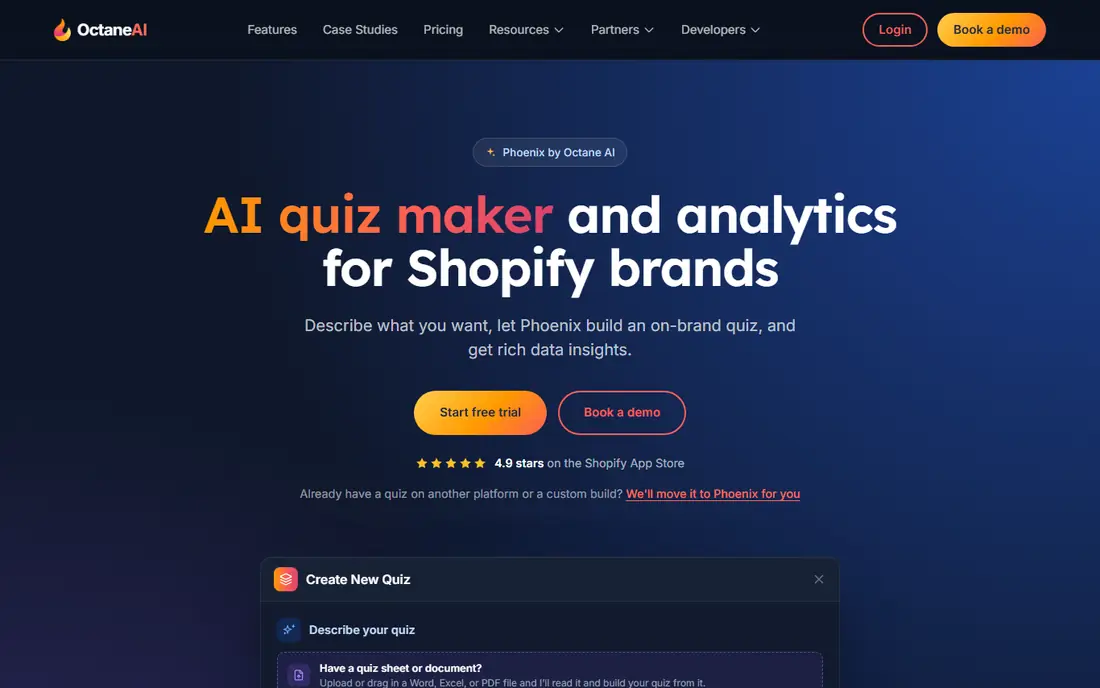
Octane AI is our pick for Shopify stores that want a quiz to end in a product recommendation, not just an email signup. It reads your catalog when it builds the quiz, so recommendations can follow tags, collections, manual rules, or points. Answers can sync back to Shopify metafields and tags, and to tools such as Klaviyo, which means the quiz data can shape later emails. The pre publish check is also practical, because it flags unreachable pages, dead rules, and out of stock products before shoppers hit them.
The limit is clear. If you do not sell on Shopify, Octane AI is not for you. Pricing starts at $50 per month, which is fair for a store with steady traffic but steep for a new store testing its first quiz. We would start here when product matching is the main goal, and when you can measure quiz revenue against that monthly cost. For a general lead quiz on a non Shopify site, look at involve.me or Heyflow instead.
- Built for Shopify catalogs
- Product logic by tags, rules, and points
- Checks answer paths before publish
- Shopify only
- Higher cost for small stores
Typeform makes the most polished quiz on this list. One question at a time, with smooth transitions, keeps completion rates up on longer quizzes, which matters when you ask five or more questions before a result. Logic jumps handle branching well, and the design tools let a brand match its site without developer help. Integrations cover email tools, CRMs, and spreadsheets, so answers can flow into a follow up system without manual export.
The catch is price per response. The free plan covers only a small number of responses per month, and paid plans still cap responses, so a successful quiz can get expensive fast. Typeform also collects responses rather than running a full funnel, so scoring and follow up sequences live in other tools. We would pick Typeform when quiz experience and brand feel matter most, and when you already have email or CRM follow up handled elsewhere.
- Clean one question at a time design
- Strong logic jumps
- Wide integration list
- Response limits are low on cheaper plans
- No native lead scoring depth
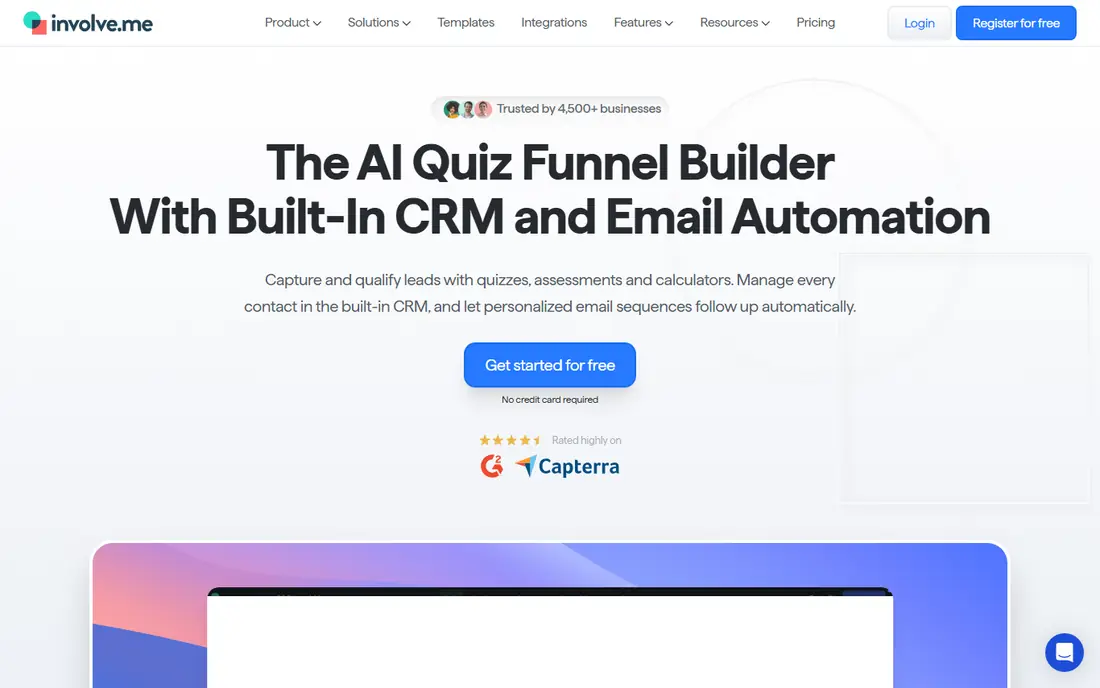
involve.me suits teams that want one tool for quizzes, calculators, and landing page forms. You can build a recommendation quiz, a price calculator, or a lead form with the same editor, which helps small marketing teams avoid learning three tools. Templates cover common niches, and the payment field option lets some funnels collect a deposit or payment without sending users to a separate checkout. The editor is visual enough for a non technical marketer to publish a working funnel in a day.
The limit is follow up. involve.me captures and segments well, but email sequences and sales follow up still run in your email tool or CRM. Check response limits on your plan before launch, because a viral quiz can hit a cap mid campaign. We would choose involve.me when you need several funnel types, want templates to start from, and already have a follow up system in place.
- Quiz, survey, calculator, and form builders in one tool
- Good templates
- Payment field option
- Response limits vary by plan
- Funnel automation still needs email or CRM tools
Heyflow is built for lead funnels, not just quizzes. Its visual builder lets you map steps, branches, and lead capture in one view, which makes it easier to spot a dead end or a confusing branch before launch. Flows are mobile friendly, which matters because most quiz traffic now comes from phones. Heyflow works well for service businesses that qualify leads, such as agencies, clinics, coaches, and financial services, where the end goal is a call or a quote rather than a product add to cart.
The trade off is product logic. Heyflow will qualify and segment leads well, but it is not a Shopify product matcher like Octane AI. Pricing can also confuse US buyers when plans are shown in euros, so confirm the currency and billing period before you compare. We would pick Heyflow when the funnel ends in a booked call or a sales handoff, and when a clear visual map of the flow matters to your team.
- Visual funnel builder
- Mobile friendly flows
- Good for lead qualification
- Pricing is in euros on some plans
- Less product recommendation depth than Octane AI
Interact is the fastest way to publish a simple recommendation quiz. Pick a template, edit the questions, set the outcomes, and connect an email tool, and you can be live in under an hour. Personality, scored, and recommendation quiz types cover most small business needs, from a style quiz to a which plan is right for you quiz. The template library is a real help for teams that do not want to write questions from scratch.
The limit is depth. Interact captures leads and segments them, but it does not run full nurture sequences or complex product logic on its own. Some CRM integrations sit on higher plans, so check your plan before you promise a sales team a direct sync. We would choose Interact for a first quiz, a newsletter growth quiz, or a simple product finder, and move to a deeper funnel tool only if the quiz outgrows it.
- Fast to publish
- Personality, scored, and recommendation quiz types
- Large template library
- Less funnel automation than Heyflow or involve.me
- Higher plans needed for some CRM links
LeadQuizzes is aimed squarely at lead generation. It captures leads, applies branching logic, and sorts respondents into segments for targeted follow up, which is the core job of a quiz funnel. On higher plans it can send custom emails to leads directly from the platform, which puts it a step ahead of pure capture tools that only hand data to another system. That matters for small teams that want a quiz to do some follow up without building a full email automation first.
The design is plainer than Typeform, so brands that care deeply about visual polish may prefer a different tool. Reporting is also basic on lower plans, so test the analytics view during a trial with real answers. We would pick LeadQuizzes when lead capture and segmentation are the main goals, and when a simple, focused quiz builder beats a broad form platform.
- Built for lead generation
- Branching logic and segments
- Email sends on higher plans
- Design options are plainer than Typeform
- Funnel reporting is basic on lower plans
ShortStack suits brands that want quizzes plus giveaways and contests in one place. Instead of running a quiz in one tool and a giveaway in another, you can build both, grow an email list, and use quiz answers to segment that list. It works on any website or CMS, not just Shopify, which makes it a good fit for brands with a custom site or a WordPress site. Starting pricing at $29 per month is also reasonable for a small team testing list growth.
The catch is product matching depth. ShortStack will recommend and segment, but it does not read a Shopify catalog the way Octane AI does, so product picks need more manual setup. Contest rules also need care, because giveaway terms, entry methods, and winner selection must be set correctly. We would choose ShortStack when list building through quizzes and giveaways is the goal, and when you want one tool for both jobs.
- Quizzes, giveaways, and contests in one tool
- Works on any website
- Strong list building features
- Less Shopify product logic than Octane AI
- Learning curve for contest rules
How we picked these
We compared official product pages, pricing pages, and public feature lists for quiz and funnel tools, and we favored tools that are still sold in 2026 and that go beyond a plain form. We looked for branching logic, lead capture, outcome handling, and integrations with email tools, CRMs, or stores. We did not claim hands on testing, and we used See website where a vendor does not publish a clear starting price.
What to check before you buy quiz funnel software
Start with the end of the funnel, not the first question. Decide what a completed quiz should do: recommend a product, book a call, send a lead to a CRM, or start an email sequence. That end goal will rule out half the tools on this list faster than any feature table.
Questions, logic, and dead ends
Keep the quiz short, usually five to eight questions, and test every answer path. Check for dead ends, out of stock recommendations, and questions that do not change the result. A quiz that asks questions it ignores will lose trust fast, and a quiz that recommends an unavailable product will lose sales.
Response limits and follow up
Check response caps, overage rules, and how answers sync to your email tool or CRM. A quiz is only useful if the data reaches the system that follows up, with the right segment attached. Run a test lead through the full path, from quiz start to first follow up email, before you spend on traffic.
FAQ
What are the best quiz funnel software tools for Shopify?
Octane AI is the strongest Shopify choice, because it builds quizzes from your catalog and syncs answers back to Shopify. ShortStack and Typeform also work on Shopify sites, but they need more manual setup for product recommendations.
How many questions should a quiz funnel have?
Five to eight questions works well for most funnels. Fewer questions may not segment well, while more questions tend to lower completion. Test completion by question during a trial, and cut any question that does not change the outcome.
Do quiz funnels work for services as well as products?
Yes. Service funnels often end in a booked call, a quote request, or a segmented lead list, rather than a product add to cart. Heyflow and LeadQuizzes suit service funnels, while Octane AI suits product funnels.
What is the difference between a quiz and a quiz funnel?
A quiz asks questions and gives a result. A quiz funnel asks questions, applies logic, captures a lead, and sends that lead to a next step, such as a product, an email sequence, or a sales team. The funnel part is the follow up, not just the questions.
Can I run a quiz funnel without an email tool?
You can collect answers, but follow up will be manual. For most teams, an email tool or CRM is needed to turn quiz leads into sales. Pick the quiz tool that syncs cleanly with the follow up system you already use.