Best QMS Software for Pharmaceutical Industry in 2026: 9 Tools Compared
Compare the best QMS software for pharmaceutical industry use in 2026, with document control, CAPA, audits, training, and validation compared for teams.
- Editor's choice
 MasterControl
Large pharma quality systems
Starts atSee websiteVisit mastercontrol.comFull review - Great alternative
 Veeva Vault QMS
Life sciences cloud quality
Starts atSee websiteVisit veeva.comFull review - Also consider
 Qualio
Smaller regulated teams
Starts atSee websiteVisit qualio.comFull review
TL;DR:
- The best QMS software for pharmaceutical industry use must support 21 CFR Part 11 controls, audit trails, and electronic signatures.
- MasterControl and Veeva Vault QMS suit large, complex pharma programs, while Qualio suits smaller regulated teams that need faster setup.
- TrackWise QMS offers deep functionality for large quality programs, but its interface and implementation need more training time.
- Published QMS pricing is rare, so budget for validation, configuration, and training on top of the license, not just the headline quote.
- Always run a pilot on a real deviation, CAPA, and document change before signing a multi-year QMS contract.
Quick comparison
| Tool | Best for | Starts at | Free plan? | |
|---|---|---|---|---|
| MasterControl | Large pharma quality systems | See website | No | Visit |
| Veeva Vault QMS | Life sciences cloud quality | See website | No | Visit |
| Qualio | Smaller regulated teams | See website | No | Visit |
 TrackWise QMS | Deep enterprise quality programs | See website | No | Visit |
 AssurX | Faster deployment and ease of use | See website | No | Visit |
 QT9 QMS | Mid-size regulated manufacturers | See website | No | Visit |
 ComplianceQuest | Salesforce-based quality | See website | No | Visit |
 Intellect QMS | Configurable quality workflows | See website | No | Visit |
 Pilgrim SmartSolve | Global enterprise pharma programs | See website | No | Visit |
The best QMS software for pharmaceutical industry use
We compared official product pages, module lists, and compliance claims for QMS tools that serve pharmaceutical and life sciences teams in October 2026. All prices are quote-based in this category, so we list See website and focus on fit, modules, and implementation effort.
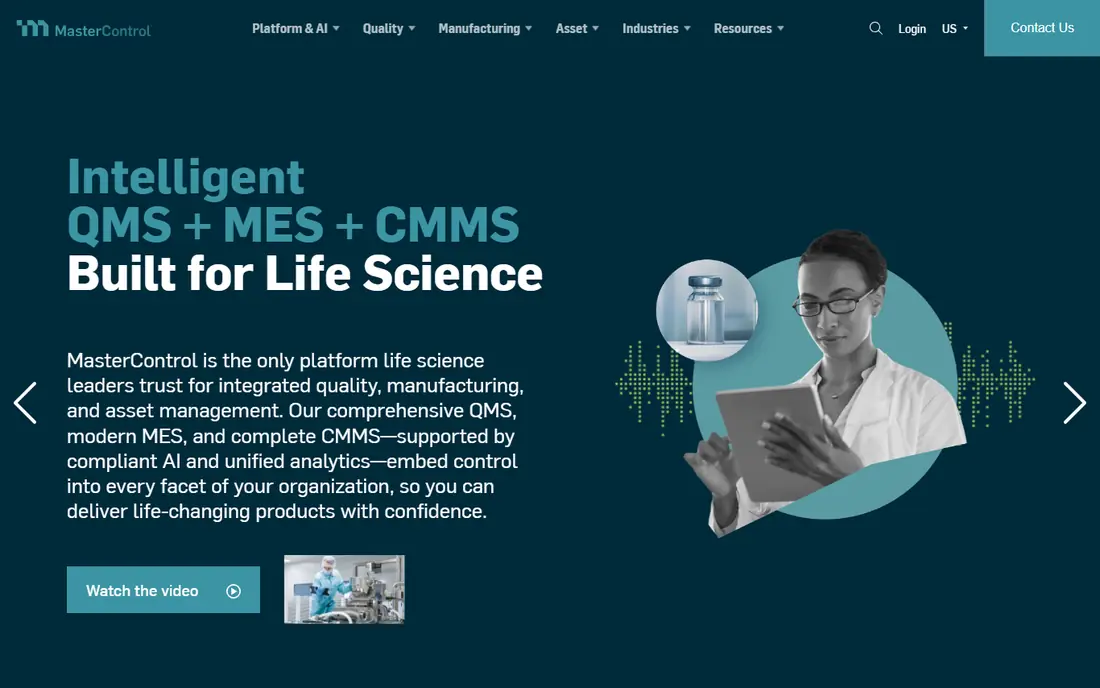
MasterControl is a long-standing choice for pharmaceutical quality teams that need document control, change control, training, audits, and CAPA in one system with a clear audit trail. Its strength is depth across a full quality system, including multi-site control and reporting for inspections. For a large pharma maker with many SOPs, suppliers, and training records, that breadth matters more than a simple interface.
The catch is implementation effort and cost. Configuration, validation, and admin training take time, and the total first-year cost is far above the license alone. It fits a company with a dedicated quality systems team. A small startup may find a lighter tool faster to adopt, even if it later outgrows it.
- Deep document, change, training, and audit modules
- Strong audit trail
- Scales to global sites
- Implementation can be complex and costly
- Needs trained admins for full value
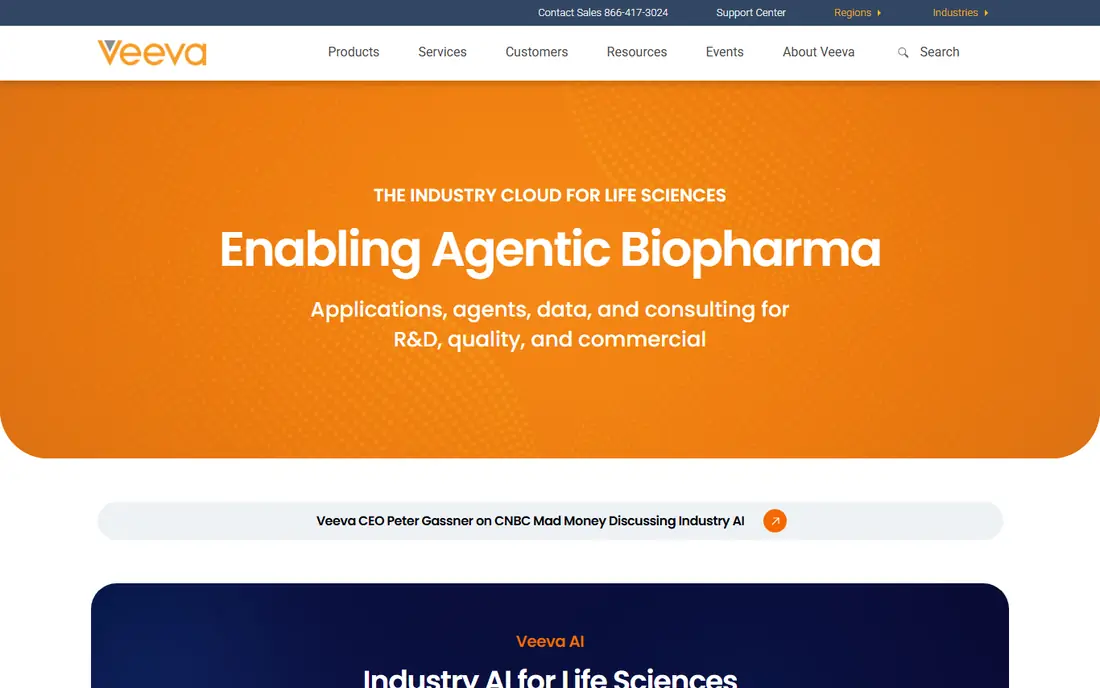
Veeva Vault QMS suits life sciences companies that already use, or plan to use, other Veeva Vault applications for documents, regulatory, or clinical work. The shared cloud platform helps quality, regulatory, and operations teams work from the same controlled content, with audit trails and electronic signatures built for regulated use. That link is a real advantage for a pharma firm with many Vault users.
The downside is ecosystem fit and cost. A company with no Veeva footprint may get less value from the platform link, and quote-based pricing means a small team must budget carefully. Ask for a full quote that includes implementation and validation support, and test how Vault QMS handles a real change and CAPA workflow before committing.
- Cloud platform built for life sciences
- Links to other Vault applications
- Strong compliance controls
- Best value inside the Veeva ecosystem
- Pricing is quote-based and can be high for small teams
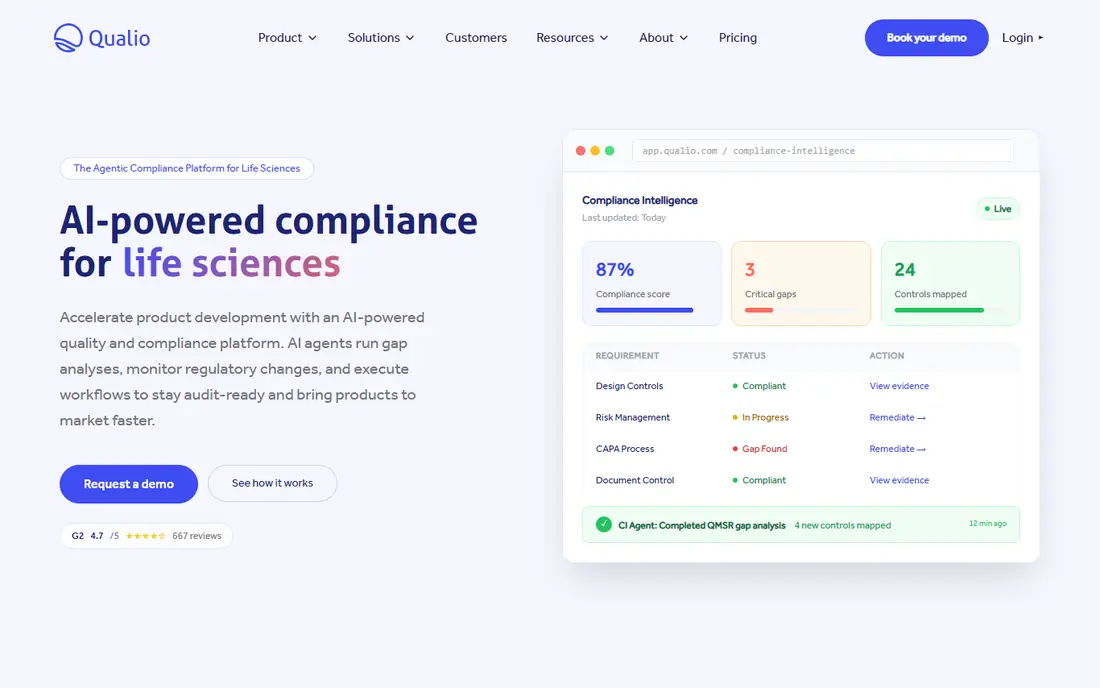
Qualio is our pick for smaller pharmaceutical and life sciences teams that need a compliant QMS without a long enterprise implementation. It covers document management, training, CAPA, change, and supplier management in a cloud system that is easier to learn than many rivals. For a startup moving from spreadsheets and shared drives to a controlled system, Qualio offers a clear step up.
The limit is customization and scale. Teams with highly complex workflows, many sites, or deep manufacturing execution needs may find enterprise tools stronger. Still, for a growing pharma team that needs control, training tracking, and audit readiness soon, Qualio balances speed and compliance well.
- Cloud-based and easier to adopt
- Document, training, CAPA, and supplier modules
- Good for growing teams
- Less customization than enterprise rivals
- Very large global programs may need more depth
TrackWise QMS, from Sparta Systems, is built for large, complex quality programs where depth matters more than simplicity. It handles deviations, CAPA, change control, audits, complaints, and supplier quality in a system that many large pharma firms rely on daily. If your quality team runs hundreds of records across sites and needs detailed reporting, TrackWise depth is a genuine advantage.
The trade-off is usability and effort. Users often note a complex interface and a learning curve, and configuration after launch can be hard. Budget for training, admin time, and a phased rollout. It fits a large team with quality systems staff, not a small team that needs a system live in a few weeks.
- Deep change, CAPA, deviation, and audit coverage
- Long pharma track record
- Strong reporting
- Interface feels complex
- Training and configuration take significant time
AssurX suits a pharma team moving off spreadsheets or a basic system that wants a faster, friendlier QMS without losing regulated controls. Users praise its navigation and support during rollout, and it covers document control, CAPA, audits, training, and supplier quality for pharma, biotech, and manufacturing. That balance helps a mid-size team get audit-ready sooner.
The catch is that no QMS removes configuration work entirely. Complex investigations and custom record types can still feel less intuitive, so pilot those exact workflows before buying. Get a written quote that separates license, implementation, and validation support, because quote-based pricing makes comparison hard without it.
- Easier day-to-day use than many enterprise rivals
- Faster time to value
- Responsive support reputation
- Complex custom workflows can still need configuration
- Pricing is quote-based
QT9 QMS covers document control, CAPA, audit management, training, and related quality modules in a system aimed at mid-size regulated manufacturers. Its customization is a plus for a pharma team with specific SOP, form, and approval needs, and it supports the audit trails and electronic signatures that regulated work requires. For a team outgrowing a generic tool, QT9 offers a clear regulated path.
The downside is cost and effort. License costs per user, plus implementation and training, can add up for a small team, so compare the first-year total with Qualio and AssurX. Ask for a demo using your own document and CAPA examples, not just vendor sample data, to judge fit.
- Broad module set
- Strong customization
- Serves regulated industries including pharma
- Total cost can be high for small teams
- Setup and training need planning
ComplianceQuest is a strong pick for a pharmaceutical company already running Salesforce, because it builds quality management on that platform. It covers document control, CAPA, audits, training, supplier quality, and related areas, with the reporting and workflow tools Salesforce users already know. That link can reduce integration work and speed adoption for Salesforce shops.
The limit is platform fit. A firm with no Salesforce footprint may prefer a standalone QMS such as MasterControl or Qualio, rather than adopting a new platform for quality alone. Check licensing for both Salesforce and ComplianceQuest, and confirm validation documentation is included in the quote.
- Built on Salesforce
- Strong quality, safety, and supplier modules
- Good for firms already on Salesforce
- Value is highest inside Salesforce
- Non-Salesforce firms may prefer a standalone QMS
Intellect QMS suits a pharma team that needs to shape quality workflows to its own SOPs without heavy custom coding. Its configurable platform covers document control, CAPA, audits, training, and nonconformance handling, with dashboards for quality leaders. For a team with varied processes across sites, that flexibility helps avoid forcing every process into one rigid template.
The catch is ownership. No-code still needs a process owner who can design, test, and maintain workflows, and quote-based pricing means you must ask for implementation costs early. Pilot one deviation-to-CAPA flow end to end, including approvals and training links, before signing.
- Configurable no-code workflows
- Document, CAPA, audit, and training modules
- Good for varied processes
- Configuration still needs owner time
- Quote-based pricing hides total cost until a demo
Pilgrim SmartSolve, from IQVIA, is built for major global pharma enterprises with large, complex quality programs. It covers document and process management, risk, supplier quality, audits, and post-market needs, with compliant electronic signatures and audit trails. For a global firm with dedicated quality systems staff, its depth and enterprise planning tools are a real fit.
The downside is complexity and cost opacity. Users note a need for admin training to use the full system, and pricing is not published, so a small team will struggle to judge value without a sales process. Consider Pilgrim only if you have the staff and scale to run an enterprise QMS, and ask for validation and training costs in writing.
- Long pharma enterprise history
- Broad quality modules
- Strong for post-market and global programs
- Complex system that needs trained admins
- Pricing is not published online
How we picked these
We compared official product pages, module lists, and compliance claims for QMS tools that serve pharmaceutical teams in October 2026. We did not claim hands-on testing, and we did not invent prices, user counts, or compliance certifications beyond vendor claims. Where pricing is quote-based, we list See website and advise asking for license, implementation, and validation costs separately.
What to check before you buy a pharma QMS
Start with regulatory needs, not features. Confirm 21 CFR Part 11 controls, audit trails, electronic signatures, document versioning, training linkage, and CAPA traceability for your exact SOPs. A tool that looks good in a demo can fail on a real deviation if those links are weak.
Pilot, validation, and total cost
Run a pilot with a real deviation, a document change, and a training record, from start to close. Ask what validation documentation is included in the license and what is billed as services. Compare first-year total cost, not just license price, across at least three vendors.
FAQ
What is the top QMS software for pharmaceutical industry use?
MasterControl and Veeva Vault QMS are strong top picks for large pharma programs, while Qualio is a top pick for smaller regulated teams. TrackWise QMS suits deep enterprise programs, and AssurX suits teams that want faster deployment. Pick by team size, existing platforms, and implementation capacity, not by brand alone.
How much does pharmaceutical QMS software cost?
Most pharma QMS vendors use quote-based pricing, so costs vary by users, modules, sites, and implementation scope. Budget for license, configuration, validation, training, and internal staff time, because those often exceed the license in year one. Ask each vendor for a written first-year total before comparing quotes.
Does QMS software need to support 21 CFR Part 11?
Yes, for electronic records and signatures in US regulated pharma work, a QMS should support 21 CFR Part 11 controls, including audit trails, access controls, and compliant electronic signatures. Confirm how the vendor supports validation, and get validation documentation terms in writing. A general document tool without those controls is not a pharma QMS.
How long does it take to implement a pharma QMS?
Timelines vary widely, from weeks for a lighter cloud tool such as Qualio to many months for a large enterprise rollout such as MasterControl or TrackWise. Factors include module scope, site count, data migration, validation, and training. Ask for a phased plan with a pilot, and do not promise an inspection date until the pilot is complete.
Can a small pharma startup use enterprise QMS software?
Yes, but it may be costly and slow. Smaller teams often start with Qualio or AssurX, which are easier to adopt, then move to an enterprise system as site count and complexity grow. Choose a system you can run with your current staff, and check data export terms so a future move is possible.
What modules should a pharma QMS include?
At minimum, look for document control, change control, CAPA, deviations, audits, training management, supplier quality, and complaints, with audit trails and reporting. Add risk management, equipment, and manufacturing links only if your SOPs require them. A module you never use still costs license and training time, so buy for current needs plus near-term growth.